What Are the Chemical and Physical Properties of Sodium Nitrate Free Flow?
Sodium Nitrate Free Flow is an inorganic nitrate (NaNO₃) supplied as a white crystalline material with high water solubility and consistent physical characteristics. Industrial buyers evaluate not only its chemical composition but also its particle uniformity, flowability, moisture condition, packaging quality, and documentation before approving it for manufacturing use.
Why Do Chemical Properties Matter in Industrial Purchasing?
When procurement teams purchase an industrial chemical, they are buying much more than a chemical formula. They are purchasing a raw material that must integrate smoothly into production, warehousing, quality systems, and inventory management.
Two products can have the same chemical formula yet differ in packaging quality, physical consistency, documentation, or batch uniformity. Those differences may influence receiving inspections, storage practices, and production planning.
That is why experienced buyers review both the chemical identity and the physical characteristics before approving a supplier.
Quick Take
The chemical formula identifies the product.
The physical properties determine how efficiently the product can be received, stored, handled, and integrated into an industrial operation.
What Is the Chemical Identity of Sodium Nitrate?
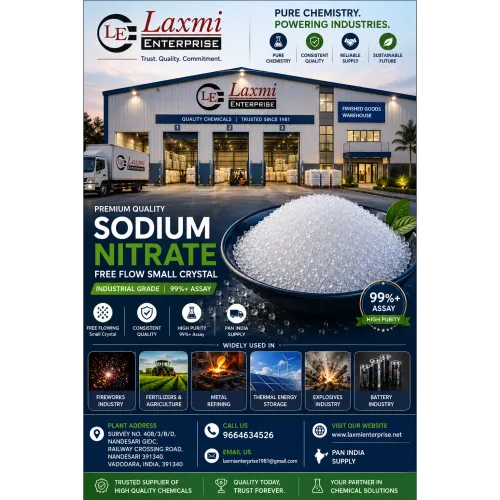
Sodium Nitrate is an inorganic nitrate salt composed of sodium ions and nitrate ions. It has the internationally recognized chemical formula NaNO₃ and is used in a variety of approved industrial applications where its chemical and physical characteristics are suitable for the intended manufacturing process.
For industrial procurement, confirming the correct product identity is the first step in supplier evaluation. This information is typically verified against the Product Specification Sheet, Certificate of Analysis (COA), and purchase documentation before the material enters inventory.
Technical Identification
Property Information
Product Name Sodium Nitrate Free Flow
Chemical Formula NaNO₃
Chemical Family Inorganic Nitrate Salt
Physical Form White Crystalline Material
Commercial Supply Industrial Grade / Technical Grade (as specified)
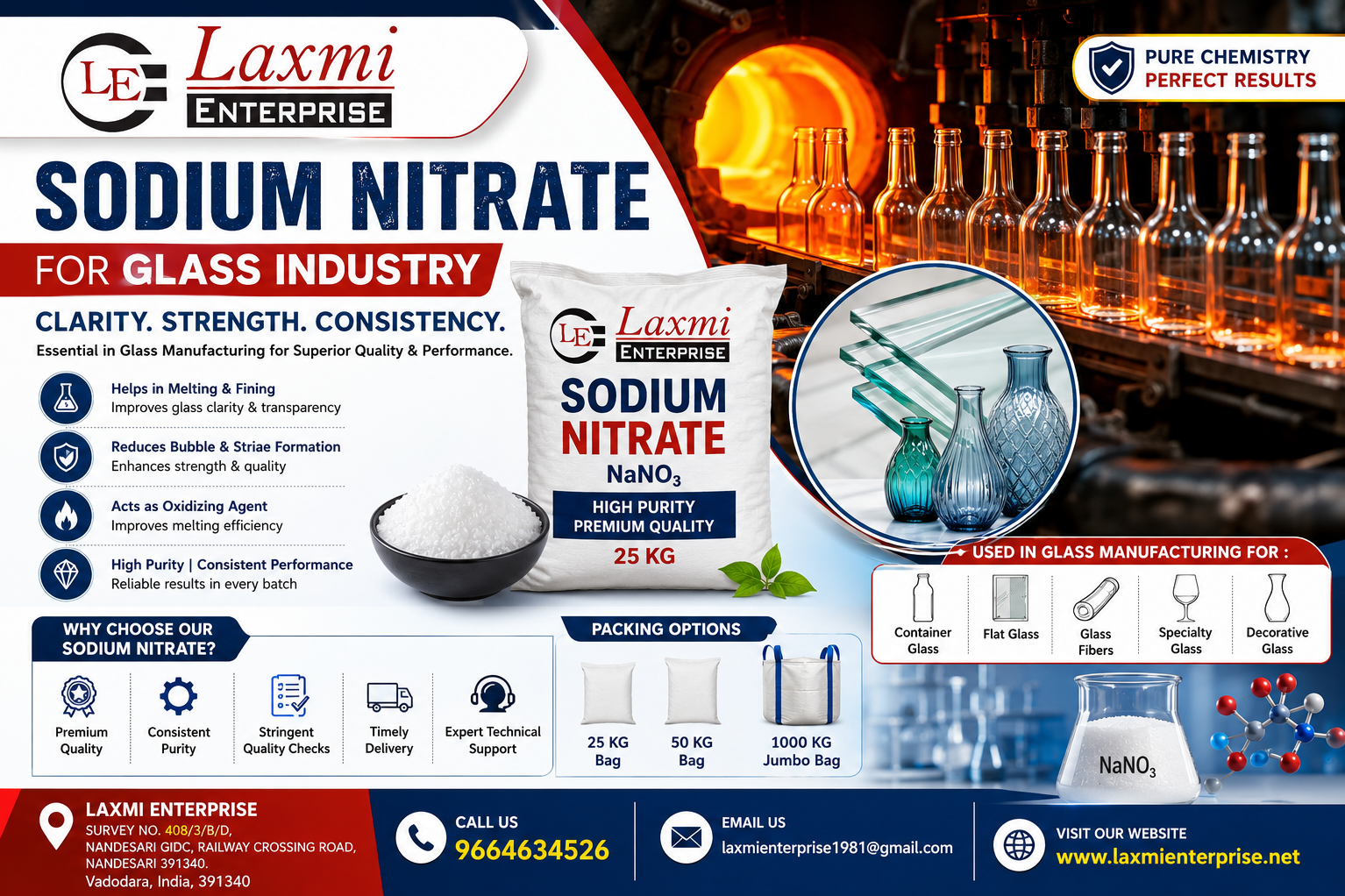
Standard Packing 25 kg, 50 kg, 500 kg Jumbo Bag
Specifications should always be confirmed with the supplier for the grade being supplied.
What Does 'Free Flow' Actually Mean?
The phrase Free Flow often creates confusion among first-time buyers.
It does not describe the chemical composition. Instead, it refers to the product's physical handling characteristics.
From a practical perspective, a Free Flow grade is intended to remain easier to move during normal industrial handling when stored under recommended conditions. This can improve warehouse operations, reduce handling interruptions, and support more consistent material movement.
For facilities using conveyors, hoppers, weighing systems, or routine manual handling, physical consistency is often just as important as chemical purity.
Which Physical Characteristics Do Buyers Review?
Industrial buyers typically evaluate several physical characteristics before approving a product.
Appearance
The material should match the expected visual description stated in the product specification.
Visual inspection often forms part of the incoming material verification process.
Particle Uniformity
Consistent particle appearance supports predictable handling and simplifies warehouse inspections.
Uniformity also provides buyers with confidence that the product has been supplied according to the agreed specification.
Flowability
Flowability influences how easily the material moves during receiving, storage, and production.
Good flow characteristics can contribute to more efficient warehouse operations and reduce unnecessary manual intervention under suitable storage conditions.
Moisture Condition
Moisture can influence the physical condition of many industrial salts.
For this reason, buyers generally inspect packaging carefully and review storage recommendations to help preserve product quality throughout transportation and warehousing.
Packaging Integrity
The condition of the packaging often provides the first indication of how well the product has been protected during transport.
Well-maintained packaging supports product protection, traceability, and efficient warehouse management.
Why Is Product Consistency So Important?
Imagine a manufacturing plant that receives one truckload of Sodium Nitrate every week.
If the first shipment arrives in excellent condition, the second shipment has damaged bags, and the third shipment contains inconsistent documentation, warehouse staff immediately spend more time verifying products before production can continue.
By contrast, consistent deliveries reduce administrative work and help production teams focus on manufacturing rather than resolving supply issues.
That is why experienced procurement teams often value supplier consistency as highly as product quality.
Practical Observation
One of the most common procurement mistakes is evaluating a supplier using only one shipment.
A better approach is to evaluate performance over multiple deliveries, reviewing consistency in:
Product quality
Documentation
Packaging
Delivery reliability
Communication
Long-term consistency is usually a better indicator of supplier performance than a single successful order.
What Information Should a Purchase Manager Verify?
Before approving Sodium Nitrate Free Flow for inventory, many organizations review:
Verification Item Purpose
Product Name Confirms correct material
Batch Number Supports traceability
COA Reviews batch quality
SDS Reviews handling and safety information
Product Specification Confirms agreed requirements
Packing Size Matches purchase order
Packaging Condition Confirms shipment quality
Quantity Received Supports inventory accuracy
Each organization may have additional verification requirements depending on its quality management system.
Why Is Batch Consistency More Valuable Than One Good Batch?
Receiving one high-quality shipment is important.
Receiving the same quality over months or years is even more valuable.
Consistent suppliers help organizations:
Improve production planning
Reduce inspection time
Simplify warehouse management
Build confidence in purchasing decisions
Reduce procurement-related uncertainty
This long-term perspective often distinguishes strategic suppliers from occasional vendors.
Keywords