

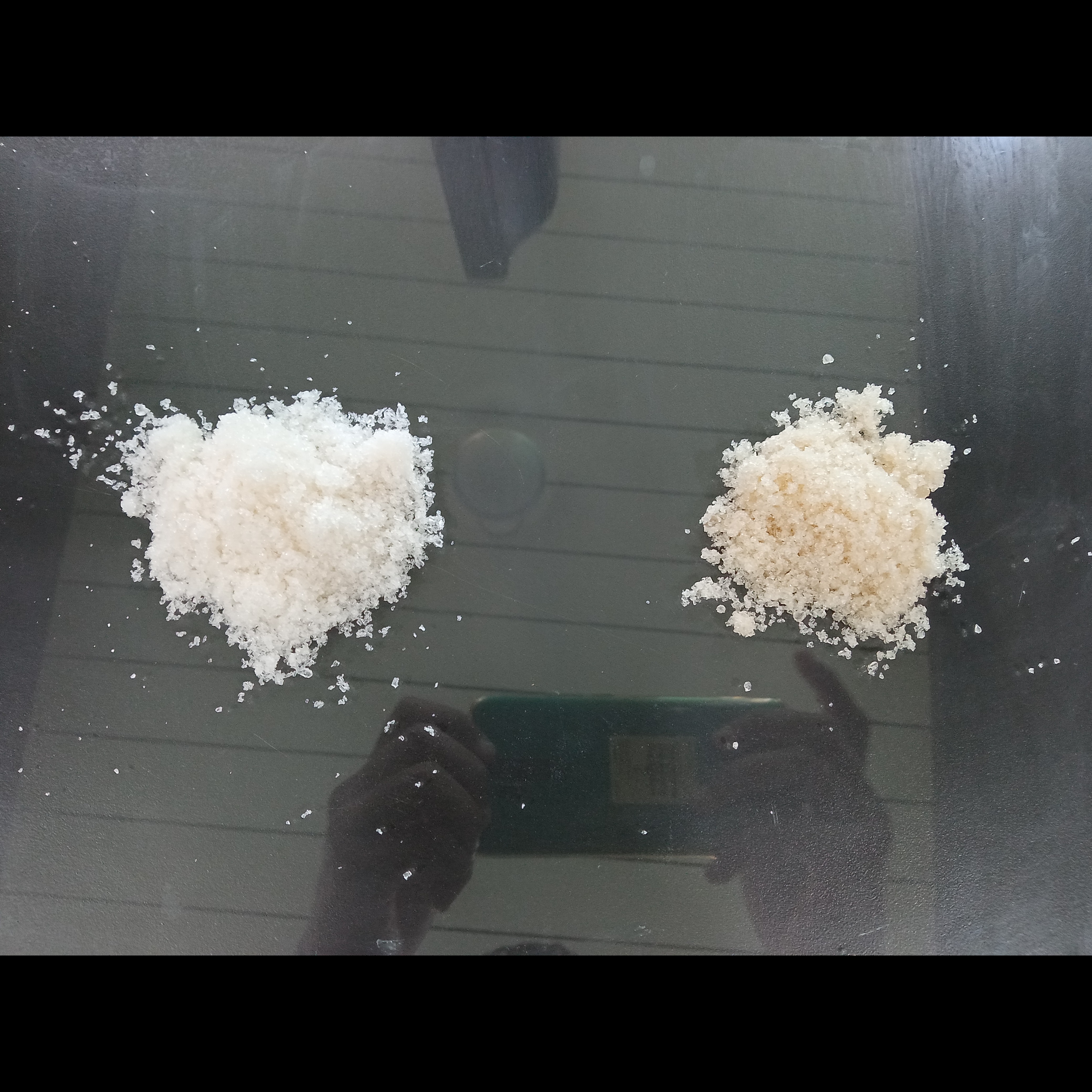
Principle (short & sweet)
Ion Chromatography separates anions based on how strongly they interact with an anion-exchange column.
Acetate (CH₃COO⁻) is detected as an anion, usually using suppressed conductivity detection.
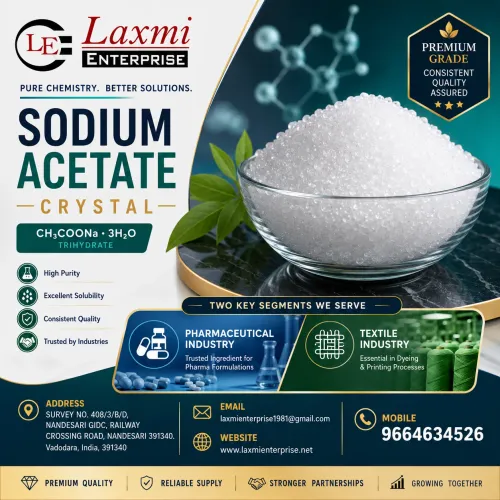
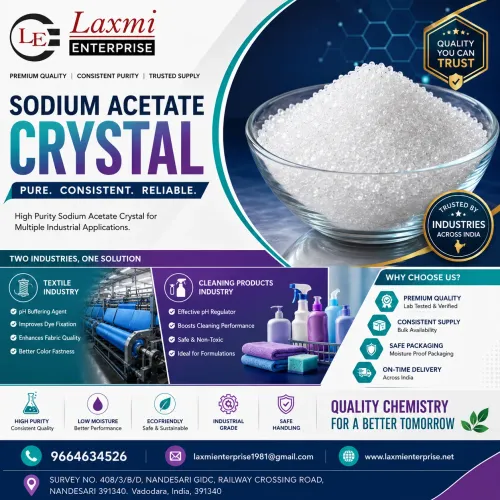
Acetate for textile industry
Acetate for dyeing
Acetate used in pharmaceuticals
Acetate in food industry
Acetate buffer solution
Acetate in chemical manufacturing
Acetate for laboratory use
Typical IC Setup for Acetate
1. Column
- Anion-exchange column
- Common examples:
- Dionex IonPac AS11-HC / AS12A / AS14A
- Metrosep A Supp 5 / 7
Suppressor
- Anion suppressor converts eluent ions to weakly conductive species
- This dramatically lowers background conductivity
- Makes acetate peak stand out clearly
Retention Time
Depends on column & eluent, but typically:
- Acetate elutes early
- Around 4–7 minutes (isocratic)
- Earlier than propionate, later than fluoride/formate
Eluent (Mobile Phase)
Most commonly used:
- Potassium hydroxide (KOH) → generated electrolytically
- OR
- Sodium carbonate / sodium bicarbonate mixture
Example conditions:
- 1–30 mM KOH gradient
- Or 3.5 mM Na₂CO₃ + 1.0 mM NaHCO₃ (isocratic)
Calibration & Quantification
- Prepare acetate standards (e.g., 0.5–100 mg/L)
- Use external calibration
- Linear response usually R² ≥ 0.999
Detector
- Suppressed conductivity detector
- Acetate gives a sharp, well-defined peak
Sample Preparation
Very important for good results:
- Filter through 0.22 or 0.45 µm membrane
- Dilute if high salt or high acetate concentration
- Avoid strong acids/bases (can damage column/suppressor)
For complex matrices:
- Use OnGuard cartridges (organic, silver, H⁺, etc.)
*Summary
- IC is highly selective & sensitive for acetate
- Suppressed conductivity is the gold standard
- Minimal sample prep, excellent reproducibility
If you want, I can:
- Share a ready-to-use IC method
- Help choose column + eluent
- Compare IC vs HPLC or GC for acetate
- Tailor the method for industrial / wastewater samples
Common Interferences
- Formate (elutes close in some methods)
- High chloride or sulfate
Organic acids in fermentation or wastewater samples
Method optimization or gradient elution solves most issues.
Acetate
Acetic acid ester
Acetate chemical
Acetate compound
Industrial acetate
Organic acetate
Sodium acetate
Potassium acetate
Calcium acetate
Ammonium acetate
Zinc acetate
Copper acetate
Magnesium acetate
Lead acetate
Ferric acetate
Aluminum acetate