Regulatory Standards & Technical Documentation for Sodium Nitrate Free Flow
Industrial chemicals move through complex supply chains involving manufacturers, distributors, logistics providers, quality laboratories, procurement teams, and end users. Throughout this lifecycle, technical documentation plays an important role in product identification, traceability, quality verification, and workplace safety.
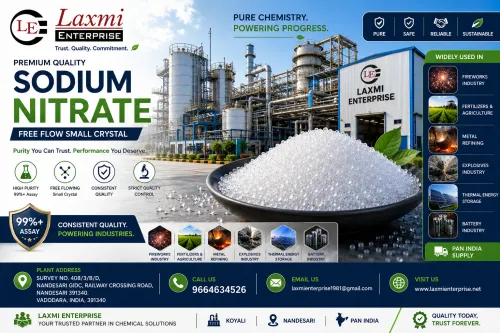
For Sodium Nitrate Free Flow, documentation is often as important as the physical product itself. Clear records help organizations maintain consistent procurement practices, support quality management systems, and simplify communication between suppliers and customers.
Why Technical Documentation Matters
Technical documentation helps organizations to:
Verify product identity.
Confirm batch traceability.
Review product specifications.
Support incoming material inspections.
Facilitate quality audits.
Improve supplier communication.
Maintain purchasing records.
Strengthen inventory control.
Well-maintained documentation also supports long-term supply chain transparency.
Product Specification Sheet
A Product Specification Sheet summarizes the key characteristics of the material supplied.
Typical information includes:
Product Name
Chemical Formula
CAS Number
Physical Appearance
Typical Physical Properties
Quality Parameters
Recommended Storage Conditions
Commercial Packing Options
Revision Number
Document Issue Date
The specification sheet serves as the reference document during procurement and quality review.
Certificate of Analysis (COA)
A Certificate of Analysis provides batch-specific quality information.
A typical COA may include:
Information Purpose
Product Name Product identification
Batch Number Traceability
Manufacturing Date Production reference
Test Parameters Characteristics evaluated
Reported Results Batch-specific quality data
Approval Signature Quality authorization
Industrial buyers commonly compare the COA with their purchase specification before accepting the shipment.
Safety Data Sheet (SDS)
The Safety Data Sheet communicates information related to workplace safety, handling, storage, emergency response, and transport.
An SDS typically includes:
Product Identification
Hazard Information
Safe Handling Guidance
Storage Recommendations
First Aid Information
Firefighting Measures
Accidental Release Guidance
Exposure Controls
Transport Information
Disposal Considerations
Users should always refer to the latest SDS supplied with the product and follow applicable regulations and workplace procedures.
Product Labels
Industrial packaging labels commonly include:
Product Name
Batch Number
Net Weight
Supplier Identification
Manufacturing Date or Batch Reference
Storage Information
Applicable hazard communication elements where required by law
Accurate labeling supports traceability and warehouse management.
Quality Management Systems
Many industrial organizations operate under documented quality management systems.
Within these systems, suppliers and buyers may maintain procedures for:
Incoming inspection
Batch identification
Documentation control
Supplier qualification
Corrective actions
Record retention
Internal audits
Continuous improvement
The specific quality framework depends on each organization's operations and certification requirements.
Traceability Documentation
Effective traceability allows each shipment to be linked with its supporting records.
Typical traceability information includes:
Product Name
Batch Number
Manufacturing Date
Dispatch Date
Customer Order Reference
Quantity Supplied
Supporting Quality Documents
Traceability simplifies investigations, recalls (if ever required), and quality reviews.
Transportation Documentation
Depending on the shipment, destination, and applicable regulations, transportation may involve documentation such as:
Commercial Invoice
Packing List
Shipping Documents
Transport Declaration (where required)
Customs Documentation (for international shipments)
The exact requirements vary by country, transport mode, and applicable legal framework.
International Considerations
Organizations involved in international trade may need to consider:
Import documentation
Export documentation
Customs requirements
Country-specific chemical regulations
Customer-specific documentation requests
Contractual quality requirements
Requirements differ by jurisdiction and should be verified for each destination market.
Documentation Best Practices
To strengthen quality and procurement systems:
Keep technical documents current.
Review revisions before use.
Archive superseded versions appropriately.
Match documentation with the supplied batch.
Maintain digital and physical records where appropriate.
Ensure quality and procurement teams use the same document revision.
Good document control supports consistent decision-making.
Technical Documentation Matrix
Document Primary Purpose Typical User
Product Specification Sheet Defines product characteristics Procurement, Engineering
Certificate of Analysis (COA) Confirms batch quality QA/QC, Production
Safety Data Sheet (SDS) Safety and handling information EHS, Warehouse, Production
Packing List Shipment verification Stores, Logistics
Commercial Invoice Commercial transaction Accounts, Procurement
Batch Identification Record Product traceability QA, Production
Transport Documents Shipping compliance Logistics
Documentation Review Checklist
Before accepting a shipment, organizations commonly verify:
✓ Product name matches the purchase order.
✓ Batch number is clearly identified.
✓ COA corresponds to the supplied batch.
✓ SDS is the latest available version.
✓ Packaging labels are legible.
✓ Quantity matches shipping documentation.
✓ Commercial packing is correct:
25 kg Bags
50 kg Bags
500 kg Jumbo Bags
Documentation FAQs
Why is a Product Specification Sheet important?
It provides the technical reference for the product, helping procurement and engineering teams compare supplier information with their purchasing requirements.
What is the purpose of a Certificate of Analysis?
A COA documents the quality characteristics of a specific production batch and supports product verification and traceability.
Why should organizations maintain document control?
Document control helps ensure that employees use the correct and most recent technical information, reducing the risk of errors during procurement, quality review, and production.
Why is traceability important?
Traceability links a product shipment to its quality records and supporting documentation, helping organizations investigate quality concerns and maintain supply chain transparency.
Does every country require the same documentation?
No. Documentation requirements vary depending on national regulations, customer requirements, transport mode, and the destination country. Organizations should verify the applicable requirements for each shipment.
Why should buyers compare the COA with their purchase specification?
Comparing the COA with the agreed specification helps confirm that the supplied batch aligns with the buyer's documented quality requirements.
How does proper documentation improve audits?
Complete and organized records simplify internal reviews, supplier evaluations, customer audits, and quality management activities.
Technical Insight
Technical documentation forms the backbone of industrial chemical procurement. Product specifications, Certificates of Analysis, Safety Data Sheets, traceability records, and shipping documents work together to support quality assurance, regulatory compliance, and efficient supply chain management. For Sodium Nitrate Free Flow, maintaining accurate and up-to-date documentation is an essential part of delivering a reliable industrial product.
Keywords