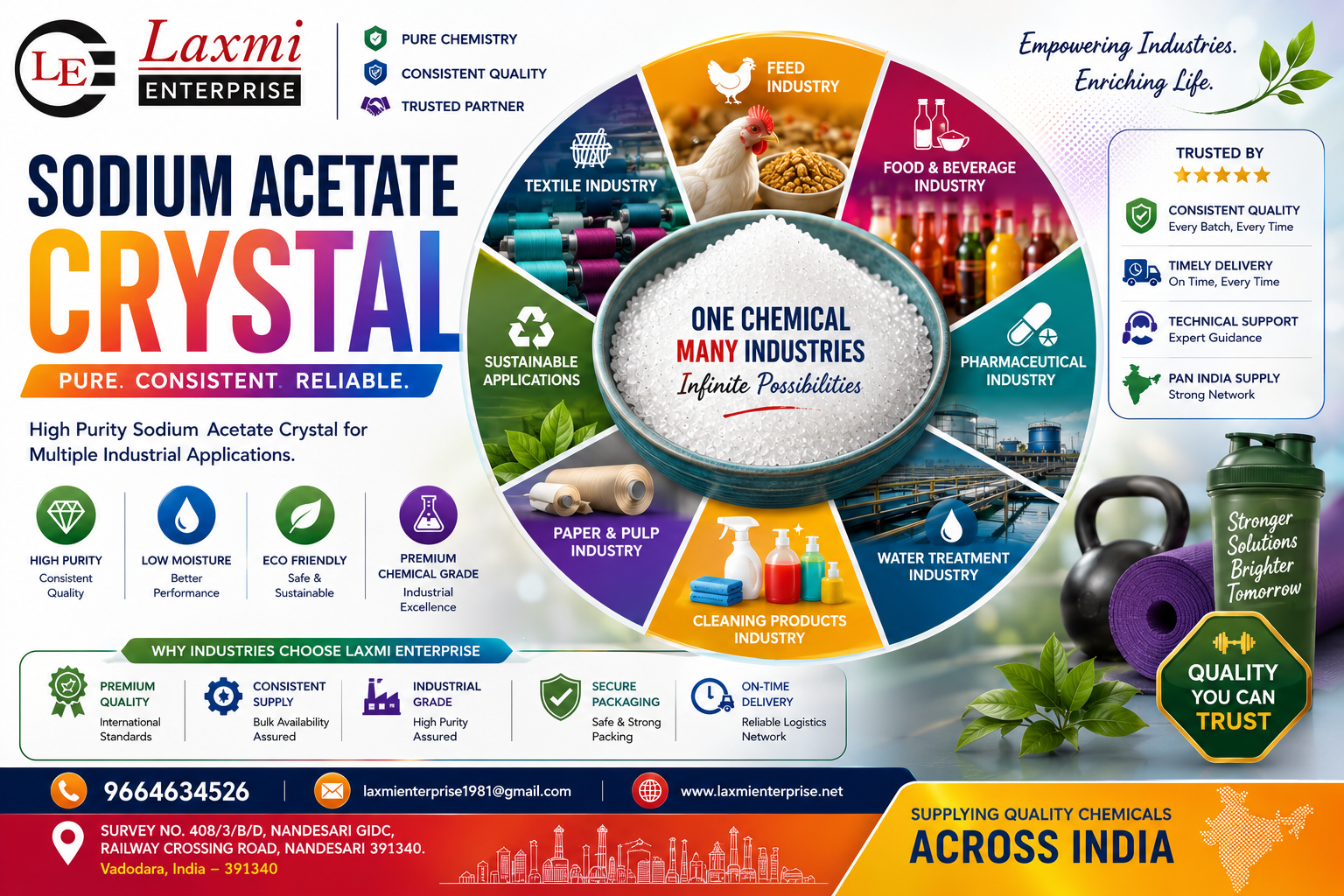
Sodium Acetate in the Bakery Industry
How Sodium Acetate Supports Commercial Baking, Dough Processing, Flavor Systems, Product Consistency & Quality Management
The commercial bakery industry is built on consistency. Whether producing sandwich bread, crackers, biscuits, pizza bases, frozen dough, or baked snacks, manufacturers expect every batch to deliver the same taste, appearance, texture, and shelf stability.
Achieving this consistency depends on more than flour, yeast, and baking equipment. Ingredient selection plays a critical role in maintaining process stability and product quality. Among the functional ingredients used in selected bakery formulations, food-grade Sodium Acetate is valued for its role in acidity regulation, buffering systems, flavor development in certain products, and as part of preservation strategies where permitted by applicable food regulations.
For commercial bakeries, selecting the right ingredient supplier is just as important as selecting the right ingredient. Batch consistency, documentation, traceability, packaging quality, and technical support all influence manufacturing efficiency and finished product quality.
This guide explains how Sodium Acetate is used in bakery applications, the factors manufacturers evaluate before selecting a supplier, quality control practices, regulatory considerations, and best practices for maintaining consistent production.
Why Consistency Matters in Commercial Baking
Unlike small artisan bakeries, industrial bakeries often produce thousands of kilograms of products every day.
Even a small variation in one ingredient can affect:
Product flavor
Texture
Dough handling
Process efficiency
Product uniformity
Customer satisfaction
For this reason, commercial bakeries emphasize ingredient consistency as much as recipe development.
Food Technology Insight
A successful bakery formulation is a carefully balanced system. Every ingredient interacts with the others, and even minor changes in ingredient quality may require process adjustments. Consistency from suppliers helps manufacturers maintain predictable production.
Why Sodium Acetate Is Used in Bakery Products
Food-grade Sodium Acetate may be included in selected bakery formulations because of its functional properties.
Depending on the recipe and product type, it may contribute to:
Acidity regulation
Buffering systems
Flavor development in certain baked products
Formulation stability
Manufacturing consistency
The specific function depends on the complete formulation and should always comply with applicable food regulations.
Common Bakery Applications
Bread Manufacturing
Large-scale bread production requires ingredients that support consistent processing from mixing through baking.
Food technologists evaluate ingredient performance based on:
Batch consistency
Process repeatability
Finished product quality
Production efficiency
Ingredient selection is validated during product development before commercial production begins.
Biscuits and Cookies
Manufacturers of biscuits and cookies focus on producing products with consistent flavor, appearance, and texture.
Functional ingredients are selected to support these objectives while maintaining efficient manufacturing.
Crackers
Cracker manufacturers often require precise process control because small variations may influence texture and overall product characteristics.
Consistent ingredient quality helps maintain stable production.
Frozen Dough
Frozen dough products require ingredients that perform consistently through mixing, freezing, storage, thawing, and baking.
Manufacturers carefully evaluate ingredient compatibility during formulation development.
Savory Bakery Products
Products such as pizza bases, garlic bread, stuffed pastries, and savory rolls may incorporate ingredients that contribute to flavor balance and formulation stability where appropriate.
Ingredient Selection in Commercial Bakeries
Professional bakery manufacturers rarely evaluate ingredients based only on price.
Instead, purchasing teams consider:
Product quality
Batch consistency
Supplier reliability
Technical documentation
Food safety systems
Supply continuity
Packaging quality
Technical support
A dependable supplier helps reduce production interruptions and supports long-term manufacturing efficiency.
Procurement Insight
The cost of an ingredient is only one part of its total value. An ingredient that arrives consistently, performs predictably, and is supported by complete documentation often provides greater long-term value than a lower-priced alternative with inconsistent performance.
Quality Control Before Production
Before ingredients enter production, bakery quality teams commonly perform:
Documentation Review
This may include:
Certificate of Analysis (COA)
Product specification
Batch identification
Supplier documentation
Packaging Inspection
Quality teams inspect packaging for:
Damage
Moisture exposure
Correct labeling
Batch traceability
Identity Verification
Manufacturers confirm that the received ingredient matches the approved purchase specification.
Storage Verification
Ingredients are stored according to the manufacturer's recommendations before production begins.
Manufacturing Considerations
During bakery production, manufacturers focus on maintaining:
Accurate ingredient weighing
Consistent mixing procedures
Controlled processing conditions
Documented production records
Batch traceability
Stable manufacturing practices help ensure consistent finished products.
Storage of Food-Grade Sodium Acetate
Proper storage helps preserve ingredient quality.
Recommended practices generally include:
Store in a clean, dry warehouse.
Protect packaging from moisture.
Keep containers properly sealed when not in use.
Rotate inventory using established stock management procedures.
Follow the storage instructions provided by the manufacturer.
Traceability in Bakery Manufacturing
Traceability helps manufacturers connect:
Ingredient supplier
Incoming batch
Production records
Finished products
Customer shipments
Strong traceability systems support quality investigations and regulatory compliance.
Food Safety Considerations
Commercial bakeries generally integrate ingredient management into their food safety systems.
These systems commonly include:
Approved supplier programs
Incoming ingredient inspections
Batch documentation
Cleaning procedures
Employee training
Internal audits
Food safety responsibilities extend throughout the production process.
Sustainability in Bakery Manufacturing
Many bakery manufacturers now evaluate suppliers based on:
Reliable deliveries
Efficient packaging
Waste reduction
Responsible manufacturing
Long-term supply capability
Sustainable sourcing supports both operational efficiency and environmental goals.
Sustainability Insight
Reducing waste begins with consistent ingredients. Reliable raw materials help minimize production adjustments, product rejects, and unnecessary disposal while improving manufacturing efficiency.
Illustrative Industrial Example
A commercial cracker manufacturer notices slight variations in seasoning distribution between production batches.
After reviewing the process, the quality team determines that the issue is linked to variability in one ingredient supplier's physical properties rather than the seasoning equipment itself.
The manufacturer strengthens supplier qualification requirements and increases incoming inspection frequency. As a result, production becomes more consistent, and product variation is reduced.
This example demonstrates why ingredient consistency is often just as important as production equipment.
Common Challenges in Bakery Manufacturing
Challenge Possible Cause Potential Impact Recommended Action
Ingredient variability Inconsistent supplier quality Product variation Strengthen supplier qualification
Packaging damage Improper storage or transport Moisture exposure Improve warehouse management
Documentation errors Incomplete records Audit observations Standardize documentation procedures
Production inconsistency Variable ingredient performance Reduced process efficiency Review formulation and supplier performance
Supply interruptions Weak procurement planning Production delays Maintain approved alternative suppliers
Best Practices for Bakery Manufacturers
Leading bakery companies typically:
Purchase ingredients from qualified suppliers.
Review Certificates of Analysis before use.
Verify incoming ingredients through documented procedures.
Maintain complete traceability.
Store ingredients according to manufacturer recommendations.
Monitor supplier performance regularly.
Conduct periodic supplier audits where appropriate.
Best Practices for Ingredient Buyers
When selecting a Sodium Acetate supplier for bakery applications, ask:
Is the product manufactured for food applications?
Are batch-specific COAs supplied?
How is ingredient consistency monitored?
What traceability systems are in place?
How is packaging protected during transportation?
What technical support is available if production issues arise?
These questions provide valuable insight into a supplier's long-term reliability.
Key Takeaways
Commercial baking depends on consistent ingredients, controlled manufacturing, and disciplined quality systems. Food-grade Sodium Acetate is used in selected bakery formulations because of its functional properties and reliable performance within approved recipes. Manufacturers that combine strong supplier qualification, effective quality control, traceability, and proper storage practices are better positioned to produce bakery products that meet customer expectations batch after batch.
Frequently Asked Questions (FAQ)
1. Why is Sodium Acetate used in bakery products?
Food-grade Sodium Acetate is used in selected bakery formulations for functions such as acidity regulation, buffering, flavor development in certain products, and as part of preservation strategies where permitted by applicable food regulations.
2. Is every grade of Sodium Acetate suitable for baking?
No. Commercial bakeries should use only food-grade Sodium Acetate that meets applicable food specifications and regulatory requirements for the intended application.
3. Why is supplier consistency important?
Consistent ingredients help maintain stable production, reduce process adjustments, and improve the uniformity of finished bakery products.
4. What documents should accompany food-grade Sodium Acetate?
Manufacturers commonly review the Certificate of Analysis (COA), product specification, batch information, and other required quality documentation before approving the ingredient for production.
5. How should Sodium Acetate be stored in a bakery?
It should generally be stored in a clean, dry environment, protected from moisture, kept in properly sealed containers, and managed using established inventory rotation procedures.
6. Can Sodium Acetate improve shelf life?
In some bakery formulations, Sodium Acetate may be included as part of a broader preservation strategy. The overall shelf life depends on the complete recipe, processing conditions, packaging, and storage.
7. Why is traceability important in bakery manufacturing?
Traceability allows manufacturers to connect incoming ingredients with production batches and finished products, supporting quality investigations, customer confidence, and regulatory compliance.
8. What quality checks are performed before production?
Typical checks include documentation review, packaging inspection, identity verification, and confirmation that storage conditions meet the manufacturer's recommendations.
9. What should procurement teams consider besides price?
Procurement teams should evaluate supplier reliability, batch consistency, technical documentation, food safety systems, delivery performance, packaging quality, and technical support.
10. How can bakeries reduce ingredient-related production problems?
Maintaining approved supplier programs, performing incoming inspections, reviewing COAs, monitoring supplier performance, and following standardized storage practices all contribute to more reliable production.
11. Why is packaging important for bakery ingredients?
Good packaging helps protect ingredients from moisture, contamination, and handling damage while supporting traceability and efficient warehouse management.
12. What makes a reliable Sodium Acetate supplier for the bakery industry?
A reliable supplier consistently delivers product that meets agreed specifications, provides complete documentation, maintains effective traceability, uses suitable packaging, and offers dependable technical and commercial support.
Expert Conclusion
In industrial baking, success depends on repeatability. Customers expect the same taste, texture, appearance, and quality every time they purchase a product, and manufacturers rely on consistent raw materials to meet those expectations. Food-grade Sodium Acetate, when used appropriately within validated formulations and sourced from qualified suppliers, can support these objectives. Strong supplier partnerships, disciplined quality systems, and robust traceability help commercial bakeries maintain efficient operations and produce consistent products in competitive markets.
How Sodium Acetate Supports Commercial Baking, Dough Processing, Flavor Systems, Product Consistency & Quality Management
The commercial bakery industry is built on consistency. Whether producing sandwich bread, crackers, biscuits, pizza bases, frozen dough, or baked snacks, manufacturers expect every batch to deliver the same taste, appearance, texture, and shelf stability.
Achieving this consistency depends on more than flour, yeast, and baking equipment. Ingredient selection plays a critical role in maintaining process stability and product quality. Among the functional ingredients used in selected bakery formulations, food-grade Sodium Acetate is valued for its role in acidity regulation, buffering systems, flavor development in certain products, and as part of preservation strategies where permitted by applicable food regulations.
For commercial bakeries, selecting the right ingredient supplier is just as important as selecting the right ingredient. Batch consistency, documentation, traceability, packaging quality, and technical support all influence manufacturing efficiency and finished product quality.
This guide explains how Sodium Acetate is used in bakery applications, the factors manufacturers evaluate before selecting a supplier, quality control practices, regulatory considerations, and best practices for maintaining consistent production.
Why Consistency Matters in Commercial Baking
Unlike small artisan bakeries, industrial bakeries often produce thousands of kilograms of products every day.
Even a small variation in one ingredient can affect:
Product flavor
Texture
Dough handling
Process efficiency
Product uniformity
Customer satisfaction
For this reason, commercial bakeries emphasize ingredient consistency as much as recipe development.
Food Technology Insight
A successful bakery formulation is a carefully balanced system. Every ingredient interacts with the others, and even minor changes in ingredient quality may require process adjustments. Consistency from suppliers helps manufacturers maintain predictable production.
Why Sodium Acetate Is Used in Bakery Products
Food-grade Sodium Acetate may be included in selected bakery formulations because of its functional properties.
Depending on the recipe and product type, it may contribute to:
Acidity regulation
Buffering systems
Flavor development in certain baked products
Formulation stability
Manufacturing consistency
The specific function depends on the complete formulation and should always comply with applicable food regulations.
Common Bakery Applications
Bread Manufacturing
Large-scale bread production requires ingredients that support consistent processing from mixing through baking.
Food technologists evaluate ingredient performance based on:
Batch consistency
Process repeatability
Finished product quality
Production efficiency
Ingredient selection is validated during product development before commercial production begins.
Biscuits and Cookies
Manufacturers of biscuits and cookies focus on producing products with consistent flavor, appearance, and texture.
Functional ingredients are selected to support these objectives while maintaining efficient manufacturing.
Crackers
Cracker manufacturers often require precise process control because small variations may influence texture and overall product characteristics.
Consistent ingredient quality helps maintain stable production.
Frozen Dough
Frozen dough products require ingredients that perform consistently through mixing, freezing, storage, thawing, and baking.
Manufacturers carefully evaluate ingredient compatibility during formulation development.
Savory Bakery Products
Products such as pizza bases, garlic bread, stuffed pastries, and savory rolls may incorporate ingredients that contribute to flavor balance and formulation stability where appropriate.
Ingredient Selection in Commercial Bakeries
Professional bakery manufacturers rarely evaluate ingredients based only on price.
Instead, purchasing teams consider:
Product quality
Batch consistency
Supplier reliability
Technical documentation
Food safety systems
Supply continuity
Packaging quality
Technical support
A dependable supplier helps reduce production interruptions and supports long-term manufacturing efficiency.
Procurement Insight
The cost of an ingredient is only one part of its total value. An ingredient that arrives consistently, performs predictably, and is supported by complete documentation often provides greater long-term value than a lower-priced alternative with inconsistent performance.
Quality Control Before Production
Before ingredients enter production, bakery quality teams commonly perform:
Documentation Review
This may include:
Certificate of Analysis (COA)
Product specification
Batch identification
Supplier documentation
Packaging Inspection
Quality teams inspect packaging for:
Damage
Moisture exposure
Correct labeling
Batch traceability
Identity Verification
Manufacturers confirm that the received ingredient matches the approved purchase specification.
Storage Verification
Ingredients are stored according to the manufacturer's recommendations before production begins.
Manufacturing Considerations
During bakery production, manufacturers focus on maintaining:
Accurate ingredient weighing
Consistent mixing procedures
Controlled processing conditions
Documented production records
Batch traceability
Stable manufacturing practices help ensure consistent finished products.
Storage of Food-Grade Sodium Acetate
Proper storage helps preserve ingredient quality.
Recommended practices generally include:
Store in a clean, dry warehouse.
Protect packaging from moisture.
Keep containers properly sealed when not in use.
Rotate inventory using established stock management procedures.
Follow the storage instructions provided by the manufacturer.
Traceability in Bakery Manufacturing
Traceability helps manufacturers connect:
Ingredient supplier
Incoming batch
Production records
Finished products
Customer shipments
Strong traceability systems support quality investigations and regulatory compliance.
Food Safety Considerations
Commercial bakeries generally integrate ingredient management into their food safety systems.
These systems commonly include:
Approved supplier programs
Incoming ingredient inspections
Batch documentation
Cleaning procedures
Employee training
Internal audits
Food safety responsibilities extend throughout the production process.
Sustainability in Bakery Manufacturing
Many bakery manufacturers now evaluate suppliers based on:
Reliable deliveries
Efficient packaging
Waste reduction
Responsible manufacturing
Long-term supply capability
Sustainable sourcing supports both operational efficiency and environmental goals.
Sustainability Insight
Reducing waste begins with consistent ingredients. Reliable raw materials help minimize production adjustments, product rejects, and unnecessary disposal while improving manufacturing efficiency.
Illustrative Industrial Example
A commercial cracker manufacturer notices slight variations in seasoning distribution between production batches.
After reviewing the process, the quality team determines that the issue is linked to variability in one ingredient supplier's physical properties rather than the seasoning equipment itself.
The manufacturer strengthens supplier qualification requirements and increases incoming inspection frequency. As a result, production becomes more consistent, and product variation is reduced.
This example demonstrates why ingredient consistency is often just as important as production equipment.
Common Challenges in Bakery Manufacturing
Challenge Possible Cause Potential Impact Recommended Action
Ingredient variability Inconsistent supplier quality Product variation Strengthen supplier qualification
Packaging damage Improper storage or transport Moisture exposure Improve warehouse management
Documentation errors Incomplete records Audit observations Standardize documentation procedures
Production inconsistency Variable ingredient performance Reduced process efficiency Review formulation and supplier performance
Supply interruptions Weak procurement planning Production delays Maintain approved alternative suppliers
Best Practices for Bakery Manufacturers
Leading bakery companies typically:
Purchase ingredients from qualified suppliers.
Review Certificates of Analysis before use.
Verify incoming ingredients through documented procedures.
Maintain complete traceability.
Store ingredients according to manufacturer recommendations.
Monitor supplier performance regularly.
Conduct periodic supplier audits where appropriate.
Best Practices for Ingredient Buyers
When selecting a Sodium Acetate supplier for bakery applications, ask:
Is the product manufactured for food applications?
Are batch-specific COAs supplied?
How is ingredient consistency monitored?
What traceability systems are in place?
How is packaging protected during transportation?
What technical support is available if production issues arise?
These questions provide valuable insight into a supplier's long-term reliability.
Key Takeaways
Commercial baking depends on consistent ingredients, controlled manufacturing, and disciplined quality systems. Food-grade Sodium Acetate is used in selected bakery formulations because of its functional properties and reliable performance within approved recipes. Manufacturers that combine strong supplier qualification, effective quality control, traceability, and proper storage practices are better positioned to produce bakery products that meet customer expectations batch after batch.
Frequently Asked Questions (FAQ)
1. Why is Sodium Acetate used in bakery products?
Food-grade Sodium Acetate is used in selected bakery formulations for functions such as acidity regulation, buffering, flavor development in certain products, and as part of preservation strategies where permitted by applicable food regulations.
2. Is every grade of Sodium Acetate suitable for baking?
No. Commercial bakeries should use only food-grade Sodium Acetate that meets applicable food specifications and regulatory requirements for the intended application.
3. Why is supplier consistency important?
Consistent ingredients help maintain stable production, reduce process adjustments, and improve the uniformity of finished bakery products.
4. What documents should accompany food-grade Sodium Acetate?
Manufacturers commonly review the Certificate of Analysis (COA), product specification, batch information, and other required quality documentation before approving the ingredient for production.
5. How should Sodium Acetate be stored in a bakery?
It should generally be stored in a clean, dry environment, protected from moisture, kept in properly sealed containers, and managed using established inventory rotation procedures.
6. Can Sodium Acetate improve shelf life?
In some bakery formulations, Sodium Acetate may be included as part of a broader preservation strategy. The overall shelf life depends on the complete recipe, processing conditions, packaging, and storage.
7. Why is traceability important in bakery manufacturing?
Traceability allows manufacturers to connect incoming ingredients with production batches and finished products, supporting quality investigations, customer confidence, and regulatory compliance.
8. What quality checks are performed before production?
Typical checks include documentation review, packaging inspection, identity verification, and confirmation that storage conditions meet the manufacturer's recommendations.
9. What should procurement teams consider besides price?
Procurement teams should evaluate supplier reliability, batch consistency, technical documentation, food safety systems, delivery performance, packaging quality, and technical support.
10. How can bakeries reduce ingredient-related production problems?
Maintaining approved supplier programs, performing incoming inspections, reviewing COAs, monitoring supplier performance, and following standardized storage practices all contribute to more reliable production.
11. Why is packaging important for bakery ingredients?
Good packaging helps protect ingredients from moisture, contamination, and handling damage while supporting traceability and efficient warehouse management.
12. What makes a reliable Sodium Acetate supplier for the bakery industry?
A reliable supplier consistently delivers product that meets agreed specifications, provides complete documentation, maintains effective traceability, uses suitable packaging, and offers dependable technical and commercial support.
Expert Conclusion
In industrial baking, success depends on repeatability. Customers expect the same taste, texture, appearance, and quality every time they purchase a product, and manufacturers rely on consistent raw materials to meet those expectations. Food-grade Sodium Acetate, when used appropriately within validated formulations and sourced from qualified suppliers, can support these objectives. Strong supplier partnerships, disciplined quality systems, and robust traceability help commercial bakeries maintain efficient operations and produce consistent products in competitive markets.
Keywords