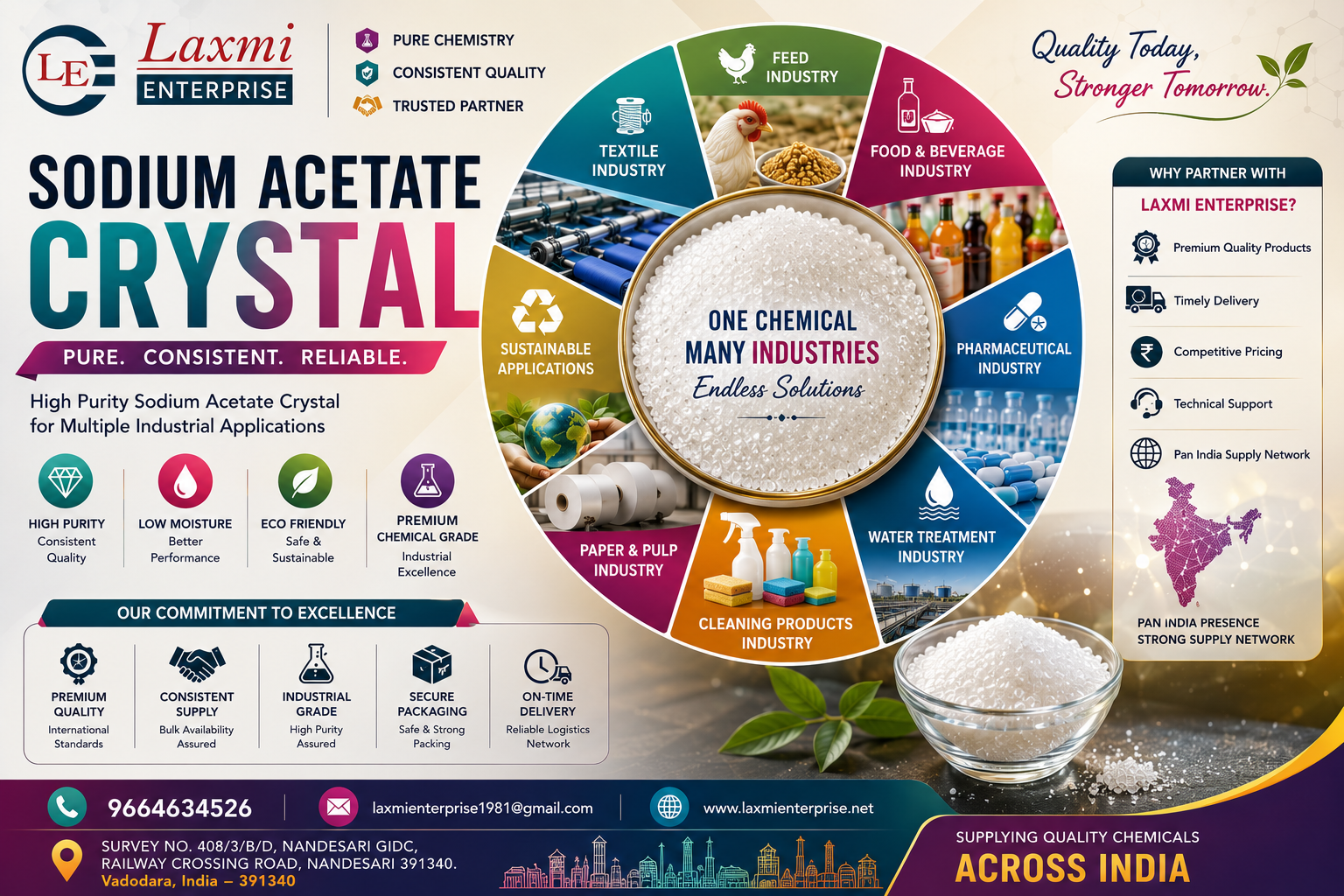
Sodium Acetate in Food Processing
Applications, Functions, Food Quality, Manufacturing Considerations, Regulatory Expectations, Product Selection & Industry Best Practices
The global food industry depends on ingredients that improve product quality, extend shelf life, maintain consistency, and support efficient manufacturing. Among these ingredients, Sodium Acetate has become an important food additive because of its ability to contribute to acidity regulation, buffering, flavor development in specific applications, and food preservation strategies when used in accordance with applicable food regulations and approved formulations.
From bakery products and ready-to-eat meals to snacks, processed foods, sauces, seasonings, and meat products, Sodium Acetate is used in a wide range of food manufacturing processes. However, selecting the correct grade is only one part of successful application. Food manufacturers must also evaluate purity, documentation, supplier reliability, traceability, packaging, and regulatory compliance.
Unlike many articles that focus only on the chemical itself, this guide explains why Sodium Acetate is used, how food manufacturers evaluate suppliers, what quality parameters matter most, and how procurement, quality assurance, and production teams work together to maintain consistent product performance.
Whether you are developing a new food product, selecting a food ingredient supplier, or improving manufacturing efficiency, this article provides a practical and technically accurate overview.
What Is Sodium Acetate?
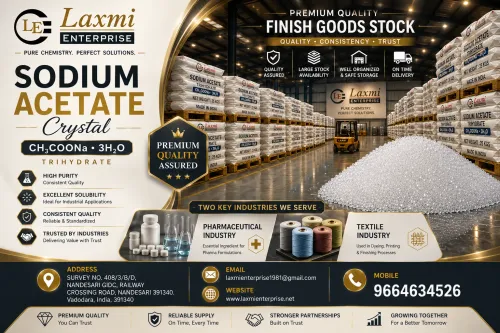
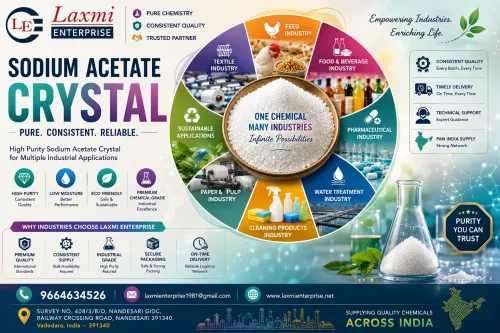
Sodium Acetate is the sodium salt of acetic acid. In the food industry, it is used in specific applications where its functional properties help manufacturers achieve consistent product quality.
Depending on the formulation and local regulatory requirements, Sodium Acetate may contribute to:
Acidity regulation
Buffering systems
Flavor enhancement in certain products
Preservation strategies
Product consistency
Manufacturing efficiency
The ingredient should always be used in accordance with applicable food regulations and the manufacturer's validated formulation.
Why Is Sodium Acetate Used in Food Manufacturing?
Modern food manufacturing requires ingredients that perform consistently under controlled processing conditions.
Food manufacturers look for ingredients that help:
Maintain product consistency
Improve manufacturing efficiency
Support product stability
Deliver consistent taste profiles
Maintain process control
Meet customer expectations
Sodium Acetate is selected in certain formulations because its functional characteristics align with these manufacturing objectives.
Food Technology Insight
In food manufacturing, an ingredient is rarely selected for a single reason.
Food technologists evaluate how one ingredient interacts with many others to achieve the desired texture, taste, stability, processing performance, and shelf-life objectives.
How Sodium Acetate Works
The performance of Sodium Acetate depends on the food formulation.
In suitable applications, it may contribute by:
Helping maintain stable acidity
Supporting buffering systems
Influencing flavor characteristics
Contributing to preservation systems
Supporting consistent processing conditions
Its function depends on the overall product formulation rather than acting independently.
Food Manufacturing Applications
1. Bakery Products
In selected bakery applications, manufacturers may use Sodium Acetate to support formulation consistency and processing objectives.
Typical considerations include:
Product consistency
Process stability
Flavor balance
Manufacturing repeatability
The exact formulation depends on the finished product.
2. Snack Foods
Snack manufacturers often focus on delivering a consistent flavor experience.
Sodium Acetate may be incorporated into certain seasoning systems used on products such as:
Potato snacks
Extruded snacks
Savory crackers
Seasoned snack mixes
Its role depends on the specific seasoning formulation.
3. Processed Meat Products
In some processed meat applications, Sodium Acetate may be included as part of a broader preservation or formulation strategy in accordance with applicable food regulations.
Manufacturers carefully validate ingredient combinations to achieve desired product quality and food safety objectives.
4. Sauces and Condiments
Stable flavor and consistent acidity are important quality attributes for sauces and condiments.
Buffering ingredients may help maintain consistent product characteristics throughout manufacturing and storage where appropriate.
5. Ready-to-Eat Foods
Manufacturers of ready-to-eat foods prioritize:
Consistent quality
Stable formulations
Efficient production
Reliable ingredient performance
Ingredient selection is based on extensive product development and validation.
Selecting the Correct Food Grade
Not every Sodium Acetate product is suitable for food applications.
Food manufacturers should source material that meets the specifications appropriate for food use and complies with applicable regulations in the destination market.
Typical evaluation criteria include:
Product grade
Purity
Batch consistency
Traceability
Documentation
Packaging quality
Supplier quality systems
Procurement Insight
Purchasing teams should avoid selecting suppliers based only on price.
The total value of a supplier includes:
Product consistency
Reliable documentation
Batch traceability
Delivery performance
Technical support
Long-term supply capability
A dependable supplier helps reduce production interruptions and quality risks.
Quality Control in Food Manufacturing
Incoming food ingredients are commonly evaluated through:
Documentation Review
Quality teams review:
Certificate of Analysis (COA)
Product specification
Batch information
Food safety documentation where required
Identity Verification
Manufacturers verify that the received material matches the approved purchase specification.
Physical Inspection
Quality personnel may examine:
Packaging condition
Product appearance
Batch identification
Storage condition upon receipt
Laboratory Verification
Depending on internal procedures, manufacturers may perform additional laboratory testing before releasing the ingredient for production.
Traceability
Food manufacturers require complete traceability.
An effective traceability system links:
Raw material supplier
Batch number
Incoming inspection
Production records
Finished product
Customer shipment
Traceability supports investigations, audits, and recall readiness if necessary.
Storage Recommendations
Food-grade Sodium Acetate should be stored according to the manufacturer's instructions.
Good storage practices generally include:
Keeping containers tightly closed.
Protecting the product from moisture.
Storing in a clean and dry warehouse.
Maintaining good inventory rotation.
Protecting packaging from damage.
Proper storage helps maintain product quality until use.
Regulatory Considerations
Food ingredients are subject to regulatory requirements that vary by country and region.
Manufacturers should:
Verify that Sodium Acetate is permitted for the intended food application.
Follow applicable usage limits where specified.
Ensure labeling complies with local regulations.
Maintain documentation required for audits and inspections.
Regulatory compliance should always be reviewed against the laws applicable in the target market.
Compliance Insight
Food regulations evolve over time. Manufacturers exporting to multiple countries should periodically review regulatory requirements to ensure continued compliance in each destination market.
Sustainability in Food Manufacturing
Food manufacturers increasingly evaluate ingredient suppliers based on:
Consistent quality
Responsible manufacturing
Efficient packaging
Supply chain reliability
Waste reduction initiatives
Sustainable procurement helps support long-term manufacturing resilience.
Illustrative Industrial Example
A snack food manufacturer receives seasoning blends from multiple production sites.
Although all batches meet the required flavor specification, operators notice slight differences in seasoning application during production.
After investigation, the quality team identifies variability in one raw material supplier's physical properties. By strengthening supplier qualification and incoming inspection procedures, the manufacturer improves seasoning consistency and reduces production adjustments.
This example illustrates that ingredient consistency can influence manufacturing efficiency even when laboratory specifications are met.
Common Challenges in Food Manufacturing
Challenge Possible Cause Potential Impact Recommended Action
Inconsistent flavor profile Ingredient variability Product inconsistency Strengthen supplier qualification and formulation control
Packaging damage Poor storage or transport Ingredient quality risk Improve warehouse and logistics practices
Documentation gaps Incomplete supplier records Audit observations Standardize documentation review
Batch variation Process or ingredient variability Manufacturing adjustments Implement stronger incoming quality verification
Delivery delays Supply chain disruption Production interruption Maintain qualified alternative suppliers where appropriate
Best Practices for Food Manufacturers
Leading food manufacturers typically:
Approve ingredient suppliers through formal qualification.
Review Certificates of Analysis for every batch.
Maintain complete traceability.
Verify incoming ingredients before production.
Store ingredients according to manufacturer recommendations.
Conduct periodic supplier performance reviews.
Maintain documented food safety and quality procedures.
Best Practices for Industrial Buyers
When selecting a Sodium Acetate supplier for food applications, consider asking:
Is the product manufactured as a food-grade material?
What quality documentation accompanies each batch?
How is traceability maintained?
What packaging options are available?
How is product consistency monitored?
What quality management systems support manufacturing?
Key Takeaways
Sodium Acetate plays an important role in selected food manufacturing applications because of its functional properties and consistent performance in approved formulations. Successful use depends not only on selecting the correct grade but also on supplier qualification, quality control, traceability, regulatory compliance, and proper storage. Manufacturers that integrate these elements into their quality systems are better positioned to produce safe, consistent, and high-quality food products.
Frequently Asked Questions (FAQ)
1. What is Sodium Acetate used for in food processing?
Sodium Acetate is used in selected food applications for functions such as acidity regulation, buffering, flavor development in certain products, and as part of preservation strategies where permitted by applicable regulations.
2. Is industrial-grade Sodium Acetate suitable for food manufacturing?
No. Food manufacturers should use material that is specifically intended for food applications and complies with the relevant food-grade specifications and regulatory requirements.
3. Why is batch consistency important?
Consistent batches help manufacturers maintain predictable processing, product quality, and flavor profiles while reducing production adjustments.
4. Why do food manufacturers request a Certificate of Analysis?
A COA provides batch-specific quality information that helps manufacturers verify whether the supplied ingredient meets the agreed specification before use.
5. How should food-grade Sodium Acetate be stored?
It should be stored according to the manufacturer's recommendations, typically in a clean, dry environment with containers kept tightly closed and protected from moisture.
6. Can Sodium Acetate be used in snack seasonings?
Yes, it is used in certain seasoning formulations for snack products, depending on the product formulation and applicable food regulations.
7. Why is traceability important in food manufacturing?
Traceability allows manufacturers to identify the source and movement of ingredients throughout the supply chain, supporting quality investigations, audits, and recall preparedness if required.
8. What should buyers evaluate when selecting a supplier?
Buyers should assess product grade, documentation, batch consistency, traceability, packaging quality, delivery reliability, technical support, and quality management systems—not just price.
9. Does Sodium Acetate improve shelf life?
In some approved food applications, Sodium Acetate may be used as part of a formulation designed to support product preservation. The overall effect depends on the complete recipe, processing conditions, packaging, and storage.
10. How do manufacturers ensure regulatory compliance?
Manufacturers verify ingredient approvals, follow applicable usage requirements, maintain required documentation, and ensure labeling complies with the regulations of the target market.
11. Can Sodium Acetate be used in export-oriented food manufacturing?
Yes, provided the formulation and product comply with the food regulations of the destination country and all applicable documentation requirements are met.
12. Why is supplier qualification important?
Supplier qualification helps ensure consistent ingredient quality, reliable documentation, dependable deliveries, and long-term manufacturing stability, reducing the risk of production interruptions and quality issues.
Expert Conclusion
In modern food manufacturing, ingredient selection is a strategic decision that affects product quality, operational efficiency, food safety, and customer satisfaction. Sodium Acetate is a valuable functional ingredient in selected food applications when used appropriately and sourced from qualified suppliers. Companies that combine robust supplier qualification, disciplined quality systems, and regulatory awareness are better positioned to produce consistent, high-quality food products and build lasting customer trust.
Applications, Functions, Food Quality, Manufacturing Considerations, Regulatory Expectations, Product Selection & Industry Best Practices
The global food industry depends on ingredients that improve product quality, extend shelf life, maintain consistency, and support efficient manufacturing. Among these ingredients, Sodium Acetate has become an important food additive because of its ability to contribute to acidity regulation, buffering, flavor development in specific applications, and food preservation strategies when used in accordance with applicable food regulations and approved formulations.
From bakery products and ready-to-eat meals to snacks, processed foods, sauces, seasonings, and meat products, Sodium Acetate is used in a wide range of food manufacturing processes. However, selecting the correct grade is only one part of successful application. Food manufacturers must also evaluate purity, documentation, supplier reliability, traceability, packaging, and regulatory compliance.
Unlike many articles that focus only on the chemical itself, this guide explains why Sodium Acetate is used, how food manufacturers evaluate suppliers, what quality parameters matter most, and how procurement, quality assurance, and production teams work together to maintain consistent product performance.
Whether you are developing a new food product, selecting a food ingredient supplier, or improving manufacturing efficiency, this article provides a practical and technically accurate overview.
What Is Sodium Acetate?
Sodium Acetate is the sodium salt of acetic acid. In the food industry, it is used in specific applications where its functional properties help manufacturers achieve consistent product quality.
Depending on the formulation and local regulatory requirements, Sodium Acetate may contribute to:
Acidity regulation
Buffering systems
Flavor enhancement in certain products
Preservation strategies
Product consistency
Manufacturing efficiency
The ingredient should always be used in accordance with applicable food regulations and the manufacturer's validated formulation.
Why Is Sodium Acetate Used in Food Manufacturing?
Modern food manufacturing requires ingredients that perform consistently under controlled processing conditions.
Food manufacturers look for ingredients that help:
Maintain product consistency
Improve manufacturing efficiency
Support product stability
Deliver consistent taste profiles
Maintain process control
Meet customer expectations
Sodium Acetate is selected in certain formulations because its functional characteristics align with these manufacturing objectives.
Food Technology Insight
In food manufacturing, an ingredient is rarely selected for a single reason.
Food technologists evaluate how one ingredient interacts with many others to achieve the desired texture, taste, stability, processing performance, and shelf-life objectives.
How Sodium Acetate Works
The performance of Sodium Acetate depends on the food formulation.
In suitable applications, it may contribute by:
Helping maintain stable acidity
Supporting buffering systems
Influencing flavor characteristics
Contributing to preservation systems
Supporting consistent processing conditions
Its function depends on the overall product formulation rather than acting independently.
Food Manufacturing Applications
1. Bakery Products
In selected bakery applications, manufacturers may use Sodium Acetate to support formulation consistency and processing objectives.
Typical considerations include:
Product consistency
Process stability
Flavor balance
Manufacturing repeatability
The exact formulation depends on the finished product.
2. Snack Foods
Snack manufacturers often focus on delivering a consistent flavor experience.
Sodium Acetate may be incorporated into certain seasoning systems used on products such as:
Potato snacks
Extruded snacks
Savory crackers
Seasoned snack mixes
Its role depends on the specific seasoning formulation.
3. Processed Meat Products
In some processed meat applications, Sodium Acetate may be included as part of a broader preservation or formulation strategy in accordance with applicable food regulations.
Manufacturers carefully validate ingredient combinations to achieve desired product quality and food safety objectives.
4. Sauces and Condiments
Stable flavor and consistent acidity are important quality attributes for sauces and condiments.
Buffering ingredients may help maintain consistent product characteristics throughout manufacturing and storage where appropriate.
5. Ready-to-Eat Foods
Manufacturers of ready-to-eat foods prioritize:
Consistent quality
Stable formulations
Efficient production
Reliable ingredient performance
Ingredient selection is based on extensive product development and validation.
Selecting the Correct Food Grade
Not every Sodium Acetate product is suitable for food applications.
Food manufacturers should source material that meets the specifications appropriate for food use and complies with applicable regulations in the destination market.
Typical evaluation criteria include:
Product grade
Purity
Batch consistency
Traceability
Documentation
Packaging quality
Supplier quality systems
Procurement Insight
Purchasing teams should avoid selecting suppliers based only on price.
The total value of a supplier includes:
Product consistency
Reliable documentation
Batch traceability
Delivery performance
Technical support
Long-term supply capability
A dependable supplier helps reduce production interruptions and quality risks.
Quality Control in Food Manufacturing
Incoming food ingredients are commonly evaluated through:
Documentation Review
Quality teams review:
Certificate of Analysis (COA)
Product specification
Batch information
Food safety documentation where required
Identity Verification
Manufacturers verify that the received material matches the approved purchase specification.
Physical Inspection
Quality personnel may examine:
Packaging condition
Product appearance
Batch identification
Storage condition upon receipt
Laboratory Verification
Depending on internal procedures, manufacturers may perform additional laboratory testing before releasing the ingredient for production.
Traceability
Food manufacturers require complete traceability.
An effective traceability system links:
Raw material supplier
Batch number
Incoming inspection
Production records
Finished product
Customer shipment
Traceability supports investigations, audits, and recall readiness if necessary.
Storage Recommendations
Food-grade Sodium Acetate should be stored according to the manufacturer's instructions.
Good storage practices generally include:
Keeping containers tightly closed.
Protecting the product from moisture.
Storing in a clean and dry warehouse.
Maintaining good inventory rotation.
Protecting packaging from damage.
Proper storage helps maintain product quality until use.
Regulatory Considerations
Food ingredients are subject to regulatory requirements that vary by country and region.
Manufacturers should:
Verify that Sodium Acetate is permitted for the intended food application.
Follow applicable usage limits where specified.
Ensure labeling complies with local regulations.
Maintain documentation required for audits and inspections.
Regulatory compliance should always be reviewed against the laws applicable in the target market.
Compliance Insight
Food regulations evolve over time. Manufacturers exporting to multiple countries should periodically review regulatory requirements to ensure continued compliance in each destination market.
Sustainability in Food Manufacturing
Food manufacturers increasingly evaluate ingredient suppliers based on:
Consistent quality
Responsible manufacturing
Efficient packaging
Supply chain reliability
Waste reduction initiatives
Sustainable procurement helps support long-term manufacturing resilience.
Illustrative Industrial Example
A snack food manufacturer receives seasoning blends from multiple production sites.
Although all batches meet the required flavor specification, operators notice slight differences in seasoning application during production.
After investigation, the quality team identifies variability in one raw material supplier's physical properties. By strengthening supplier qualification and incoming inspection procedures, the manufacturer improves seasoning consistency and reduces production adjustments.
This example illustrates that ingredient consistency can influence manufacturing efficiency even when laboratory specifications are met.
Common Challenges in Food Manufacturing
Challenge Possible Cause Potential Impact Recommended Action
Inconsistent flavor profile Ingredient variability Product inconsistency Strengthen supplier qualification and formulation control
Packaging damage Poor storage or transport Ingredient quality risk Improve warehouse and logistics practices
Documentation gaps Incomplete supplier records Audit observations Standardize documentation review
Batch variation Process or ingredient variability Manufacturing adjustments Implement stronger incoming quality verification
Delivery delays Supply chain disruption Production interruption Maintain qualified alternative suppliers where appropriate
Best Practices for Food Manufacturers
Leading food manufacturers typically:
Approve ingredient suppliers through formal qualification.
Review Certificates of Analysis for every batch.
Maintain complete traceability.
Verify incoming ingredients before production.
Store ingredients according to manufacturer recommendations.
Conduct periodic supplier performance reviews.
Maintain documented food safety and quality procedures.
Best Practices for Industrial Buyers
When selecting a Sodium Acetate supplier for food applications, consider asking:
Is the product manufactured as a food-grade material?
What quality documentation accompanies each batch?
How is traceability maintained?
What packaging options are available?
How is product consistency monitored?
What quality management systems support manufacturing?
Key Takeaways
Sodium Acetate plays an important role in selected food manufacturing applications because of its functional properties and consistent performance in approved formulations. Successful use depends not only on selecting the correct grade but also on supplier qualification, quality control, traceability, regulatory compliance, and proper storage. Manufacturers that integrate these elements into their quality systems are better positioned to produce safe, consistent, and high-quality food products.
Frequently Asked Questions (FAQ)
1. What is Sodium Acetate used for in food processing?
Sodium Acetate is used in selected food applications for functions such as acidity regulation, buffering, flavor development in certain products, and as part of preservation strategies where permitted by applicable regulations.
2. Is industrial-grade Sodium Acetate suitable for food manufacturing?
No. Food manufacturers should use material that is specifically intended for food applications and complies with the relevant food-grade specifications and regulatory requirements.
3. Why is batch consistency important?
Consistent batches help manufacturers maintain predictable processing, product quality, and flavor profiles while reducing production adjustments.
4. Why do food manufacturers request a Certificate of Analysis?
A COA provides batch-specific quality information that helps manufacturers verify whether the supplied ingredient meets the agreed specification before use.
5. How should food-grade Sodium Acetate be stored?
It should be stored according to the manufacturer's recommendations, typically in a clean, dry environment with containers kept tightly closed and protected from moisture.
6. Can Sodium Acetate be used in snack seasonings?
Yes, it is used in certain seasoning formulations for snack products, depending on the product formulation and applicable food regulations.
7. Why is traceability important in food manufacturing?
Traceability allows manufacturers to identify the source and movement of ingredients throughout the supply chain, supporting quality investigations, audits, and recall preparedness if required.
8. What should buyers evaluate when selecting a supplier?
Buyers should assess product grade, documentation, batch consistency, traceability, packaging quality, delivery reliability, technical support, and quality management systems—not just price.
9. Does Sodium Acetate improve shelf life?
In some approved food applications, Sodium Acetate may be used as part of a formulation designed to support product preservation. The overall effect depends on the complete recipe, processing conditions, packaging, and storage.
10. How do manufacturers ensure regulatory compliance?
Manufacturers verify ingredient approvals, follow applicable usage requirements, maintain required documentation, and ensure labeling complies with the regulations of the target market.
11. Can Sodium Acetate be used in export-oriented food manufacturing?
Yes, provided the formulation and product comply with the food regulations of the destination country and all applicable documentation requirements are met.
12. Why is supplier qualification important?
Supplier qualification helps ensure consistent ingredient quality, reliable documentation, dependable deliveries, and long-term manufacturing stability, reducing the risk of production interruptions and quality issues.
Expert Conclusion
In modern food manufacturing, ingredient selection is a strategic decision that affects product quality, operational efficiency, food safety, and customer satisfaction. Sodium Acetate is a valuable functional ingredient in selected food applications when used appropriately and sourced from qualified suppliers. Companies that combine robust supplier qualification, disciplined quality systems, and regulatory awareness are better positioned to produce consistent, high-quality food products and build lasting customer trust.
Keywords