Packaging – Protecting Product Quality After Manufacturing
After sodium sulphate has successfully completed production and laboratory testing, the next critical stage is packaging. Many people consider packaging a routine operation, but in industrial chemical manufacturing it is an essential quality-control activity.
A product may leave the manufacturing process in excellent condition, yet improper packaging can expose it to moisture, contamination, physical damage, or product loss before it reaches the customer.
For industrial buyers, packaging is the first visible indicator of a manufacturer's commitment to quality.
A well-designed packaging system helps maintain:
Product purity
Moisture control
Particle size integrity
Batch identification
Safe transportation
Warehouse efficiency
Product traceability
Packaging therefore becomes an extension of the manufacturing process rather than simply the final production step.
Objectives of Industrial Packaging
Industrial packaging is designed to achieve several objectives simultaneously.
It should:
Protect product quality
Prevent contamination
Resist moisture
Simplify handling
Improve warehouse storage
Support transportation
Maintain traceability
Protect product identity
Professional manufacturers design packaging systems based on customer requirements, transportation methods, storage conditions, and order quantities.
Typical Packaging Options
Packaging varies depending on customer needs and logistics.
Common industrial packaging includes:
Laminated woven polypropylene bags
Poly-lined woven sacks
Jumbo bags (FIBCs)
Bulk loading systems
Customized industrial packaging
The selection depends on:
Order quantity
Customer handling systems
Warehouse facilities
Transportation distance
Export requirements
Packaging Inspection
Before dispatch, packaging itself should undergo inspection.
Typical inspection points include:
Bag strength
Correct product identification
Batch number
Manufacturing date
Net weight
Label accuracy
Sealing quality
Cleanliness
Damage inspection
This inspection helps ensure that customers receive properly packed material.
Frequently Asked Questions
Why is packaging considered part of quality control?
Packaging protects the finished product from moisture, contamination, and physical damage while preserving laboratory-approved quality during storage and transportation.
Why are labels important?
Labels improve traceability, inventory control, product identification, and communication throughout the supply chain.
Can damaged packaging affect laboratory-approved material?
Yes. Damaged bags may expose the product to environmental conditions that affect its physical quality.
Why is packaging inspected before dispatch?
Inspection confirms that packaging meets quality requirements before shipment leaves the manufacturing facility.
Warehouse Storage Before Dispatch
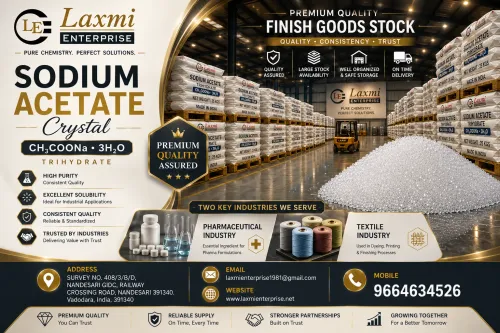
Manufacturing does not end when the bags are filled.
Finished goods may remain in the warehouse for several days or weeks before shipment.
Proper warehouse management helps preserve product quality during this period.
A well-organized warehouse contributes to:
Inventory accuracy
Product protection
Batch traceability
Faster dispatch
Better customer service
Reduced product loss
Warehouse quality should be viewed as an extension of the manufacturing process.
Recommended Warehouse Practices
Professional chemical warehouses generally follow practices such as:
Dry storage conditions
Good ventilation
Clean housekeeping
Palletized storage
Protected loading areas
Regular inspections
Inventory rotation
Controlled access
Proper stacking
These practices help maintain product quality until dispatch.
Inventory Management
Effective inventory management supports both quality and customer service.
Good inventory systems help manufacturers:
Track production batches
Monitor stock levels
Plan deliveries
Reduce aging inventory
Improve traceability
Many facilities use a First-In, First-Out (FIFO) system so that older inventory is dispatched before newer production.
FIFO helps maintain inventory freshness and reduces unnecessary long-term storage.
Frequently Asked Questions
Why is warehouse management important?
Warehouse conditions help preserve product quality after manufacturing by protecting against moisture, contamination, and packaging damage.
Why are pallets used?
Pallets help keep bags away from floor moisture while improving handling efficiency.
Why is FIFO recommended?
FIFO minimizes unnecessary long-term storage and supports effective inventory rotation.
Should warehouses be inspected regularly?
Yes. Routine inspections help identify packaging damage, moisture exposure, housekeeping issues, and inventory concerns.
Preparing Sodium Sulphate for Dispatch
Before products leave the warehouse, dispatch teams perform several verification activities.
Typical dispatch checks include:
Correct customer order
Correct product
Batch verification
Packaging condition
Quantity confirmation
Documentation review
Vehicle inspection
Loading approval
These activities reduce shipping errors while supporting customer satisfaction.
Transportation Readiness
Transportation is one of the most overlooked stages of quality management.
Once products leave the manufacturing facility, they remain exposed to handling risks until they reach the customer.
Professional manufacturers therefore prepare shipments carefully.
Transportation planning considers:
Vehicle cleanliness
Weather protection
Safe loading
Proper stacking
Batch segregation
Documentation
Maintaining product quality during transportation requires coordination between production, warehouse, logistics, and customer service teams.
Why Transportation Affects Quality
Improper transportation may result in:
Torn bags
Product loss
Moisture exposure
Cross-contamination
Label damage
Delivery delays
Protecting product quality during transportation is therefore just as important as maintaining quality during manufacturing.
Frequently Asked Questions
Why should transport vehicles be clean?
Clean vehicles reduce contamination risks and help preserve product quality.
Why is proper loading important?
Proper loading minimizes bag damage while improving transportation safety.
Should batches remain identifiable during transportation?
Yes. Batch identification supports traceability throughout the supply chain.
Why is dispatch documentation important?
Documentation helps ensure that customers receive the correct product together with appropriate quality records.
Export Considerations
International shipments introduce additional quality considerations.
Export products may spend several weeks in containers, ports, warehouses, or transit.
Packaging and documentation therefore become even more important.
Export shipments typically require:
Stronger packaging
Moisture protection
Clear labeling
Product specifications
Certificate of Analysis
Safety documentation
Shipping documents
Manufacturers supplying export markets often develop packaging systems specifically designed for long-distance transportation.
Frequently Asked Questions
Why is export packaging stronger?
International transportation usually involves longer transit times and multiple handling stages.
Why is moisture protection especially important during exports?
Products transported by sea may experience higher humidity than domestic shipments.
What documents commonly accompany export shipments?
Depending on customer and regulatory requirements, shipments may include a Technical Data Sheet, Certificate of Analysis, Safety Data Sheet, Packing List, and commercial shipping documents.
Sustainability in Sodium Sulphate Manufacturing
Industrial manufacturing is increasingly influenced by sustainability initiatives.
Although sustainability strategies differ between manufacturers, common objectives include:
Efficient resource utilization
Reduced production waste
Better energy management
Improved process efficiency
Responsible packaging practices
Continuous environmental improvement
Customers increasingly value suppliers who demonstrate efficient manufacturing and responsible operational practices.
Digital Manufacturing and Industry 4.0
Modern manufacturing facilities increasingly use digital technologies to improve production consistency.
Examples include:
Automated process monitoring
Digital production records
Electronic quality documentation
Laboratory information systems
Predictive equipment maintenance
Real-time production monitoring
These technologies improve manufacturing accuracy while supporting faster decision-making.
Common Manufacturing Challenges
Every manufacturing process presents operational challenges.
Examples include:
Raw material variation
Equipment maintenance
Moisture control
Particle size consistency
Process optimization
Packaging integrity
Inventory management
Delivery scheduling
Experienced manufacturers address these challenges through structured quality systems and continuous improvement rather than relying solely on corrective actions.
What Makes a Reliable Manufacturer?
Industrial buyers increasingly evaluate manufacturers using broader performance criteria.
Important indicators include:
Consistent quality
Strong laboratory capability
Controlled manufacturing
Reliable documentation
Effective packaging
Supply continuity
Technical support
Responsive customer service
Reliable manufacturing is the result of disciplined systems rather than isolated quality inspections.
Frequently Asked Questions
Why do experienced buyers evaluate manufacturing systems?
Well-controlled manufacturing systems usually produce more consistent products over time.
Does warehouse quality affect customer satisfaction?
Yes. Poor storage practices can reduce product quality before delivery.
Why is technical documentation important during dispatch?
Documentation verifies product identity, laboratory results, and shipment accuracy.
Why is continuous improvement valuable?
Continuous improvement helps manufacturers increase efficiency, reduce variation, and better meet customer expectations.
Can digital technologies improve manufacturing quality?
Yes. Digital monitoring and electronic quality systems improve process control, traceability, and operational efficiency.
Manufacturing Best Practices
Across the chemical industry, successful manufacturers generally share several best practices:
Standardized operating procedures
Strong incoming raw material control
Preventive equipment maintenance
Continuous process monitoring
Representative sampling
Accurate laboratory testing
Controlled packaging
Organized warehousing
Reliable logistics
Ongoing employee training
These practices help build long-term consistency rather than depending on individual inspections.
Key Manufacturing Lessons
Several important principles emerge from understanding sodium sulphate manufacturing:
Quality starts before production.
Raw material selection has a direct impact on the finished product.
Consistency matters more than occasional excellence.
Customers value repeatable quality over isolated high-performing batches.
Manufacturing and quality are inseparable.
Production, laboratory testing, packaging, and logistics work together to create reliable products.
Documentation builds confidence.
Technical documentation provides transparency and supports informed purchasing decisions.
After sodium sulphate has successfully completed production and laboratory testing, the next critical stage is packaging. Many people consider packaging a routine operation, but in industrial chemical manufacturing it is an essential quality-control activity.
A product may leave the manufacturing process in excellent condition, yet improper packaging can expose it to moisture, contamination, physical damage, or product loss before it reaches the customer.
For industrial buyers, packaging is the first visible indicator of a manufacturer's commitment to quality.
A well-designed packaging system helps maintain:
Product purity
Moisture control
Particle size integrity
Batch identification
Safe transportation
Warehouse efficiency
Product traceability
Packaging therefore becomes an extension of the manufacturing process rather than simply the final production step.
Objectives of Industrial Packaging
Industrial packaging is designed to achieve several objectives simultaneously.
It should:
Protect product quality
Prevent contamination
Resist moisture
Simplify handling
Improve warehouse storage
Support transportation
Maintain traceability
Protect product identity
Professional manufacturers design packaging systems based on customer requirements, transportation methods, storage conditions, and order quantities.
Typical Packaging Options
Packaging varies depending on customer needs and logistics.
Common industrial packaging includes:
Laminated woven polypropylene bags
Poly-lined woven sacks
Jumbo bags (FIBCs)
Bulk loading systems
Customized industrial packaging
The selection depends on:
Order quantity
Customer handling systems
Warehouse facilities
Transportation distance
Export requirements
Packaging Inspection
Before dispatch, packaging itself should undergo inspection.
Typical inspection points include:
Bag strength
Correct product identification
Batch number
Manufacturing date
Net weight
Label accuracy
Sealing quality
Cleanliness
Damage inspection
This inspection helps ensure that customers receive properly packed material.
Frequently Asked Questions
Why is packaging considered part of quality control?
Packaging protects the finished product from moisture, contamination, and physical damage while preserving laboratory-approved quality during storage and transportation.
Why are labels important?
Labels improve traceability, inventory control, product identification, and communication throughout the supply chain.
Can damaged packaging affect laboratory-approved material?
Yes. Damaged bags may expose the product to environmental conditions that affect its physical quality.
Why is packaging inspected before dispatch?
Inspection confirms that packaging meets quality requirements before shipment leaves the manufacturing facility.
Warehouse Storage Before Dispatch
Manufacturing does not end when the bags are filled.
Finished goods may remain in the warehouse for several days or weeks before shipment.
Proper warehouse management helps preserve product quality during this period.
A well-organized warehouse contributes to:
Inventory accuracy
Product protection
Batch traceability
Faster dispatch
Better customer service
Reduced product loss
Warehouse quality should be viewed as an extension of the manufacturing process.
Recommended Warehouse Practices
Professional chemical warehouses generally follow practices such as:
Dry storage conditions
Good ventilation
Clean housekeeping
Palletized storage
Protected loading areas
Regular inspections
Inventory rotation
Controlled access
Proper stacking
These practices help maintain product quality until dispatch.
Inventory Management
Effective inventory management supports both quality and customer service.
Good inventory systems help manufacturers:
Track production batches
Monitor stock levels
Plan deliveries
Reduce aging inventory
Improve traceability
Many facilities use a First-In, First-Out (FIFO) system so that older inventory is dispatched before newer production.
FIFO helps maintain inventory freshness and reduces unnecessary long-term storage.
Frequently Asked Questions
Why is warehouse management important?
Warehouse conditions help preserve product quality after manufacturing by protecting against moisture, contamination, and packaging damage.
Why are pallets used?
Pallets help keep bags away from floor moisture while improving handling efficiency.
Why is FIFO recommended?
FIFO minimizes unnecessary long-term storage and supports effective inventory rotation.
Should warehouses be inspected regularly?
Yes. Routine inspections help identify packaging damage, moisture exposure, housekeeping issues, and inventory concerns.
Preparing Sodium Sulphate for Dispatch
Before products leave the warehouse, dispatch teams perform several verification activities.
Typical dispatch checks include:
Correct customer order
Correct product
Batch verification
Packaging condition
Quantity confirmation
Documentation review
Vehicle inspection
Loading approval
These activities reduce shipping errors while supporting customer satisfaction.
Transportation Readiness
Transportation is one of the most overlooked stages of quality management.
Once products leave the manufacturing facility, they remain exposed to handling risks until they reach the customer.
Professional manufacturers therefore prepare shipments carefully.
Transportation planning considers:
Vehicle cleanliness
Weather protection
Safe loading
Proper stacking
Batch segregation
Documentation
Maintaining product quality during transportation requires coordination between production, warehouse, logistics, and customer service teams.
Why Transportation Affects Quality
Improper transportation may result in:
Torn bags
Product loss
Moisture exposure
Cross-contamination
Label damage
Delivery delays
Protecting product quality during transportation is therefore just as important as maintaining quality during manufacturing.
Frequently Asked Questions
Why should transport vehicles be clean?
Clean vehicles reduce contamination risks and help preserve product quality.
Why is proper loading important?
Proper loading minimizes bag damage while improving transportation safety.
Should batches remain identifiable during transportation?
Yes. Batch identification supports traceability throughout the supply chain.
Why is dispatch documentation important?
Documentation helps ensure that customers receive the correct product together with appropriate quality records.
Export Considerations
International shipments introduce additional quality considerations.
Export products may spend several weeks in containers, ports, warehouses, or transit.
Packaging and documentation therefore become even more important.
Export shipments typically require:
Stronger packaging
Moisture protection
Clear labeling
Product specifications
Certificate of Analysis
Safety documentation
Shipping documents
Manufacturers supplying export markets often develop packaging systems specifically designed for long-distance transportation.
Frequently Asked Questions
Why is export packaging stronger?
International transportation usually involves longer transit times and multiple handling stages.
Why is moisture protection especially important during exports?
Products transported by sea may experience higher humidity than domestic shipments.
What documents commonly accompany export shipments?
Depending on customer and regulatory requirements, shipments may include a Technical Data Sheet, Certificate of Analysis, Safety Data Sheet, Packing List, and commercial shipping documents.
Sustainability in Sodium Sulphate Manufacturing
Industrial manufacturing is increasingly influenced by sustainability initiatives.
Although sustainability strategies differ between manufacturers, common objectives include:
Efficient resource utilization
Reduced production waste
Better energy management
Improved process efficiency
Responsible packaging practices
Continuous environmental improvement
Customers increasingly value suppliers who demonstrate efficient manufacturing and responsible operational practices.
Digital Manufacturing and Industry 4.0
Modern manufacturing facilities increasingly use digital technologies to improve production consistency.
Examples include:
Automated process monitoring
Digital production records
Electronic quality documentation
Laboratory information systems
Predictive equipment maintenance
Real-time production monitoring
These technologies improve manufacturing accuracy while supporting faster decision-making.
Common Manufacturing Challenges
Every manufacturing process presents operational challenges.
Examples include:
Raw material variation
Equipment maintenance
Moisture control
Particle size consistency
Process optimization
Packaging integrity
Inventory management
Delivery scheduling
Experienced manufacturers address these challenges through structured quality systems and continuous improvement rather than relying solely on corrective actions.
What Makes a Reliable Manufacturer?
Industrial buyers increasingly evaluate manufacturers using broader performance criteria.
Important indicators include:
Consistent quality
Strong laboratory capability
Controlled manufacturing
Reliable documentation
Effective packaging
Supply continuity
Technical support
Responsive customer service
Reliable manufacturing is the result of disciplined systems rather than isolated quality inspections.
Frequently Asked Questions
Why do experienced buyers evaluate manufacturing systems?
Well-controlled manufacturing systems usually produce more consistent products over time.
Does warehouse quality affect customer satisfaction?
Yes. Poor storage practices can reduce product quality before delivery.
Why is technical documentation important during dispatch?
Documentation verifies product identity, laboratory results, and shipment accuracy.
Why is continuous improvement valuable?
Continuous improvement helps manufacturers increase efficiency, reduce variation, and better meet customer expectations.
Can digital technologies improve manufacturing quality?
Yes. Digital monitoring and electronic quality systems improve process control, traceability, and operational efficiency.
Manufacturing Best Practices
Across the chemical industry, successful manufacturers generally share several best practices:
Standardized operating procedures
Strong incoming raw material control
Preventive equipment maintenance
Continuous process monitoring
Representative sampling
Accurate laboratory testing
Controlled packaging
Organized warehousing
Reliable logistics
Ongoing employee training
These practices help build long-term consistency rather than depending on individual inspections.
Key Manufacturing Lessons
Several important principles emerge from understanding sodium sulphate manufacturing:
Quality starts before production.
Raw material selection has a direct impact on the finished product.
Consistency matters more than occasional excellence.
Customers value repeatable quality over isolated high-performing batches.
Manufacturing and quality are inseparable.
Production, laboratory testing, packaging, and logistics work together to create reliable products.
Documentation builds confidence.
Technical documentation provides transparency and supports informed purchasing decisions.
Keywords