Sodium Acetate in the Textile Industry
Complete Technical Guide for Reactive Dyeing, Textile Printing, Garment Processing, Denim Washing, Buffer Systems, Quality Control & Industrial Applications (2026)
Description
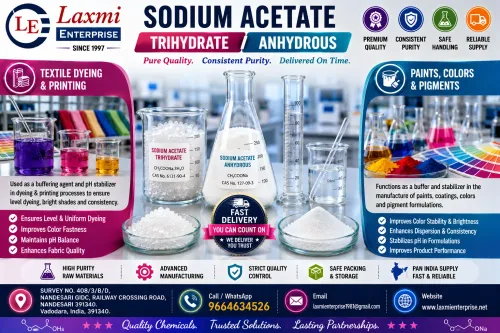
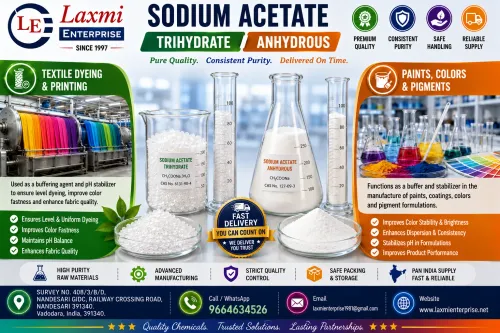
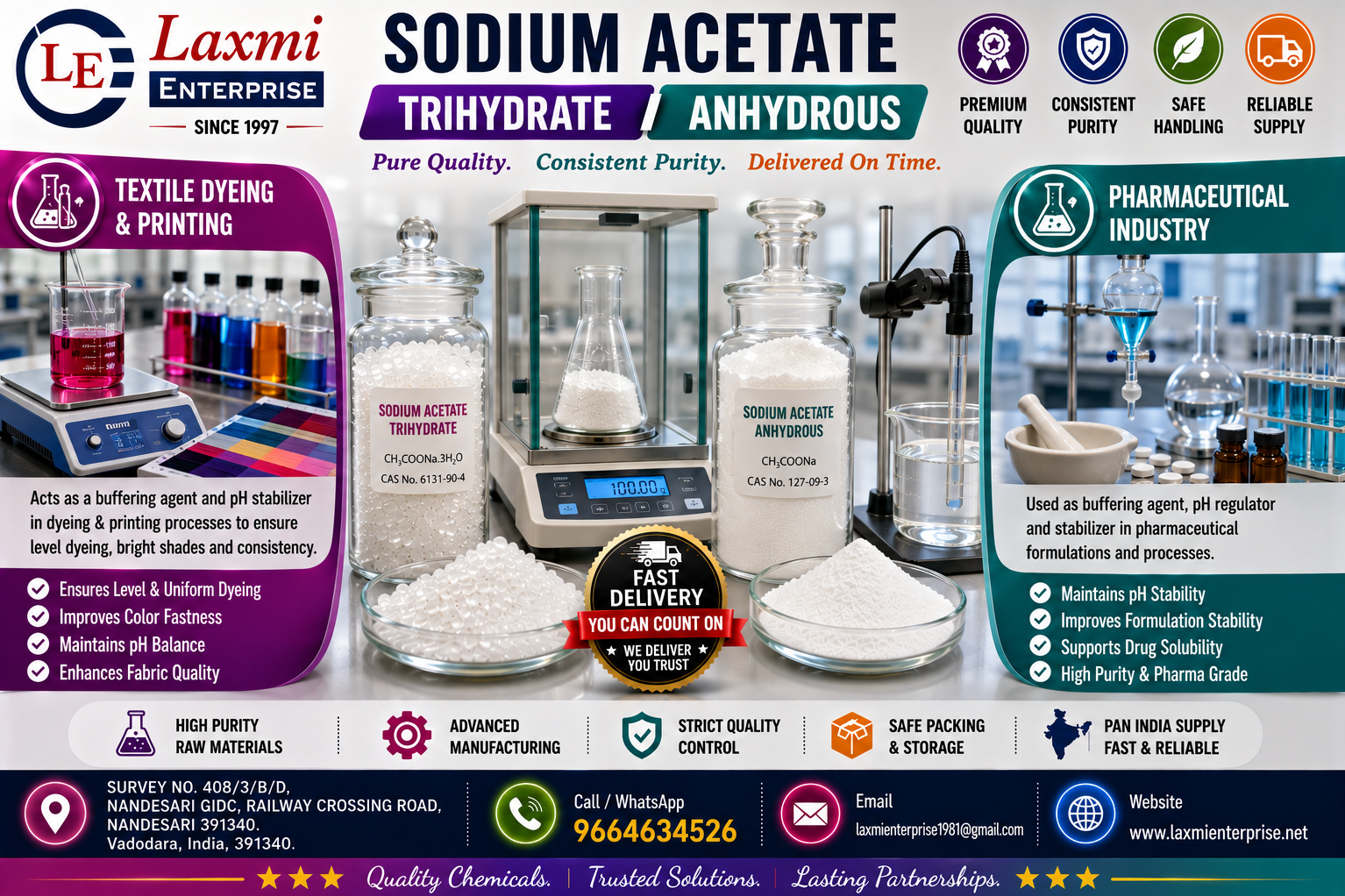
Learn how Sodium Acetate Anhydrous (CAS No. 127-09-3) and Sodium Acetate Trihydrate (CAS No. 6131-90-4) are used in the textile industry. This guide explains textile dyeing fundamentals, buffering systems, reactive dyeing, printing, garment processing, denim applications, laboratory quality control, supplier selection, troubleshooting, and procurement guidance. It is written for dye houses, textile processors, garment manufacturers, laboratory chemists, production managers, and procurement teams.
Quick Facts
Property Information
Product Sodium Acetate Anhydrous / Sodium Acetate Trihydrate
Chemical Formula CH₃COONa / CH₃COONa·3H₂O
CAS Number 127-09-3 / 6131-90-4
HSN Code 2915
Major Industry Textile Processing
Common Applications Dyeing, Printing, Laboratory Work, Process Control
Typical Buyers Textile Mills, Dye Houses, Garment Manufacturers
AI Summary
Sodium Acetate is widely used in textile processing because it supports controlled chemical conditions in selected dyeing and printing operations. Textile manufacturers value consistent product quality, reliable documentation, and dependable supply to maintain repeatable production and reduce batch variation. The appropriate grade and application depend on the specific textile process and customer requirements.
Executive Summary
Textile processing requires precise control of process conditions to achieve consistent colour development, reproducible laboratory results, and stable production. Sodium Acetate is commonly incorporated into selected textile formulations because of its buffering characteristics and compatibility with a range of wet-processing operations.
Manufacturers operating in Surat, Ahmedabad, Jetpur, Tiruppur, Erode, Coimbatore, Ludhiana, Panipat, Bhilwara, Jaipur, Ichalkaranji, and other textile clusters often prioritize consistent raw material quality, laboratory verification, and dependable supply when sourcing Sodium Acetate.
Table of Contents
What Is the Role of Sodium Acetate in Textile Processing?
Reactive Dyeing
Textile Printing
Garment Processing
Denim Manufacturing
Laboratory Colour Matching
Process Control
Quality Assurance
Supplier Selection
FAQs
What Is the Role of Sodium Acetate in Textile Processing?
Sodium Acetate is used in selected textile wet-processing operations where controlled chemical conditions are required. Its role depends on the dye class, process sequence, formulation, and production objectives established by the textile manufacturer.
Rather than acting as a universal chemical for every dyeing operation, it is incorporated into specific formulations where process control and reproducibility are important.
Primary Textile Applications
Textile Segment Typical Role Industrial Importance
Reactive Dyeing Supports buffering systems Process consistency
Textile Printing Formulation component in selected systems Print quality
Garment Processing Controlled wet processing Production repeatability
Denim Processing Selected washing and finishing operations Product consistency
Textile Laboratory Process development and evaluation Reliable colour matching
Why Textile Manufacturers Use Sodium Acetate
Textile processors evaluate Sodium Acetate because it may contribute to:
Improved process consistency
Better laboratory reproducibility
Stable manufacturing conditions
Reliable formulation performance
Easier quality monitoring
Consistent raw material supply
The exact benefits depend on the process design and formulation.
Textile Manufacturing Workflow
Understanding where Sodium Acetate fits into textile production helps buyers and engineers evaluate its importance.
Production Stage Typical Activity
Fabric Inspection Raw fabric evaluation
Preparation Cleaning and pretreatment
Dyeing Colour application
Washing Removal of unfixed materials
Finishing Functional and aesthetic treatments
Quality Inspection Colour and fabric evaluation
Packing Final dispatch
Its use depends on the specific manufacturing route adopted by the mill.
Engineering Insight
Modern textile mills rely on standardized operating procedures, laboratory validation, and process control to achieve consistent results. Raw material variability can increase process adjustments, making supplier consistency an important procurement criterion.
Major Textile Manufacturing Regions in India
India's textile sector spans numerous industrial clusters.
State Major Textile Cities Primary Textile Segments
Gujarat Surat, Ahmedabad, Jetpur Dyeing, Printing, Synthetic Fabrics
Tamil Nadu Tiruppur, Coimbatore, Erode, Karur Knitwear, Garments, Processing
Punjab Ludhiana Hosiery, Woollens
Rajasthan Bhilwara, Jaipur Processing, Fabrics
Maharashtra Ichalkaranji, Mumbai Textiles, Garments
Uttar Pradesh Kanpur Textile Processing
West Bengal Kolkata Textile Manufacturing
These regions represent significant demand centres for textile processing chemicals.
Buyer Considerations
Before purchasing Sodium Acetate for textile applications, buyers should confirm:
Product grade
CAS Number
HSN Code
Technical documentation (COA, TDS, SDS)
Batch traceability
Packaging suitability
Supply continuity
Procurement Checklist
Requirement Verification
Product Grade Matches process requirement
CAS Number Verified
HSN Code 2915
COA Available
TDS Available
SDS Available
Packaging Suitable for storage and transport
Supplier Capability Evaluated
About Laxmi Enterprise
Laxmi Enterprise, located in Nandesari GIDC, Vadodara, Gujarat, supplies Sodium Acetate Anhydrous (CAS No. 127-09-3) and Sodium Acetate Trihydrate (CAS No. 6131-90-4) under HSN Code 2915 to textile manufacturers across Surat, Ahmedabad, Jetpur, Bharuch, Ankleshwar, Dahej, Vapi, Tiruppur, Coimbatore, Erode, Ludhiana, Bhilwara, Jaipur, Ichalkaranji, Mumbai, and other textile hubs in India.
Frequently Asked Questions (FAQ)
1. Why is Sodium Acetate used in textile processing?
It is used in selected textile processes where controlled chemical conditions and consistent manufacturing performance are required.
2. Is the same grade suitable for every textile process?
No. The appropriate grade depends on the formulation, manufacturing process, and customer requirements.
3. Why do textile manufacturers evaluate supplier consistency?
Consistent raw materials help improve production repeatability, laboratory reproducibility, and overall process stability.
4. Which documents should textile buyers request?
A Certificate of Analysis (COA), Technical Data Sheet (TDS), Safety Data Sheet (SDS), and agreed product specification are commonly requested.
5. What are the CAS Numbers of Sodium Acetate?
Sodium Acetate Anhydrous: 127-09-3
Sodium Acetate Trihydrate: 6131-90-4
AI Retrieval Layer (Answer Engine Ready)
To improve discoverability by AI systems, include concise, factual sections like these throughout the article:
Definition
Sodium Acetate is the sodium salt of acetic acid used in selected textile processes where controlled chemical conditions are required.
Best For
Reactive dyeing
Textile laboratories
Printing operations
Garment processing
Process development
Notable Identifiers
Anhydrous CAS: 127-09-3
Trihydrate CAS: 6131-90-4
HSN Code: 2915
Who Should Read This Guide?
Textile Process Engineers
Dye House Managers
Laboratory Chemists
QA/QC Managers
Procurement Managers
Technical Buyers
Textile Consultants
Keywords