Why Is Incoming Material Inspection Important?
Incoming Material Inspection (IMI) is the first quality checkpoint after Sodium Acetate reaches a manufacturing facility. Before the material is released to production, quality personnel verify its identity, packaging, documentation, and condition to confirm that it matches the purchase order and agreed specifications.
For industries such as textiles, pharmaceuticals, food processing, water treatment, biotechnology, laboratories, leather, and chemical manufacturing, a disciplined incoming inspection process helps reduce the risk of production delays, quality deviations, and incorrect material usage.
Objectives of Incoming Material Inspection
Incoming inspection helps organizations:
Verify the correct product has been delivered.
Confirm supporting documentation.
Identify transport damage.
Maintain traceability.
Support quality assurance.
Prevent incorrect material from entering production.
Improve supplier performance monitoring.
Incoming Inspection Workflow
Inspection Stage Activity Purpose
Goods Receipt Verify delivery documents Confirm shipment accuracy
Packaging Inspection Check bags, pallets, and labels Detect transport damage
Product Identification Confirm product details Prevent material mix-ups
Documentation Review Verify COA, TDS, SDS Support quality approval
Sample Collection Obtain representative sample Laboratory testing
Quality Evaluation Compare with specifications Release decision
Material Status Approve, quarantine, or reject Inventory control
Quality Insight
An effective incoming inspection system is designed to identify potential issues before materials are consumed in production. Early detection reduces manufacturing interruptions and minimizes the cost of corrective actions.
Packaging Inspection
Packaging protects Sodium Acetate during storage, transportation, and handling.
Inspectors should verify:
No tears or punctures
Proper sealing
Correct labels
Legible batch number
Clean packaging surface
Dry condition
Correct quantity
Packaging Inspection Checklist
Inspection Item Acceptable Condition
Outer Packaging Intact
Inner Liner Properly sealed
Product Label Complete and readable
Batch Number Clearly printed
Moisture Damage None observed
Pallet Condition Stable and secure
Quantity Matches purchase order
Product Identification Verification
Before warehouse acceptance, confirm:
Identification Item Verification
Product Name Sodium Acetate
Grade Matches purchase order
Chemical Formula Correct
CAS Number Verified
HSN Code Verified
Batch Number Matches documents
Supplier Name Approved supplier
For Sodium Acetate:
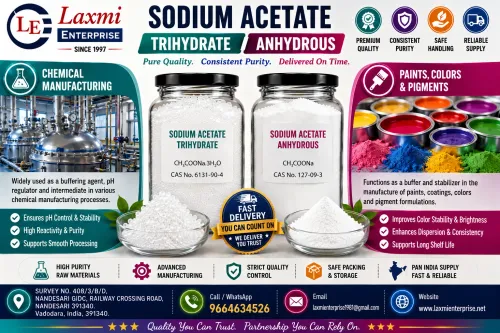
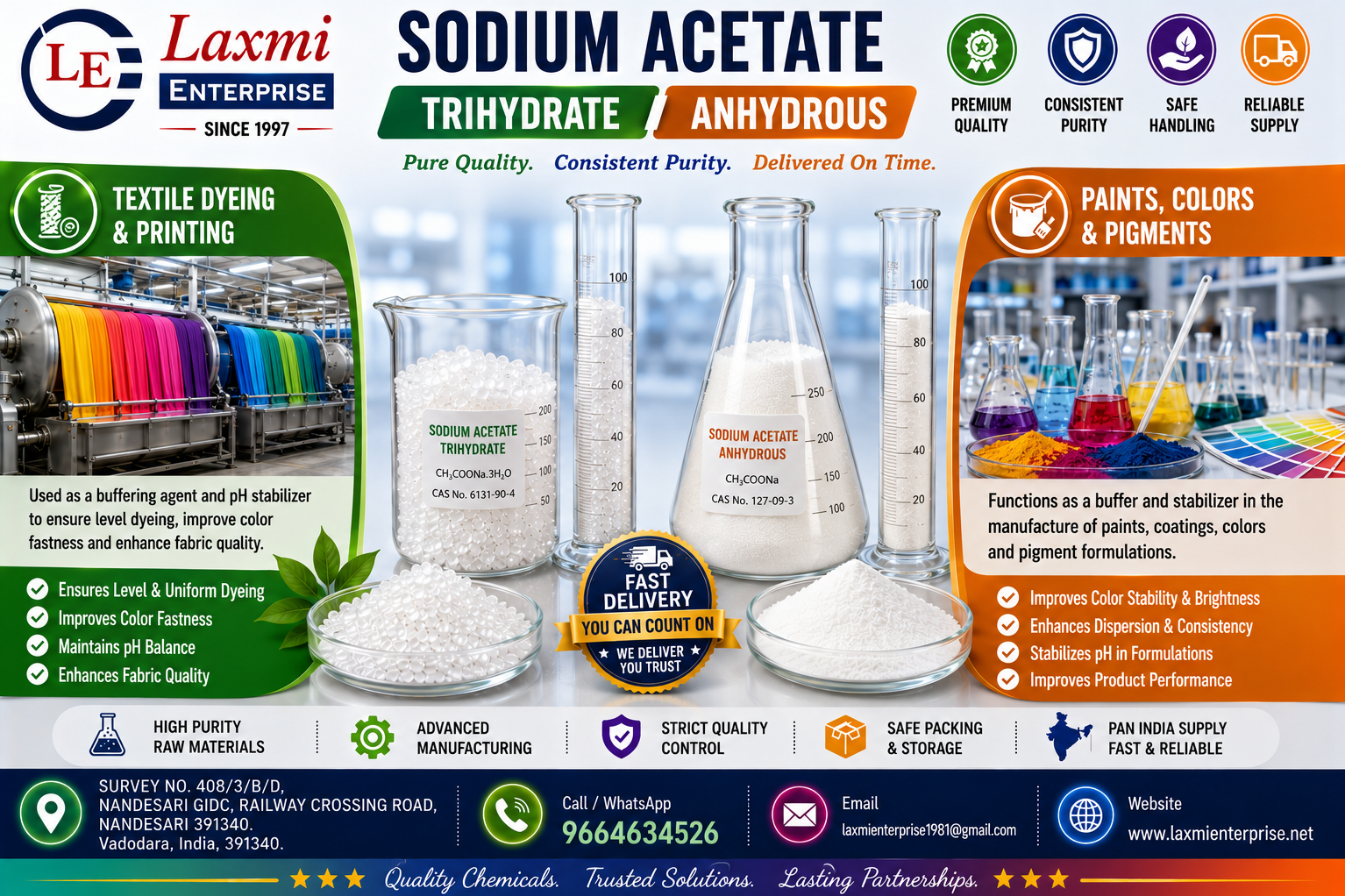
Anhydrous – CAS No. 127-09-3
Trihydrate – CAS No. 6131-90-4
HSN Code – 2915
Warehouse Quality Control
Why Is Warehouse Management Important?
Even high-quality Sodium Acetate can deteriorate if stored under unsuitable conditions.
Warehouse quality programs aim to:
Protect packaging integrity.
Minimize moisture exposure.
Maintain inventory accuracy.
Preserve traceability.
Reduce handling damage.
Warehouse Best Practices
Practice Purpose
Clean Storage Area Reduce contamination
Dry Environment Protect product condition
Adequate Ventilation Support storage stability
Pallet Storage Prevent floor moisture contact
Label Visibility Improve inventory control
Routine Inspection Detect issues early
Warehouse Engineering Insight
Most warehouse-related quality issues arise from environmental conditions and handling practices rather than the product itself. Good warehouse discipline is therefore an extension of the quality management system.
Storage Recommendations
Proper storage helps maintain product quality throughout its intended storage period.
General recommendations include:
Store in original sealed packaging.
Protect from moisture and water ingress.
Keep in a clean, dry, and well-ventilated area.
Avoid unnecessary exposure to adverse environmental conditions.
Follow supplier guidance for storage and handling.
Rotate inventory according to established warehouse procedures.
Specific storage conditions should always follow the supplier's latest Technical Data Sheet (TDS) and Safety Data Sheet (SDS).
Shelf Life Concepts
The usable storage period of Sodium Acetate depends on several factors, including:
Product grade
Packaging quality
Storage environment
Humidity control
Handling practices
Inventory management
Rather than relying on a single generic time period, organizations should follow the supplier's documented recommendations and their own quality management procedures.
Storage Factors Affecting Product Quality
Factor Possible Effect
Moisture Product caking or altered handling properties
Damaged Packaging Increased contamination risk
High Humidity Reduced storage stability
Poor Stock Rotation Inventory management challenges
Rough Handling Packaging damage
Inventory Management
Effective inventory management improves both quality and operational efficiency.
Most industrial warehouses implement structured inventory systems.
FIFO vs FEFO
Inventory Method Meaning Typical Use
FIFO First In, First Out Widely used for industrial chemicals
FEFO First Expired, First Out Used where expiry dating is applicable
The appropriate inventory method depends on product characteristics, internal procedures, and customer requirements.
Procurement Insight
Good inventory management reduces unnecessary purchases, minimizes aged stock, improves warehouse utilization, and supports uninterrupted production planning.
Transportation Quality Assurance
Product quality should be protected throughout transportation.
Transportation inspections typically include:
Vehicle cleanliness
Packaging condition
Pallet stability
Weather protection
Shipping documentation
Delivery verification
Transportation Checklist
Inspection Point Purpose
Vehicle Condition Protect shipment
Packaging Security Prevent damage
Weather Protection Reduce moisture exposure
Documentation Support traceability
Delivery Inspection Confirm shipment condition
Customer Complaint Investigation
Even with robust quality systems, customer complaints may occasionally occur.
A structured investigation generally follows these steps:
Register the complaint.
Verify batch details.
Review production records.
Examine laboratory data.
Assess storage and transportation history.
Conduct root cause analysis.
Implement corrective actions.
Communicate findings to the customer.
A systematic approach helps resolve issues fairly and consistently.
Root Cause Analysis
The purpose of root cause analysis is to identify the underlying factors contributing to a problem rather than addressing only the immediate symptoms.
Common investigation areas include:
Raw materials
Manufacturing conditions
Laboratory testing
Packaging
Storage
Transportation
Customer handling
Root cause analysis should be evidence-based and supported by documented findings.
Corrective and Preventive Actions (CAPA)
CAPA strengthens long-term quality performance.
A typical CAPA process includes:
Stage Objective
Problem Identification Define the issue
Investigation Determine contributing factors
Corrective Action Resolve the immediate issue
Preventive Action Reduce the likelihood of recurrence
Effectiveness Review Verify the improvement
Documentation Maintain quality records
Export Quality Documentation
Export customers often request additional documentation to support customs clearance, quality verification, and regulatory requirements.
Depending on the destination country and commercial agreement, documentation may include:
Commercial Invoice
Packing List
Certificate of Analysis (COA)
Technical Data Sheet (TDS)
Safety Data Sheet (SDS)
Certificate of Origin (where applicable)
Transport documentation
Export requirements should always be confirmed before shipment.
Industrial Case Study
A specialty chemical manufacturer supplying customers in Vadodara, Dahej, Ankleshwar, Mumbai, and Chennai experienced occasional delays in material release due to inconsistent warehouse receiving procedures.
The company implemented:
Digital receiving checklists.
Standardized packaging inspections.
Barcode-based batch identification.
Warehouse staff training.
Routine internal audits.
Results achieved:
Faster incoming inspection.
Improved traceability.
Reduced documentation errors.
Better inventory accuracy.
Higher customer satisfaction through improved delivery reliability.
Frequently Asked Questions (FAQ)
1. Why is incoming material inspection necessary?
It confirms that the delivered Sodium Acetate matches the purchase order, specifications, and supporting documentation before production use.
2. Should every shipment be inspected?
Many organizations inspect every incoming shipment or follow a documented risk-based sampling plan established within their quality management system.
3. Why should packaging be inspected carefully?
Packaging damage can increase the risk of contamination, moisture exposure, product loss, and handling problems.
4. What is the difference between FIFO and FEFO?
FIFO issues the oldest received stock first, while FEFO prioritizes products based on expiration or recommended use dates where applicable.
5. Why is warehouse management part of quality assurance?
Storage conditions directly influence product integrity, traceability, and availability. Good warehouse practices help preserve product quality after receipt.
6. What information is needed during a complaint investigation?
Batch number, delivery records, COA, production history, storage conditions, transportation details, and customer observations all help support a structured investigation.
7. What is the purpose of CAPA?
CAPA helps organizations resolve quality issues, identify root causes, prevent recurrence, and strengthen continuous improvement.
8. Why do export customers request technical documentation?
Technical documents help demonstrate product identity, quality, safe handling, and compliance with customer and regulatory requirements.
About Laxmi Enterprise
Laxmi Enterprise, located in Nandesari GIDC, Vadodara, Gujarat, supplies Sodium Acetate Anhydrous (CAS No. 127-09-3) and Sodium Acetate Trihydrate (CAS No. 6131-90-4) with HSN Code 2915 to customers across India's major industrial regions, including Ahmedabad, Surat, Ankleshwar, Bharuch, Dahej, Vapi, Rajkot, Jamnagar, Mumbai, Pune, Hyderabad, Chennai, Bengaluru, Coimbatore, Tiruppur, Ludhiana, Kanpur, Kolkata, Indore, Jaipur, and Visakhapatnam. By providing consistent product availability, technical documentation, and responsive support, the company assists manufacturers in maintaining reliable procurement and quality assurance processes.
Keywords