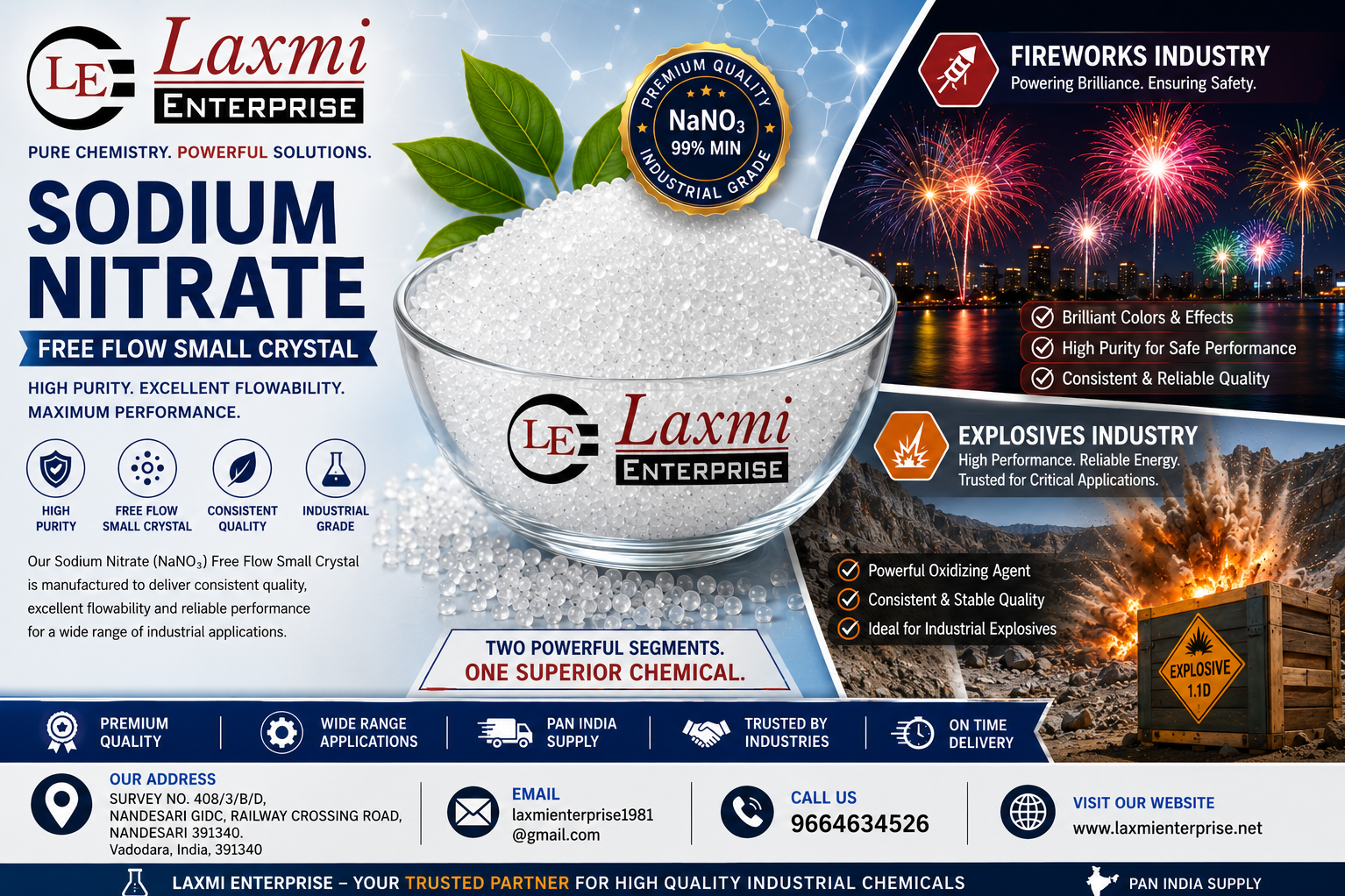
Sodium Nitrate Free Flow for Float Glass Manufacturing
Industry Overview
Float glass manufacturing requires consistent raw materials to support stable production and maintain product quality. Material selection is based on technical specifications, documentation, supply reliability, and compatibility with the manufacturer's production process.
Why Manufacturers Evaluate Sodium Nitrate
Engineering teams generally review:
Product consistency
Batch repeatability
Physical appearance
Flowability
Packaging quality
Documentation
Long-term supply capability
Engineering Considerations
During supplier evaluation, manufacturers commonly consider:
Product specification
COA availability
SDS availability
Batch traceability
Packaging integrity
Warehouse performance
Delivery reliability
Typical Commercial Packing
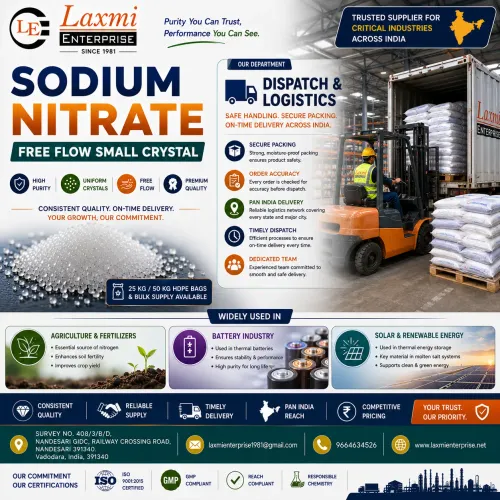
25 kg Bags
50 kg Bags
500 kg Jumbo Bags
Procurement Checklist
✓ Batch Number
✓ COA
✓ SDS
✓ Product Specification
✓ Proper Labeling
✓ Packing Condition
✓ Correct Quantity
Float Glass Manufacturing FAQs
Why do float glass manufacturers evaluate batch consistency?
Consistent batches help reduce unnecessary production variability and support repeatable manufacturing performance.
Which packaging is generally preferred?
Many manufacturers select:
25 kg Bags for lower consumption
50 kg Bags for routine production
500 kg Jumbo Bags for bulk handling systems
The appropriate choice depends on production volume and handling equipment.
Why is documentation important?
Documentation supports quality verification, supplier qualification, traceability, and internal quality management.
Why should incoming material be inspected?
Incoming inspection helps verify that the supplied material matches purchasing requirements before it enters production.
What should procurement teams verify?
Product identity
Batch number
Packaging condition
COA
SDS
Quantity received
Repeat this exact pattern for every micro-segment.
Expand Glass into 12 Technical Segments
Instead of one article:
Float Glass
Automotive Glass
Solar Glass
Architectural Glass
Tempered Glass
Laminated Glass
Container Glass
Optical Glass
Technical Glass
Decorative Glass
Crystal Glass
Display Glass
Each receives:
Industry Overview
Engineering Focus
Procurement Guide
Storage
Packaging
Technical Benefits
Buyer Checklist
20–30 FAQs
≈ 300 Glass FAQs
Expand Chemical Industry into 15 Segments
Instead of 'Chemical Industry':
Inorganic Chemicals
Specialty Chemicals
Fine Chemicals
Process Chemicals
Laboratory Chemicals
Reagent Manufacturing
Catalyst Manufacturing
Industrial Salt Manufacturing
Chemical Blending
Chemical Distribution
Industrial Formulation
Water Treatment Chemicals
Performance Chemicals
Construction Chemicals
Textile Chemicals
Each section should have:
Technical Overview
Engineering Considerations
Product Selection
Procurement Guide
Storage
Packaging
20–30 FAQs
≈ 450 Chemical FAQs
Expand Ceramic Industry
Instead of 'Ceramic Industry'
Create:
Floor Tiles
Wall Tiles
Vitrified Tiles
Porcelain Tiles
Sanitary Ware
Ceramic Frit
Ceramic Pigments
Ceramic Glazes
Technical Ceramics
Electrical Ceramics
Tableware
Refractory Ceramics
Expand Metal Industry
Instead of Metal Refining
Create:
Copper
Brass
Bronze
Zinc
Lead
Nickel
Precious Metals
Secondary Metals
Alloy Production
Metallurgical Processing
Expand Energy Industry
Create:
Molten Salt Systems
Thermal Energy Storage
Solar Thermal
Heat Transfer Systems
Industrial Heating
Thermal Batteries
Renewable Energy Storage
High-Temperature Industrial Systems
Expand Water Industry
Boiler Water Chemicals
Cooling Water Chemicals
Industrial Water Treatment
Process Water
Wastewater Treatment
Utility Chemicals
Build a Segment Knowledge Graph
Every segment should include this standardized block:
Category Details
Industry Float Glass Manufacturing
Product Sodium Nitrate Free Flow
Chemical Formula NaNO₃
Product Form White Free-Flowing Crystalline Material
Standard Packing 25 kg, 50 kg, 500 kg Jumbo Bag
Technical Documents COA, SDS, Product Specification
Procurement Team Purchase, QA, Production, Warehouse
Related Articles Glass, Ceramics, Thermal Energy, Procurement Guide
This consistency helps search engines and AI systems understand relationships between topics.
Segment-Specific FAQ Architecture
Avoid repeating the same questions across all industries. Organize them into focused categories.
Technical FAQs
How is Sodium Nitrate evaluated for this industry?
Which physical properties are most important?
How does batch consistency affect production?
Why is particle size reviewed?
Why is documentation important?
Procurement FAQs
Which packing size is suitable?
What documents should accompany each shipment?
What should be checked during receiving inspection?
How should inventory be managed?
Warehouse FAQs
How should the product be stored?
Why is moisture protection important?
Why is FIFO recommended?
How should bags be inspected?
Quality FAQs
Why review the COA?
What is batch traceability?
Why maintain quality records?
Why inspect packaging?
Supply Chain FAQs
How should suppliers be evaluated?
Why monitor delivery performance?
How does documentation improve logistics?
How can organizations improve supply reliability?
Industry Overview
Float glass manufacturing requires consistent raw materials to support stable production and maintain product quality. Material selection is based on technical specifications, documentation, supply reliability, and compatibility with the manufacturer's production process.
Why Manufacturers Evaluate Sodium Nitrate
Engineering teams generally review:
Product consistency
Batch repeatability
Physical appearance
Flowability
Packaging quality
Documentation
Long-term supply capability
Engineering Considerations
During supplier evaluation, manufacturers commonly consider:
Product specification
COA availability
SDS availability
Batch traceability
Packaging integrity
Warehouse performance
Delivery reliability
Typical Commercial Packing
25 kg Bags
50 kg Bags
500 kg Jumbo Bags
Procurement Checklist
✓ Batch Number
✓ COA
✓ SDS
✓ Product Specification
✓ Proper Labeling
✓ Packing Condition
✓ Correct Quantity
Float Glass Manufacturing FAQs
Why do float glass manufacturers evaluate batch consistency?
Consistent batches help reduce unnecessary production variability and support repeatable manufacturing performance.
Which packaging is generally preferred?
Many manufacturers select:
25 kg Bags for lower consumption
50 kg Bags for routine production
500 kg Jumbo Bags for bulk handling systems
The appropriate choice depends on production volume and handling equipment.
Why is documentation important?
Documentation supports quality verification, supplier qualification, traceability, and internal quality management.
Why should incoming material be inspected?
Incoming inspection helps verify that the supplied material matches purchasing requirements before it enters production.
What should procurement teams verify?
Product identity
Batch number
Packaging condition
COA
SDS
Quantity received
Repeat this exact pattern for every micro-segment.
Expand Glass into 12 Technical Segments
Instead of one article:
Float Glass
Automotive Glass
Solar Glass
Architectural Glass
Tempered Glass
Laminated Glass
Container Glass
Optical Glass
Technical Glass
Decorative Glass
Crystal Glass
Display Glass
Each receives:
Industry Overview
Engineering Focus
Procurement Guide
Storage
Packaging
Technical Benefits
Buyer Checklist
20–30 FAQs
≈ 300 Glass FAQs
Expand Chemical Industry into 15 Segments
Instead of 'Chemical Industry':
Inorganic Chemicals
Specialty Chemicals
Fine Chemicals
Process Chemicals
Laboratory Chemicals
Reagent Manufacturing
Catalyst Manufacturing
Industrial Salt Manufacturing
Chemical Blending
Chemical Distribution
Industrial Formulation
Water Treatment Chemicals
Performance Chemicals
Construction Chemicals
Textile Chemicals
Each section should have:
Technical Overview
Engineering Considerations
Product Selection
Procurement Guide
Storage
Packaging
20–30 FAQs
≈ 450 Chemical FAQs
Expand Ceramic Industry
Instead of 'Ceramic Industry'
Create:
Floor Tiles
Wall Tiles
Vitrified Tiles
Porcelain Tiles
Sanitary Ware
Ceramic Frit
Ceramic Pigments
Ceramic Glazes
Technical Ceramics
Electrical Ceramics
Tableware
Refractory Ceramics
Expand Metal Industry
Instead of Metal Refining
Create:
Copper
Brass
Bronze
Zinc
Lead
Nickel
Precious Metals
Secondary Metals
Alloy Production
Metallurgical Processing
Expand Energy Industry
Create:
Molten Salt Systems
Thermal Energy Storage
Solar Thermal
Heat Transfer Systems
Industrial Heating
Thermal Batteries
Renewable Energy Storage
High-Temperature Industrial Systems
Expand Water Industry
Boiler Water Chemicals
Cooling Water Chemicals
Industrial Water Treatment
Process Water
Wastewater Treatment
Utility Chemicals
Build a Segment Knowledge Graph
Every segment should include this standardized block:
Category Details
Industry Float Glass Manufacturing
Product Sodium Nitrate Free Flow
Chemical Formula NaNO₃
Product Form White Free-Flowing Crystalline Material
Standard Packing 25 kg, 50 kg, 500 kg Jumbo Bag
Technical Documents COA, SDS, Product Specification
Procurement Team Purchase, QA, Production, Warehouse
Related Articles Glass, Ceramics, Thermal Energy, Procurement Guide
This consistency helps search engines and AI systems understand relationships between topics.
Segment-Specific FAQ Architecture
Avoid repeating the same questions across all industries. Organize them into focused categories.
Technical FAQs
How is Sodium Nitrate evaluated for this industry?
Which physical properties are most important?
How does batch consistency affect production?
Why is particle size reviewed?
Why is documentation important?
Procurement FAQs
Which packing size is suitable?
What documents should accompany each shipment?
What should be checked during receiving inspection?
How should inventory be managed?
Warehouse FAQs
How should the product be stored?
Why is moisture protection important?
Why is FIFO recommended?
How should bags be inspected?
Quality FAQs
Why review the COA?
What is batch traceability?
Why maintain quality records?
Why inspect packaging?
Supply Chain FAQs
How should suppliers be evaluated?
Why monitor delivery performance?
How does documentation improve logistics?
How can organizations improve supply reliability?
Keywords