
Sulfate Antiscalants for Industrial Plants
Sulfate scaling—mainly calcium sulfate (CaSO₄), barium sulfate (BaSO₄), and strontium sulfate (SrSO₄)—is a major issue in RO/NF systems, boilers, cooling towers, evaporators, and ZLD plants. Antiscalants are the most effective preventive solution.
- ATMP (Aminotris(methylene phosphonic acid))
- HEDP (Hydroxyethylidene diphosphonic acid)
- DTPMP
Effective Against
- Calcium sulfate
- Moderate barium/strontium sulfate
- Calcium carbonate
Advantages
- High temperature stability
- Strong crystal distortion
Limited effectiveness at very high sulfate saturation
Phosphorus discharge restrictions in some regions
Polyacrylic acid (PAA)
Polymaleic acid (PMA)
Acrylic–sulfonic copolymers
- Calcium sulfate
- Mixed sulfate–silica scales
Excellent dispersion capability
Low phosphorus / phosphorus-free
Works well in high-recovery RO systems
Examples
- Sulfonated copolymers
- Phosphino-polycarboxylic acids
Effective Against
- Barium sulfate (extremely insoluble)
- Strontium sulfate
Advantages
- Effective at very high saturation indices
- Critical for oil & gas and ZLD brines
Reverse Osmosis (RO) & Nanofiltration (NF)
- Use low molecular weight phosphonate + polymer blends
- Injection point: RO feed line before cartridge filters
- Target LSI / Sulfate SI < scaling threshold
Boilers
- Internal treatment using phosphonates + polymers
- External RO pretreatment reduces sulfate load significantly
Cooling Towers
- Polymeric antiscalants preferred
- Effective at high cycles of concentration
- Often combined with corrosion inhibitors
Evaporators / ZLD Plants
- Specialty sulfate inhibitors mandatory
- Designed for extreme supersaturation conditions
Monitoring & Control
- Online conductivity & differential pressure
- Periodic sulfate analysis (Ion Chromatography / Turbidimetric)
- Membrane autopsy in chronic scaling cases
- Optimize dose via saturation index modeling
- Nalco (Ecolab)
- SUEZ (formerly GE Water)
- Kurita
- Avista
- BWA Water Additives
- Thermax (India)
Controls bulk density of detergent powder
Improves free-flowing properties
Prevents caking during storage and transport
Acts as a diluent for surfactants (LAS, AOS, SLS)
Ensures uniform distribution of actives in spray-dried powders
- Powder detergents: 20 – 60 % (w/w)
- Low-foam formulations: Higher sodium sulfate content
- Concentrated detergents: Reduced or eliminated
Note: Liquid detergents generally do not use sodium sulfate.
Spray Drying
- Sodium sulfate blended with slurry before spray tower
- Controls tower density and particle size
B. Post-Blending
- Mixed with surfactant granules, enzymes, and perfume
- Requires uniform particle size (100–800 µm)
- Store in dry, moisture-free conditions
- Use HDPE or laminated bags
- Avoid contamination with iron or organic matter
- Hygroscopic behavior increases caking risk at high RH
- IS 255: Sodium Sulphate, Anhydrous
- Detergent formulations: IS 4955 / IS 4956 (laundry detergents)
Below is a practical, industry-focused list of reliable industrial-grade sodium sulfate (Na₂SO₄) suppliers, suitable for detergents, glass, textiles, pulp & paper, dyes, and chemical manufacturing.
- Gujarat Alkalies & Chemicals Ltd. (GACL) – Gujarat
- Industrial & detergent grade
- Consistent bulk quality, rail & bulk supply
- Nirma Ltd. – Gujarat
- Captive + commercial detergent-grade sodium sulfate
- Stable supply for FMCG users
- DCW Ltd. – Gujarat / Tamil Nadu
- Dense sodium sulfate
- Reliable for glass & detergent industries
- Aditya Birla Chemicals
- Industrial by-product sodium sulfate
- Large-volume contracts
- Hindustan Salts Ltd. (Govt. of India)
- Natural sodium sulfate (Glauber salt & anhydrous)
- Rajasthan-based production
- Nitin Chemicals / Sodium Sulphate Units – Kutch Region
- Cost-effective industrial grade
- Widely used by detergent & textile units
- TGV SRAAC Ltd.
- Industrial chemicals portfolio
- Sodium sulfate as co-product
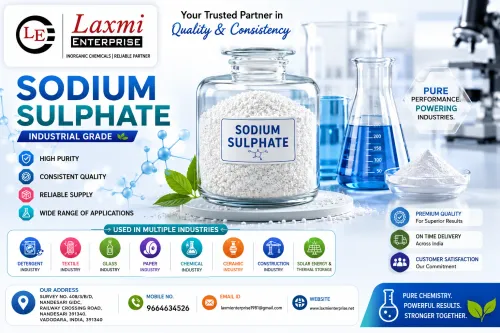
Laxmi Enterprise – Vadodara (local industrial chemical supplier)
Aarti Chemical Traders
Prakash Chemicals International
Mehul Dye Chem Industries
Packaging & Supply Options
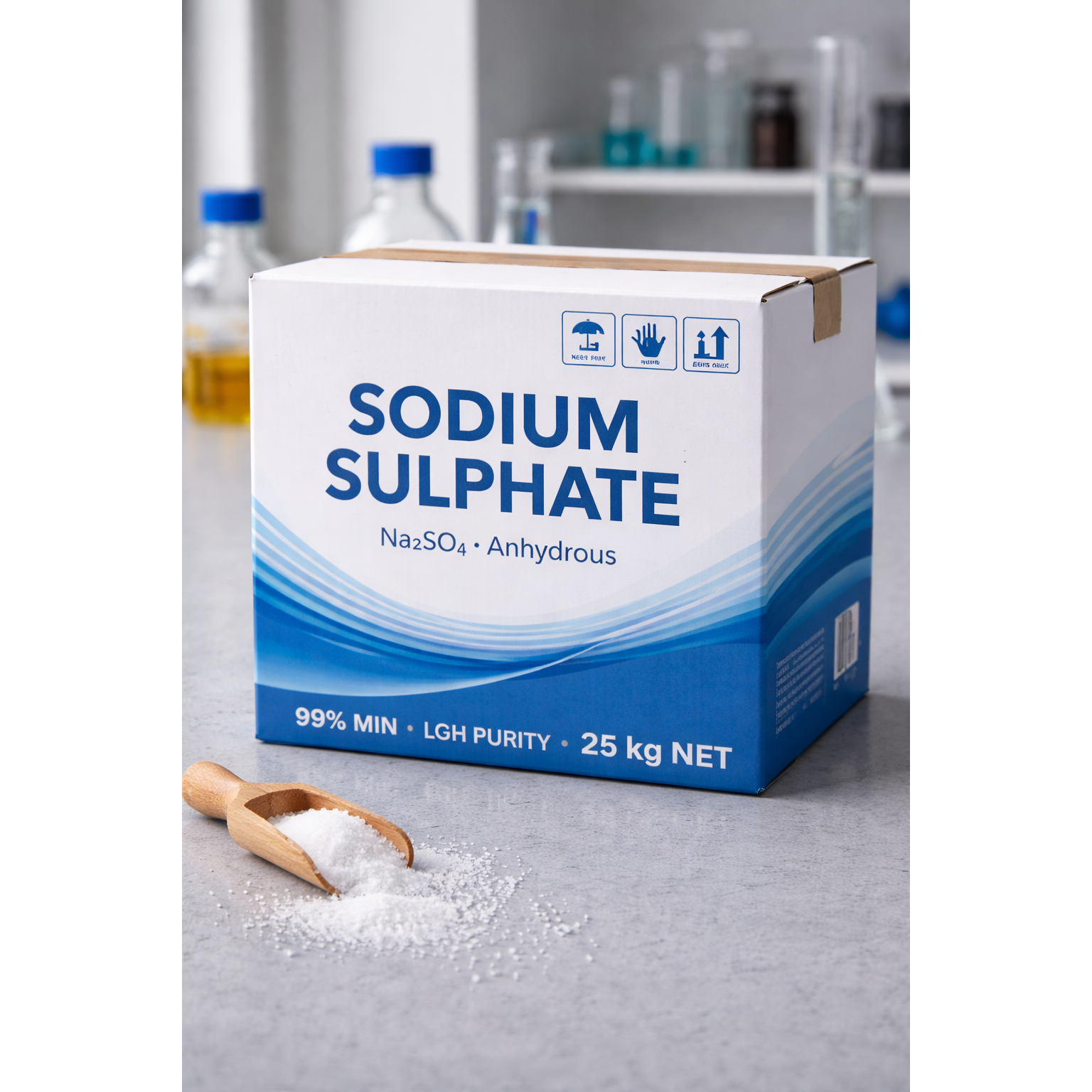
- 25 kg / 50 kg HDPE or laminated bags
- 1 MT jumbo bags
- Bulk tanker / rail wagons (large consumers)
If you want, I can:
- Shortlist best suppliers for Gujarat / Vadodara region
- Compare Indian vs imported landed cost
- Share current market price trends
- Help draft a technical inquiry/spec sheet for RFQ
By-product from HCl / caustic soda / detergent manufacturing
Natural salt-based sodium sulfate (Kutch region)
Spray-dried & dense grades for detergent exporters
- Industrial grade (98.5–99.2%)
- Detergent grade (low Fe, controlled bulk density)
- Light & dense sodium sulfate
- Mundra Port – largest container port in India
- Kandla (Deendayal) Port – bulk cargo leader
- Hazira Port – chemical bulk handling
- Nhava Sheva (JNPT) – containerized exports
- 25 / 50 kg bags on pallets
- 1 MT jumbo bags
- Bulk vessel (for large buyers)
Primary Markets
- Middle East: UAE, Saudi Arabia, Oman
- Africa: Kenya, Tanzania, Nigeria
- South & Southeast Asia: Bangladesh, Sri Lanka, Vietnam
- Europe (select buyers): Italy, Spain
- Detergent manufacturing
- Glass & ceramics
- Textile dyeing
- Pulp & paper
- COA (Certificate of Analysis)
- MSDS / SDS
- Commercial invoice & packing list
- Certificate of Origin (Gujarat Chamber / FIEO)
- HS Code: 2833.11 / 2833.19
Quality Standards
- BIS (IS 255) compliance preferred
- REACH (for EU buyers)
- Low heavy metals for detergent use
Gujarat is India’s strongest hub for sodium sulfate exports, thanks to its large chlor-alkali base, proximity to ports, and mature export infrastructure. Below is a clear, export-oriented overview.
Moisture: ≤ 0.3–0.5 %
Insolubles: ≤ 0.1 %
Iron: ≤ 30–50 ppm
25 kg / 50 kg HDPE laminated bags
1 MT jumbo bags
Palletized container loading
Mundra Port (largest sodium sulfate export hub)
Kandla (Deendayal Port)
Hazira Port
Nhava Sheva (JNPT) – for south & west-bound cargo
HS Code: 2833.11 / 2833.19
COA (Certificate of Analysis)
MSDS / SDS
Certificate of Origin
REACH / GSO compliance (if required)
SGS / Intertek inspection (optional)
- FCL (20 ft): 25–28 MT
- Monthly contracts: 500–5,000 MT
- Annual export capacity (Gujarat): > 1 million MT