

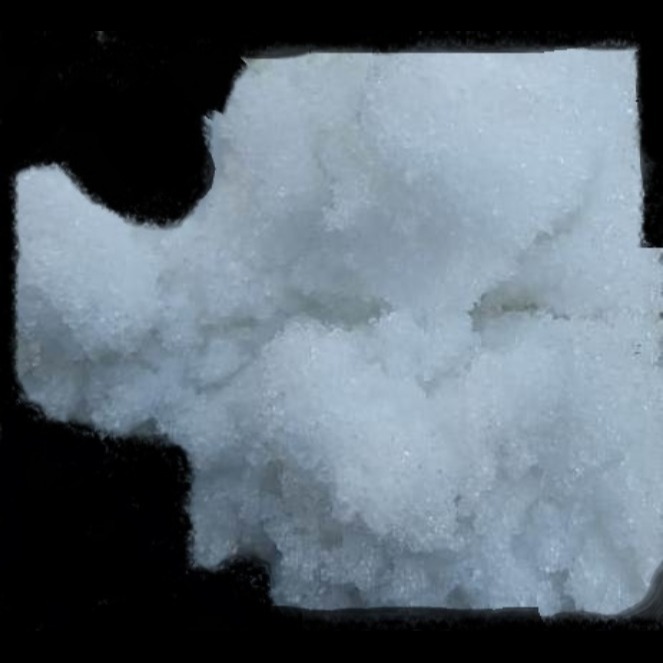
Primary industrial uses
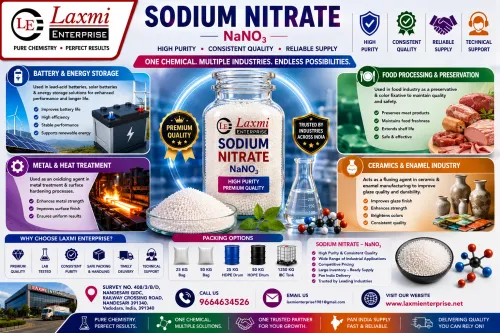
Molten salt baths / heat treatment — NaNO₃ (often blended with KNO₃ or NaNO₂) is used in molten salt baths for annealing, bright-annealing and some quenching/tempering operations because of good heat transfer and controllable temperature ranges.
Cleaning / pickling additives — used in some metal-cleaning and pickling formulations as an oxidizing agent or to regulate chemistry.
Flux / brazing support — in certain flux blends for joining, nitrate salts can modify surface oxides and assist wetting (used together with other salts).
Surface brightening / descaling — in controlled molten-salt brightening baths (with other salts) for ferrous parts.
Note: sodium nitrate alone is not a nitriding agent (thermochemical nitriding usually uses ammonia, cyanates, or plasma); NaNO₃ is primarily an oxidizing salt used in baths and fluxes.
Typical compositions & operating conditions
Purity: industrial/technical grade usually ≥ 98–99% NaNO₃ for consistent behaviour. Impurities (chlorides, sulfates, heavy metals) can cause problems—ask for a certificate of analysis from your supplier.
Melting point: pure NaNO₃ ≈ 307–308 °C.
Common mixtures: NaNO₃ + KNO₃ or NaNO₂/KNO₃ blends are used to lower melting point and tune properties (e.g., a NaNO₃–KNO₃ mix can have a melting point ≈ 220 °C depending on ratio).
Working temperature range: for molten-salt metal baths typically ~220 °C up to ≈ 550–600 °C, depending on formulation and thermal stability. Always check the specific blend’s stability (some mixtures decompose at higher temperatures producing NOₓ).
Concentration: when used as a component of mixtures, formulation is process-dependent — follow supplier or process engineering recipes. Do not improvise.
Typical process notes (high level)
Bath preparation: dry, contamination-free salts; melt gradually in a suitable crucible/liner rated for salt service.
Heating / control: use precise temperature control and inert or ventilated enclosure; nitrates can decompose to NOₓ if overheated.
Part loading: pre-clean parts to remove oils/grease; scale/oxide behaviour depends on temperature and bath chemistry.
Post-treatment: parts are rinsed thoroughly (often with hot water) and neutralized if residues remain; salt carryover can promote corrosion if not removed.
Monitoring: regularly test bath chemistry and remove contaminants; replenish salts per usage and analysis.
These are high-level guidelines — process-specific recipes and parameters must be validated in your facility.
Safety & hazards (important)
Oxidizer: NaNO₃ is a strong oxidizer — avoid contact with organic materials, oils, greases, sawdust, paper, etc. Fire/explosion risk if contaminated with combustibles.
Thermal decomposition: on overheating it decomposes and can release toxic NO and NO₂ gases (NOₓ). Ensure good ventilation and gas scrubbing where required.
Corrosivity: molten nitrate salts are corrosive to many metals at high temperatures and can cause accelerated corrosion if residues remain on parts. Use compatible containment materials (e.g., certain stainless steels, nickel alloys, or ceramic liners as recommended).
PPE: chemical-resistant gloves, goggles/face shield, lab/industrial coat or apron, and appropriate respiratory protection if airborne NOₓ is possible. Use hot-handling PPE for molten-salt work.
Storage: keep in a cool, dry, well-ventilated area away from reducing agents and combustibles. Keep containers closed and labeled.
Spill response & disposal: avoid mixing spills with organic absorbents; collect mechanically and dispose per local hazardous-waste regulations. Do not dump into drains — nitrates are regulated pollutants.
Always consult the MSDS/SDS for the exact product you buy and follow local workplace regulations (e.g., Indian Factories Act / local CPCB guidelines if in India).
Material compatibility & equipment
Containment: ceramic crucibles, refractory-lined tanks, or specific alloy linings are typically used. Mild steel is often attacked; choose tank and pump materials rated for nitrate salts and the operating temperature.
Seals & pumps: use materials rated for high-temperature salt service — many elastomers will fail; consider metal or specialized high-temp seals.
Instrumentation: thermocouples and controllers should be rated for salt bath service and protected from corrosive fumes.
Alternatives & complementary chemistries
KNO₃ (potassium nitrate) — often blended with NaNO₃ to tailor melting point and physical properties.
NaNO₂ / nitrite salts — used in some formulations but present additional decomposition and safety considerations.
Molten chloride or cyanate baths — used for different surface treatments (but cyanates/cyanides are highly toxic; handle per strict controls).
Gas nitriding (NH₃), plasma nitriding — used when you specifically want nitriding rather than the heat-transfer/cleaning roles of nitrate salts.
Quality & purchasing checklist
When sourcing NaNO₃ for metal surface work, ask the supplier for:
Purity / assay (wt% NaNO₃).
Moisture content.
Max allowed chloride / sulfate / heavy metals.
Particle size / granulation (affects melting behavior).
MSDS / safety data sheet and handling recommendations.
Recommended storage & shelf life.
Environmental & regulatory
Nitrate-containing effluents are regulated — don’t discharge salt bath rinse waters untreated. Follow local effluent treatment rules (biological/chemical treatments or ion-exchange / reduction methods as required).
Track NOₓ emissions if high-temperature salt baths are used and comply with workplace air quality and environmental limits.
If you want I can next:
provide a sample SDS/MSDS checklist you can give to suppliers;
suggest typical bath recipes (percent compositions and temp ranges) for common bright-annealing or salt-bath annealing applications — I’ll give process-safe, conservative examples; or
help draft a supplier enquiry (email) to request technical data and quotes.
Which of those would help you most right now?
Handling & Storage
Store in cool, dry, and well-ventilated areas away from heat sources.
Keep away from organic materials, reducing agents, acids, and combustible substances.
Avoid contamination with oil, sulfur, or charcoal (risk of fire/explosion).
Use corrosion-resistant containers (HDPE or lined steel drums).
Reseal bags or drums tightly after use to prevent moisture absorption.
Regulatory Information
REACH Registered (where applicable)
FSSAI Approved for Food Grade (for curing salt applications, under limit)
IMDG Code: Class 5.1 (Oxidizing Solid)
Transport: Non-combustible, but supports combustion.
Manufacturer’s Note
The data above represent typical values and do not constitute a specification. End-users must determine suitability for specific applications. Handle only by trained personnel in compliance with local regulations.
Would you like me to create a print-ready PDF version of this Technical Data Sheet (with your company name and logo, e.g., Laxmi Enterprise, Vadodara) for use in your product catalog or website?
Buy Sodium Nitrate
Sodium Nitrate for Sale
Sodium Nitrate Supplier
Sodium Nitrate Manufacturers
Sodium Nitrate Wholesale
Industrial Grade Sodium Nitrate
Food Grade Sodium Nitrate
High Purity Sodium Nitrate
Sodium Nitrate Fertilizer
Nitrogen Fertilizer Supplier
Nitrate-Based Fertilizers
Crop Nutrition Solutions
Agricultural Chemicals Supplier
Sodium Nitrate Food Additive
Curing Salt Additive
Food-Grade Nitrate Preservative
Meat Curing Ingredients
Preservatives for Processed Meat
Sodium Nitrate for Explosives
Oxidizer Chemicals Supplier
Pyrotechnic Grade Sodium Nitrate
Blasting Compound Ingredients
Mining Chemicals Supplier
What is Sodium Nitrate Used For?
Sodium Nitrate vs Sodium Nitrite
Is Sodium Nitrate Safe?