How Sodium Sulphate Is Manufactured: Complete Industrial Manufacturing Process from Raw Materials to Finished Product
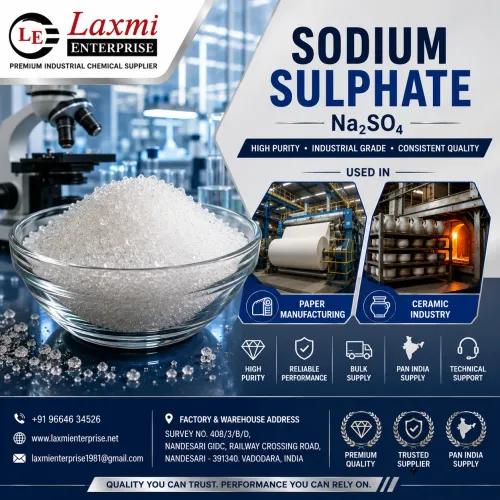
Every industrial chemical begins its journey with a manufacturing process, but not every manufacturing process produces the same quality. Two suppliers may offer sodium sulphate with the same chemical formula (Na₂SO₄), yet differences in raw materials, purification techniques, process control, drying systems, and quality assurance can lead to noticeable differences in product consistency.
For industrial buyers, understanding how sodium sulphate is manufactured provides valuable insight into product quality, laboratory specifications, and supplier capability. It also helps explain why one supplier consistently delivers reliable material while another may experience batch-to-batch variations.
Modern sodium sulphate manufacturing is far more than a simple chemical production process. It combines raw material selection, controlled processing, purification, drying, particle size classification, laboratory testing, packaging, and quality assurance into a structured production system. Every stage influences the final product that reaches detergent manufacturers, glass producers, textile mills, pulp and paper companies, chemical plants, ceramic manufacturers, and many other industries.
This guide explains the industrial manufacturing process of sodium sulphate in a practical and technically accurate manner. Rather than focusing only on chemical reactions, it explores how manufacturers control quality, improve consistency, reduce impurities, and ensure that every production batch meets customer expectations.
Whether you are a procurement professional evaluating suppliers, a production engineer responsible for process efficiency, or a quality control specialist reviewing Certificates of Analysis, understanding the manufacturing journey of sodium sulphate provides a stronger foundation for informed technical decisions.
Why Understanding the Manufacturing Process Matters
Many industrial buyers focus on laboratory reports without considering the production process that created those results. In reality, every laboratory value begins with manufacturing.
The manufacturing process influences:
Product purity
Moisture content
Particle size
Iron contamination
Chloride content
Water insoluble matter
Bulk density
Flowability
Batch consistency
Long-term product reliability
A manufacturer with well-controlled production systems is generally better positioned to deliver consistent quality over time.
Understanding production also helps procurement teams evaluate supplier capability beyond commercial quotations.
Frequently Asked Questions
Why should buyers understand how sodium sulphate is manufactured?
Understanding the manufacturing process helps buyers evaluate product consistency, quality systems, laboratory controls, and supplier reliability rather than relying solely on price comparisons.
Does the manufacturing process affect product quality?
Yes. Raw material selection, purification, drying, particle size control, and quality assurance all influence the finished product's chemical and physical characteristics.
Can two manufacturers produce different quality sodium sulphate?
Yes. Even when producing the same chemical compound, differences in manufacturing technology, equipment, process control, and laboratory practices can result in different product consistency and performance.
Why do procurement teams ask about manufacturing facilities?
The manufacturing facility reflects a supplier's ability to control quality, maintain consistent production, and meet long-term customer requirements.
Does every batch follow the same manufacturing process?
Reputable manufacturers aim to follow standardized operating procedures so that each production batch meets established specifications and quality requirements.
The Journey from Raw Materials to Finished Product
Manufacturing sodium sulphate is a carefully controlled sequence rather than a single operation. Every stage adds value by improving quality, removing impurities, controlling physical properties, or verifying product performance.
A typical industrial production sequence includes:
Stage 1 – Raw material selection
↓
Stage 2 – Manufacturing or recovery process
↓
Stage 3 – Purification
↓
Stage 4 – Filtration or separation
↓
Stage 5 – Drying
↓
Stage 6 – Particle size classification
↓
Stage 7 – Laboratory quality testing
↓
Stage 8 – Packaging
↓
Stage 9 – Storage
↓
Stage 10 – Dispatch
Although individual manufacturers may use different technologies, this overall workflow is common across the industry.
Raw Material Selection
Every high-quality product begins with carefully selected raw materials. The consistency of incoming materials has a direct influence on the quality of the finished sodium sulphate.
Manufacturers typically evaluate incoming raw materials for:
Chemical composition
Purity
Moisture
Contamination
Physical consistency
Supplier reliability
Strong incoming quality control reduces production variability and supports consistent batch performance.
Raw material inspection is often the first quality checkpoint in the manufacturing process. Samples may be tested before the materials are accepted for production, helping prevent unsuitable inputs from entering the process.
Frequently Asked Questions
Why are raw materials tested before manufacturing?
Testing helps verify that incoming materials meet predefined quality requirements, reducing the risk of quality issues later in production.
Can poor raw materials affect the finished product?
Yes. Variations in raw materials can influence purity, impurity levels, and overall manufacturing consistency.
What happens if raw materials fail inspection?
Manufacturers typically follow internal quality procedures, which may include rejection, segregation, or further evaluation before use.
Why is supplier quality important even for raw materials?
Reliable raw material suppliers help manufacturers maintain stable production and reduce batch-to-batch variation.
Is incoming inspection part of quality assurance?
Yes. It is one of the earliest and most important stages in a comprehensive quality management system.
Every industrial chemical begins its journey with a manufacturing process, but not every manufacturing process produces the same quality. Two suppliers may offer sodium sulphate with the same chemical formula (Na₂SO₄), yet differences in raw materials, purification techniques, process control, drying systems, and quality assurance can lead to noticeable differences in product consistency.
For industrial buyers, understanding how sodium sulphate is manufactured provides valuable insight into product quality, laboratory specifications, and supplier capability. It also helps explain why one supplier consistently delivers reliable material while another may experience batch-to-batch variations.
Modern sodium sulphate manufacturing is far more than a simple chemical production process. It combines raw material selection, controlled processing, purification, drying, particle size classification, laboratory testing, packaging, and quality assurance into a structured production system. Every stage influences the final product that reaches detergent manufacturers, glass producers, textile mills, pulp and paper companies, chemical plants, ceramic manufacturers, and many other industries.
This guide explains the industrial manufacturing process of sodium sulphate in a practical and technically accurate manner. Rather than focusing only on chemical reactions, it explores how manufacturers control quality, improve consistency, reduce impurities, and ensure that every production batch meets customer expectations.
Whether you are a procurement professional evaluating suppliers, a production engineer responsible for process efficiency, or a quality control specialist reviewing Certificates of Analysis, understanding the manufacturing journey of sodium sulphate provides a stronger foundation for informed technical decisions.
Why Understanding the Manufacturing Process Matters
Many industrial buyers focus on laboratory reports without considering the production process that created those results. In reality, every laboratory value begins with manufacturing.
The manufacturing process influences:
Product purity
Moisture content
Particle size
Iron contamination
Chloride content
Water insoluble matter
Bulk density
Flowability
Batch consistency
Long-term product reliability
A manufacturer with well-controlled production systems is generally better positioned to deliver consistent quality over time.
Understanding production also helps procurement teams evaluate supplier capability beyond commercial quotations.
Frequently Asked Questions
Why should buyers understand how sodium sulphate is manufactured?
Understanding the manufacturing process helps buyers evaluate product consistency, quality systems, laboratory controls, and supplier reliability rather than relying solely on price comparisons.
Does the manufacturing process affect product quality?
Yes. Raw material selection, purification, drying, particle size control, and quality assurance all influence the finished product's chemical and physical characteristics.
Can two manufacturers produce different quality sodium sulphate?
Yes. Even when producing the same chemical compound, differences in manufacturing technology, equipment, process control, and laboratory practices can result in different product consistency and performance.
Why do procurement teams ask about manufacturing facilities?
The manufacturing facility reflects a supplier's ability to control quality, maintain consistent production, and meet long-term customer requirements.
Does every batch follow the same manufacturing process?
Reputable manufacturers aim to follow standardized operating procedures so that each production batch meets established specifications and quality requirements.
The Journey from Raw Materials to Finished Product
Manufacturing sodium sulphate is a carefully controlled sequence rather than a single operation. Every stage adds value by improving quality, removing impurities, controlling physical properties, or verifying product performance.
A typical industrial production sequence includes:
Stage 1 – Raw material selection
↓
Stage 2 – Manufacturing or recovery process
↓
Stage 3 – Purification
↓
Stage 4 – Filtration or separation
↓
Stage 5 – Drying
↓
Stage 6 – Particle size classification
↓
Stage 7 – Laboratory quality testing
↓
Stage 8 – Packaging
↓
Stage 9 – Storage
↓
Stage 10 – Dispatch
Although individual manufacturers may use different technologies, this overall workflow is common across the industry.
Raw Material Selection
Every high-quality product begins with carefully selected raw materials. The consistency of incoming materials has a direct influence on the quality of the finished sodium sulphate.
Manufacturers typically evaluate incoming raw materials for:
Chemical composition
Purity
Moisture
Contamination
Physical consistency
Supplier reliability
Strong incoming quality control reduces production variability and supports consistent batch performance.
Raw material inspection is often the first quality checkpoint in the manufacturing process. Samples may be tested before the materials are accepted for production, helping prevent unsuitable inputs from entering the process.
Frequently Asked Questions
Why are raw materials tested before manufacturing?
Testing helps verify that incoming materials meet predefined quality requirements, reducing the risk of quality issues later in production.
Can poor raw materials affect the finished product?
Yes. Variations in raw materials can influence purity, impurity levels, and overall manufacturing consistency.
What happens if raw materials fail inspection?
Manufacturers typically follow internal quality procedures, which may include rejection, segregation, or further evaluation before use.
Why is supplier quality important even for raw materials?
Reliable raw material suppliers help manufacturers maintain stable production and reduce batch-to-batch variation.
Is incoming inspection part of quality assurance?
Yes. It is one of the earliest and most important stages in a comprehensive quality management system.
Keywords