How to Evaluate Sodium Nitrate Free Flow Before Purchasing
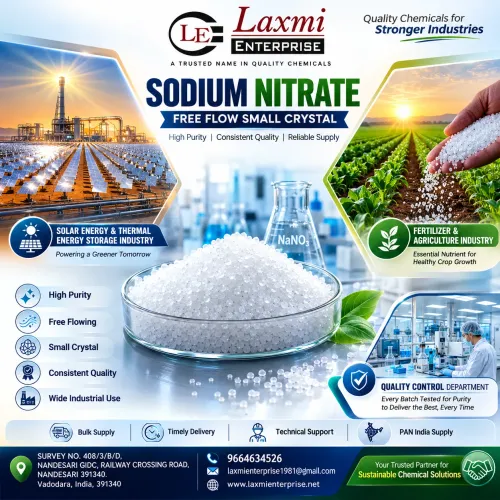
Purchasing industrial chemicals is a strategic decision that directly influences production efficiency, product quality, operational costs, and customer satisfaction. While price remains an important consideration, experienced buyers recognize that the true value of Sodium Nitrate Free Flow lies in its consistency, quality assurance, technical support, and long-term reliability.
Before finalizing a purchase, industrial buyers should evaluate multiple technical and commercial factors to ensure that the selected product aligns with their manufacturing requirements.
Step 1 – Define Your Industrial Application
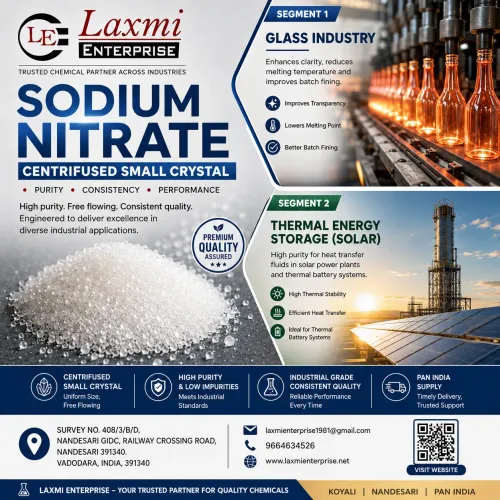
Different industries use Sodium Nitrate for different purposes. The required product specification may vary depending on the manufacturing process.
Examples include:
Industry Primary Requirement
Chemical Processing High purity and consistent quality
Glass Manufacturing Stable composition and uniform mixing
Ceramic Industry Controlled particle size
Pigment Manufacturing Low impurities
Metal Refining Reliable oxidation performance
Thermal Energy Storage Consistent chemical stability
Specialty Chemicals High batch consistency
Understanding your application helps determine the appropriate product specification.
Step 2 – Review Product Specifications
Before purchasing, compare the supplier's specifications with your process requirements.
Important parameters include:
Chemical Purity
Moisture
Particle Size
Bulk Density
Flowability
Appearance
Water Insoluble Matter
Chloride
Sulphate
Iron Content
Request the latest COA before approving the material.
Step 3 – Evaluate Physical Performance
Many purchasing decisions focus only on laboratory purity.
However, production departments often care more about:
Flowability
Hopper discharge
Mixing performance
Feeding consistency
Storage stability
Packaging strength
These characteristics directly affect production efficiency.
Step 4 – Select Proper Packing
Industrial consumption determines the ideal packing size.
25 kg Bags
Suitable for:
Small industries
Batch manufacturing
Manual handling
Laboratory scale production
50 kg Bags
Recommended for:
Medium production plants
Regular industrial consumption
Warehouse inventory
500 kg Jumbo Bags
Preferred for:
Large manufacturing plants
Automated conveying systems
Bulk storage
Continuous production
Step 5 – Verify Documentation
Professional suppliers should provide:
✓ Certificate of Analysis
✓ Safety Data Sheet
✓ Batch Number
✓ Product Label
✓ Packing Details
✓ Dispatch Information
Complete documentation simplifies procurement audits.
Step 6 – Assess Supplier Reliability
A reliable supplier consistently delivers:
Same quality
Same particle size
Same packaging
Timely dispatch
Technical support
Reliable suppliers reduce manufacturing risk.
Procurement Decision Matrix
Evaluation Criteria Importance
Product Purity ★★★★★
Batch Consistency ★★★★★
Flowability ★★★★★
Moisture Control ★★★★★
Technical Documentation ★★★★★
Packing Quality ★★★★☆
Delivery Reliability ★★★★★
Technical Support ★★★★☆
Inventory Availability ★★★★☆
Commercial Terms ★★★★☆
Common Procurement Challenges
Industrial buyers frequently encounter:
Inconsistent Quality
Different batches behave differently.
Result:
Production variation
Customer complaints
Rework
Moisture Problems
Improper storage or packaging can affect material flow.
Result:
Lump formation
Hopper blockage
Slow production
Poor Documentation
Missing COA or SDS creates unnecessary audit issues.
Weak Packaging
Damaged bags increase:
Product losses
Warehouse contamination
Handling costs
Unreliable Supply
Late deliveries may interrupt production planning.
How Professional Buyers Reduce Risk
Experienced procurement teams generally:
Approve suppliers through quality evaluation.
Verify technical specifications before ordering.
Request batch-wise COAs.
Monitor supplier consistency.
Maintain safety stock for critical raw materials.
Conduct incoming material inspections.
Review supplier performance periodically.
These practices help maintain stable production and reduce procurement-related risks.
Expert Tips for Production Managers
Production managers can improve operational efficiency by:
Using FIFO inventory management.
Keeping Sodium Nitrate in dry storage conditions.
Inspecting packaging before use.
Monitoring hopper performance.
Recording batch numbers for traceability.
Coordinating with procurement teams regarding quality feedback.
Collaboration between procurement and production departments often results in better process stability.
Procurement FAQs
What should be checked before accepting a Sodium Nitrate shipment?
Inspect the packaging for damage, verify the product label and batch number, review the Certificate of Analysis (COA), confirm the quantity received, and ensure the material matches the purchase specifications.
How important is supplier consistency?
Supplier consistency is critical because variations in product quality or physical characteristics can affect manufacturing performance, process stability, and finished product quality.
Should buyers keep safety stock?
Many manufacturers maintain appropriate safety stock for critical raw materials to reduce the risk of production interruptions caused by unexpected supply delays. The appropriate quantity depends on consumption patterns and lead times.
Why should procurement and production teams communicate regularly?
Production teams can provide feedback on material performance, helping procurement teams make informed supplier evaluations and purchasing decisions.
What is the advantage of standard commercial packing?
Standardized 25 kg, 50 kg, and 500 kg Jumbo Bags simplify warehouse handling, inventory management, transportation, and production planning.
How can buyers compare different suppliers?
Rather than comparing price alone, evaluate:
Product quality
Technical specifications
Flowability
Batch consistency
Packaging quality
Documentation
Delivery reliability
Technical support
Industry experience
Long-term supply capability
Purchasing industrial chemicals is a strategic decision that directly influences production efficiency, product quality, operational costs, and customer satisfaction. While price remains an important consideration, experienced buyers recognize that the true value of Sodium Nitrate Free Flow lies in its consistency, quality assurance, technical support, and long-term reliability.
Before finalizing a purchase, industrial buyers should evaluate multiple technical and commercial factors to ensure that the selected product aligns with their manufacturing requirements.
Step 1 – Define Your Industrial Application
Different industries use Sodium Nitrate for different purposes. The required product specification may vary depending on the manufacturing process.
Examples include:
Industry Primary Requirement
Chemical Processing High purity and consistent quality
Glass Manufacturing Stable composition and uniform mixing
Ceramic Industry Controlled particle size
Pigment Manufacturing Low impurities
Metal Refining Reliable oxidation performance
Thermal Energy Storage Consistent chemical stability
Specialty Chemicals High batch consistency
Understanding your application helps determine the appropriate product specification.
Step 2 – Review Product Specifications
Before purchasing, compare the supplier's specifications with your process requirements.
Important parameters include:
Chemical Purity
Moisture
Particle Size
Bulk Density
Flowability
Appearance
Water Insoluble Matter
Chloride
Sulphate
Iron Content
Request the latest COA before approving the material.
Step 3 – Evaluate Physical Performance
Many purchasing decisions focus only on laboratory purity.
However, production departments often care more about:
Flowability
Hopper discharge
Mixing performance
Feeding consistency
Storage stability
Packaging strength
These characteristics directly affect production efficiency.
Step 4 – Select Proper Packing
Industrial consumption determines the ideal packing size.
25 kg Bags
Suitable for:
Small industries
Batch manufacturing
Manual handling
Laboratory scale production
50 kg Bags
Recommended for:
Medium production plants
Regular industrial consumption
Warehouse inventory
500 kg Jumbo Bags
Preferred for:
Large manufacturing plants
Automated conveying systems
Bulk storage
Continuous production
Step 5 – Verify Documentation
Professional suppliers should provide:
✓ Certificate of Analysis
✓ Safety Data Sheet
✓ Batch Number
✓ Product Label
✓ Packing Details
✓ Dispatch Information
Complete documentation simplifies procurement audits.
Step 6 – Assess Supplier Reliability
A reliable supplier consistently delivers:
Same quality
Same particle size
Same packaging
Timely dispatch
Technical support
Reliable suppliers reduce manufacturing risk.
Procurement Decision Matrix
Evaluation Criteria Importance
Product Purity ★★★★★
Batch Consistency ★★★★★
Flowability ★★★★★
Moisture Control ★★★★★
Technical Documentation ★★★★★
Packing Quality ★★★★☆
Delivery Reliability ★★★★★
Technical Support ★★★★☆
Inventory Availability ★★★★☆
Commercial Terms ★★★★☆
Common Procurement Challenges
Industrial buyers frequently encounter:
Inconsistent Quality
Different batches behave differently.
Result:
Production variation
Customer complaints
Rework
Moisture Problems
Improper storage or packaging can affect material flow.
Result:
Lump formation
Hopper blockage
Slow production
Poor Documentation
Missing COA or SDS creates unnecessary audit issues.
Weak Packaging
Damaged bags increase:
Product losses
Warehouse contamination
Handling costs
Unreliable Supply
Late deliveries may interrupt production planning.
How Professional Buyers Reduce Risk
Experienced procurement teams generally:
Approve suppliers through quality evaluation.
Verify technical specifications before ordering.
Request batch-wise COAs.
Monitor supplier consistency.
Maintain safety stock for critical raw materials.
Conduct incoming material inspections.
Review supplier performance periodically.
These practices help maintain stable production and reduce procurement-related risks.
Expert Tips for Production Managers
Production managers can improve operational efficiency by:
Using FIFO inventory management.
Keeping Sodium Nitrate in dry storage conditions.
Inspecting packaging before use.
Monitoring hopper performance.
Recording batch numbers for traceability.
Coordinating with procurement teams regarding quality feedback.
Collaboration between procurement and production departments often results in better process stability.
Procurement FAQs
What should be checked before accepting a Sodium Nitrate shipment?
Inspect the packaging for damage, verify the product label and batch number, review the Certificate of Analysis (COA), confirm the quantity received, and ensure the material matches the purchase specifications.
How important is supplier consistency?
Supplier consistency is critical because variations in product quality or physical characteristics can affect manufacturing performance, process stability, and finished product quality.
Should buyers keep safety stock?
Many manufacturers maintain appropriate safety stock for critical raw materials to reduce the risk of production interruptions caused by unexpected supply delays. The appropriate quantity depends on consumption patterns and lead times.
Why should procurement and production teams communicate regularly?
Production teams can provide feedback on material performance, helping procurement teams make informed supplier evaluations and purchasing decisions.
What is the advantage of standard commercial packing?
Standardized 25 kg, 50 kg, and 500 kg Jumbo Bags simplify warehouse handling, inventory management, transportation, and production planning.
How can buyers compare different suppliers?
Rather than comparing price alone, evaluate:
Product quality
Technical specifications
Flowability
Batch consistency
Packaging quality
Documentation
Delivery reliability
Technical support
Industry experience
Long-term supply capability
Keywords