
How to Select the Right Sodium Sulphate Grade for Industrial Manufacturing Applications
One of the most common assumptions in industrial procurement is that Sodium Sulphate is the same regardless of the supplier.
On paper, two products may appear similar.
Both may carry the same chemical name.
Both may be packed in similar bags.
Both may meet basic specifications.
However, experienced production managers know that successful manufacturing depends on much more than the product name.
Every manufacturing process has its own technical requirements.
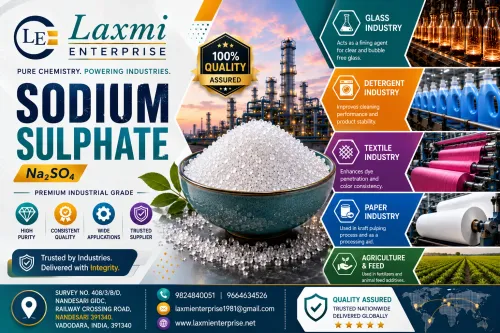
A detergent plant operates differently from a glass manufacturing unit.
A textile processing plant has different process conditions than a paper mill.
The chemical may be the same, but the expectations from that chemical are often very different.
Selecting the appropriate Sodium Sulphate grade is not simply a purchasing decision.
It is a technical decision that directly influences production stability, operational efficiency and finished product consistency.
Understanding Industrial Grade Requirements
Industrial manufacturing is built on precision.
Every raw material entering the production process must support consistent production.
Before approving any supplier, manufacturers should clearly define their own technical requirements.
Questions that should be answered include the following.
What industry will use the product
What production process will it enter
What level of consistency is required
How frequently will the material be consumed
What are the storage conditions inside the factory
The answers to these questions help procurement teams identify suppliers capable of meeting long-term production requirements rather than only immediate purchasing needs.
Every Industry Has Different Expectations
A detergent manufacturer focuses on production efficiency, blending performance and packaging consistency.
A glass manufacturer values reliable batch preparation and continuous furnace operation.
Paper manufacturers require dependable raw materials to maintain uninterrupted production.
Textile processing companies look for consistency that supports stable processing conditions.
Although the industries differ, one expectation remains the same.
Every manufacturer wants predictable performance from every delivery.
This is why suppliers should understand the customer's application instead of simply quoting a price.
Why Product Consistency Is More Important Than One Technical Report
Many purchasing decisions are based on a single laboratory report.
While technical documents are important, they represent only one point in time.
Manufacturing requires consistency over months and years.
A supplier who provides the same quality with every shipment creates greater value than a supplier who delivers one excellent batch followed by inconsistent deliveries.
Production managers appreciate repeatability because stable production depends on stable raw materials.
Consistency reduces unnecessary process adjustments and improves operational confidence.
Technical Discussions Should Happen Before Commercial Negotiations
One mistake frequently made during procurement is discussing price before understanding technical requirements.
The correct sequence should be different.
First understand the application.
Then evaluate technical suitability.
After technical approval, commercial discussions become meaningful.
Choosing a material only because it appears less expensive can increase manufacturing costs if production efficiency decreases.
Technical suitability should always guide procurement decisions.
The Importance of Trial Orders
Even after reviewing specifications and discussing technical requirements, experienced manufacturers often begin with a controlled trial order.
A production trial allows the company to observe how the material behaves under actual operating conditions.
Production teams evaluate process stability.
Quality teams monitor consistency.
Warehouse personnel review packaging and handling.
Procurement departments assess supplier responsiveness.
This practical evaluation provides valuable information before establishing a long-term purchasing agreement.
Packaging Quality Supports Product Quality
Industrial packaging is more than a transport requirement.
It protects the material from dispatch until production.
Strong packaging reduces handling damage.
Proper identification improves warehouse efficiency.
Clear product information supports inventory control.
Professional packaging demonstrates that the supplier values quality throughout the supply chain.
Manufacturers should evaluate packaging with the same attention given to laboratory specifications.
Reliable Documentation Improves Traceability
Modern manufacturing depends on accurate records.
Purchase documentation.
Delivery records.
Technical specifications.
Quality reports.
Inventory records.
Every document contributes to traceability.
Professional suppliers provide organised documentation that supports quality systems and simplifies future audits.
Administrative discipline reflects operational discipline.
Long-Term Availability Matters
Selecting the right grade also means selecting a supplier capable of supporting future production.
Can the supplier continue supplying the same grade as production increases
Can inventory be maintained during periods of high demand
Can dispatch schedules remain consistent
Can technical support continue as customer requirements evolve
Long-term availability is just as important as immediate availability.
Reliable suppliers plan for future growth alongside their customers.
Common Procurement Mistakes
Many manufacturing companies unintentionally create avoidable procurement challenges.
Choosing only on price.
Ignoring production feedback.
Approving suppliers without plant trials.
Not reviewing supplier performance.
Changing suppliers too frequently.
Each of these decisions can introduce unnecessary variability into the manufacturing process.
Strong procurement systems focus on long-term operational stability rather than short-term purchasing advantages.
How Laxmi Enterprise Helps Customers Select the Right Product
At Laxmi Enterprise, we believe that every customer deserves technical guidance before making a purchasing decision.
Operating from Nandesari GIDC, Vadodara, we supply Sodium Sulphate and other industrial chemicals to manufacturers across India.
Before recommending a product, we work to understand the customer's industry, manufacturing process, production volume and long-term requirements.
This allows us to support customers with products that align with their operational needs rather than simply fulfilling an order.
Many of our long-term relationships began with technical discussions instead of commercial negotiations.
That approach continues to guide our business today.
Final Thoughts
Selecting the right Sodium Sulphate grade is about much more than comparing product specifications.
It requires understanding the manufacturing process, evaluating long-term supplier capability and building relationships with companies that value consistency.
Manufacturers who invest time in technical evaluation usually experience smoother production, stronger quality control and greater operational confidence.
The right product, supplied by the right partner, creates long-term value that extends far beyond the purchase order.
Frequently Asked Questions
How do manufacturers choose the right Sodium Sulphate grade
Manufacturers evaluate their production process, technical requirements, quality expectations, storage conditions and long-term supply needs before selecting a suitable product.
Why are production trials recommended before approving a supplier
Production trials allow manufacturers to evaluate actual process performance, consistency, packaging quality and supplier responsiveness under normal operating conditions.
Is technical evaluation more important than price
Technical suitability should always be confirmed first because a product that does not support stable manufacturing may increase overall production costs despite having a lower purchase price.
What should manufacturers evaluate besides the product specification
Manufacturers should also evaluate supplier experience, packaging, documentation, delivery reliability, technical support and long-term supply capability.
Why do manufacturers across India choose Laxmi Enterprise
Manufacturers across India choose Laxmi Enterprise because we combine technical knowledge, consistent-quality Sodium Sulphate, dependable deliveries and professional customer support. Operating from Nandesari GIDC, Vadodara, we help customers select products that support efficient manufacturing, stable production and long-term business growth.
About Laxmi Enterprise
Laxmi Enterprise is a trusted manufacturer, supplier and distributor of industrial chemicals based in Nandesari GIDC, Vadodara, Gujarat. We supply Sodium Sulphate, Sodium Nitrate, Sodium Acetate, Tri Sodium Phosphate and a wide range of industrial chemicals to detergent, glass, textile, paper, ceramic, construction, water treatment and chemical processing industries across India.
With decades of industrial experience, we believe that successful manufacturing begins with informed technical decisions. Through quality products, dependable logistics, transparent communication and customer-focused service, we help manufacturers build reliable production systems and lasting business partnerships.