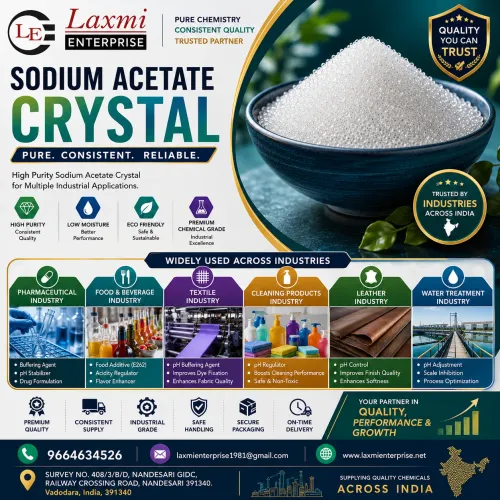


SODIUM ACETATE IN FABRIC FINISHING
Chemical Information
Chemical Name: Sodium Acetate (CH₃COONa)
CAS No.: 127-09-3
Molecular Weight: 82.03 g/mol
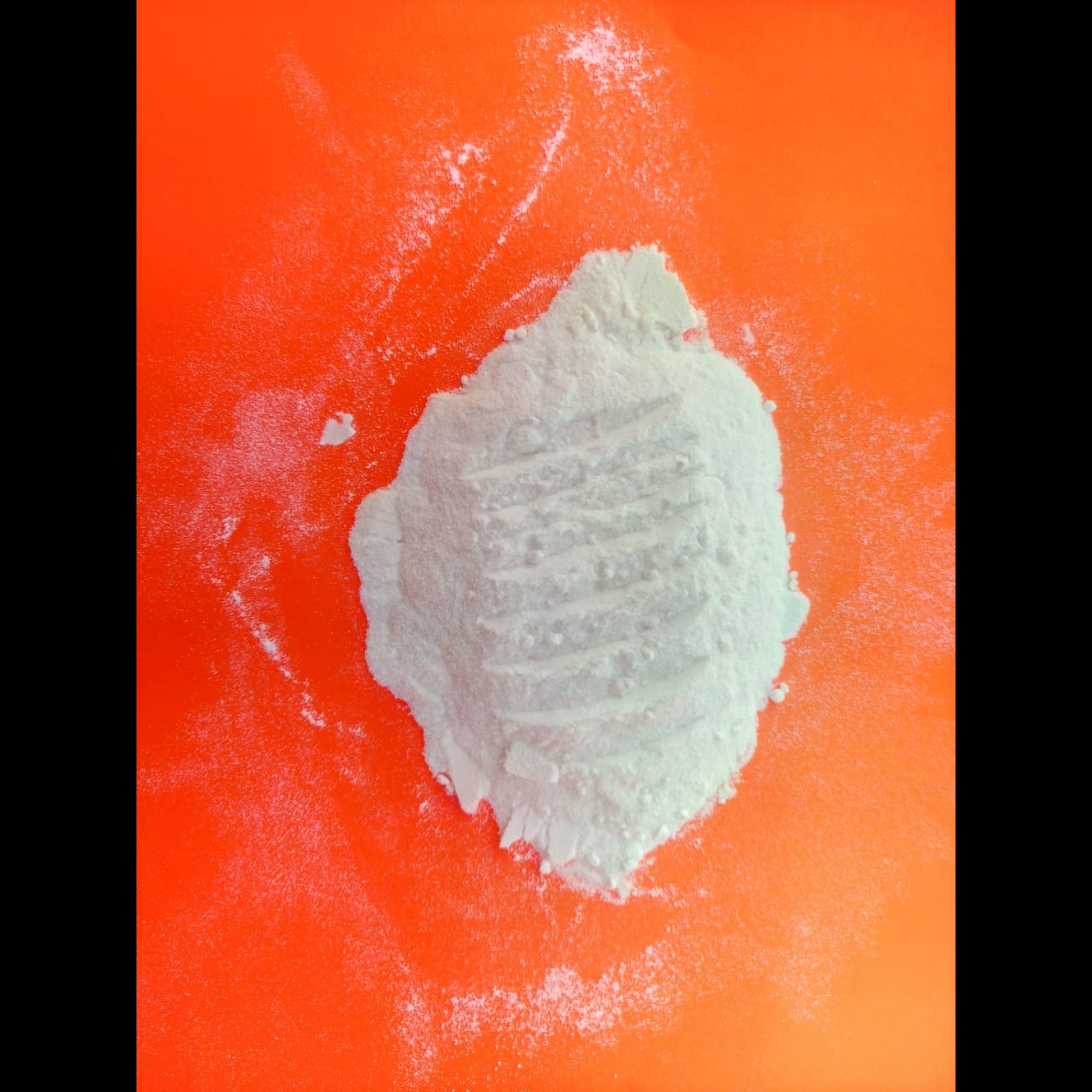
Appearance: White crystalline powder or granular solid
Solubility: Freely soluble in water
Role in Textile and Fabric Finishing
Sodium acetate is commonly used in the textile and dyeing industry — especially during fabric finishing — due to its buffering and neutralizing properties.
1. pH Buffering Agent
Maintains a stable pH during dyeing and finishing processes.
Prevents color variation caused by pH fluctuations.
Protects sensitive dyes and finishing agents from degradation.
2. Neutralizing Agent
Used to neutralize acids (such as acetic acid or sulfuric acid) left after bleaching or dyeing.
Helps achieve a soft hand feel and reduces fabric harshness.
3. Dye Fixation Assistant
Enhances dye uptake and evenness during finishing.
Helps in achieving brighter and more uniform shades on cotton and blended fabrics.
4. Anti-Yellowing Agent
Prevents yellowing of white fabrics after finishing or heat treatment, especially in polyester–cotton blends.
Typical Application
Process Stage Function Dosage (approx.) Remarks
After dyeing Neutralizer 1–3 g/L Adjust to maintain pH 6–7
Finishing bath Buffering & anti-yellowing 2–5 g/L Used with softeners and resins
Mercerizing rinse Neutralizer 1–2 g/L Ensures uniform finish
Advantages
Eco-friendly (biodegradable and non-toxic).
Prevents damage to fibers caused by acidic residues.
Improves fabric handle and luster.
Cost-effective and easy to handle.
Safety & Handling
Store in a dry, cool place away from moisture.
Use gloves and masks to avoid dust inhalation.
Avoid mixing directly with strong acids or oxidizers.
SODIUM ACETATE IN SOAP & DETERGENT INDUSTRY
Chemical Information
Chemical Name: Sodium Acetate
Molecular Formula: CH₃COONa
CAS No.: 127-09-3
Molecular Weight: 82.03 g/mol
Appearance: White crystalline powder or granular solid
Solubility: Freely soluble in water
pH (1% solution): 7.0 – 9.0 (mildly alkaline)
Role in Soap and Detergent Formulations
Sodium acetate serves multiple functional roles in the soap and detergent industry, enhancing product stability, texture, and performance.
1. pH Buffering Agent
Maintains a stable pH during production and storage.
Prevents excessive alkalinity, which can cause skin irritation or reduce surfactant efficiency.
Especially useful in liquid detergents, shampoos, and personal care formulations.
2. Electrolyte & Viscosity Modifier
Acts as a controlled electrolyte, influencing the viscosity of detergent formulations.
Helps stabilize the consistency of liquid detergents and soaps.
Used to fine-tune rheology without harsh effects of salts like NaCl.
3. Stabilizer for Enzymes and Surfactants
Provides a stable medium for enzyme-based detergents.
Protects surfactants from breakdown during high-temperature processing or long-term storage.
Reduces hydrolysis of ester-based surfactants.
4. Odor Control & Neutralizing Agent
Neutralizes residual acids or bases in the formulation.
Improves odor profile and extends shelf life of detergent products.
Often used in fabric softeners and dishwashing liquids.
5. Anti-Caking Agent (Powder Detergents)
Prevents moisture absorption and lump formation.
Enhances free-flowing characteristics of powder detergents.
Advantages
Biodegradable and environmentally safe.
Enhances product shelf life and consistency.
Compatible with most anionic, cationic, and nonionic surfactants.
Economical and easy to incorporate.
Safety & Handling
Non-toxic and non-flammable.
Avoid inhalation of dust — use appropriate masks.
Store in a cool, dry, well-ventilated area.
Keep away from strong acids or oxidizing agents
ODIUM ACETATE AS A CORROSION INHIBITOR IN DETERGENT INDUSTRY
Chemical Profile
Chemical Name: Sodium Acetate
Chemical Formula: CH₃COONa
CAS No.: 127-09-3
Molecular Weight: 82.03 g/mol
Appearance: White crystalline powder or granular solid
Solubility: Freely soluble in water
Nature: Mildly alkaline (pH 7–9 in 1% solution)
🔧 Function: Corrosion Inhibitor
Sodium acetate is widely used in liquid and powder detergent formulations as a secondary corrosion inhibitor to protect metal surfaces and equipment during cleaning or storage.
Mechanism of Action
Forms a protective film on metallic surfaces (iron, steel, copper, zinc, etc.).
Buffers the solution pH, preventing acidic attack or metal oxidation.
Complexes with metal ions to inhibit corrosion in water-based systems.
Minimizes corrosion caused by chlorides or alkaline builders present in detergents.
Key Benefits
Effective corrosion inhibition in neutral to mildly alkaline systems
Enhances product stability and storage life
Reduces equipment maintenance and metal wear
Compatible with surfactants, builders, enzymes, and chelating agents
Eco-friendly, non-toxic, and biodegradable
Technical Insight
Often used in combination with sodium benzoate, borates, or silicates for enhanced protection.
Helps prevent flash rusting and color contamination in metal-surface cleaning detergents.
Suitable for phosphate-free formulations, aligning with green chemistry trends.
Handling & Storage
Store in a dry, cool environment away from acids and moisture.
Use gloves and dust masks while handling.
Stable under normal conditions, but may absorb moisture (hygroscopic).
Would you like me to prepare a Product Data Sheet (PDS) or website product description for
“Sodium Acetate – Corrosion Inhibitor Grade (for Detergent Applications)”?
It can include:
Technical Specifications
Typical Properties
Packing & Storage
Application Industries
Export/HSN Code
• sodium acetate
• sodium acetate anhydrous
• sodium acetate trihydrate
• sodium acetate buffer
• sodium acetate CAS 127-09-3
• sodium acetate E262
• sodium ethanoate
• sodium salt of acetic acid
• sodium acetic acid
• sodium CH3COO
• natrii acetas
• hot ice (trihydrate)
• sodium acetate hydrate
((INDUSTRIAL SODIUM ACETATE APPLICATIONS INDIA.LAXMI ENTERPRISE, VADODRA, GUJARAT, INDIA))