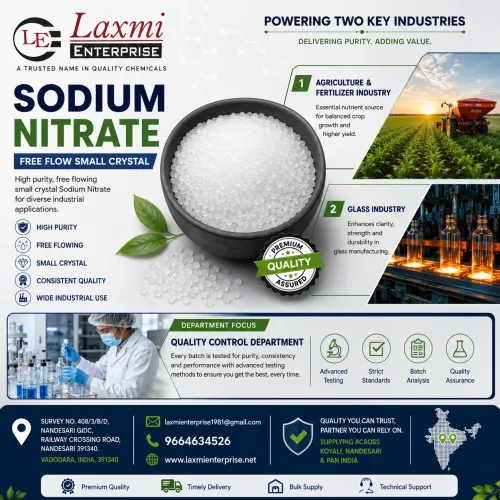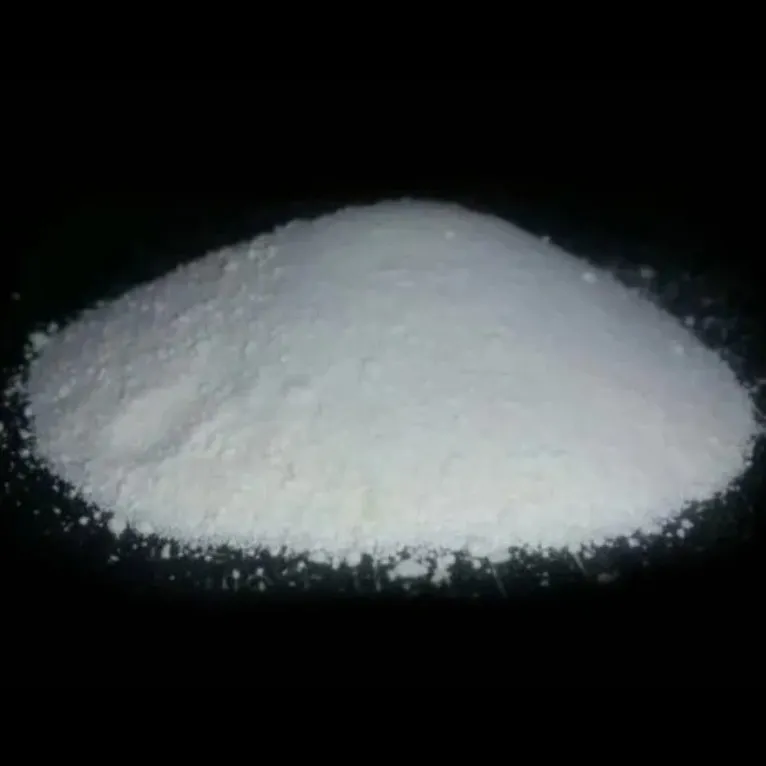
Great — here’s a ready-to-use, pharmacy-quality specification template for pharmaceutical‑grade sodium nitrate (NaNO₃). I can adapt this to a specific pharmacopeia (USP/BP/EP) if you want — just tell me which one. Note: I don’t have web access in this session so I couldn’t pull a current monograph; the table below is a practical, commonly used specification set and analytical-methods list you can use as a baseline or drop into a Certificate of Analysis (CoA).
Pharmaceutical‑Grade Sodium Nitrate — Specification (template)
1. Identification
Chemical name: Sodium nitrate
Synonyms: Natrium nitrate
CAS No.: 7631-99-4
Formula: NaNO₃
Molecular weight: 84.99 g·mol⁻¹
Appearance: White crystalline powder or colorless crystals, free from visible extraneous matter
2. Quality / Acceptance criteria
Item Acceptance criteria Typical test method
Assay (on dry basis) ≥ 99.0 — 100.5% (as NaNO₃) Ion chromatography (preferred) or titration (standard gravimetric / redox methods)
Identification A IR spectrum consistent with reference standard IR (FTIR)
Identification B Produces characteristic reactions for nitrate Classical chemical test (e.g., reduction + diazotization) or ion chromatography
Loss on drying ≤ 0.2% (105°C, 2 h) Gravimetric (LOD)
Residue on ignition ≤ 0.10% Ignition at specified temperature
Chloride (Cl⁻) ≤ 0.02% Potentiometric titration or ion chromatography
Sulfate (SO₄²⁻) ≤ 0.02% Gravimetric/ion chromatography
Heavy metals (as Pb) ≤ 10 ppm (0.0010%) ICP‑MS / AAS
Arsenic (As) ≤ 2 ppm ICP‑MS / Hydride generation AAS
Iron (Fe) ≤ 50 ppm ICP‑MS / AAS
Other anions (e.g., nitrite) Nitrite: ≤ 10 ppm Ion chromatography
pH (1% w/v aqueous soln) ~6.5–8.5 pH meter
Microbial limits Not normally required for inorganic salts intended for non‑parenteral use; if intended for parenteral/sterile use: sterility and endotoxin tests required USP Sterility / LAL
Melting / Decomposition Melting point ~308°C (decomposes) Melting point apparatus / DSC
Appearance of solution Clear, colorless (1% w/v) Visual inspection
Notes: exact numeric acceptance limits can be tightened/loosened per your manufacturing/Regulatory requirements or the pharmacopeial monograph you must comply with (USP/BP/EP).
3. Analytical methods (recommended)
Assay: Ion chromatography (IC) with external standard or titrimetric/redox method traceable to a primary standard. IC is preferred for accuracy and separation of nitrate/nitrite/other anions.
Identification: FTIR spectrum comparison and IC retention time match; supplementary classical chemical test for nitrate if required.
Impurities (Cl⁻, SO₄²⁻, NO₂⁻): Ion chromatography.
Heavy metals / As / Fe: ICP‑MS or AAS.
Loss on drying: Gravimetric at 105°C (or per internal SOP).
Residue on ignition: Per internal SOP (careful to account for nitrate decomposition).
pH: pH of 1% w/v aqueous solution measured at 20–25°C.
Microbiology / Endotoxin: Only if the intended use requires (e.g., sterile injectable), otherwise state “Not applicable” and include a justification.
4. Safety, storage & handling
Hazards: Strong oxidizer. Avoid contact with combustible/organic materials — risk of fire or explosion when mixed with reducing agents or organics. Handle with appropriate care.
PPE: Gloves, safety goggles, lab coat; use in well‑ventilated area.
Storage: Keep in a cool, dry, well‑ventilated area away from reducing agents, organics, combustibles, and acids. Store in tightly closed containers.
Shelf life: Typically 24–36 months from date of manufacture when stored as recommended; confirm by stability testing.
Disposal: Follow local regulations for oxidizing salts; avoid release to organic waste streams.
5. Packaging
Primary: Food‑grade / pharma‑grade HDPE drums, poly bags inside drums, or double-bagged polyethylene lined containers.
Gross weights: as required (e.g., 25 kg bags or 250 kg drums) — specify lot / batch number, manufacture date, expiry.
6. Typical Certificate of Analysis (CoA) fields
Product name, grade, CAS, batch/lot number, Mfg date, Expiry date, Net weight, Appearance, Assay (w/w), Loss on drying, Chloride, Sulfate, Heavy metals, Arsenic, Iron, Nitrite, pH (1% w/v), Microbial status, Method references, Release signature.
7. For parenteral/sterile applications
If the material is to be used in sterile/parenteral formulations, additional requirements will apply:
Sterility test (USP sterility) — pass
Endotoxin (LAL) — specify limit (EU/mL or IU/mg) depending on intended dose
Aseptic/sterile packaging and validation of sterilization method
Full traceability and change control
Residual solvents (if any solvents were used in production) — per ICH Q3C
8. Regulatory & pharmacopeial note
Pharmacopeias (USP/BP/EP) may have specific monographs and numeric limits for sodium nitrate. If you require a USP/BP/EP‑compliant spec, tell me which monograph to align with and I’ll adapt this template precisely to that monograph (or list differences) — I can also produce a formatted CoA or a PDF spec sheet.
If you want, I can:
Produce a ready-to-print CoA (PDF) or an Excel CoA template with the fields above.
Tighten numeric limits to match USP / BP / EP (specify which).
Draft SOP text for any of the analytical tests (e.g., ion chromatography method parameters or a titration SOP).
Which of those would you like next?
Sodium nitrate (NaNO₃) is not a primary detergent ingredient like surfactants, builders, or fillers, but it does have niche applications in detergent and cleaning product manufacturing, mainly as an oxidizing agent, stabilizer, or additive. Here’s a structured explanation:
1. Role of Sodium Nitrate in Detergent Manufacturing
a) Oxidizing Agent / Bleaching Aid
Sodium nitrate is a mild oxidizer.
In powdered laundry detergents, it can act as a bleaching adjunct when combined with sodium percarbonate or sodium perborate.
The oxidizing properties help remove stains and enhance whitening without generating chlorine.
b) Color and Odor Stabilizer
Helps stabilize dyes or perfumes in detergent powders by reducing degradation from other reactive components.
Can prevent yellowing of detergent powders caused by certain chemical reactions during storage.
c) Preventing Caking
In combination with certain silicates or phosphates, sodium nitrate can reduce moisture-induced caking in detergent powders.
Works by mildly controlling the crystal structure of the bulk powder.
d) Niche Chemical Reactions
Occasionally used in specialty or industrial detergents where nitrate ions participate in pH control or specific oxidation reactions.
Acts as a corrosion inhibitor in washing powders for metal-handling applications.
2. Typical Usage Levels
Concentration in detergent: Generally very low, 0.1–1.0% by weight, depending on the product type.
Excess nitrate is avoided due to regulatory limits and environmental concerns (nitrate runoff).
3. Advantages
Non-chlorine bleaching: gentler on fabrics.
Long shelf-life additive: stabilizes detergent powders.
Compatible with most detergent ingredients like sodium carbonate, silicates, and surfactants.
4. Limitations / Safety
Strong oxidizer: should be handled carefully in manufacturing.
Can react with reducing agents (like some sulfites) — must avoid contamination.
Environmental impact: high nitrate concentrations in wastewater can contribute to eutrophication.
5. Regulatory / Environmental Notes
In India and most countries, detergent-grade sodium nitrate must comply with environmental discharge norms.
Typically, final formulations are checked for total nitrogen/nitrate content in wastewater.
Not permitted in high concentrations in consumer detergents due to environmental regulations.
Summary:
In detergent manufacturing, sodium nitrate is a minor but useful additive, primarily for oxidation, stability, and caking prevention. It is not a surfactant or builder and is usually limited to small percentages.
Controlled humidity regulation” in industries refers to managing and maintaining specific humidity levels in manufacturing, storage, and processing environments. Proper humidity control is critical for product quality, equipment reliability, and worker safety. Here’s a detailed overview:
1. Importance of Humidity Control in Industries
a) Pharmaceuticals & Chemicals
Moisture-sensitive powders (e.g., sodium nitrate, APIs, excipients) can caking, degradation, or reaction if exposed to high humidity.
Controlled Relative Humidity (RH) ensures stability of raw materials, intermediates, and finished products.
Examples: Tablet coating, powder mixing, sterile production environments.
b) Food & Beverage
Prevents microbial growth and spoilage.
Maintains texture, flavor, and shelf life of baked goods, cereals, and snacks.
Example: Chocolate processing — ideal RH 50–55% to prevent sugar bloom.
c) Electronics & Semiconductors
High humidity causes corrosion, short-circuits, or condensation on sensitive electronic components.
Typical RH: 30–50% in cleanrooms.
d) Textiles & Paper
Fiber and paper absorb moisture; uncontrolled RH can cause:
Shrinkage, stretching, or deformation.
Static electricity buildup.
Typical RH: 50–60% for textile processing.
e) Metal & Precision Engineering
High humidity leads to rust and corrosion.
Controlled RH prevents damage during storage or assembly.
2. Methods of Humidity Control
Method Description Industrial Application
Humidifiers Add moisture to dry air Textile, paper, pharma, electronics
Dehumidifiers Remove moisture from air Chemical storage, food processing
HVAC with Humidity Control Integrated heating/cooling + humidification/dehumidification Cleanrooms, pharmaceutical plants
Desiccant Systems Use silica gel, molecular sieves Dry storage, lab-grade environments
Steam Injection / Atomization Rapid humidification Food processing, pharma cleanrooms
3. Critical Parameters
Relative Humidity (RH %) — usually controlled ±2–5%.
Temperature — affects RH; precise control requires temperature-humidity coordination.
Airflow — ensures uniform humidity distribution.
Monitoring & Sensors — electronic hygrometers, data loggers, PLC-based control for automation.
4. Industry Standards & Guidelines
Pharmaceuticals: WHO, GMP, and USP specify RH limits for different areas (e.g., dry storage ≤40% RH).
Food: FDA & FSSAI guidelines for storage RH.
Electronics & Cleanrooms: ISO 14644 and IEC standards for RH in cleanrooms.
Textiles: ISO 139:1988 for ambient conditions in textile testing.
5. Benefits of Controlled Humidity
Product Quality — prevents spoilage, caking, degradation.
Equipment Longevity — reduces corrosion, condensation, and mold growth.
Energy Efficiency — precise control saves HVAC energy.
Compliance — ensures adherence to regulatory standards.
Worker Comfort — maintains safe and productive working environment.
Summary
Controlled humidity regulation is critical across chemical, pharmaceutical, food, electronics, textile, and metal industries. It involves humidification, dehumidification, precise monitoring, and automation to protect products, equipment, and processes.
Pharmaceutical‑Grade Sodium Nitrate — Specification (template)
1. Identification
Chemical name: Sodium nitrate
Synonyms: Natrium nitrate
CAS No.: 7631-99-4
Formula: NaNO₃
Molecular weight: 84.99 g·mol⁻¹
Appearance: White crystalline powder or colorless crystals, free from visible extraneous matter
2. Quality / Acceptance criteria
Item Acceptance criteria Typical test method
Assay (on dry basis) ≥ 99.0 — 100.5% (as NaNO₃) Ion chromatography (preferred) or titration (standard gravimetric / redox methods)
Identification A IR spectrum consistent with reference standard IR (FTIR)
Identification B Produces characteristic reactions for nitrate Classical chemical test (e.g., reduction + diazotization) or ion chromatography
Loss on drying ≤ 0.2% (105°C, 2 h) Gravimetric (LOD)
Residue on ignition ≤ 0.10% Ignition at specified temperature
Chloride (Cl⁻) ≤ 0.02% Potentiometric titration or ion chromatography
Sulfate (SO₄²⁻) ≤ 0.02% Gravimetric/ion chromatography
Heavy metals (as Pb) ≤ 10 ppm (0.0010%) ICP‑MS / AAS
Arsenic (As) ≤ 2 ppm ICP‑MS / Hydride generation AAS
Iron (Fe) ≤ 50 ppm ICP‑MS / AAS
Other anions (e.g., nitrite) Nitrite: ≤ 10 ppm Ion chromatography
pH (1% w/v aqueous soln) ~6.5–8.5 pH meter
Microbial limits Not normally required for inorganic salts intended for non‑parenteral use; if intended for parenteral/sterile use: sterility and endotoxin tests required USP Sterility / LAL
Melting / Decomposition Melting point ~308°C (decomposes) Melting point apparatus / DSC
Appearance of solution Clear, colorless (1% w/v) Visual inspection
Notes: exact numeric acceptance limits can be tightened/loosened per your manufacturing/Regulatory requirements or the pharmacopeial monograph you must comply with (USP/BP/EP).
3. Analytical methods (recommended)
Assay: Ion chromatography (IC) with external standard or titrimetric/redox method traceable to a primary standard. IC is preferred for accuracy and separation of nitrate/nitrite/other anions.
Identification: FTIR spectrum comparison and IC retention time match; supplementary classical chemical test for nitrate if required.
Impurities (Cl⁻, SO₄²⁻, NO₂⁻): Ion chromatography.
Heavy metals / As / Fe: ICP‑MS or AAS.
Loss on drying: Gravimetric at 105°C (or per internal SOP).
Residue on ignition: Per internal SOP (careful to account for nitrate decomposition).
pH: pH of 1% w/v aqueous solution measured at 20–25°C.
Microbiology / Endotoxin: Only if the intended use requires (e.g., sterile injectable), otherwise state “Not applicable” and include a justification.
4. Safety, storage & handling
Hazards: Strong oxidizer. Avoid contact with combustible/organic materials — risk of fire or explosion when mixed with reducing agents or organics. Handle with appropriate care.
PPE: Gloves, safety goggles, lab coat; use in well‑ventilated area.
Storage: Keep in a cool, dry, well‑ventilated area away from reducing agents, organics, combustibles, and acids. Store in tightly closed containers.
Shelf life: Typically 24–36 months from date of manufacture when stored as recommended; confirm by stability testing.
Disposal: Follow local regulations for oxidizing salts; avoid release to organic waste streams.
5. Packaging
Primary: Food‑grade / pharma‑grade HDPE drums, poly bags inside drums, or double-bagged polyethylene lined containers.
Gross weights: as required (e.g., 25 kg bags or 250 kg drums) — specify lot / batch number, manufacture date, expiry.
6. Typical Certificate of Analysis (CoA) fields
Product name, grade, CAS, batch/lot number, Mfg date, Expiry date, Net weight, Appearance, Assay (w/w), Loss on drying, Chloride, Sulfate, Heavy metals, Arsenic, Iron, Nitrite, pH (1% w/v), Microbial status, Method references, Release signature.
7. For parenteral/sterile applications
If the material is to be used in sterile/parenteral formulations, additional requirements will apply:
Sterility test (USP sterility) — pass
Endotoxin (LAL) — specify limit (EU/mL or IU/mg) depending on intended dose
Aseptic/sterile packaging and validation of sterilization method
Full traceability and change control
Residual solvents (if any solvents were used in production) — per ICH Q3C
8. Regulatory & pharmacopeial note
Pharmacopeias (USP/BP/EP) may have specific monographs and numeric limits for sodium nitrate. If you require a USP/BP/EP‑compliant spec, tell me which monograph to align with and I’ll adapt this template precisely to that monograph (or list differences) — I can also produce a formatted CoA or a PDF spec sheet.
If you want, I can:
Produce a ready-to-print CoA (PDF) or an Excel CoA template with the fields above.
Tighten numeric limits to match USP / BP / EP (specify which).
Draft SOP text for any of the analytical tests (e.g., ion chromatography method parameters or a titration SOP).
Which of those would you like next?
Sodium nitrate (NaNO₃) is not a primary detergent ingredient like surfactants, builders, or fillers, but it does have niche applications in detergent and cleaning product manufacturing, mainly as an oxidizing agent, stabilizer, or additive. Here’s a structured explanation:
1. Role of Sodium Nitrate in Detergent Manufacturing
a) Oxidizing Agent / Bleaching Aid
Sodium nitrate is a mild oxidizer.
In powdered laundry detergents, it can act as a bleaching adjunct when combined with sodium percarbonate or sodium perborate.
The oxidizing properties help remove stains and enhance whitening without generating chlorine.
b) Color and Odor Stabilizer
Helps stabilize dyes or perfumes in detergent powders by reducing degradation from other reactive components.
Can prevent yellowing of detergent powders caused by certain chemical reactions during storage.
c) Preventing Caking
In combination with certain silicates or phosphates, sodium nitrate can reduce moisture-induced caking in detergent powders.
Works by mildly controlling the crystal structure of the bulk powder.
d) Niche Chemical Reactions
Occasionally used in specialty or industrial detergents where nitrate ions participate in pH control or specific oxidation reactions.
Acts as a corrosion inhibitor in washing powders for metal-handling applications.
2. Typical Usage Levels
Concentration in detergent: Generally very low, 0.1–1.0% by weight, depending on the product type.
Excess nitrate is avoided due to regulatory limits and environmental concerns (nitrate runoff).
3. Advantages
Non-chlorine bleaching: gentler on fabrics.
Long shelf-life additive: stabilizes detergent powders.
Compatible with most detergent ingredients like sodium carbonate, silicates, and surfactants.
4. Limitations / Safety
Strong oxidizer: should be handled carefully in manufacturing.
Can react with reducing agents (like some sulfites) — must avoid contamination.
Environmental impact: high nitrate concentrations in wastewater can contribute to eutrophication.
5. Regulatory / Environmental Notes
In India and most countries, detergent-grade sodium nitrate must comply with environmental discharge norms.
Typically, final formulations are checked for total nitrogen/nitrate content in wastewater.
Not permitted in high concentrations in consumer detergents due to environmental regulations.
Summary:
In detergent manufacturing, sodium nitrate is a minor but useful additive, primarily for oxidation, stability, and caking prevention. It is not a surfactant or builder and is usually limited to small percentages.
Controlled humidity regulation” in industries refers to managing and maintaining specific humidity levels in manufacturing, storage, and processing environments. Proper humidity control is critical for product quality, equipment reliability, and worker safety. Here’s a detailed overview:
1. Importance of Humidity Control in Industries
a) Pharmaceuticals & Chemicals
Moisture-sensitive powders (e.g., sodium nitrate, APIs, excipients) can caking, degradation, or reaction if exposed to high humidity.
Controlled Relative Humidity (RH) ensures stability of raw materials, intermediates, and finished products.
Examples: Tablet coating, powder mixing, sterile production environments.
b) Food & Beverage
Prevents microbial growth and spoilage.
Maintains texture, flavor, and shelf life of baked goods, cereals, and snacks.
Example: Chocolate processing — ideal RH 50–55% to prevent sugar bloom.
c) Electronics & Semiconductors
High humidity causes corrosion, short-circuits, or condensation on sensitive electronic components.
Typical RH: 30–50% in cleanrooms.
d) Textiles & Paper
Fiber and paper absorb moisture; uncontrolled RH can cause:
Shrinkage, stretching, or deformation.
Static electricity buildup.
Typical RH: 50–60% for textile processing.
e) Metal & Precision Engineering
High humidity leads to rust and corrosion.
Controlled RH prevents damage during storage or assembly.
2. Methods of Humidity Control
Method Description Industrial Application
Humidifiers Add moisture to dry air Textile, paper, pharma, electronics
Dehumidifiers Remove moisture from air Chemical storage, food processing
HVAC with Humidity Control Integrated heating/cooling + humidification/dehumidification Cleanrooms, pharmaceutical plants
Desiccant Systems Use silica gel, molecular sieves Dry storage, lab-grade environments
Steam Injection / Atomization Rapid humidification Food processing, pharma cleanrooms
3. Critical Parameters
Relative Humidity (RH %) — usually controlled ±2–5%.
Temperature — affects RH; precise control requires temperature-humidity coordination.
Airflow — ensures uniform humidity distribution.
Monitoring & Sensors — electronic hygrometers, data loggers, PLC-based control for automation.
4. Industry Standards & Guidelines
Pharmaceuticals: WHO, GMP, and USP specify RH limits for different areas (e.g., dry storage ≤40% RH).
Food: FDA & FSSAI guidelines for storage RH.
Electronics & Cleanrooms: ISO 14644 and IEC standards for RH in cleanrooms.
Textiles: ISO 139:1988 for ambient conditions in textile testing.
5. Benefits of Controlled Humidity
Product Quality — prevents spoilage, caking, degradation.
Equipment Longevity — reduces corrosion, condensation, and mold growth.
Energy Efficiency — precise control saves HVAC energy.
Compliance — ensures adherence to regulatory standards.
Worker Comfort — maintains safe and productive working environment.
Summary
Controlled humidity regulation is critical across chemical, pharmaceutical, food, electronics, textile, and metal industries. It involves humidification, dehumidification, precise monitoring, and automation to protect products, equipment, and processes.
Keywords