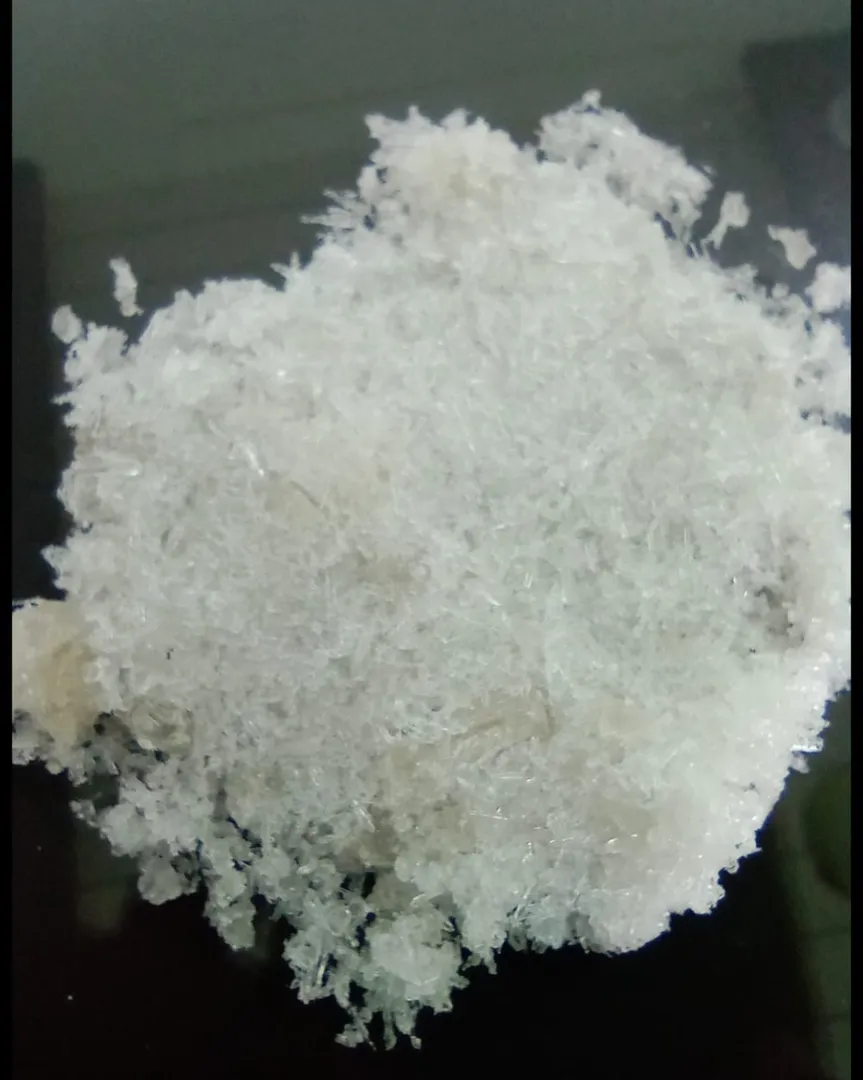
Environmentally Safe Sodium Acetate Manufacturing
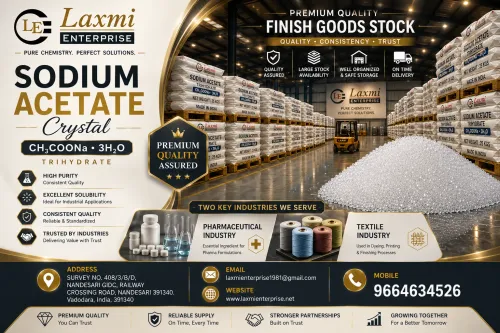
Chemical Name: Sodium Acetate
Chemical Formula: CH₃COONa
CAS No.: 127-09-3
Molecular Weight: 82.03 g/mol
Overview
At Laxmi Enterprise, our Sodium Acetate is produced using an eco-friendly and sustainable manufacturing process, minimizing environmental impact while maintaining high chemical purity and performance.
We prioritize green chemistry principles — focusing on waste reduction, resource efficiency, and non-toxic processes throughout production.
Environmentally Responsible Manufacturing Process
Reaction Pathway
Sodium Acetate is manufactured through a controlled neutralization reaction between acetic acid and sodium carbonate or sodium hydroxide:
CH3COOH+Na2CO3→2CH3COONa+H2O+CO2CH₃COOH + Na₂CO₃ → 2CH₃COONa + H₂O + CO₂CH3COOH+Na2CO3→2CH3COONa+H2O+CO2
The process generates water and carbon dioxide as harmless by-Products.
Use of Food / Pharma Grade Raw Materials
High-purity acetic acid (from bio-fermentation or petrochemical origin) and sodium carbonate/sodium hydroxide are used.
No heavy metals or harmful additives are introduced during synthesis.
Closed-loop & Low-waste System
Effluent-free operation with maximum water recycling.
CO₂ evolved can be captured or reused in other chemical processes.
Filtration and crystallization units ensure consistent product quality without releasing pollutants.
Energy-efficient Production
Optimized heating and crystallization systems reduce energy consumption and carbon footprint.
Steam recovery and condensate reuse minimize resource wastage.
Sustainability & Environmental Benefits
✅ Zero Liquid Discharge (ZLD) process capability
✅ Non-toxic, biodegradable end product
✅ Reduced greenhouse gas emissions
✅ Meets RoHS and REACH environmental standards
✅ Safe for textile, leather, and detergent industries
Quality & Safety Standards
Conforms to ISO 9001:2015 and ISO 14001:2015 quality & environmental norms
Batch-wise quality checks for pH, purity, and solubility
Packaged in recyclable HDPE bags with moisture protection
Applications of Eco-safe Sodium Acetate
Textile processing & finishing
Leather tanning & retanning
Detergent and cleaning formulations
Buffering and neutralizing in chemical synthesis
Food-grade variants for preservation and flavoring (upon request)
Packaging Options
25 / 50 kg HDPE laminated bags
Jumbo bags for bulk users
Custom eco-friendly packaging available on request
Sustainable & eco-safe manufacturing practices
Consistent high purity and solubility
Rliable supply chain and technical support
Focus on quality, safety, and environmental responsibility
Would you like me to create a branded “Sodium Acetate – Environmentally Safe Manufacturing” PDF datasheet (with your company logo, tagline, and contact info for Laxmi Enterprise)?
It will look professional and ready for client presentations or your website.
Neutralizing Residual Alkali in Textiles
Overview
During textile processing — particularly scouring, bleaching, and mercerizing — fabrics are treated with strong alkaline agents such as caustic soda (NaOH) or soda ash (Na₂CO₃).
After these operations, a certain amount of residual alkali remains trapped in the fibers, which must be neutralized before dyeing or finishing.
If left untreated, this residual alkalinity can lead to:
Uneven dyeing or patchy coloration
Fiber damage and harsh fabric feel
Yellowing or reduced whiteness
pH imbalance in subsequent finishing baths
Importance of Neutralization
Neutralizing residual alkali ensures:
Stable fabric pH (6.0–7.0) before dyeing and finishing
Enhanced dye affinity and brightness
Improved fabric softness and feel
Prevention of chemical degradation of fibers
Role of Sodium Acetate
Sodium Acetate (CH₃COONa) is a preferred mild neutralizing agent used after alkaline textile treatments.
It effectively neutralizes leftover alkali without harming delicate fibers or altering dyeing properties.
Key Advantages
Gentle Neutralization – Prevents over-acidification that can damage cotton or synthetic fibers.
Buffering Action – Maintains a controlled pH in the slightly neutral range.
Improves Dyeing Performance – Ensures even and bright coloration.
Enhances Fabric Quality – Results in a soft, smooth hand feel and improved finish.
Eco-friendly & Non-corrosive – Safer alternative to strong mineral acids (like acetic or hydrochloric acid).
Benefits of Using Sodium Acetate
Stable pH control without fiber damage
Uniform dye absorption and shade consistency
Reduced effluent load compared to acid neutralizers
Compatible with all textile substrates (cotton, polyester, blends)
Packaging & Availability
25 / 50 kg HDPE bags with inner liner
Bulk and custom packaging available
Supplied by Laxmi Enterprise, Vadodara for textile and detergent industries
Chemical Name: Sodium Acetate
Chemical Formula: CH₃COONa
CAS No.: 127-09-3
Molecular Weight: 82.03 g/mol
Overview
At Laxmi Enterprise, our Sodium Acetate is produced using an eco-friendly and sustainable manufacturing process, minimizing environmental impact while maintaining high chemical purity and performance.
We prioritize green chemistry principles — focusing on waste reduction, resource efficiency, and non-toxic processes throughout production.
Environmentally Responsible Manufacturing Process
Reaction Pathway
Sodium Acetate is manufactured through a controlled neutralization reaction between acetic acid and sodium carbonate or sodium hydroxide:
CH3COOH+Na2CO3→2CH3COONa+H2O+CO2CH₃COOH + Na₂CO₃ → 2CH₃COONa + H₂O + CO₂CH3COOH+Na2CO3→2CH3COONa+H2O+CO2
The process generates water and carbon dioxide as harmless by-Products.
Use of Food / Pharma Grade Raw Materials
High-purity acetic acid (from bio-fermentation or petrochemical origin) and sodium carbonate/sodium hydroxide are used.
No heavy metals or harmful additives are introduced during synthesis.
Closed-loop & Low-waste System
Effluent-free operation with maximum water recycling.
CO₂ evolved can be captured or reused in other chemical processes.
Filtration and crystallization units ensure consistent product quality without releasing pollutants.
Energy-efficient Production
Optimized heating and crystallization systems reduce energy consumption and carbon footprint.
Steam recovery and condensate reuse minimize resource wastage.
Sustainability & Environmental Benefits
✅ Zero Liquid Discharge (ZLD) process capability
✅ Non-toxic, biodegradable end product
✅ Reduced greenhouse gas emissions
✅ Meets RoHS and REACH environmental standards
✅ Safe for textile, leather, and detergent industries
Quality & Safety Standards
Conforms to ISO 9001:2015 and ISO 14001:2015 quality & environmental norms
Batch-wise quality checks for pH, purity, and solubility
Packaged in recyclable HDPE bags with moisture protection
Applications of Eco-safe Sodium Acetate
Textile processing & finishing
Leather tanning & retanning
Detergent and cleaning formulations
Buffering and neutralizing in chemical synthesis
Food-grade variants for preservation and flavoring (upon request)
Packaging Options
25 / 50 kg HDPE laminated bags
Jumbo bags for bulk users
Custom eco-friendly packaging available on request
Sustainable & eco-safe manufacturing practices
Consistent high purity and solubility
Rliable supply chain and technical support
Focus on quality, safety, and environmental responsibility
Would you like me to create a branded “Sodium Acetate – Environmentally Safe Manufacturing” PDF datasheet (with your company logo, tagline, and contact info for Laxmi Enterprise)?
It will look professional and ready for client presentations or your website.
Neutralizing Residual Alkali in Textiles
Overview
During textile processing — particularly scouring, bleaching, and mercerizing — fabrics are treated with strong alkaline agents such as caustic soda (NaOH) or soda ash (Na₂CO₃).
After these operations, a certain amount of residual alkali remains trapped in the fibers, which must be neutralized before dyeing or finishing.
If left untreated, this residual alkalinity can lead to:
Uneven dyeing or patchy coloration
Fiber damage and harsh fabric feel
Yellowing or reduced whiteness
pH imbalance in subsequent finishing baths
Importance of Neutralization
Neutralizing residual alkali ensures:
Stable fabric pH (6.0–7.0) before dyeing and finishing
Enhanced dye affinity and brightness
Improved fabric softness and feel
Prevention of chemical degradation of fibers
Role of Sodium Acetate
Sodium Acetate (CH₃COONa) is a preferred mild neutralizing agent used after alkaline textile treatments.
It effectively neutralizes leftover alkali without harming delicate fibers or altering dyeing properties.
Key Advantages
Gentle Neutralization – Prevents over-acidification that can damage cotton or synthetic fibers.
Buffering Action – Maintains a controlled pH in the slightly neutral range.
Improves Dyeing Performance – Ensures even and bright coloration.
Enhances Fabric Quality – Results in a soft, smooth hand feel and improved finish.
Eco-friendly & Non-corrosive – Safer alternative to strong mineral acids (like acetic or hydrochloric acid).
Benefits of Using Sodium Acetate
Stable pH control without fiber damage
Uniform dye absorption and shade consistency
Reduced effluent load compared to acid neutralizers
Compatible with all textile substrates (cotton, polyester, blends)
Packaging & Availability
25 / 50 kg HDPE bags with inner liner
Bulk and custom packaging available
Supplied by Laxmi Enterprise, Vadodara for textile and detergent industries
Keywords