

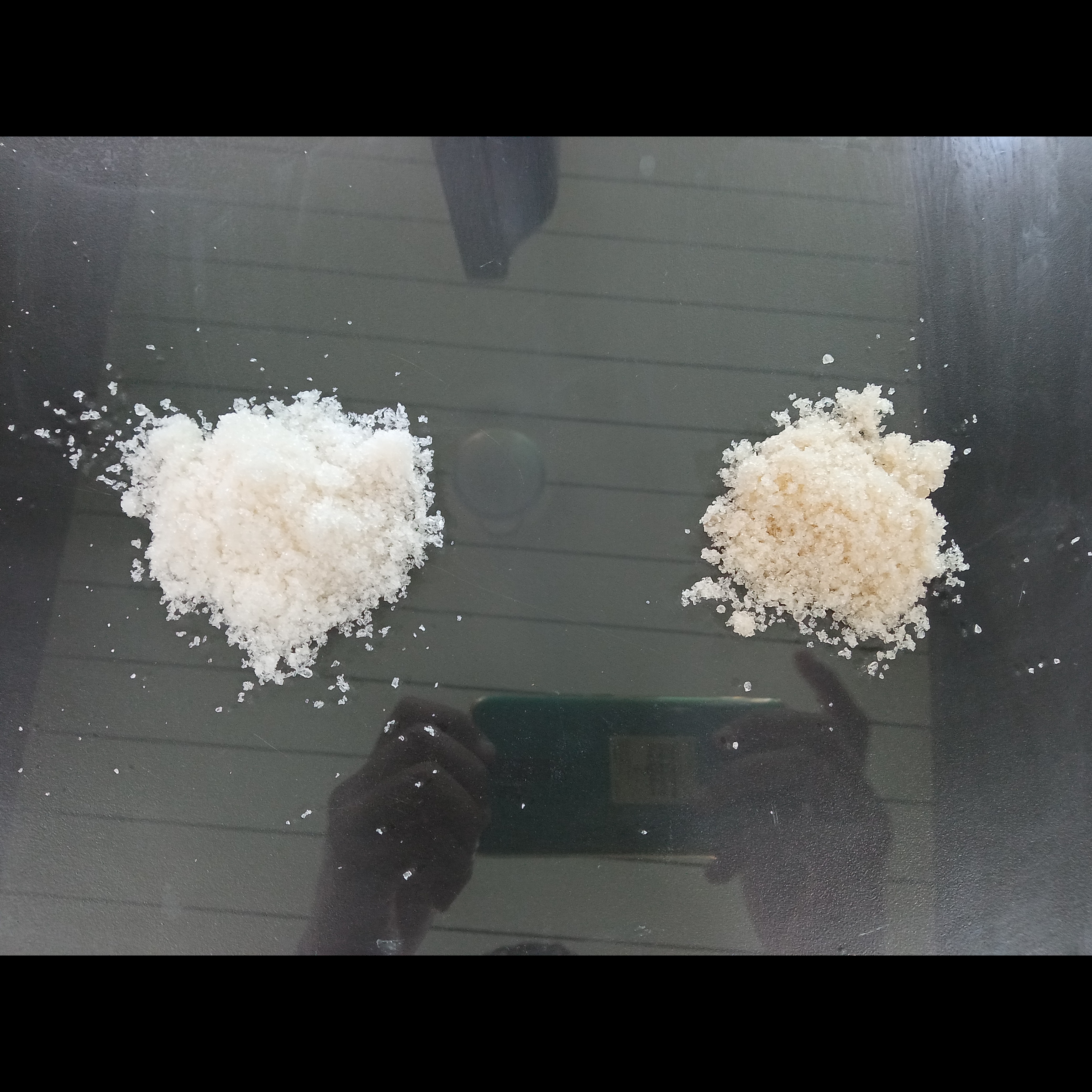
Sodium Acetate for Electroplating Processes
Overview:
Sodium acetate (CH₃COONa) is widely used in electroplating and metal finishing industries as a buffering and pH-regulating agent. It helps maintain the desired acidity and conductivity of plating baths, ensuring smooth, uniform, and high-quality metal deposits on substrates.
Functions in Electroplating:
pH Buffer: Stabilizes the pH of the plating bath, preventing fluctuations that can affect coating uniformity.
Conductivity Enhancer: Improves ionic strength, allowing even current distribution during electroplating.
Complexing Agent: In certain plating systems (e.g., nickel or zinc), sodium acetate helps form stable metal complexes, promoting bright and smooth deposits.
Corrosion Control: Minimizes acid attack on equipment and substrates by moderating bath acidity.
Applications:
Nickel plating
Zinc plating
Copper electroplating
Bright and matte finishing processes
Metal surface pre-treatment and passivation baths
Benefits:
Ensures consistent plating thickness and brightness
Reduces defects such as pitting or burning
Provides controlled buffering without excessive alkalinity
Compatible with a variety of acidic and neutral plating solutions
Typical Concentration:
Used at concentrations between 5–25 g/L, depending on bath composition and process requirements.
Packaging: 25 Kg HDPE Bags
CAS No.: 127-09-3
Grade: Industrial / Electroplating
Supplier:
Laxmi Enterprise, Vadodara, India
Reliable supplier of Sodium Acetate for textile, leather, and electroplating industries.
Sodium Acetate for Electroplating Processes
Overview:
Sodium acetate (CH₃COONa) is widely used in electroplating and metal finishing industries as a buffering and pH-regulating agent. It helps maintain the desired acidity and conductivity of plating baths, ensuring smooth, uniform, and high-quality metal deposits on substrates.
Functions in Electroplating:
pH Buffer: Stabilizes the pH of the plating bath, preventing fluctuations that can affect coating uniformity.
Conductivity Enhancer: Improves ionic strength, allowing even current distribution during electroplating.
Complexing Agent: In certain plating systems (e.g., nickel or zinc), sodium acetate helps form stable metal complexes, promoting bright and smooth deposits.
Corrosion Control: Minimizes acid attack on equipment and substrates by moderating bath acidity.
Applications:
Nickel plating
Zinc plating
Copper electroplating
Bright and matte finishing processes
Metal surface pre-treatment and passivation baths
Benefits:
Ensures consistent plating thickness and brightness
Reduces defects such as pitting or burning
Provides controlled buffering without excessive alkalinity
Compatible with a variety of acidic and neutral plating solutions
Typical Concentration:
Used at concentrations between 5–25 g/L, depending on bath composition and process requirements.
Packaging: 25 Kg HDPE Bags
CAS No.: 127-09-3
Grade: Industrial / Electroplating
Sodium Acetate for Water Treatment
Overview:
Sodium acetate (CH₃COONa) is a versatile and eco-friendly chemical used in industrial and municipal water treatment processes. It serves primarily as a carbon source, pH regulator, and neutralizing agent, helping maintain water quality and improve biological treatment efficiency.
Functions in Water Treatment:
Carbon Source for Denitrification:
Sodium acetate acts as a readily biodegradable carbon source that supports microbial growth in biological nutrient removal (BNR) systems. It enhances denitrification by providing energy to bacteria that convert nitrates (NO₃⁻) into harmless nitrogen gas (N₂).
pH Regulation and Neutralization:
It neutralizes acidic waste streams and stabilizes pH in effluent treatment systems, ensuring optimal biological and chemical reaction conditions.
Flocculation Aid:
By improving microbial activity, sodium acetate contributes to better sludge settling and reduced suspended solids in treated water.
Eco-Friendly Alternative:
Compared to methanol or ethanol, sodium acetate is non-toxic, non-volatile, and safer to handle, making it ideal for environmentally conscious operations.
Applications:
Municipal wastewater treatment plants (WWTPs)
Industrial effluent treatment systems
Chemical and dye manufacturing units
Textile and tannery wastewater treatment
Neutralization of acidic rinse waters
Advantages:
Enhances denitrification efficiency
Provides safe and controlled carbon supplementation
Reduces operational hazards versus organic solvents
Biodegradable and environmentally sustainable
Packaging: 25 Kg HDPE Bags
CAS No.: 127-09-3
Grade: Industrial / Technical
Supplier:
Laxmi Enterprise, Vadodara, India
Trusted supplier of Sodium Acetate for textile, leather, electroplating, and water treatment industries.
Sodium Acetate for Dyeing Fixation
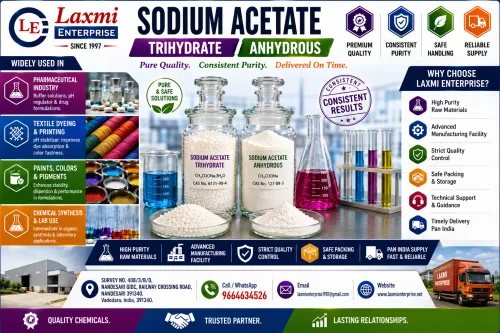
• sodium acetate CAS 127-09-3 (anhydrous)
• sodium acetate CAS 6131-90-4 (trihydrate)
• sodium acetate EC 204-823-8
• E number E262
• sodium acetate supplier
• sodium acetate manufacturer
• sodium acetate distributor
• buy sodium acetate online
• sodium acetate price per kg
• bulk sodium acetate
Overview:
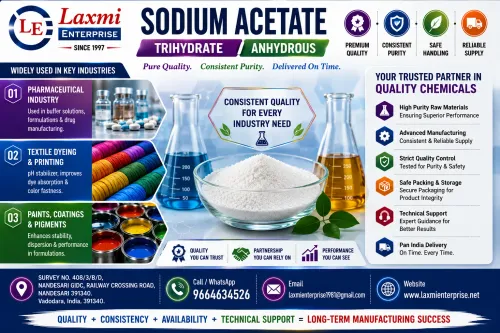
Sodium acetate (CH₃COONa) is widely used in the textile dyeing industry as a buffering and fixation agent. It helps regulate the pH of dye baths and improves dye-to-fiber bonding, resulting in bright, uniform, and long-lasting colors.
Role in Dyeing Fixation:
pH Control: Maintains the dye bath pH within the optimal range (typically 4.5–6.0) to ensure proper dye fixation, especially for reactive and direct dyes.
Buffering Action: Prevents sudden pH fluctuations that can cause uneven coloring or dye hydrolysis.
Enhanced Color Fastness: Stabilizes dye molecules on the fabric, reducing color bleeding and improving wash and light fastness.
Compatibility: Works effectively with a wide range of dyes such as reactive, acid, and vat dyes used on cotton, silk, and wool fabrics.
Benefits:
Promotes strong dye-fiber bonding
Ensures uniform shade development
Reduces dye wastage and improves process reproducibility
Safe, eco-friendly, and easy to handle
Applications:
Reactive dyeing of cotton and blended fabrics
Acid dyeing of wool and silk
Finishing and post-dye fixation treatments