

Why Sulfuric Acid Is Used in Water Treatment
Sulfuric acid (H₂SO₄) is primarily used for:
pH control – lowering alkalinity or neutralizing caustic wastewater.
Regeneration of ion-exchange resins (especially in demineralization).
Scale prevention – by maintaining solubility of certain salts.
However, it’s corrosive, hazardous to handle, and can cause sulfate buildup, which can be problematic in some systems.
Selection Criteria
When choosing a sulfuric acid replacement, consider:
System materials of construction (compatibility)
Desired pH range
Environmental discharge limits (e.g., sulfate, phosphate)
Safety and handling requirements
Total cost of ownership (chemical + maintenance)
What Is Biological Nutrient Removal (BNR)?
BNR is a biological process designed to remove nitrogen (N) and phosphorus (P) from wastewater through the action of specific microorganisms under controlled aerobic, anoxic, and anaerobic conditions.
Role of Sodium Acetate in BNR
Chemical Formula:
CH₃COONa (sodium acetate)
Sodium acetate serves as a readily biodegradable carbon source that microorganisms use during denitrification and phosphorus release stages.
How Sodium Acetate Works in BNR
1. Denitrification (Anoxic Zone)
Nitrate (NO₃⁻) is reduced to nitrogen gas (N₂).
Sodium acetate acts as an electron donor.
Benefits of Using Sodium Acetate
*Readily biodegradable — easily utilized by microbes
*Fast denitrification rates (better than methanol or ethanol)
*Improves EBPR efficiency — acetate is the preferred substrate for PAOs
* Safe and easy to handle — non-toxic, non-volatile
* Stable and consistent — reliable process control
Denitrification in ZLD Wastewater Systems
Purpose:
To remove nitrates (NO₃⁻) and nitrites (NO₂⁻) biologically before advanced treatment steps such as:
Reverse Osmosis (RO)
Multiple Effect Evaporators (MEE)
Crystallizers
If nitrogen is not removed, it can:
Foul membranes and resins
Increase TDS and corrosion
Interfere with crystallization
Violate discharge norms
* Why Chemical Carbon Sources Are Needed
Industrial effluents in ZLD systems (e.g., from textile, pharma, fertilizer, chemical, or power plants) often have:
Low BOD/COD
High nitrate/nitrite concentrations
Would you like me to prepare a technical datasheet (PDF) titled
“Denitrification Chemicals for ZLD Wastewater Systems”, including:
Process flow schematic
Reaction equations
Chemical selection table
Dosing and safety guide
Example Case Study
Industry: Textile ZLD plant
Influent: NO₃–N = 40 mg/L; low BOD (<20 mg/L)
Treatment: Anoxic tank + sodium acetate dosing
Dose: 150 mg/L sodium acetate
Result: >90% nitrate removal before RO; RO scaling reduced; no
nitrogen detected in permeate
Role of Sodium Acetate Solution in Wastewater Treatment
* Function:
Sodium acetate (CH₃COONa) serves as a readily biodegradable organic carbon source for:
Denitrification (nitrate → nitrogen gas)
Enhanced Biological Phosphorus Removal (EBPR)
Microbial growth support in low-COD wastewater
pH stabilization (buffering effect with acetic acid)
* Typical Concentration:
30% sodium acetate solution (common industrial grade)
pH: 7.0–9.0
COD equivalence: ~0.78 g COD per g sodium acetate
* Why Sodium Acetate Is Preferred
Fast microbial uptake (compared to methanol or glucose)
Safe, non-toxic, and non-flammable
Improves process stability in ETPs, STPs, and ZLD systems
pH BUFFERS IN ELECTROPLATING BATHS
Maintaining correct pH is critical in all plating baths.
If pH drifts:
High pH → metal hydroxide precipitation, dull deposits
Low pH → low current efficiency, hydrogen embrittlement
Sodium acetate is unique in that it performs three roles simultaneously:
Acts as a weak buffer (pH 4–6)
Enhances bath conductivity mildly
Stabilizes metal ions (like Ni²⁺, Cu²⁺, Zn²⁺) through weak complexation
6. Practical Example — Nickel Acetate Plating Bath
Bath Composition:
Nickel acetate: 300 g/L
Sodium acetate: 10–20 g/L (pH buffer + conductivity)
Boric acid: 30–40 g/L (buffer + stress control)
pH: 4.5 ± 0.1
Temperature: 50°C
Result:
Uniform, ductile nickel deposit with low internal stress and high gloss.
Overview
Chemical Name: Sodium acetate (anhydrous or trihydrate)
Formula: CH₃COONa or CH₃COONa·3H₂O
CAS No.: 127-09-3 (anhydrous), 6131-90-4 (trihydrate)
Molecular Weight: 82.03 (anhydrous), 136.08 (trihydrate)
E-number (food grade): E262
Pharmacopoeial Grades:
IP / BP / USP / EP compliant
Available in pharma-grade, analytical-grade, and buffer-grade qualities
Typical Uses in Formulations
1. Intravenous and Injectable Solutions
Sodium Acetate Injection (USP) – used to replenish sodium and acetate ions.
Acts as a systemic alkalizer (acetate → bicarbonate in vivo).
Commonly found in:
Ringer’s acetate
Plasma-Lyte A
Dialysis and infusion solutions
2. Buffer Systems
Used with acetic acid to form acetate buffers in pH range 3.8–6.0.
Controls pH in:
Ophthalmic and parenteral drugs
Antibiotic reconstitution solutions
Protein/peptide formulations
Acts as a carbon and energy source for microbial cultures.
Used in production of:
Penicillin, erythromycin, cephalosporin
Vitamin B12, amino acids
4. Oral and Topical Formulations
Stabilizes acidic or mildly basic actives.
Safety and Regulatory Information
GRAS (Generally Recognized As Safe) by US FDA.
Listed in USP–NF, IP, BP, and EP monographs.
Non-toxic, non-carcinogenic, and safe for parenteral use within pharmacopeial limits
Typical Packaging
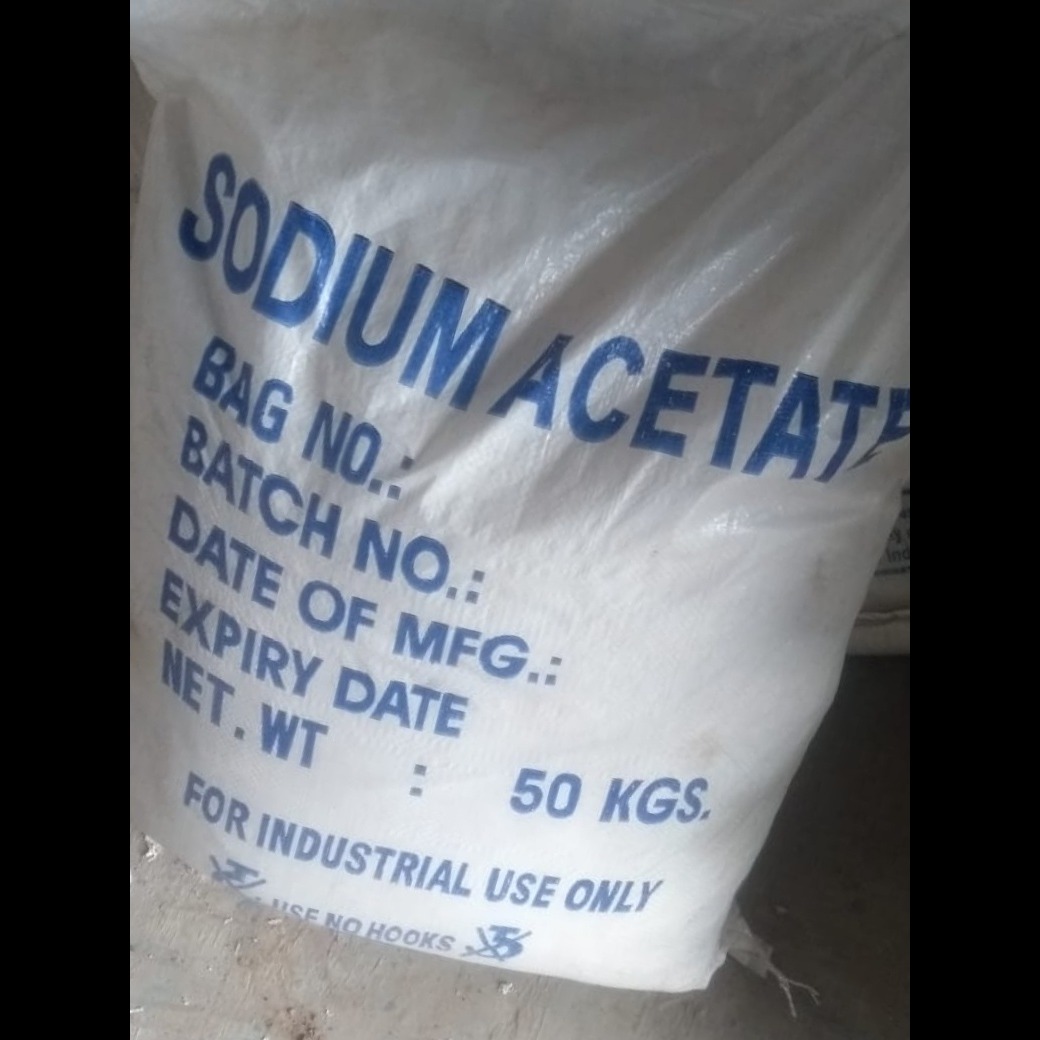
25 kg HDPE bags (solid form)
50 kg / 200 L HDPE drums (liquid solution)
IBC tanks (for bulk users)
All pharma-grade materials supplied with COA, MSDS, and TDS.
Would you like me to prepare a pharmaceutical-grade sodium acetate technical datasheet (PDF) for your documentation or client use — including:
USP/IP specs
Buffering data (pH vs ratio)
Formulation examples
Local Vadodara suppliers and packaging formats?