100+ Sodium Sulphate FAQs: Technical, Quality Control, Testing & Industrial Applications (2026)
Technical Product Identity
Property Details
Product Name Sodium Sulphate
Chemical Formula Na₂SO₄
CAS Number 7757-82-6
HSN Code (India) 2833 11 00
Molecular Weight 142.04 g/mol
EINECS Number 231-820-9
Appearance White crystalline powder or granules
Section F – Technical Properties FAQs
31. What is the molecular weight of Sodium Sulphate?
The molecular weight of Sodium Sulphate (Na₂SO₄) is 142.04 g/mol. This value is commonly used in laboratory calculations, process design, and chemical documentation.
32. What is the EINECS Number?
The EINECS Number is 231-820-9. It is a European inventory number used to identify commercially available chemical substances and is commonly referenced in regulatory documentation.
33. What is the difference between anhydrous Sodium Sulphate and hydrated Sodium Sulphate?
Anhydrous Sodium Sulphate contains no water of crystallization, while hydrated forms (such as sodium sulfate decahydrate, also known as Glauber's salt) contain chemically bound water. Industrial buyers should confirm which form is required for their application.
34. Is industrial Sodium Sulphate always anhydrous?
Not necessarily. Many industrial applications use anhydrous Sodium Sulphate, but some applications use hydrated forms. Procurement specifications should clearly identify the required product.
35. Why is appearance checked during incoming inspection?
Visual inspection helps confirm that the product generally matches expectations and may identify obvious issues such as damaged packaging, contamination, or unusual discoloration before further testing.
36. Why is particle size important?
Particle size can influence:
Handling.
Blending.
Dissolution.
Feeding systems.
Dust generation.
The required particle size depends on the customer's manufacturing process.
37. Why is moisture tested?
Moisture content can affect storage characteristics, handling, and flowability. Buyers often include moisture limits within their purchase specifications.
38. What is water-insoluble matter?
Water-insoluble matter represents material that does not dissolve under the specified test conditions. Applications requiring complete dissolution may include limits for this parameter.
39. Why is iron content important?
Some industries, including glass manufacturing, may specify iron limits because impurities can influence product quality. Acceptable values depend on the application.
40. Does purity alone determine quality?
No. Product suitability depends on the complete specification, including moisture, particle size, insoluble matter, documentation, and consistency—not purity alone.
Section G – Quality Control FAQs
41. Why should every batch have a batch number?
Batch numbers provide traceability. They allow suppliers and buyers to identify specific production lots during quality reviews or investigations.
42. Why is batch consistency important?
Consistent batches help manufacturers maintain stable production processes and reduce unnecessary process adjustments.
43. Should incoming material always be tested?
Testing practices depend on the buyer's quality management system, supplier qualification status, and the criticality of the application.
44. What documents should accompany a shipment?
Industrial buyers commonly request:
COA.
TDS.
SDS/MSDS.
Commercial invoice.
Packing list.
Batch identification.
Additional documentation may be required depending on customer or regulatory requirements.
45. Why is a COA important?
A Certificate of Analysis reports the test results for the specific batch supplied, allowing buyers to compare those results with the agreed purchase specification.
46. Why is a TDS important?
A Technical Data Sheet provides general technical information about the product, including its characteristics, typical properties, and recommended applications.
47. Why is an SDS/MSDS important?
An SDS (formerly commonly called an MSDS) provides information on safe handling, storage, emergency response, and other workplace safety considerations.
48. How do procurement teams verify quality?
Quality verification often includes:
Reviewing documentation.
Inspecting packaging.
Confirming product identity.
Reviewing the COA.
Performing laboratory testing where required.
49. Why is traceability important?
Traceability supports quality investigations, customer communication, supplier performance monitoring, and compliance with quality management systems.
50. How can suppliers improve buyer confidence?
Providing consistent product quality, complete documentation, reliable communication, and dependable deliveries helps build long-term buyer confidence.
Section H – Packaging & Logistics FAQs
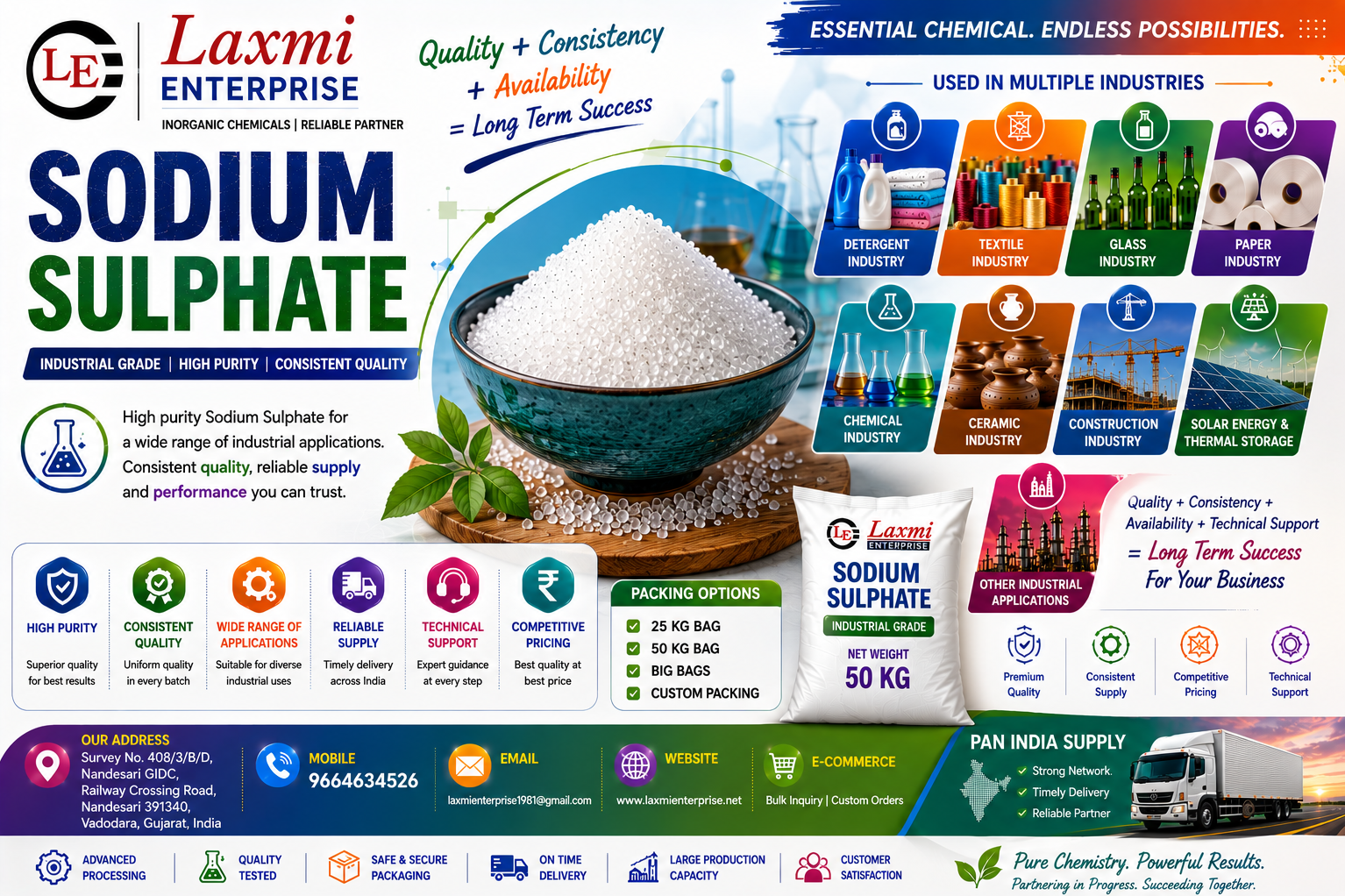
51. Which packaging is most common?
Common industrial packaging includes:
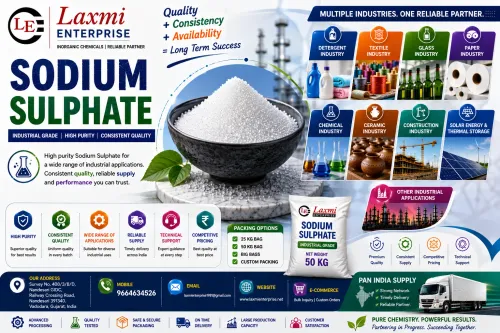
25 kg bags.
50 kg bags.
500 kg FIBC.
1000 kg FIBC.
The appropriate option depends on handling systems and production volume.
52. How should Sodium Sulphate be transported?
Transportation should protect the product from moisture, physical damage, and contamination while maintaining packaging integrity throughout transit.
53. Should bags be stored directly on the floor?
Using pallets is generally recommended to reduce exposure to ground moisture and improve warehouse handling.
54. Why is FIFO recommended?
First-In, First-Out (FIFO) inventory management helps reduce prolonged storage periods and supports organized stock rotation.
55. What should be checked before unloading?
Typical checks include:
Packaging condition.
Batch numbers.
Quantity.
Documentation.
Product identification.
56. Can damaged packaging affect product quality?
Damaged packaging may increase the risk of moisture ingress or contamination. Buyers should inspect packaging during receipt.
57. Which industries typically purchase jumbo bags?
High-volume users such as detergent manufacturers, textile processors, glass manufacturers, and kraft pulp mills may use FIBC (jumbo bags), depending on their handling systems.
58. Why is warehouse cleanliness important?
A clean warehouse helps reduce the risk of contamination and supports better inventory management.
59. How should warehouse inventory be identified?
Many organizations label inventory with:
Product name.
Batch number.
Receipt date.
Storage location.
This supports traceability and stock control.
60. Can transportation influence procurement cost?
Yes. Freight, distance, packaging type, and shipment size can all contribute to the delivered cost of Sodium Sulphate.
Section I – Supplier & Procurement FAQs
61. What makes a reliable Sodium Sulphate supplier?
A reliable supplier consistently provides:
Quality products.
Complete documentation.
Technical support.
Reliable logistics.
Responsive communication.
Batch traceability.
62. Should buyers compare only prices?
No. Procurement decisions should also consider quality consistency, documentation, logistics, technical capability, and long-term supply reliability.
63. What information should be included in a purchase order?
A purchase order typically includes:
Product name.
Grade.
Quantity.
Packaging.
Delivery location.
Technical requirements.
Documentation requirements.
64. How often should supplier performance be reviewed?
Review frequency depends on the buyer's quality management system, supplier criticality, and operational requirements. Many organizations conduct periodic supplier evaluations.
65. Why is Pan-India supply important?
Manufacturers often operate across multiple states or have production facilities in different regions. A supplier with established logistics can better support scheduled deliveries and production planning.
66. Does Laxmi Enterprise supply to detergent manufacturers?
Yes. Laxmi Enterprise supplies industrial-grade Sodium Sulphate to detergent manufacturers across Pan India, with packaging options, technical documentation, and logistics support tailored to industrial procurement.
67. Does Laxmi Enterprise supply to textile industries?
Yes. The company supports textile processing units with Sodium Sulphate suitable for industrial applications, along with COA, TDS, SDS/MSDS, and supply planning.
68. Does Laxmi Enterprise supply to glass manufacturers?
Yes. Laxmi Enterprise supplies industrial-grade Sodium Sulphate to glass manufacturers across India, supporting procurement with documentation and reliable logistics.
69. Where is Laxmi Enterprise located?
Laxmi Enterprise operates from Nandesari GIDC, Vadodara, Gujarat, serving customers throughout Pan India.
70. Why choose an experienced industrial supplier?
An experienced supplier can support procurement teams through consistent product quality, technical documentation, responsive service, and dependable supply planning.
Keywords