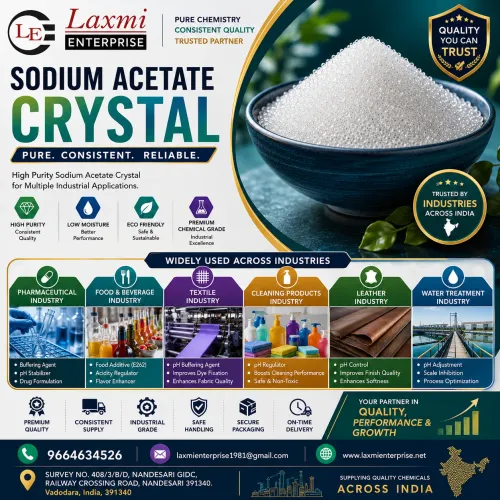



Sodium Acetate in the Food Industry – Food Additive Functions, Acidity Regulation, Flavor Enhancement, Preservation, Food Safety Systems, Processing Applications & Supplier Selection Guide
Food manufacturers continuously seek ingredients that improve product stability, enhance flavor, maintain food safety, and deliver consistent processing performance. Sodium Acetate is one such multifunctional ingredient that is widely used in selected food applications when it meets the applicable food-grade specifications and regulatory requirements of the target market.
Its versatility allows it to function as an acidity regulator, buffering agent, preservative component in certain formulations, and flavor enhancer. Because of these characteristics, Sodium Acetate is used in snack foods, seasonings, sauces, processed meats, bakery products, ready-to-eat foods, dairy applications, and food processing operations, depending on regional regulations and product formulation.
Unlike industrial applications, food manufacturing places significant emphasis on food-grade quality, hygiene, traceability, food safety systems, and regulatory compliance. Every batch supplied to food manufacturers must be produced, tested, packaged, stored, and transported in a manner that supports food safety and product consistency.
This article provides a comprehensive overview of Sodium Acetate's role in food manufacturing, quality expectations, regulatory considerations, and supplier selection.
What Is Food-Grade Sodium Acetate?
Food-grade Sodium Acetate is manufactured and controlled to meet applicable food-quality specifications for its intended market and use. Manufacturers typically implement stricter controls over:
Raw material quality
Process hygiene
Product purity
Batch traceability
Packaging integrity
Laboratory testing
Documentation
Food-grade materials should only be used where they comply with the applicable regulations and standards of the destination country.
Functional Roles in Food Manufacturing
Sodium Acetate performs several important technological functions.
1. Acidity Regulator
Maintaining pH is essential in many food products.
Sodium Acetate helps:
Stabilize acidity
Improve formulation consistency
Support processing efficiency
Maintain product characteristics
Proper pH control contributes to product quality and shelf stability.
2. Buffering Agent
Many food formulations require stable pH during:
Mixing
Heating
Cooling
Storage
Acetate buffer systems help reduce unwanted pH fluctuations during processing.
3. Flavor Enhancement
One of the best-known applications is in seasoning systems.
Sodium Acetate contributes to:
Tangy flavor profiles
Vinegar-like taste notes
Improved seasoning balance
Flavor consistency
It is commonly associated with salt-and-vinegar style snack seasonings and similar flavor systems.
4. Preservation Support
Depending on the formulation, Sodium Acetate may contribute to systems designed to support product preservation by helping maintain suitable processing and formulation conditions.
Its effectiveness depends on the complete formulation, manufacturing process, packaging, and applicable food regulations.
5. Processing Aid
Food processors may use Sodium Acetate during:
Ingredient preparation
Buffer preparation
Process optimization
Product standardization
Its use depends on the specific manufacturing process and regulatory requirements.
Major Food Industry Applications
Snack Foods
Examples include:
Seasoned potato chips
Extruded snacks
Popcorn seasonings
Savory snack blends
Flavor consistency is particularly important in these products.
Bakery Products
Potential uses include:
pH adjustment
Dough process optimization
Specialty formulations
Application depends on the product recipe and manufacturing objectives.
Processed Meat Products
Acetate-based ingredient systems may be used in certain processed meat formulations to support flavor and product quality, subject to applicable regulations and formulation requirements.
Sauces and Condiments
Sodium Acetate may be incorporated into:
Sauce formulations
Dressings
Marinades
Condiment systems
Buffering helps maintain formulation consistency during production and storage.
Dairy Processing
Certain dairy applications may use acetate buffer systems in processing or laboratory environments where appropriate.
Ready-to-Eat Foods
Manufacturers may incorporate Sodium Acetate into selected formulations requiring controlled acidity and consistent flavor characteristics.
Food Safety Requirements
Food manufacturers generally operate under comprehensive food safety systems.
These systems typically include:
Raw material approval
Supplier qualification
Hygiene management
Process control
Product testing
Traceability
Corrective action
Continuous improvement
HACCP Principles
Hazard Analysis and Critical Control Point (HACCP) is a preventive food safety methodology.
Typical HACCP activities include:
Hazard identification
Critical control point determination
Monitoring procedures
Corrective actions
Verification
Documentation
Food ingredient suppliers should understand how their products integrate into customer HACCP programs.
Good Manufacturing Practices (GMP)
Food-grade manufacturing generally emphasizes:
Clean production environments
Personnel hygiene
Equipment sanitation
Controlled storage
Pest management
Documentation
Product identification
Effective GMP supports consistent food safety performance.
Product Quality Parameters
Food manufacturers commonly review:
Appearance
Material should match the agreed specification.
Assay
Assay confirms conformity with the required product specification.
Moisture
Controlled moisture supports product stability and storage performance.
pH
pH characteristics should align with specification requirements.
Solubility
Good solubility supports efficient incorporation into food formulations.
Impurity Profile
Impurities should remain within applicable specification limits for the intended food-grade application.
Packaging Requirements
Food-grade packaging should:
Protect against moisture
Prevent contamination
Maintain product integrity
Provide clear identification
Support traceability
Packaging materials should be suitable for food ingredient applications.
Storage Recommendations
Recommended practices include:
Store in a cool, dry environment.
Keep containers tightly closed.
Protect from excessive humidity.
Follow manufacturer storage instructions.
Proper storage helps preserve product quality throughout its shelf life.
Laboratory Testing
Typical laboratory evaluations include:
Identity testing
Assay
Moisture
pH
Appearance
Solubility
Selected impurity analyses
Testing frequency depends on quality systems and customer requirements.
Documentation
Food manufacturers commonly request:
Certificate of Analysis (COA)
Safety Data Sheet (SDS)
Product Specification
Batch Number
Manufacturing Date
Recommended Storage Conditions
Additional documentation may be requested depending on customer requirements and regulatory expectations.
Traceability
An effective traceability system enables identification of:
Raw material sources
Production batches
Laboratory results
Packaging records
Distribution history
Traceability supports quality investigations and efficient product recalls if necessary.
Supplier Qualification
Food manufacturers typically evaluate suppliers based on:
Product consistency
Quality management systems
Documentation quality
Technical support
Manufacturing controls
Supply reliability
Traceability
Supplier performance is generally reviewed on an ongoing basis.
Common Challenges
Food ingredient suppliers may encounter:
Moisture control during storage
Packaging damage
Regulatory updates
Batch consistency requirements
Transportation delays
Customer-specific documentation requests
Continuous monitoring helps address these challenges.
Best Practices for Manufacturers
Food-grade Sodium Acetate suppliers should:
Maintain strict hygiene standards
Verify every production batch
Protect products from contamination
Provide complete documentation
Ensure consistent packaging quality
Continuously improve quality systems
Best Practices for Food Manufacturers
When selecting a Sodium Acetate supplier, buyers should evaluate:
Product consistency
Food-grade quality controls
Laboratory capability
Documentation availability
Traceability systems
Technical support
Supply reliability
Regulatory compliance for the intended market
Frequently Asked Questions (FAQ)
Is Sodium Acetate approved for food use?
Its use depends on the regulations of the country or region and the intended food application. Food manufacturers should verify that the ingredient complies with all applicable legal and technical requirements for their market.
Why is Sodium Acetate used in snack seasonings?
It contributes to tangy flavor profiles and helps achieve consistent seasoning characteristics, particularly in vinegar-style flavor systems.
How does Sodium Acetate function as a buffer?
It helps maintain stable pH conditions during food processing and storage, supporting formulation consistency.
What quality documents do food manufacturers usually request?
Typical documents include a Certificate of Analysis, product specification, Safety Data Sheet, batch identification, and other quality records as required.
Why is traceability important in food manufacturing?
Traceability allows manufacturers to identify raw materials, production batches, and distribution records, supporting food safety investigations and recall readiness.
How should food-grade Sodium Acetate be stored?
Store it in a clean, cool, dry environment with containers properly sealed and protected from moisture, following the manufacturer's recommendations.
Does Sodium Acetate extend shelf life?
Its role depends on the overall formulation, processing conditions, packaging system, and applicable regulations. Shelf life should be established through product-specific validation.
Why is supplier qualification important?
Supplier qualification helps ensure consistent quality, reliable documentation, technical support, and dependable supply performance.
What laboratory tests are commonly performed?
Identity, assay, moisture, pH, appearance, solubility, and selected impurity evaluations are commonly included in quality control programs.
What should buyers consider when selecting a supplier?
Quality management systems, documentation, traceability, product consistency, technical support, and supply reliability are key considerations.
Expert Insight: Food Safety Begins with Ingredient Quality
For food manufacturers, Sodium Acetate is more than a functional ingredient—it is part of a broader food safety and quality assurance system. Reliable suppliers combine robust manufacturing controls, comprehensive documentation, effective traceability, and consistent product performance to help customers produce safe, high-quality food products that meet regulatory and consumer expectations.
Original Assets to Build
Technical Diagrams
Food-Grade Sodium Acetate Supply Chain
Acetate Buffer System in Food Processing
HACCP Integration for Ingredient Suppliers
Food Ingredient Traceability Workflow
Food-Grade Packaging Protection Model
Supplier Qualification Process for Food Ingredients
Batch Release Documentation Flow
Moisture Protection During Storage
Quality Control Testing Workflow
Food Safety Management System Overview
Downloadable Resources
Food Ingredient Supplier Audit Checklist
Incoming Raw Material Inspection Form
Food-Grade COA Review Checklist
HACCP Supplier Assessment Template
Storage & Warehouse Inspection Checklist
Batch Traceability Register
Food Ingredient Technical Data Sheet Template
Customer Complaint Investigation Form
Original Photography
Food ingredient blending facility
Snack seasoning production line
Food-grade packaging area
Quality control laboratory analyzing ingredients
Warehouse storing food-grade chemicals
HACCP audit in progress
Ingredient receiving inspection
Finished packaged food products using seasoning blends
Internal Linking Strategy
Link this article with:
Product Specifications
Quality Testing & COA
Regulatory Compliance
Packaging & Storage
Supply Chain Management
Sustainability & ESG
Pharmaceutical Applications
Laboratory Applications
Biotechnology Applications
Sodium Acetate in Textile Dyeing & Textile Processing