Sodium Acetate Manufacturing Plant – Machinery, Equipment and Indian Manufacturers
1. Complete machinery required
The following is a typical batch-production equipment arrangement.
No. Machinery Recommended equipment type Main function
1 Acetic Acid Storage Tank SS316L storage tank Raw material storage
2 Caustic/Soda Ash Preparation Tank SS316L agitated tank Preparation of alkaline solution
3 Process Water Tank SS316L tank Process water storage
4 Neutralization Reactor Jacketed SS316L reactor with agitator Acetic acid neutralization
5 Heat Exchanger Shell-and-tube or plate type Temperature management
6 Activated Carbon Treatment Vessel Agitated SS316L vessel Colour and impurity reduction, if required
7 Pressure Filter Sparkler or pressure leaf filter Solution clarification
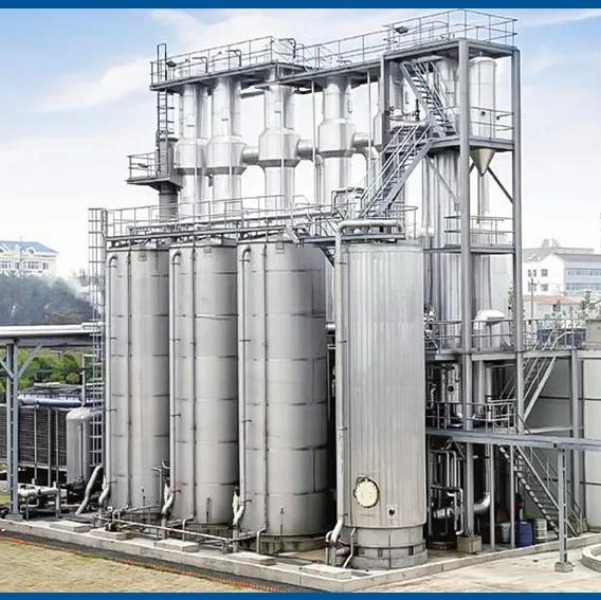
8 Evaporator Vacuum evaporator Concentration of Sodium Acetate solution
9 Crystallizer Jacketed agitated crystallizer Crystal formation
10 Centrifuge Industrial basket centrifuge Crystal and mother liquor separation
11 Dryer Vacuum dryer or suitable fluid-bed system Moisture control
12 Vibro Sifter Stainless-steel vibratory screening machine Particle-size classification
13 Ribbon Blender SS316L industrial blender Product homogenization
14 Packing Machine Semi-automatic or automatic weighing and filling Final packaging
15 Boiler Industrial steam boiler Heating utility
16 Chilling Plant Industrial chiller Crystallizer cooling
17 Cooling Tower Industrial cooling system Heat rejection
18 Vacuum Pump Chemical-duty vacuum system Evaporation and vacuum drying
My recommendation: Give special engineering attention to the neutralization reactor, crystallizer, centrifuge and dryer. These four equipment groups have a major influence on production consistency and finished-product quality.
2. Detailed equipment specifications to request
These are preliminary engineering specifications for discussing the project with machinery manufacturers. Final dimensions, capacities and operating conditions must be established through process calculations and equipment design.
A. Neutralization Reactor
Recommended type: Jacketed, top-entry agitated chemical reactor.
Parameter Recommended requirement
Material of construction SS316L for product-contact surfaces, subject to corrosion review
Construction Jacketed vessel
Agitator Anchor or suitable pitched-blade type, selected through mixing study
Drive Industrial geared motor with VFD
Temperature monitoring PT100 or equivalent industrial sensor
Level measurement Suitable industrial level instrument
Load measurement Load cells, where justified
Dosing Metered acid and alkali transfer
Safety Temperature alarms, emergency arrangements and suitable venting
Critical details:
- Reactor should support controlled addition of acetic acid and alkaline material.
- Agitation must prevent local concentration differences.
- Temperature monitoring should be continuous.
- Reactor volume should account for working volume, headspace and foaming potential.
- The design should consider the heat released during neutralization.
For the sodium carbonate route, carbon dioxide generation must also be considered in the reactor vent design.
B. Crystallizer
Recommended type: Jacketed batch crystallizer with controlled agitation.
Important specifications:
- SS316L product-contact surfaces, subject to material compatibility assessment.
- Cooling jacket or engineered internal heat-transfer arrangement.
- Variable-speed agitator.
- Temperature sensors at appropriate locations.
- Controlled cooling utility.
- Suitable bottom discharge.
- Sampling arrangement.
- Provision for seed-crystal addition.
- Suitable access for cleaning and inspection.
Why this equipment matters:
The crystallizer determines crystal nucleation and growth conditions. Incorrect cooling, poor agitation or excessive supersaturation can result in excessive fines and inconsistent particle sizes.
For Anhydrous and Trihydrate production, crystallization conditions must be developed separately.
C. Industrial Centrifuge
Recommended type: Industrial basket centrifuge, with discharge arrangement selected according to capacity and operator requirements.
Important specifications:
- Suitable product-contact material.
- Chemical-resistant construction.
- Appropriate basket and screen design.
- Vibration monitoring.
- Safety interlocks.
- Controlled acceleration and braking.
- Suitable product discharge.
- Easy cleaning and inspection.
A centrifuge separates crystals from mother liquor. Its performance affects moisture carryover into the dryer and the amount of product lost during separation.
D. Industrial Dryer
The correct dryer depends heavily on the product being manufactured.
Dryer type Potential application Important consideration
Vacuum Tray Dryer Controlled batch drying Product temperature and drying uniformity
Rotary Cone Vacuum Dryer Gentle mixing and vacuum drying Heat-transfer and discharge performance
Fluid Bed Dryer Suitable granular material Fluidization and product-temperature control
Rotary Vacuum Paddle Dryer Selected powder and wet-solid duties Mechanical handling and thermal conditions
Important distinction:
For Sodium Acetate Trihydrate, drying must preserve the required hydration state.
For Sodium Acetate Anhydrous, the dryer must achieve the specified moisture level without unacceptable thermal degradation.
Do not select a dryer solely on advertised capacity. Ask the manufacturer to demonstrate performance using representative Sodium Acetate material.
3. Indian machinery manufacturers worth contacting
I have identified the following companies with publicly listed relevant equipment ranges. These are potential equipment suppliers, not endorsements or confirmations that they have previously supplied a Sodium Acetate plant.
1. Analpa Industries
Official website – Analpa Industries
Location: Ankleshwar, Gujarat.
Publicly listed equipment:
- Chemical reactors.
- Agitated Nutsche Filter Dryers.
- Roto-Cone Vacuum Dryers.
- Heat exchangers.
- Storage tanks.
- Ribbon blenders.
- Skid-mounted process assemblies.
A useful potential contact for the reactor, filtration and drying sections. analpaindustries.com
2. Shiv Shakkti Process Equipment Pvt. Ltd.
Official website – Shiv Shakkti Process Equipment
Publicly listed equipment:
- Basket centrifuges.
- Agitated Nutsche Filter Dryers.
- Fluid Bed Dryers.
- Vacuum Tray Dryers.
- Double Cone Vacuum Dryers.
- Crystallizers.
- Evaporators.
- Industrial blenders.
Worth contacting for crystal separation and drying equipment. shivshaktiequip.in
3. Sunrise Process Equipments Pvt. Ltd.
Official website – Sunrise Process Equipments
Publicly listed equipment:
- Jacketed reactors.
- Heat exchangers.
- Rotary vacuum dryers.
- Nutsche filters.
- Activated carbon filters.
- Evaporators.
- Storage tanks.
- Vibratory fluid-bed dryers.
A potential supplier for reaction, filtration and evaporation equipment. sunriseequipments.com
4. R.G. Industries
Website: R.G. Industries
A machinery directory published in 2024 lists:
- Industrial centrifuges.
- Fluid-bed dryers.
- Agitated Nutsche filters.
- Tray dryers.
- Chemical vessels.
- Other customized process equipment.
This makes them worth approaching for centrifuge and dryer requirements. Verify their current product range and manufacturing capabilities directly. chemicalsbusinessindia.in
4. My recommended machinery configuration
For a plant producing both Anhydrous and Trihydrate, I would initially evaluate this arrangement:
Section Recommended machinery
Raw material handling Storage tanks, dosing pumps, weighing systems
Reaction Jacketed SS316L neutralization reactor
Purification Activated carbon vessel, pressure filter
Concentration Vacuum evaporator
Crystallization Jacketed agitated crystallizer
Separation Industrial basket centrifuge
Trihydrate finishing Validated controlled-temperature drying arrangement
Anhydrous finishing Suitable dehydration and drying system
Final processing Vibro sifter and ribbon blender
Packaging Semi-automatic or automatic bag filling system
One important design decision: Do not assume that one common dryer and one common crystallization recipe will be suitable for both hydration states. Develop and validate separate process routes.
5. Critical questions to ask machinery manufacturers
Before placing an order, obtain written answers to these questions:
1. Have you supplied equipment for sodium acetate or similar crystallizing salt processes?
2. Can you provide material-of-construction certificates?
3. Can you provide SS316L material test certificates?
4. What is the guaranteed working capacity?
5. Can the crystallizer maintain controlled cooling throughout the batch?
6. Can the dryer preserve Sodium Acetate Trihydrate hydration?
7. Can you conduct a product trial before final acceptance?
8. What are the power, steam, cooling-water and chilled-water requirements?
9. What instrumentation and automation are included?
10. Will you provide P& ID, GA drawings, equipment datasheets and operating manuals?
11. What are the warranty and after-sales service arrangements?
12. Can you provide references for comparable chemical-processing installations?
Also request a complete quotation separating equipment cost, instrumentation, electrical panels, piping, installation, commissioning, taxes and transportation.
6. Three important details I need to prepare a proper plant machinery recommendation
A machinery manufacturer cannot responsibly size a plant without knowing the required production capacity and product mix.
Please provide just these three details:
1. Production capacity
- 500 kg/day
- 1 MT/day
- 2 MT/day
- 5 MT/day
- 10 MT/day
- Other
2. Product
- Sodium Acetate Anhydrous
- Sodium Acetate Trihydrate
- Both products
3. Manufacturing route
- Acetic Acid + Caustic Soda
- Acetic Acid + Soda Ash
- Open to the most economical technically suitable route
Keywords