Sodium Sulphate in Paper & Pulp Manufacturing
Technical Product Identity
Property Details
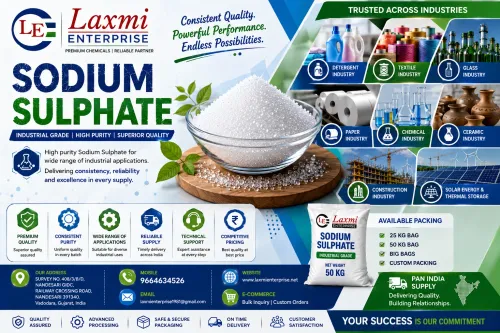
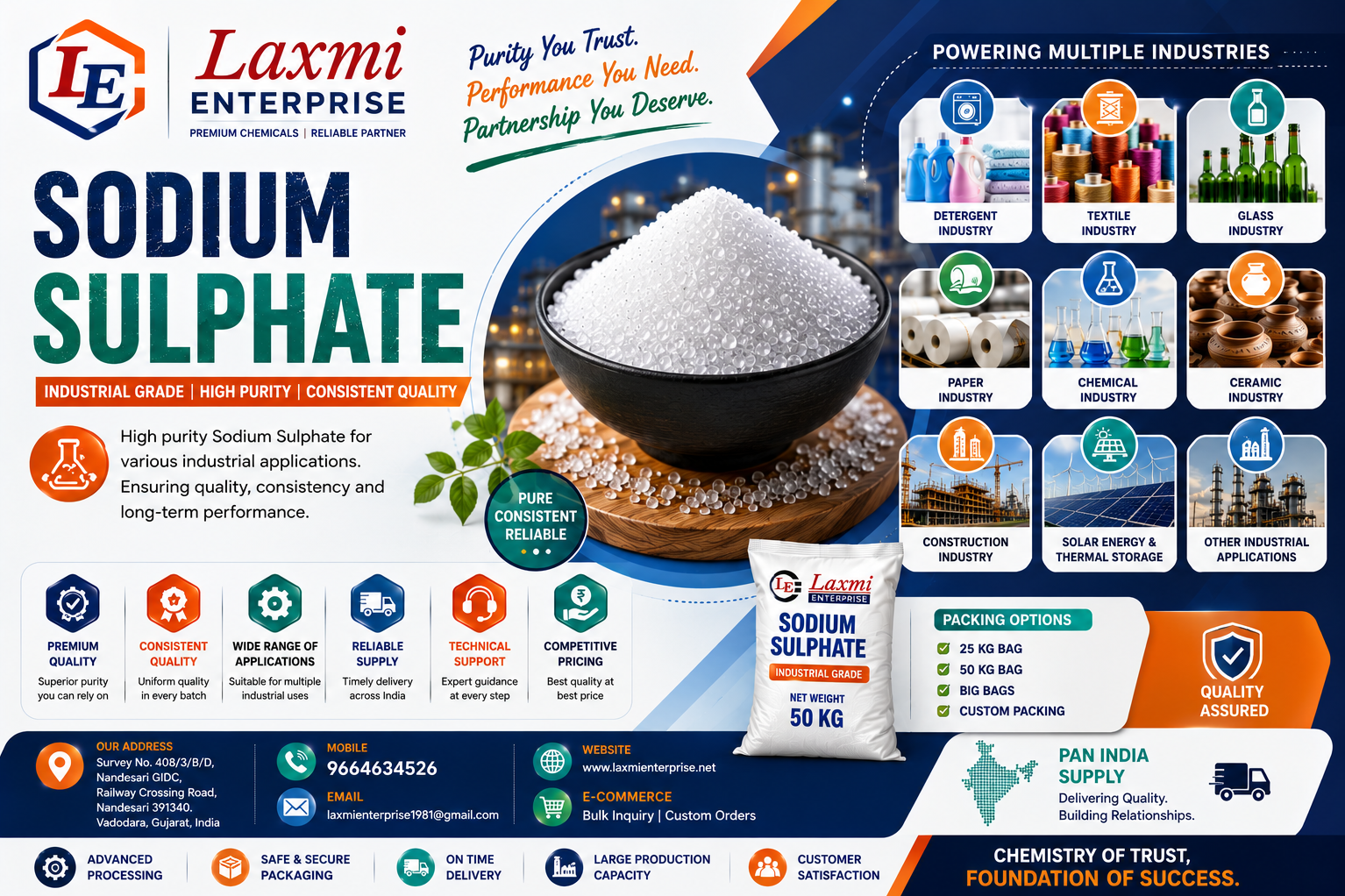
Product Name Sodium Sulphate
Chemical Formula Na₂SO₄
CAS Number 7757-82-6
HSN Code (India) 2833 11 00
Molecular Weight 142.04 g/mol
EINECS Number 231-820-9
Appearance White crystalline powder or granules
Typical Grades Industrial Grade, Technical Grade
Common Packaging 25 kg, 50 kg, 500 kg & 1000 kg FIBC (Jumbo Bags), subject to agreement
Procurement Strategy for Kraft Mills
Quick Answer
For kraft pulp mills, Sodium Sulphate procurement should focus on consistent quality, reliable documentation, dependable logistics, and long-term supplier capability. A structured procurement strategy helps maintain recovery system performance and reduces the risk of production interruptions.
A practical procurement process generally includes:
Define the technical specification.
Review supplier documentation.
Evaluate product samples where required.
Confirm packaging and logistics.
Approve the supplier through technical and commercial review.
Monitor incoming quality and supplier performance.
Supplier Evaluation Checklist
Before approving a supplier, paper mills may evaluate:
Technical Capability
Consistent product quality.
Batch traceability.
Laboratory testing.
COA availability.
TDS and SDS/MSDS.
Operational Capability
Production planning.
Inventory availability.
Packaging flexibility.
Delivery performance.
Commercial Capability
Clear quotations.
Reliable communication.
Long-term supply support.
Responsive issue resolution.
Selecting a supplier based on these factors supports more reliable procurement than evaluating price alone.
Packaging Selection
The appropriate packaging depends on mill consumption and handling systems.
Packaging Typical Use
25 kg bags Laboratory or pilot-scale use
50 kg bags Standard industrial consumption
500 kg FIBC Medium-volume operations
1000 kg FIBC High-volume users
Bulk supply Large continuous consumers, where applicable
Packaging should protect the material during storage and transportation while remaining compatible with the customer's handling equipment.
Warehouse Management
Proper warehouse practices help preserve product quality.
Recommended practices include:
Store indoors in a clean and dry environment.
Keep packaging sealed until use.
Protect material from rain and excessive humidity.
Use pallets to avoid direct floor contact.
Follow FIFO inventory rotation.
Inspect packaging for damage before use.
These measures help maintain handling characteristics and reduce the likelihood of contamination.
Transportation Planning
Reliable transportation is important because kraft mills often operate continuously.
When planning deliveries, consider:
Lead time.
Route planning.
Vehicle suitability.
Weather conditions.
Loading and unloading arrangements.
Documentation accompanying the shipment.
Good coordination between supplier and buyer supports uninterrupted production.
Inventory Management
Inventory planning should balance supply continuity with warehouse capacity.
Factors commonly considered include:
Average monthly consumption.
Supplier lead time.
Safety stock.
Seasonal demand.
Warehouse space.
Periodic inventory reviews help reduce the risk of shortages or excessive stock.
Sustainability Considerations
Quick Answer
The kraft process is recognized for its integrated chemical recovery system, which regenerates valuable pulping chemicals and improves resource efficiency. Consistent-quality makeup chemicals and effective inventory management support these recovery operations.
Examples of good operational practices include:
Efficient chemical recovery.
Reduction of avoidable waste.
Proper warehouse management.
Optimized transportation planning.
Preventive maintenance of handling systems.
Environmental objectives should always be aligned with applicable regulations and mill-specific sustainability programs.
Documentation for Industrial Buyers
Paper mills commonly request:
Certificate of Analysis (COA).
Technical Data Sheet (TDS).
Safety Data Sheet (SDS/MSDS).
Batch identification.
Commercial invoice.
Packing list.
Transport documentation, where applicable.
Organized documentation supports traceability and quality audits.
Pan-India Supply
India's kraft paper and pulp industry is distributed across multiple manufacturing regions, including:
Gujarat
Maharashtra
Uttar Pradesh
Punjab
Haryana
Tamil Nadu
Karnataka
Telangana
Andhra Pradesh
West Bengal
Odisha
Chhattisgarh
Laxmi Enterprise, located in Nandesari GIDC, Vadodara, Gujarat, supplies industrial-grade Sodium Sulphate (CAS 7757-82-6, HSN 2833 11 00) to customers across Pan India, supporting procurement teams with quality documentation, packaging options, and logistics planning.
Frequently Asked Questions
1. Is Sodium Sulphate used directly in paper sheets?
In the kraft process, Sodium Sulphate is primarily used within the chemical recovery cycle rather than as a direct paper additive.
2. Why is product consistency important?
Consistent quality supports predictable recovery chemistry and stable mill operation.
3. What documents should accompany every shipment?
Industrial buyers commonly request a COA, TDS, SDS/MSDS, batch identification, packing list, invoice, and other shipment documents as applicable.
4. How should Sodium Sulphate be stored?
Store it in a clean, dry warehouse, protected from moisture, with sealed packaging and FIFO inventory management.
5. Should every incoming batch be inspected?
Inspection practices vary by organization, but many mills perform incoming verification based on their quality management system and supplier qualification program.
6. What packaging is suitable for large mills?
The most appropriate packaging depends on consumption rate, handling equipment, and storage facilities. Many high-volume users select FIBC (jumbo bags) or bulk supply arrangements where available.
7. Does every paper mill use Sodium Sulphate?
No. Its use depends on the pulping process. The discussion in this guide relates specifically to kraft (sulfate) pulping.
8. Why is the CAS Number important?
The CAS Number (7757-82-6) uniquely identifies Sodium Sulphate and helps avoid confusion during procurement, documentation, and regulatory communication.
9. Why is the HSN Code important?
The HSN Code (2833 11 00) is used in India for product classification in commercial documentation, taxation, and logistics.
10. Why choose a technically capable supplier?
A supplier that provides consistent quality, traceable documentation, responsive support, and reliable deliveries can help mills maintain stable operations and reduce procurement risk.
Internal Linking Recommendations
To strengthen your Sodium Sulphate knowledge hub, link this article with:
What Is Sodium Sulphate?
Manufacturing Process.
Chemical & Physical Properties.
Grades & Industrial Specifications.
Quality Testing & COA Interpretation.
Glass Industry Applications.
Detergent Industry Applications.
Textile Dyeing Applications.
Packaging, Storage & Transportation.
Complete Buyer's Guide.
A structured internal linking strategy helps readers navigate related topics and reinforces topical authority for search engines and AI systems.
Conclusion
Sodium Sulphate is an important makeup chemical in the kraft pulping process, supporting the regeneration of cooking chemicals through the mill's chemical recovery system. Procurement teams should evaluate suppliers based on product consistency, documentation, logistics, and long-term reliability rather than cost alone.
For paper and pulp manufacturers across India, working with an experienced industrial supplier can support stable operations and efficient procurement. Laxmi Enterprise, based in Nandesari GIDC, Vadodara, Gujarat, supplies industrial-grade Sodium Sulphate to customers across Pan India, providing quality-focused sourcing, technical documentation, and dependable logistics for industrial applications.
Keywords