

Temperature RangeBehavior / PhaseNotesRoom Temp – 250 °CStable SolidNo significant decomposition; hygroscopicity is minor.
308 °CMelting pointTransitions to clear molten salt
.308–380 °CStable Molten PhaseWidely used in molten salt heat storage systems. Long‑term stability is good.
≈380–400 °CDecomposition onset beginsSlow release of O₂; formation of NaNO₂ starts.
400–550 °CGradual DecompositionNitrite formation increases; prolonged exposure accelerates breakdown.
550–650 °CHigh‑rate decompositionGas evolution significant; risks of pressure build‑up.
>650–700 °CSecondary breakdownNaNO₂ → Na₂O + NO/NO₂ (toxic fumes).
Overall Stability Statement
Sodium nitrate is thermally stable up to ~380 °C, especially in molten form.
Above 400 °C decomposition becomes noticeable, accelerating as temperature increases.
- Maintain dry conditions (hygroscopic behavior increases corrosion risk when molten).
- Avoid contamination by chloride or metal oxides — may reduce stability threshold.
- Closed systems must allow pressure release due to O₂ evolution on decomposition.
Use airtight, corrosion‑resistant containers
Suitable materials: HDPE drums, plastic-lined fiber drums, glass containers, stainless steel
Avoid contact with iron, copper, and aluminum in humid environments
- Always keep containers tightly closed
- Store in cool, dry chemical storage rooms
- Keep away from:
- Heat, flames, sparks, welding areas
- Reducing agents (sulfur, metals, carbon, organics)
- Flammable materials
- Acids
- Combustible materials (paper, oils, wood, cloth)
Sodium nitrate is a strong oxidizer.
Do NOT store near or mix with:
- Fuels, solvents, coal, charcoal
- Powdered metals (Al, Mg)
- Sulfur, phosphorus, organic materials
- Ammonium salts
- Chlorides, bromides (may form explosive mixtures)
- Acids (can produce toxic nitric fumes)
Keep separate from flammable materials to prevent fire intensification
If fire occurs: Sodium nitrate itself is non‑flammable, but releases oxygen, increasing fire severity
Preferred extinguishing media: water in large quantities
- Avoid dry chemical extinguishers or CO₂ for oxidizer fires
Use PPE: gloves, goggles, lab coat or apron
Avoid inhalation of dust; use dust masks/respirators if required
Use scoop/scoop tools rather than bare hands
- Provide washing facilities near storage/handling areas
Avoid using organic absorbent materials
Sweep up solid carefully and collect in clean, dry container
- Wash area with water after cleanup
Follow oxidizer class rules (Class 5.1 – UN 1498)
Transport upright in sealed packaging
- Avoid transport with flammables or reducing agents
Storage & Handling Controls
- Store away from all combustible materials (paper, wood, oils, solvents, textiles, plastics)
- Maintain cool & dry environment — avoid heat sources, furnaces, welding areas
- Implement oxidizer segregation in warehouse layout
In fire conditions:
- Best extinguishing agent → Large amounts of water
- Flood affected area to cool material & dissolve salt
- Avoid CO₂ or dry chemical extinguishers — ineffective against oxidizers
Fire Response Steps
- Activate alarm & evacuate non‑essential personnel
- Use water spray/fog — never water mist if mixed with incompatible materials
- Cool containers exposed to heat to prevent rupture
- Approach fire from upwind (possible toxic fumes)
- Wear chemical‑resistant gloves & goggles
- Use respiratory protection if dusty or heated
- Use non‑sparking tools
During firefighting:
- Use Self‑Contained Breathing Apparatus (SCBA)
- Chemical protective suit for large‑scale fire response
Possible thermal decomposition gases:
- NO, NO₂, N₂O, O₂ (toxic & corrosive)
General Requirements
- Must prevent moisture ingress (NaNO₃ is hygroscopic)
- Must be chemically compatible (avoid reaction or corrosion)
- Must be sealed tightly to avoid contamination
- Containers should be labeled clearly: “Oxidizer – Keep Away from Flammables”
Aluminum, Copper, Brass, Zinc → Can react, especially in moist conditions
Iron / Carbon Steel (unlined) → Corrosion and possible reduction reactions
Wood, Paper, Cardboard → Combustible; not compatible for oxidizers
Laboratory scale: 100 g – 5 kg glass/plastic jars
Industrial scale: 25–50 kg HDPE or fiber drums, 500–1000 kg IBC totes
Bulk storage: Stainless steel tanks (molten salt handling)
Sealed lids / caps: Prevent moisture and contamination
UV protection: Optional for long-term sunlight exposure
Grounding/bonding: If transferring powder to avoid static discharge
Secondary containment: Drums on pallets with spill trays
- Keep containers off the floor (pallets)
- Separate from flammable materials by at least 3 meters or use barrier walls
- Inspect containers periodically for leaks, cracks, or signs of moisture
- Clearly label containers with:
- Chemical name: Sodium Nitrate
- UN number: 1498
- Hazard class: 5.1 – Oxidizer
- Recommended continuous operating limit: ≤ 380 °C
- Short-term upper tolerance: 400 °C, with monitoring
- Avoid prolonged exposure above: 400–450 °C
- Thermal storage / molten salt systems: Often operate 250–380 °C
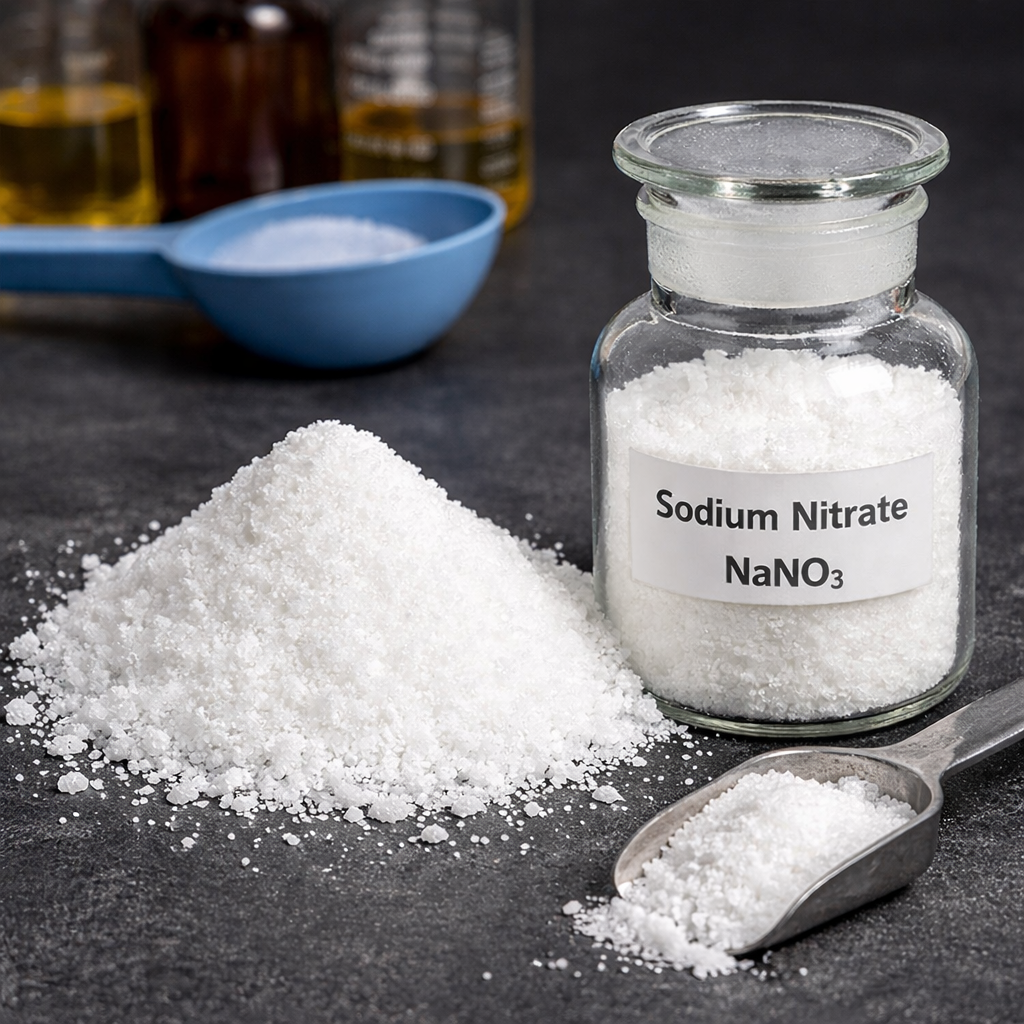
Sodium Nitrate is thermally stable up to ~380 °C.
Decomposition starts around 380–400 °C and accelerates with temperature, producing nitrite and oxygen, with further breakdown at >600 °C.
· Chile saltpeter Peru saltpeter
· nitrate of soda nitric acid sodium salt sodium salt of nitric acid
· what is sodium nitrate uses of sodium nitrate
· sodium nitrate chemical formula sodium nitrate vs sodium nitrite
· Commercial Keywords: sodium nitrate price per kg
· sodium nitrate suppliers comparison Transactional Keywords:
· buy sodium nitrate online bulk sodium nitrate for sale
Long-Tail Keywords: pharmaceutical grade sodium nitrate supplier in India
sodium nitrate for glass manufacturing sodium nitrate for heat storage applications