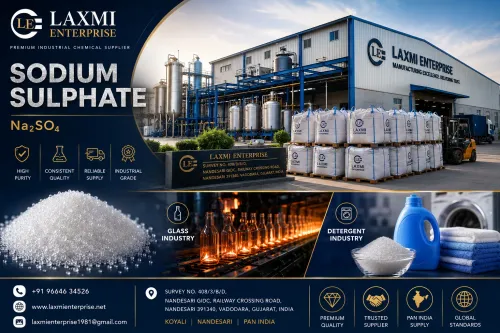
Sodium Sulphate Price in India: Complete Buying Guide, Price Factors, Market Trends & Procurement Strategies
Sodium Sulphate Price India
Sodium Sulphate Price per Kg
Sodium Sulphate Bulk Price
Industrial Sodium Sulphate Price
Technical Grade Sodium Sulphate Price
Sodium Sulphate Supplier India
Buy Sodium Sulphate India
Sodium Sulphate Gujarat
Sodium Sulphate Manufacturer India
Sodium Sulphate Wholesale Price
Search Intent: Commercial / Transactional
Introduction
One of the first questions industrial buyers ask is:
'What is the price of sodium sulphate in India?'
While this appears to be a straightforward question, there is rarely a single price that applies to every buyer. Sodium sulphate pricing depends on several technical, commercial, and logistical factors. Two companies purchasing the same chemical may receive different quotations because of differences in order quantity, product grade, packaging, delivery location, transportation costs, and commercial terms.
For procurement managers, understanding what influences pricing is often more valuable than knowing a single market quotation. A competitive purchase is achieved by evaluating the total cost of ownership, including quality consistency, delivery reliability, documentation, inventory availability, and supplier support.
This guide explains the major factors that influence sodium sulphate pricing in India and provides practical purchasing strategies to help industrial buyers make informed sourcing decisions.
Why Sodium Sulphate Prices Change
Unlike consumer products with fixed retail prices, industrial chemicals are supplied through business-to-business contracts, negotiated quotations, and long-term supply agreements.
Prices may change because of:
Raw material availability
Manufacturing costs
Transportation expenses
Packaging requirements
Order quantity
Regional demand
Seasonal logistics
Import and export activity
Fuel and freight costs
Supply chain conditions
Procurement teams should therefore evaluate current quotations rather than relying on outdated price lists.
Major Factors That Influence Sodium Sulphate Pricing
1. Product Grade
Different grades may have different production and quality requirements.
Examples include:
Industrial Grade
Technical Grade
Commercial Grade
Customer-Specific Grade
The required grade should match the intended application rather than simply selecting the lowest-priced option.
2. Order Quantity
Bulk purchases often provide opportunities for improved commercial terms because transportation, packaging, and handling costs can be distributed across larger quantities.
Many industrial buyers therefore establish annual procurement plans rather than placing frequent small orders.
3. Packaging Type
Packaging requirements influence both handling costs and transportation efficiency.
Common industrial packaging includes:
25 kg bags
50 kg bags
Jumbo bags (FIBC)
Bulk supply (where applicable)
The most suitable packaging depends on the customer's storage facilities and production process.
4. Delivery Location
Freight plays an important role in industrial chemical pricing.
Transportation costs vary depending on:
Distance
Road connectivity
Shipment size
Delivery frequency
Loading and unloading requirements
Customers located near major industrial corridors may experience logistical advantages.
5. Documentation Requirements
Some industries require additional documentation such as:
Certificate of Analysis (COA)
Technical Data Sheet (TDS)
Safety Data Sheet (SDS)
Batch traceability records
Customer-specific documentation
Documentation requirements may influence the overall supply process and should be discussed before purchase.
Why Buyers Should Compare Value, Not Only Price
The lowest quotation does not always represent the best procurement decision.
Experienced purchase managers compare:
Product quality
Batch consistency
Technical support
Delivery reliability
Documentation
Supplier responsiveness
Inventory availability
Commercial terms
A slightly higher quotation from a dependable supplier may reduce production interruptions, emergency purchases, and quality-related costs.
Typical Industries Purchasing Sodium Sulphate
Demand in India comes from a wide range of industries, including:
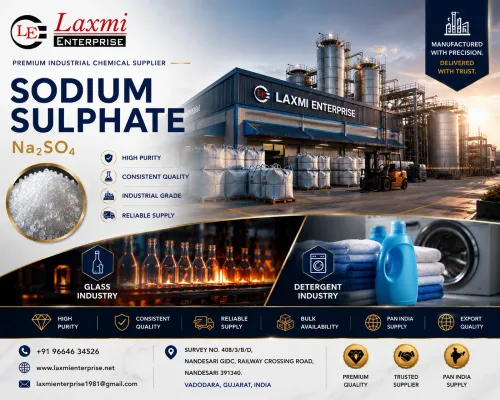
Detergent Manufacturers
Often prioritize:
Free-flowing material
Consistent particle size
Reliable supply
Bulk deliveries
Glass Manufacturers
Typically focus on:
Consistent specifications
Stable quality
Documentation
Long-term supply agreements
Textile Processing Units
Frequently evaluate:
Product consistency
Reliable logistics
Technical support
Timely deliveries
Paper & Pulp Industry
Common priorities include:
Inventory reliability
Packaging quality
Supplier responsiveness
How to Request an Accurate Quotation
When contacting a supplier, provide as much relevant information as possible.
Typical details include:
Product name
Required grade
Approximate monthly or annual quantity
Packaging preference
Delivery location
Intended application
Expected delivery schedule
Providing complete information allows suppliers to prepare more accurate commercial proposals.
Frequently Asked Questions
Why doesn't sodium sulphate have one fixed market price?
Industrial pricing depends on variables such as product grade, order quantity, packaging, freight, and commercial terms.
Does buying in bulk reduce procurement costs?
Larger orders may provide commercial and logistical advantages, depending on the supplier and delivery requirements.
Should I compare quotations from multiple suppliers?
Yes. Comparing quotations helps evaluate pricing, documentation, delivery capability, and technical support. Ensure that all quotations refer to the same product grade and specification.
Why is freight important?
Transportation costs are a significant part of industrial chemical procurement, especially for large-volume shipments.
What information should I provide when requesting pricing?
Include the required grade, quantity, packaging, delivery location, intended application, and preferred delivery timeline to receive a more relevant quotation.
Marketing Tips for Indian Procurement Teams
When evaluating suppliers, consider these questions:
Can the supplier maintain consistent inventory?
Are batch-specific COAs provided?
Is technical support available when needed?
Can deliveries be scheduled according to your production plan?
Does the supplier understand your industry?
Can the supplier support long-term procurement requirements?
A strong supplier relationship often delivers greater value than negotiating for the lowest initial price.
To improve visibility for regional searches, create supporting landing pages such as:
Sodium Sulphate Supplier in Gujarat
Sodium Sulphate Supplier in Maharashtra
Sodium Sulphate Supplier in Rajasthan
Sodium Sulphate Supplier in Tamil Nadu
Sodium Sulphate Supplier in Karnataka
Sodium Sulphate Supplier in Uttar Pradesh
Sodium Sulphate Supplier in Delhi NCR
Sodium Sulphate Supplier in Punjab
Sodium Sulphate Supplier in Haryana
Sodium Sulphate Supplier in Madhya Pradesh
Keywords