

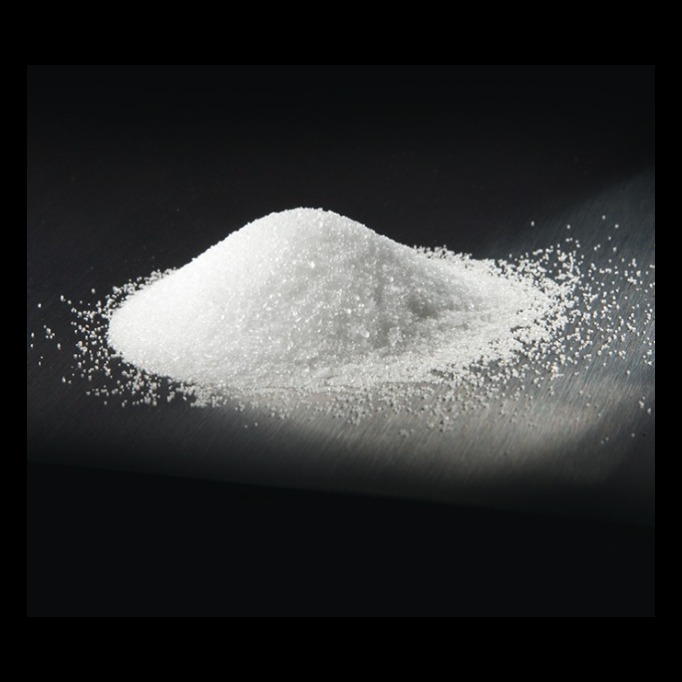
FIRST AID MEASURES
Inhalation: Move to fresh air. Seek medical attention if irritation persists.
Skin Contact: Wash with plenty of soap and water.
Eye Contact: Rinse cautiously with water for several minutes. Remove contact lenses.
Ingestion: Rinse mouth, do not induce vomiting, seek medical help immediately.
FIRE-FIGHTING MEASURES
Suitable Extinguishing Media: Water spray, foam (not dry chemical or CO₂).
Specific Hazards: May release toxic nitrogen oxides (NOx) on decomposition.
Special Protective Equipment: Use full protective gear and self-contained breathing apparatus.
ACCIDENTAL RELEASE MEASURES
Avoid contact with combustible materials.
Sweep up and place in suitable labeled containers.
Prevent entry into drains or water sources.
TOXICOLOGICAL INFORMATION
Acute Toxicity (Oral, Rat) LD₅₀: 1267 mg/kg
Skin / Eye Irritation Causes mild skin and eye irritation
Chronic Effects Prolonged exposure may cause methemoglobinemia (reduced oxygen transport in blood)
DISPOSAL CONSIDERATIONS
Dispose according to local environmental regulations.
Do not discharge into drains or natural waterways.
REGULATORY INFORMATION
Complies with REACH, GHS, and Indian BIS standards (IS 573).
Not listed as a hazardous waste under Indian Environmental Laws.
OTHER INFORMATION
Recommended Uses:
Oxidizing agent in pyrotechnics, fertilizer blends, metal treatments, glass manufacturing, and heat transfer salts.
Shelf Life: 24 months from manufacturing date if store
Quick chemical facts (exact numbers)
Chemical formula: NaNO₃
Molecular weight: ≈ 84.994 g·mol⁻¹ (commonly quoted as 85.00)
Nitrogen content (N): 16.48% (14.0067 / 84.994 = 0.1648 → 16.48% N)
Sodium content (Na): 27.05% (22.9898 / 84.994 = 0.2705 → 27.05% Na)
Solubility: very high (readily soluble in water — suitable for fertigation and foliar feed)
What sodium nitrate supplies and when to use it
Main role: Rapidly available nitrate-N source — immediately available to plants (no soil hydrolysis needed).
Best for: Vegetables, fruit trees, high-value vegetable crops, greenhouse crops, fertigation systems, and situations where quick nitrate uptake is needed.
Not ideal for: Long-term basal application on sodium-sensitive crops or saline-prone soils because of high sodium content.
Sodium (Na) load & salinity risk — critical warning
Because NaNO₃ contains ~27.05% sodium, using it for routine large N applications will add substantial sodium to soil.
Example: supplying 120 kg N/ha with NaNO₃ (728.17 kg NaNO₃/ha) adds about:
Sodium added = 728.17 kg × 0.2705 ≈ 196.96 kg Na/ha
That is a very high sodium load and can cause soil structure damage, dispersion of clay, reduced infiltration, and crop yield decline on sensitive soils. Use with extreme caution — typically limited to soils that tolerate sodium (arid soils with good drainage) or only as small, targeted foliar/fertigations on high-value crops.
Blending & compatibility notes
Provides only N (and Na). It cannot supply P or K — use with a P and K source when making NPK blends.
Sodium concern: Do not use NaNO₃ as the main N source in crops or soils where sodium buildup is a concern. Prefer calcium nitrate, potassium nitrate, urea, or ammonium nitrate where sodium is undesirable.
Compatibility: Generally compatible with most water-soluble fertilizer stocks (check for specific mixes). Avoid mixing with strong reducing agents, organic materials, or incompatible industrial chemicals.
Granular blends: If you are making granular NPK blends, NaNO₃'s hygroscopic nature and safety/compatibility need testing — it’s more commonly used as a straight soluble fertilizer or as the nitrate component in water-soluble mixes.
. Agronomic recommendations & application methods
Split applications: To reduce leaching and improve use-efficiency, split the total N into several applications timed to crop demand.
Fertigation: Ideal for fertigation — use small amounts frequently rather than one large basal dose. Use soil/leachate monitoring for salinity.
Foliar feeding: Can be used for foliar nitrate applications at low rates for quick correction of N deficiency.
Soil testing: Always perform pre-season soil EC and sodium tests. If soil SAR/EC is high, avoid NaNO₃.
Crop examples: Suitable for high-value vegetable crops (tomato, lettuce), some fruit trees when used carefully; avoid routine use on broadacre cereals unless soil sodium is known to be safe.
. Safety, storage & transport
Hazard class: Oxidizing solid (handle away from combustible materials).
Storage: Keep dry, cool, in sealed bags or jumbo sacks; avoid contamination with organic materials.
Handling PPE: Dust mask, gloves, goggles.
Packaging: 25/50 kg HDPE bags with liners; 1 MT jumbo bags for bulk.
MSDS: Must include oxidizer warnings, firefighting measures (water recommended), and incompatibilities (organics, reducing agents).
. Typical technical specs you can offer customers
Purity (NaNO₃): ≥ 99.0%
Moisture: ≤ 0.5%
Insoluble matter: ≤ 0.05%
Chloride (Cl⁻): ≤ 0.05%
Nitrite (NO₂⁻): ≤ 0.01%
Packaging options: 25/50 kg bags, 1 MT jumbo bags
(You can adapt these to your plant’s QC results.)
. Alternatives & when to recommend them
Calcium nitrate (Ca(NO₃)₂): Provides nitrate-N without sodium and supplies Ca — good for soils low in Ca or where sodium is a problem.
Potassium nitrate (KNO₃): Provides nitrate-N plus K — great when potassium is needed and sodium must be avoided.
Urea or ammonium nitrate: Cheaper N sources; choose based on soil pH, timing, and crop needs
• sodium nitrate supplier
• sodium nitrate manufacturer
• sodium nitrate exporter
• sodium nitrate distributor
• sodium nitrate price
• buy sodium nitrate online
• bulk sodium nitrate for sale
• industrial grade sodium nitrate
• food grade sodium nitrate
• pharmaceutical grade sodium nitrate
• sodium nitrate supplier in India
• sodium nitrate manufacturer in Gujarat
• sodium nitrate exporter Asia Pacific
• buy sodium nitrate near me
• sodium nitrate distributor in USA
• sodium nitrate supplier in Europe
*Example client advisory (short)
“If rapid nitrate is required for fertigation or foliar correction on high-value vegetable/horticultural crops, sodium nitrate is an excellent quick-release option. However — due to its high sodium content (~27%) — we recommend limited, controlled use (small fertigation doses or foliar sprays) and routine soil EC/SAR monitoring. For long-term basal N on arable land, prefer non-sodium nitrate sources such as calcium nitrate.”
[[SODIUM NITRATE – MSDS & TECHNICAL SPECIFICATIONS LAXMI ENTERPRISE, VADODRA, GUJARAT, INDIA.]]