

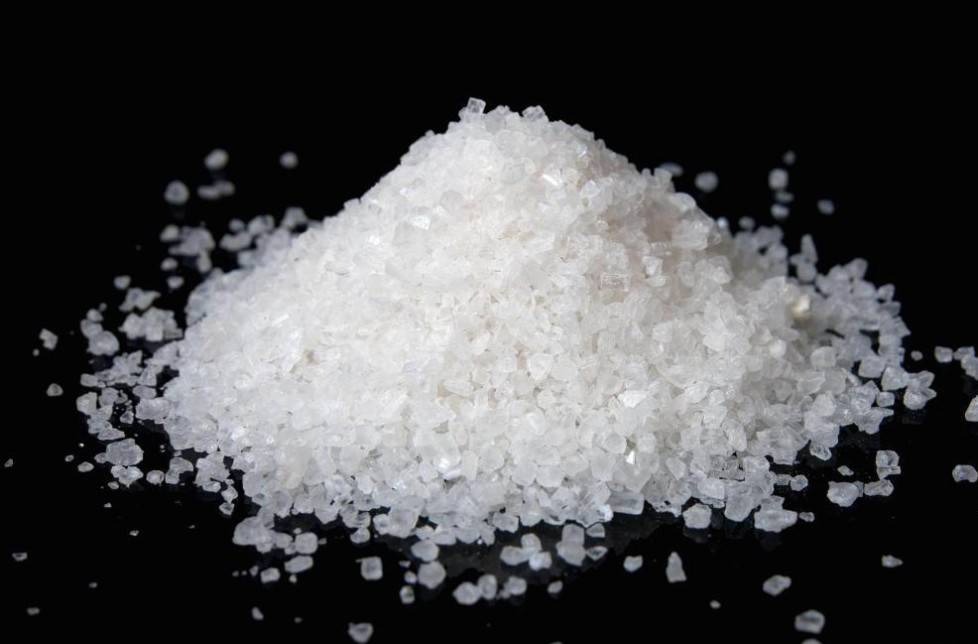
INDUSTRIAL SODIUM NITRATE — HEAT-TREATMENT APPLICATIONS
Below is a concise, practical reference on how sodium nitrate (NaNO₃) is used in industrial heat-treatment processes, plus key process ranges, benefits, limitations and safety/handling notes.
1) Main roles in heat treatment
Molten salt bath (heat-transfer medium) — NaNO₃ (often as binary mixtures with KNO₃ or NaNO₂) is used as a molten salt to provide very uniform and rapid heat transfer for annealing, tempering, stress-relief and quenching operations.
Oxidizing / brightening agent — nitrate baths can produce bright, scale-free surfaces for some steels and stainless steels when carefully controlled (often called “bright annealing” or “salt bath annealing”).
Component in salt baths for carburizing / nitrocarburizing (less common) — nitrates sometimes appear in formulated salts for surface treatments (but cyanide or other nitride sources are more common for classical nitriding).
Heat-transfer fluid in thermal processes — NaNO₃/KNO₃ mixtures (so-called “solar salts”) are used where stable high-temperature heat transfer is needed (related, though not strictly a metallurgical “treatment”).
2) Typical compositions & temperature ranges
Pure NaNO₃ — melting point ≈ 308 °C.
NaNO₃–KNO₃ mixtures (common industrial blends) — eutectic mixes melt lower (≈ 220 °C for common solar salt mixtures) and are used to get lower operating temperatures and wider liquid range.
Usual operating window for salt-bath heat treatment — typically ~250 °C to 600 °C, depending on the exact mix and stability. Above ~500–600 °C nitrates begin to thermally decompose and generate NOx/oxygen; stability depends on contamination and dwell time.
Note: exact safe upper limit depends on the specific formulation and contaminants — treat the numbers above as practical guidelines, not guaranteed limits.
3) Typical applications & processes
Bright annealing / annealing of stainless and alloy steels — gives controlled cooling/heating with low oxidation/scale when bath chemistry and atmosphere are right.
Tempering & stress relief — uniform temperature and rapid heat exchange reduce distortion.
Quenching (salt quench) — for some steels salt quenching provides faster, uniform cooling than oil/water with reduced cracking risk; composition controls cooling severity.
Hot working/heat soaking — for parts requiring uniform soak before forming.
Heat-transfer in continuous furnaces or solar thermal systems — similar salts used as heat transfer/storage fluids.
4) Advantages
High heat capacity and excellent heat transfer → uniform part temperature and faster processing.
Cleaner/scale-free finishes possible (bright annealing) when properly managed.
Adjustable melting/working range by blending with KNO₃/NaNO₂.
Non-flammable as a bulk material (but strong oxidizer).
5) Limitations & compatibility
Oxidizing / corrosive behavior — molten nitrates are oxidizing; they can aggressively corrode carbon steels and some common alloys if not controlled. Stainless steels (higher Cr/Ni) are typically used for containment and immersion baskets, but even these can suffer from pitting if contaminated (chlorides) or if the redox chemistry is unfavorable.
Thermal decomposition at high T — generates NOx gases and oxygen; decomposition accelerates above about 500–600 °C (depends on impurities).
Contamination sensitivity — water, chlorides, organics and metal salts change bath chemistry, increase corrosion, and lower stability.
Buy Sodium Nitrate
Sodium Nitrate for Sale
Sodium Nitrate Supplier
Sodium Nitrate Manufacturers
Sodium Nitrate Wholesale
Industrial Grade Sodium Nitrate
Food Grade Sodium Nitrate
High Purity Sodium Nitrate
Sodium Nitrate Fertilizer
Nitrogen Fertilizer Supplier
Nitrate-Based Fertilizers
Crop Nutrition Solutions
Environmental & disposal — spent baths contain nitrates and possible metal contaminants → regulated waste stream in many jurisdictions.
6) Material selection & equipment notes
Bath materials: use alloys proven in oxidizing salt environments (high-nickel stainlesss e.g., 316L or special alloys) or protective linings. Avoid plain carbon steels for prolonged contact.
Baskets & fixtures: use corrosion-resistant fixtures, and minimize crevices where salts/contaminants accumulate.
Sealing & venting: provide robust ventilation and NOx scrubbing/filtration for emissions.
Instrumentation: redox potential monitors, salt filtration, and dissolved oxygen / nitrite monitors help maintain bath life and reduce corrosion.
7) Safety, handling & environmental controls
Personal protection: PPE for chemical handling (gloves, goggles, face shield), heat protection near molten baths.
Gaseous hazards: decomposition → NOx and O₂ release. Good local exhaust ventilation and scrubbers are recommended.
Fire/explosion: nitrates are strong oxidizers — avoid contact with organics or reducing agents.
Spill response: cool and contain; do not mix with incompatible materials.
Disposal: treated and characterized as industrial waste; follow local regulation for nitrate-bearing wastes and any metal contamination.
8) Process control checklist (practical)
Choose salt composition to match required melt point & max temperature.
Verify compatibility of tank & fixtures with oxidizing nitrate salts.
Establish bath filtration and impurity removal (skimming, fluxing, filtering).
Monitor temperature, redox potential, and contamination (chloride/metal).
Vent and treat exhaust (NOx).
Schedule regular chemical analysis and top-up/replacement plan.
9) When not to use sodium nitrate baths
For very high temperature treatments above the nitrate decomposition window (>~600 °C).
When materials to be treated or tooling are highly reactive to oxidizers and cannot be satisfactorily protected.
Where environmental permits or NOx controls are not available.
If you want, I can:
produce a one-page spec sheet with recommended salt blends and specific temperature ranges for common steel grades;
draft a safe operating procedure (SOP) for a molten NaNO₃ salt bath; or
prepare a comparison table of NaNO₃ vs. common alternatives (oil quench, polymer quenchant, molten chloride salts).