

Chemical Information
Chemical Name: Sodium Sulfate (Anhydrous or Glauber’s Salt – Na₂SO₄)
Molecular Weight: 142.04 g/mol
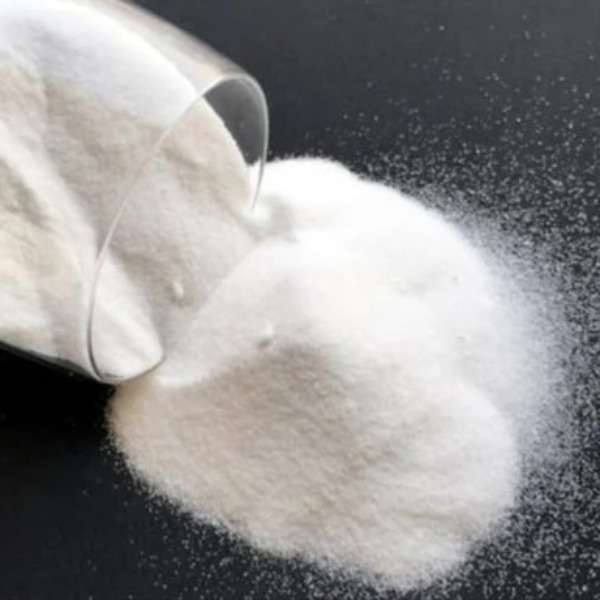
Appearance: White crystalline powder
Solubility: Highly soluble in water
CAS Number: 7757-82-6
Role in Detergent Manufacturing
1. Filler or Diluent
Primary Function: Sodium sulfate is used as an inert filler in powder detergents to adjust the concentration of the active ingredients.
It helps maintain consistent bulk density and flowability of the powder.
Allows uniform mixing of surfactants (like Linear Alkylbenzene Sulfonate – LAS) and builders (like Sodium Tripolyphosphate).
2. Cost Reduction
It reduces the cost per kilogram of detergent by acting as a low-cost carrier material.
Without sodium sulfate, detergents would be more concentrated and thus more expensive to produce.
3. Improves Powder Properties
Enhances free-flowing characteristics and prevents clumping.
Aids in achieving a smooth texture and even granule size.
Improves drying efficiency in spray-drying processes.
4. Aids Solubility
Sodium sulfate assists in quick dissolution of detergent powder in water, ensuring better performance in washing machines.
Usage Levels
Typically used in the range of 30% to 50% in detergent powder formulations, depending on the concentration of active surfactants and market grade (premium vs. economy).
Example Detergent Formula (Economy Grade)
ComponentPercentage (%)Linear Alkylbenzene Sulfonic Acid (LABSA)12Sodium Carbonate10Sodium Tripolyphosphate (STPP)5Sodium Silicate3Sodium Sulfate45Optical Brightener, Perfume, Color1Water & OthersBalance
Environmental and Safety Aspects
Non-toxic and non-corrosive.
Does not harm aquatic life at typical concentrations.
Environmentally safe compared to phosphate builders.
Should be stored in dry conditions to prevent caking.
sodium sulphate
- sodium sulfate
- Na2SO4
- CAS 7757-82-6 (anhydrous)
- CAS 7727-73-3 (decahydrate)
- E514
- EC 231-820-9
- sodium sulphate SDS
- sodium sulphate MSDS
Industrial Sources
By-product from:
Viscose fiber manufacturing
Dyes and pigment production
Hydrochloric acid neutralization of sodium hydroxide
Key Advantages
Economical filler for bulk detergents
Improves physical properties of detergent powders
Non-reactive and stable
Readily available and easy to handle
Would you like me to include a detailed manufacturing flow diagram or formulation chart showing where sodium sulfate is added during the detergent.
What Is a Thermal Energy Storage System?
A Thermal Energy Storage (TES) system stores thermal energy — either as sensible heat, latent heat, or chemical energy — so it can be used at a later time for heating, cooling, or power generation.
It acts like a thermal battery that stores heat or cold and releases it when needed.
2. Classification of Thermal Energy Storage Systems
A. Sensible Heat Storage
Principle: Energy is stored by raising or lowering the temperature of a storage medium.
Storage Media: Water, sand, rocks, molten salts, concrete, etc.
Examples:
Hot water tanks (domestic heating)
Molten salt tanks in solar thermal plants
Advantages: Simple design, low cost
Disadvantages: Requires large volume; limited energy density
Formula:
Q = m × c × ΔT
(where m = mass, c = specific heat, ΔT = temperature change)
B. Latent Heat Storage (Phase Change Materials – PCM)
Principle: Stores/release energy during phase changes (usually solid ↔ liquid).
Storage Media: Paraffin wax, salt hydrates, fatty acids, eutectic mixtures
Advantages: High energy density, nearly constant temperature operation
Disadvantages: Expensive materials, low thermal conductivity
Example: Ice storage for air conditioning systems.
C. Thermochemical Energy Storage
Principle: Based on reversible chemical reactions that absorb or release heat.
Storage Media: Metal oxides, salts, adsorption materials (e.g., zeolite + water, CaO/Ca(OH)₂)
Advantages: Very high energy density; long-term storage without losses
Disadvantages: Complex, costly, still under development for large-scale use
3. Applications of Thermal Energy Storage
Sector Application Example
Power Generation Store solar heat for night-time electricity Concentrated Solar Power (CSP) with molten salt tanks
Building HVAC Store chilled or hot water for air-conditioning Ice thermal storage in large buildings
Industrial Processes Recover and reuse waste heat Furnace heat recovery
District Heating/Cooling Balance demand and supply in networks Hot water tanks or underground pits
Renewable Integration Balance intermittent solar/wind generation Coupled with solar thermal collectors
4. Example: Molten Salt Energy Storage (in CSP Plants)
Medium: Mixture of sodium nitrate (NaNO₃) and potassium nitrate (KNO₃)
Temperature Range: 290°C – 565°C
Process:
Solar mirrors focus sunlight to heat the molten salt.
The hot salt stores heat in insulated tanks.
The stored heat generates steam to drive turbines even after sunset.
Storage Time: Up to 15 hours of power generation
Efficiency: 70–85%
5. Advantages of Thermal Energy Storage
Enhances energy efficiency and grid stability
Reduces peak electricity demand
Enables round-the-clock renewable power
Decreases fossil fuel consumption
Provides cost-effective long-term energy storage
6. Challenges
High initial cost
Heat losses during long-term storage
Limited availability of high-performance storage materials
Need for better thermal insulation and system design
7. Future Trends
Use of advanced PCMs (nano-enhanced materials)
Thermochemical batteries for seasonal energy storage
Hybrid systems combining electrical and thermal storage
Integration with smart grids and AI-based control systems
Chemical Overview
Chemical Name: Sodium Sulfate (Anhydrous or Glauber’s Salt)
Chemical Formula: Na₂SO₄
Molecular Weight: 142.04 g/mol
Appearance: White, crystalline powder
Solubility: Highly soluble in water
CAS No.: 7757-82-6
2. Role in Detergent Manufacturing
A. Filler / Bulking Agent
The main purpose of sodium sulfate in detergent powder is as a filler or diluent.
Detergent powders contain active surfactants that clean. Sodium sulfate provides bulk to the powder without affecting cleaning efficiency.
It ensures the detergent has a consistent texture and is easy to pour and handle.
Example:
Premium detergents may contain 15–25% sodium sulfate,
while economy-grade detergents may contain 30–50%.
B. Improves Powder Properties
Prevents clumping and improves free flow during packaging and use.
Enhances granule uniformity and dispersion in water.
Aids in achieving a uniform blend of active ingredients.
C. Cost Reduction
Sodium sulfate is low-cost and inert, helping reduce the overall production cost without compromising performance.
Allows manufacturers to control the concentration of expensive active ingredients (like surfactants and builders).
D. Helps in Spray-Drying
In large-scale detergent production, the slurry (mix of surfactants, builders, etc.) is spray-dried into powder form.
Sodium sulfate aids drying, improving flow and preventing caking.
E. Solubility Aid
Improves the solubility and dispersion of detergent powder in water, ensuring quicker dissolution during washing.
3. Typical Detergent Powder Composition
Component Function % Composition
Linear Alkyl Benzene Sulfonate (LABSA) Primary surfactant 10–15%
Sodium Carbonate Builder 10–15%
Sodium Tripolyphosphate / Zeolite Water softener 5–10%
Sodium Sulfate Filler / carrier 30–50%
Sodium Silicate Anti-corrosive agent 2–5%
Optical Brightener, Perfume, Color, Enzymes Additives 1–2%
Water & others Balance —
4. Industrial Sources of Sodium Sulfate
By-product in:
Viscose rayon manufacturing
Hydrochloric acid production
Dyes and pigments industry
- Informational: what is sodium sulphate, uses of sodium sulphate
- Commercial: sodium sulphate price per kg, supplier comparison
- Transactional: buy sodium sulphate online, bulk sodium sulphate for sale
- Long-tail: sodium sulphate for detergents, sodium sulphate for glass industry
Also produced by neutralizing sulfuric acid with sodium carbonate.
5. Environmental and Safety Profile
Non-toxic, non-flammable, and stable under normal conditions.
Eco-friendly compared to some phosphate builders.
Should be stored in dry conditions to prevent moisture absorption and caking.
6. Summary of Benefits
Property Benefit in Detergents
Inert and stable Doesn’t react with other ingredients
Low cost Reduces total manufacturing cost
Free-flowing Improves powder handling
Soluble Aids quick dissolution in wash water
Bulking Provides uniform volume and consistency
In Summary:
Sodium sulfate is an essential component in detergent powder formulations, serving primarily as an inert filler to improve flow, control concentration, and reduce cost — all while maintaining product performance and quality.