

Sodium Sulphate Manufacturing Process: Sustainability, Quality Assurance, Supplier Selection, Future Technologies, and Industrial FAQ
Environmental Management in Sodium Sulphate Manufacturing
Environmental performance has become an important consideration for sodium sulphate manufacturers worldwide. Modern production facilities focus not only on product quality but also on reducing energy consumption, minimizing emissions, conserving water, and improving resource efficiency.
The environmental approach differs depending on whether sodium sulphate is produced from natural deposits or recovered through synthetic manufacturing processes.
Key sustainability objectives include:
Improving production efficiency.
Reducing process waste.
Optimizing energy consumption.
Conserving water resources.
Maximizing raw material utilization.
Minimizing dust emissions.
Promoting responsible industrial practices.
Manufacturers that invest in environmental improvements often achieve better production consistency while meeting increasingly stringent regulatory requirements.
Water Management
Water plays a significant role in crystallization, washing, cooling, and process handling.
Modern plants aim to reduce fresh water consumption through:
Process water recycling.
Closed-loop cooling systems.
Condensate recovery.
Controlled wastewater treatment.
Optimized washing operations.
Efficient water management lowers operating costs and supports sustainable manufacturing.
Energy Optimization
Drying and evaporation are among the most energy-intensive operations in sodium sulphate production.
To improve efficiency, manufacturers increasingly adopt:
Heat Recovery Systems
Recovering waste heat from one process for use in another reduces overall energy demand.
High-Efficiency Dryers
Modern rotary and fluidized bed dryers improve heat transfer and reduce fuel consumption.
Automated Process Control
Digital control systems continuously optimize operating conditions, improving both product quality and energy efficiency.
Dust Control and Workplace Safety
Because sodium sulphate is typically handled as a crystalline solid or powder, manufacturers implement dust-control measures throughout production and packaging.
Common practices include:
Enclosed conveying systems.
Dust extraction units.
Bag filters.
Local exhaust ventilation.
Automated bag filling.
Routine housekeeping.
These measures improve workplace cleanliness and help maintain a safer production environment.
Process Automation
Automation has become a defining feature of modern sodium sulphate manufacturing.
Computer-controlled production systems monitor and regulate critical operating parameters such as:
Temperature.
Flow rate.
Solution concentration.
Crystallization conditions.
Dryer performance.
Packaging accuracy.
Automation offers several advantages:
Improved batch consistency.
Reduced human error.
Better production efficiency.
Enhanced traceability.
Faster response to process variations.
Quality Assurance Systems
Industrial buyers increasingly expect suppliers to operate under structured quality management systems.
An effective quality assurance program typically includes:
Documented Standard Operating Procedures (SOPs).
Raw material inspection.
In-process monitoring.
Finished product testing.
Equipment calibration.
Internal quality audits.
Corrective and preventive actions.
Batch traceability.
These practices help ensure that every shipment meets agreed technical specifications.
Traceability in Manufacturing
Traceability enables manufacturers to identify the origin and production history of every batch supplied to customers.
Typical traceability records include:
Production date.
Batch number.
Raw material source.
Process parameters.
Laboratory test results.
Packaging records.
Dispatch information.
Good traceability supports quality investigations and strengthens customer confidence.
Supplier Qualification for Industrial Buyers
Selecting a sodium sulphate supplier should involve a structured evaluation rather than focusing solely on price.
Industrial procurement teams commonly assess:
Manufacturing Capability
The supplier should demonstrate stable production capacity capable of supporting long-term supply requirements.
Product Consistency
Reliable batch-to-batch quality is essential for continuous industrial processes.
Laboratory Support
Suppliers should provide comprehensive documentation, including Certificates of Analysis (COA), Technical Data Sheets (TDS), and Safety Data Sheets (SDS).
Logistics Reliability
Consistent delivery performance helps reduce inventory risk and avoid production interruptions.
Technical Expertise
Suppliers familiar with the end-use industry are better equipped to recommend suitable grades and address technical questions.
Procurement Checklist
Before approving a sodium sulphate supplier, industrial buyers should review:
Product purity.
Moisture content.
Water-insoluble matter.
Chloride level.
Iron content.
Particle size distribution.
Batch consistency.
Packaging quality.
Technical documentation.
Production capacity.
Delivery performance.
Customer support.
A systematic evaluation reduces procurement risk and supports long-term operational reliability.
Future Developments in Sodium Sulphate Manufacturing
Advances in process engineering and digital technologies continue to improve sodium sulphate production.
Emerging trends include:
Advanced Process Analytics
Real-time monitoring allows manufacturers to optimize crystallization, drying, and product consistency.
Artificial Intelligence
AI-assisted process control can identify production trends, predict maintenance needs, and improve operational efficiency.
Energy-Efficient Equipment
New generations of evaporators and dryers are designed to reduce energy consumption while maintaining throughput.
Circular Manufacturing
Manufacturers increasingly recover sodium sulphate from compatible industrial streams, supporting resource efficiency and reducing waste.
Digital Supply Chain Integration
Electronic documentation, batch tracking, and inventory integration improve communication between manufacturers and industrial customers.
Why Manufacturing Knowledge Matters to Buyers
Understanding how sodium sulphate is produced helps buyers make more informed purchasing decisions.
Knowledge of the manufacturing process enables procurement professionals to:
Compare suppliers more effectively.
Evaluate technical documentation.
Understand quality variations.
Specify appropriate product grades.
Improve quality assurance procedures.
Reduce the risk of supply-related production issues.
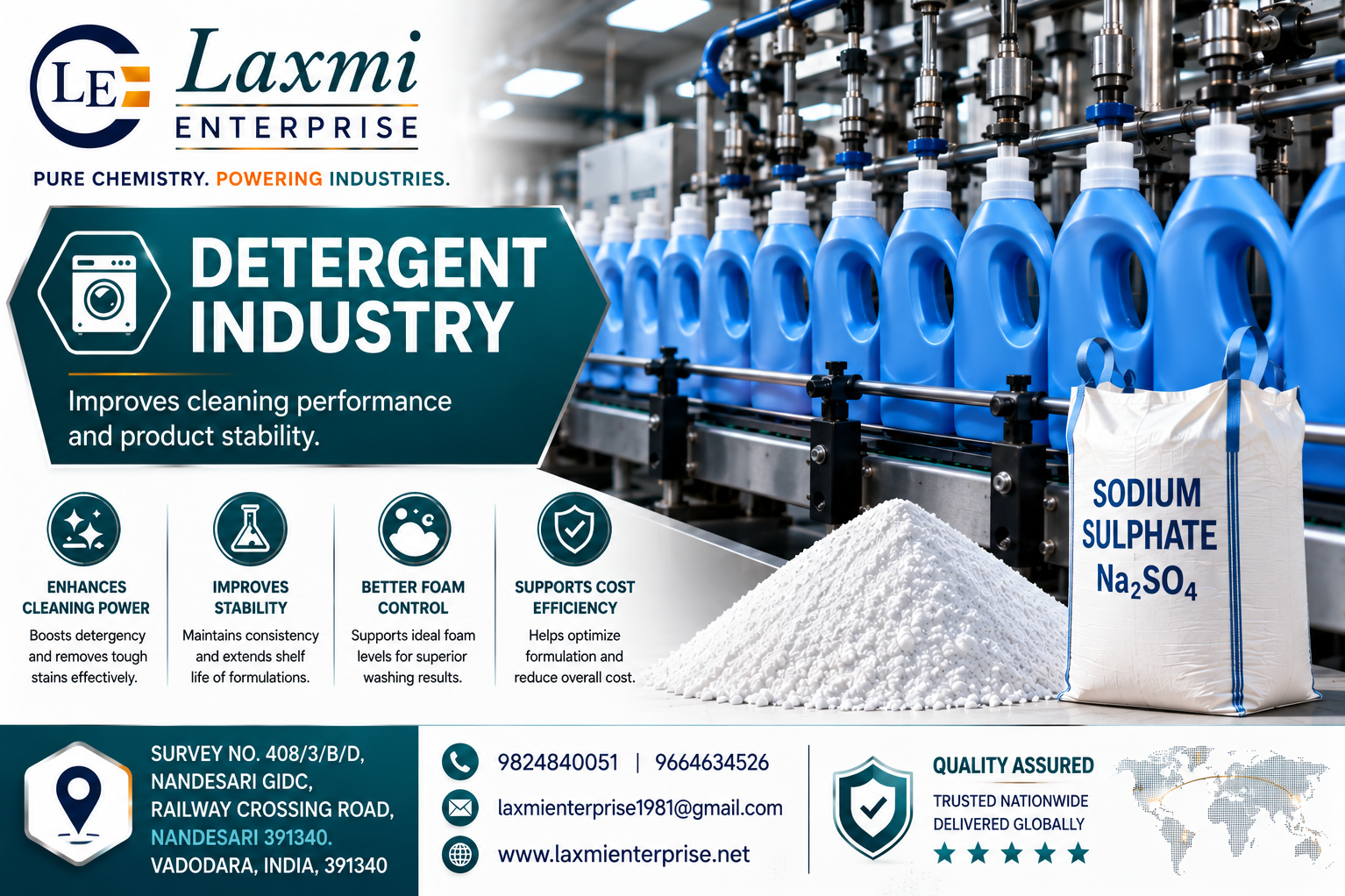
For industries such as detergents, glass, textiles, pulp and paper, and chemical manufacturing, selecting the appropriate sodium sulphate source contributes to consistent process performance and long-term operational efficiency.
Conclusion
Sodium sulphate production combines well-established chemical engineering principles with modern quality assurance, process automation, and sustainability practices. Whether obtained from natural mineral deposits or produced through synthetic manufacturing routes, the final product must meet strict quality requirements to satisfy the needs of diverse industrial sectors.
From raw material inspection and purification to crystallization, drying, packaging, and laboratory testing, every stage of the manufacturing process influences the final characteristics of sodium sulphate. Industrial buyers therefore benefit from working with manufacturers that demonstrate consistent production practices, comprehensive quality control, reliable logistics, and strong technical support.
As manufacturing technologies continue to evolve, the emphasis on efficiency, traceability, and environmental responsibility will remain central to the production of high-quality sodium sulphate for global industries.
Frequently Asked Questions
1. How is sodium sulphate manufactured?
Sodium sulphate is produced either by recovering it from natural mineral deposits and brines or through synthetic chemical manufacturing processes. The production route depends on raw material availability, required purity, and intended application.
2. What are the main sources of sodium sulphate?
Commercial sodium sulphate is obtained from natural sources such as thenardite and mirabilite deposits, as well as from synthetic production or recovery during certain chemical manufacturing processes.
3. What is the difference between natural and synthetic sodium sulphate?
Natural sodium sulphate is extracted from geological deposits or saline waters, while synthetic sodium sulphate is manufactured or recovered through industrial chemical processes. Both can meet industrial specifications when properly processed.
4. Why is crystallization important?
Crystallization determines crystal size, purity, filtration characteristics, and drying efficiency, all of which influence the quality of the finished product.
5. What equipment is used in sodium sulphate production?
Typical equipment includes reaction vessels, clarifiers, filters, crystallizers, centrifuges, evaporators, dryers, screens, storage silos, conveyors, and automated packaging systems.
6. Why is moisture control important?
Controlled moisture helps maintain free-flowing properties, prevents caking, improves storage stability, and supports consistent handling during transportation and industrial use.
7. What laboratory tests are commonly performed?
Manufacturers routinely test chemical purity, moisture, chloride content, iron content, water-insoluble matter, particle size distribution, bulk density, and product appearance.
8. What is a Certificate of Analysis (COA)?
A COA is a document issued for each production batch that reports the measured quality parameters and confirms compliance with the agreed product specifications.
9. Why is batch consistency important?
Consistent batches help industrial users maintain stable manufacturing processes, reduce quality variations, and improve product reproducibility.
10. What packaging options are available?
Sodium sulphate is commonly supplied in 25 kg bags, 50 kg bags, jumbo bags, palletized export packaging, or bulk transport systems, depending on customer requirements.
11. How should sodium sulphate be stored?
It should be stored in a dry, covered warehouse, protected from moisture and contamination, with proper inventory rotation using First-In, First-Out (FIFO) practices.
12. What factors should buyers evaluate when selecting a supplier?
Important considerations include product quality, manufacturing capability, laboratory support, documentation, logistics performance, production capacity, and technical expertise.
13. Is sodium sulphate manufacturing environmentally sustainable?
Modern facilities increasingly incorporate water recycling, energy-efficient equipment, dust-control systems, and resource recovery practices to improve sustainability and reduce environmental impact.
14. How does automation improve production?
Automation helps maintain consistent operating conditions, reduces process variability, enhances traceability, and improves production efficiency.
15. What documentation should a manufacturer provide?
Industrial buyers typically expect a Certificate of Analysis (COA), Technical Data Sheet (TDS), Safety Data Sheet (SDS), product specifications, batch records, and packaging information.
16. Can sodium sulphate quality vary between manufacturers?
Yes. Variations in raw materials, production methods, purification processes, and quality control systems can influence the final product. Buyers should review technical specifications and supporting documentation before approval.
17. Which industries require high-quality sodium sulphate?
Major consumers include detergent manufacturers, glass producers, textile dyeing mills, kraft pulp and paper mills, thermal energy storage projects, and various chemical manufacturers.
18. Does the manufacturing process affect product performance?
Yes. Production methods influence purity, impurity levels, particle size, moisture content, and other characteristics that determine suitability for specific industrial applications.
19. Why is traceability important?
Traceability allows manufacturers and customers to identify the production history of each batch, supporting quality assurance, investigations, and regulatory compliance.
20. Why should buyers understand the manufacturing process?
A basic understanding of sodium sulphate manufacturing helps buyers compare suppliers, interpret technical documentation, select appropriate product grades, and make informed procurement decisions.