Sodium Sulphate Technical Specifications Explained: What Every Purchase Manager and Quality Engineer Should Know
In industrial manufacturing, a purchase order is often approved after comparing quotations.
A quality approval, however, is never based on price alone.
Before a new supplier is added to the approved vendor list, quality engineers, production managers and procurement teams spend time reviewing technical specifications. They want to understand exactly what they are buying and whether the material will perform consistently inside their manufacturing process.
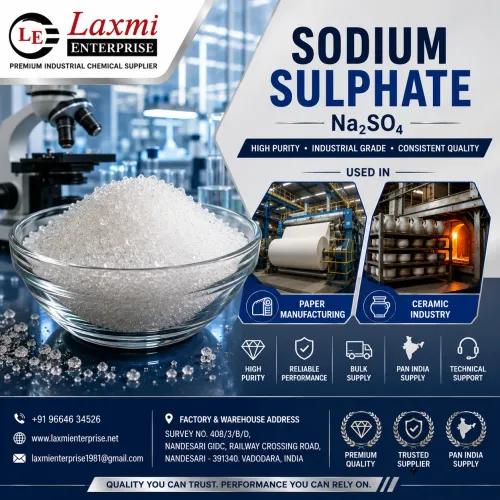
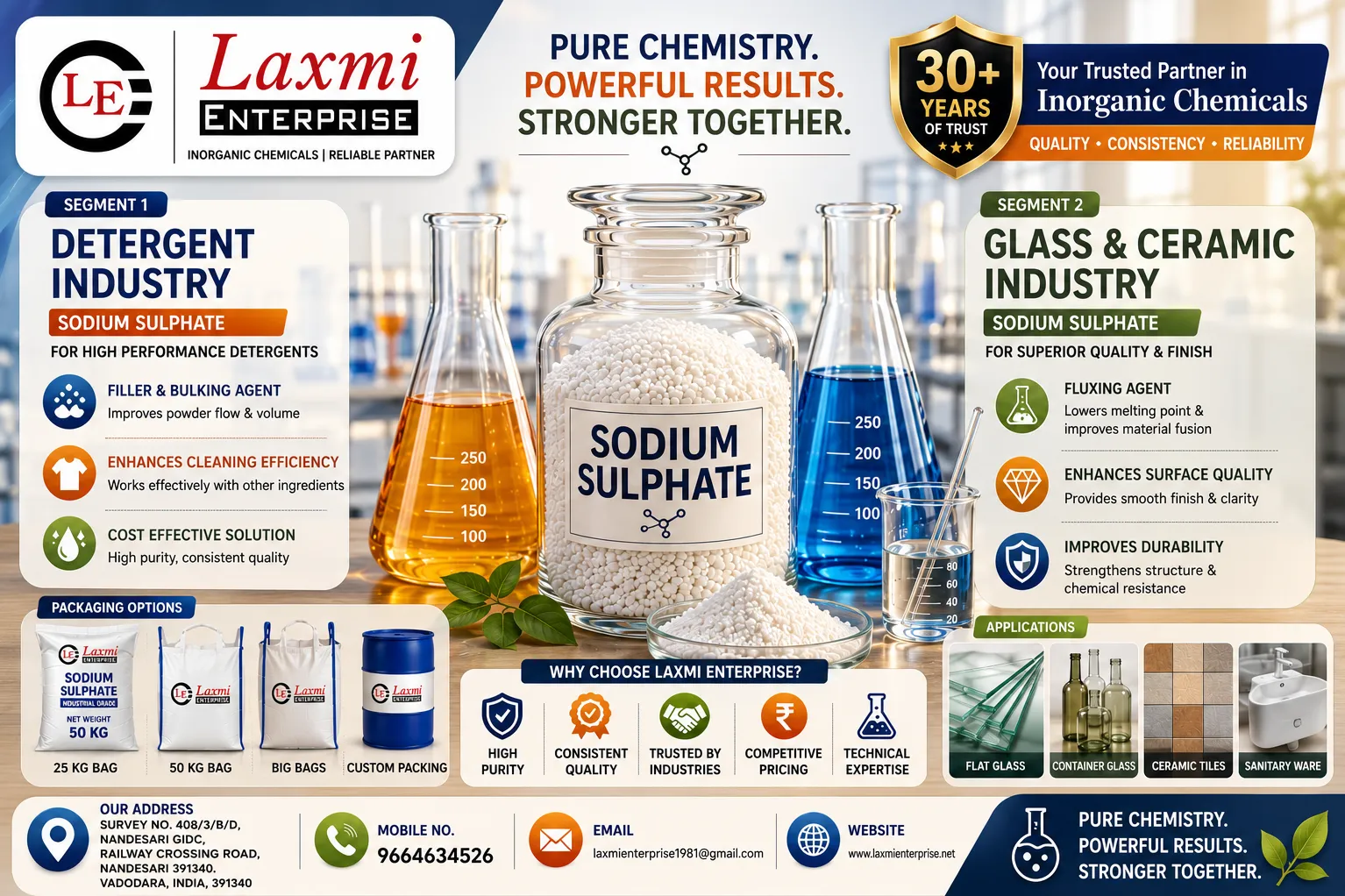
For Sodium Sulphate, the specification sheet is much more than a document attached to a quotation.
It is a technical reference that helps manufacturers evaluate product suitability, establish quality expectations and reduce production risks.
Understanding the information contained in a specification sheet allows better purchasing decisions and helps manufacturers build stronger supplier relationships.
A Technical Specification Is More Than a Formality
Many companies receive technical specifications from suppliers but rarely study them in detail.
The document is filed with purchase records and referred to only when questions arise.
Experienced manufacturers follow a different approach.
They review the specification before approving a supplier.
They compare it with internal quality requirements.
They discuss any differences with the supplier.
Only after technical clarity is achieved do they move forward with commercial discussions.
This sequence reduces misunderstandings and strengthens long-term business relationships.
Purity Should Be Viewed in Context
Purity is often the first value that attracts attention on a specification sheet.
Higher purity generally indicates better control over the manufacturing process.
However, quality engineers understand that purity alone does not determine manufacturing performance.
Consistency between deliveries is equally important.
A supplier who maintains the same quality throughout the year usually provides greater value than a supplier who occasionally delivers excellent material but struggles with long-term consistency.
Production depends on repeatability.
Repeatability depends on consistent manufacturing standards.
Physical Characteristics Matter
Chemical analysis is only one part of technical evaluation.
Physical characteristics also influence manufacturing efficiency.
Particle size.
Material appearance.
Free-flowing behaviour.
Handling characteristics.
Storage performance.
These properties affect warehouse operations, blending efficiency and production consistency.
Quality teams should therefore evaluate both chemical and physical characteristics before approving a supplier.
Moisture Content Requires Attention
Moisture is an important consideration for many industrial chemicals.
Improper storage, damaged packaging or poor transportation conditions may affect material handling.
Manufacturers should evaluate moisture together with warehouse practices.
Proper storage on pallets.
Protection from rain.
Dry warehouse conditions.
Routine inspections.
These practices help maintain product quality after delivery.
The supplier and the customer both contribute to preserving material condition.
Appearance Provides Useful Information
Although laboratory testing provides technical confirmation, visual inspection also has value.
Quality inspectors often observe the general appearance of the material during receiving.
Uniform appearance.
Clean packaging.
Proper labelling.
Professional presentation.
These observations help create an overall impression of supplier discipline.
Attention to detail often reflects the quality culture of the supplying company.
Documentation Supports Traceability
Every technical specification should match the material supplied.
Purchase departments should maintain organised records.
Quality departments should archive technical documents.
Warehouse teams should verify product identification.
Traceability becomes especially important when reviewing historical production records or conducting supplier performance evaluations.
Accurate documentation supports efficient quality management.
Batch Consistency Is the Real Performance Indicator
One successful delivery demonstrates capability.
Consistent deliveries demonstrate reliability.
Manufacturers should review technical performance over an extended period rather than evaluating only the first shipment.
Does every delivery perform similarly?
Do production teams report stable processing?
Have laboratory results remained consistent?
Long-term consistency is one of the strongest indicators of supplier quality.
Technical Discussions Improve Procurement Decisions
Quality engineers and procurement managers should communicate regularly.
Quality departments understand technical requirements.
Procurement departments understand commercial requirements.
Production managers understand operational requirements.
When these departments work together, supplier evaluations become more balanced.
Technical decisions become stronger because every department contributes practical experience.
Supplier Audits Add Additional Confidence
Many large manufacturing companies periodically visit important suppliers.
These visits help customers understand manufacturing capability, quality systems and operational discipline.
Supplier audits also encourage open technical discussions.
They strengthen business relationships and create opportunities for continuous improvement.
While not every purchase requires a supplier audit, long-term partnerships often benefit from closer technical collaboration.
Develop an Internal Technical Approval Process
Every manufacturing company should establish a structured technical approval system.
Review the specification.
Inspect packaging.
Evaluate documentation.
Perform laboratory testing.
Conduct production trials.
Collect operator feedback.
Review supplier performance.
Approve for regular procurement.
Using the same process for every supplier improves consistency and reduces procurement risk.
Disciplined systems create dependable manufacturing.
How Laxmi Enterprise Maintains Technical Standards
At Laxmi Enterprise, we understand that our customers expect more than industrial chemicals.
They expect technical confidence.
Operating from Nandesari GIDC, Vadodara, we supply Sodium Sulphate and other industrial chemicals to manufacturers across India.
Every stage of our operation is designed to support consistent product quality.
From raw material handling and packaging to documentation, dispatch planning and customer support, we work to provide products that meet the expectations of modern manufacturing.
We encourage customers to discuss technical requirements openly because we believe informed decisions create stronger long-term partnerships.
Final Thoughts
A technical specification should never be viewed as just another attachment to a quotation.
It is an important document that helps manufacturers understand product suitability, evaluate supplier capability and strengthen production reliability.
Companies that carefully review technical specifications before approving suppliers usually experience better quality control, more stable production and stronger supply chain performance.
Successful manufacturing begins with informed technical decisions.
Frequently Asked Questions
Why is a Sodium Sulphate technical specification important?
It helps manufacturers understand product characteristics, compare supplier capabilities and ensure the material meets production requirements before procurement.
Is purity the only parameter that should be evaluated?
No. Manufacturers should also review physical characteristics, consistency, packaging, documentation and long-term supplier reliability.
Why is batch consistency more important than a single laboratory report?
Manufacturing depends on repeatable performance. Consistent quality across multiple deliveries supports stable production and reduces operational variation.
Should procurement and quality teams work together during supplier evaluation?
Yes. Joint evaluation improves decision-making because commercial, technical and operational perspectives are considered together.
Why do manufacturers across India choose Laxmi Enterprise?
Manufacturers choose Laxmi Enterprise because we combine technical consistency, dependable product quality, organised documentation and reliable customer support. Operating from Nandesari GIDC, Vadodara, we help manufacturers build stable production systems through reliable industrial chemical supply.
About Laxmi Enterprise
Laxmi Enterprise is a trusted manufacturer, supplier and distributor of industrial chemicals based in Nandesari GIDC, Vadodara, Gujarat. We supply Sodium Sulphate, Sodium Nitrate, Sodium Acetate, Tri Sodium Phosphate and a wide portfolio of industrial chemicals to manufacturers across detergent, glass, textile, paper, ceramic, construction, water treatment and chemical processing industries throughout India.
Our commitment is built on technical excellence, consistent product quality and long-term customer relationships. By combining dependable logistics, professional documentation and responsive technical support, we help manufacturers improve production efficiency, strengthen quality systems and achieve sustainable industrial growth.
In industrial manufacturing, a purchase order is often approved after comparing quotations.
A quality approval, however, is never based on price alone.
Before a new supplier is added to the approved vendor list, quality engineers, production managers and procurement teams spend time reviewing technical specifications. They want to understand exactly what they are buying and whether the material will perform consistently inside their manufacturing process.
For Sodium Sulphate, the specification sheet is much more than a document attached to a quotation.
It is a technical reference that helps manufacturers evaluate product suitability, establish quality expectations and reduce production risks.
Understanding the information contained in a specification sheet allows better purchasing decisions and helps manufacturers build stronger supplier relationships.
A Technical Specification Is More Than a Formality
Many companies receive technical specifications from suppliers but rarely study them in detail.
The document is filed with purchase records and referred to only when questions arise.
Experienced manufacturers follow a different approach.
They review the specification before approving a supplier.
They compare it with internal quality requirements.
They discuss any differences with the supplier.
Only after technical clarity is achieved do they move forward with commercial discussions.
This sequence reduces misunderstandings and strengthens long-term business relationships.
Purity Should Be Viewed in Context
Purity is often the first value that attracts attention on a specification sheet.
Higher purity generally indicates better control over the manufacturing process.
However, quality engineers understand that purity alone does not determine manufacturing performance.
Consistency between deliveries is equally important.
A supplier who maintains the same quality throughout the year usually provides greater value than a supplier who occasionally delivers excellent material but struggles with long-term consistency.
Production depends on repeatability.
Repeatability depends on consistent manufacturing standards.
Physical Characteristics Matter
Chemical analysis is only one part of technical evaluation.
Physical characteristics also influence manufacturing efficiency.
Particle size.
Material appearance.
Free-flowing behaviour.
Handling characteristics.
Storage performance.
These properties affect warehouse operations, blending efficiency and production consistency.
Quality teams should therefore evaluate both chemical and physical characteristics before approving a supplier.
Moisture Content Requires Attention
Moisture is an important consideration for many industrial chemicals.
Improper storage, damaged packaging or poor transportation conditions may affect material handling.
Manufacturers should evaluate moisture together with warehouse practices.
Proper storage on pallets.
Protection from rain.
Dry warehouse conditions.
Routine inspections.
These practices help maintain product quality after delivery.
The supplier and the customer both contribute to preserving material condition.
Appearance Provides Useful Information
Although laboratory testing provides technical confirmation, visual inspection also has value.
Quality inspectors often observe the general appearance of the material during receiving.
Uniform appearance.
Clean packaging.
Proper labelling.
Professional presentation.
These observations help create an overall impression of supplier discipline.
Attention to detail often reflects the quality culture of the supplying company.
Documentation Supports Traceability
Every technical specification should match the material supplied.
Purchase departments should maintain organised records.
Quality departments should archive technical documents.
Warehouse teams should verify product identification.
Traceability becomes especially important when reviewing historical production records or conducting supplier performance evaluations.
Accurate documentation supports efficient quality management.
Batch Consistency Is the Real Performance Indicator
One successful delivery demonstrates capability.
Consistent deliveries demonstrate reliability.
Manufacturers should review technical performance over an extended period rather than evaluating only the first shipment.
Does every delivery perform similarly?
Do production teams report stable processing?
Have laboratory results remained consistent?
Long-term consistency is one of the strongest indicators of supplier quality.
Technical Discussions Improve Procurement Decisions
Quality engineers and procurement managers should communicate regularly.
Quality departments understand technical requirements.
Procurement departments understand commercial requirements.
Production managers understand operational requirements.
When these departments work together, supplier evaluations become more balanced.
Technical decisions become stronger because every department contributes practical experience.
Supplier Audits Add Additional Confidence
Many large manufacturing companies periodically visit important suppliers.
These visits help customers understand manufacturing capability, quality systems and operational discipline.
Supplier audits also encourage open technical discussions.
They strengthen business relationships and create opportunities for continuous improvement.
While not every purchase requires a supplier audit, long-term partnerships often benefit from closer technical collaboration.
Develop an Internal Technical Approval Process
Every manufacturing company should establish a structured technical approval system.
Review the specification.
Inspect packaging.
Evaluate documentation.
Perform laboratory testing.
Conduct production trials.
Collect operator feedback.
Review supplier performance.
Approve for regular procurement.
Using the same process for every supplier improves consistency and reduces procurement risk.
Disciplined systems create dependable manufacturing.
How Laxmi Enterprise Maintains Technical Standards
At Laxmi Enterprise, we understand that our customers expect more than industrial chemicals.
They expect technical confidence.
Operating from Nandesari GIDC, Vadodara, we supply Sodium Sulphate and other industrial chemicals to manufacturers across India.
Every stage of our operation is designed to support consistent product quality.
From raw material handling and packaging to documentation, dispatch planning and customer support, we work to provide products that meet the expectations of modern manufacturing.
We encourage customers to discuss technical requirements openly because we believe informed decisions create stronger long-term partnerships.
Final Thoughts
A technical specification should never be viewed as just another attachment to a quotation.
It is an important document that helps manufacturers understand product suitability, evaluate supplier capability and strengthen production reliability.
Companies that carefully review technical specifications before approving suppliers usually experience better quality control, more stable production and stronger supply chain performance.
Successful manufacturing begins with informed technical decisions.
Frequently Asked Questions
Why is a Sodium Sulphate technical specification important?
It helps manufacturers understand product characteristics, compare supplier capabilities and ensure the material meets production requirements before procurement.
Is purity the only parameter that should be evaluated?
No. Manufacturers should also review physical characteristics, consistency, packaging, documentation and long-term supplier reliability.
Why is batch consistency more important than a single laboratory report?
Manufacturing depends on repeatable performance. Consistent quality across multiple deliveries supports stable production and reduces operational variation.
Should procurement and quality teams work together during supplier evaluation?
Yes. Joint evaluation improves decision-making because commercial, technical and operational perspectives are considered together.
Why do manufacturers across India choose Laxmi Enterprise?
Manufacturers choose Laxmi Enterprise because we combine technical consistency, dependable product quality, organised documentation and reliable customer support. Operating from Nandesari GIDC, Vadodara, we help manufacturers build stable production systems through reliable industrial chemical supply.
About Laxmi Enterprise
Laxmi Enterprise is a trusted manufacturer, supplier and distributor of industrial chemicals based in Nandesari GIDC, Vadodara, Gujarat. We supply Sodium Sulphate, Sodium Nitrate, Sodium Acetate, Tri Sodium Phosphate and a wide portfolio of industrial chemicals to manufacturers across detergent, glass, textile, paper, ceramic, construction, water treatment and chemical processing industries throughout India.
Our commitment is built on technical excellence, consistent product quality and long-term customer relationships. By combining dependable logistics, professional documentation and responsive technical support, we help manufacturers improve production efficiency, strengthen quality systems and achieve sustainable industrial growth.
Keywords