Technical Standards and Quality Assurance
For industrial manufacturers, product quality extends beyond chemical composition. A comprehensive quality assurance program ensures that Sodium Nitrate Free Flow consistently meets the physical, chemical, and performance requirements expected in modern manufacturing environments.
Quality assurance begins with raw material evaluation and continues through production, testing, packaging, storage, and dispatch. Consistent quality helps manufacturers reduce production variability, improve product reliability, and maintain customer confidence.
Industrial buyers should work with suppliers that follow documented quality control procedures and provide complete technical documentation with every shipment.
Typical Quality Control Parameters
The following parameters are commonly evaluated before Sodium Nitrate Free Flow is released for dispatch.
Quality Parameter Purpose
Appearance Confirms visual quality and product uniformity
Chemical Purity Verifies Sodium Nitrate content
Moisture Content Supports storage stability and flowability
Particle Size Distribution Improves mixing and dosing performance
Flowability Evaluates handling characteristics
Bulk Density Supports weighing and packaging consistency
Water Insoluble Matter Confirms cleanliness of the product
Chloride Content Checks impurity levels
Sulphate Content Monitors product consistency
Iron Content Helps verify impurity control
Regular testing provides confidence that each batch meets established quality requirements.
Importance of Batch Consistency
Manufacturing operations depend on predictable raw materials. Variations between batches can lead to:
Inconsistent product quality
Process adjustments
Increased production downtime
Higher rejection rates
Additional quality inspections
Reliable suppliers focus on maintaining consistent specifications from batch to batch, helping customers achieve stable production performance.
Role of Quality Documentation
Technical documentation is an essential part of industrial procurement.
Common documents include:
Certificate of Analysis (COA)
Safety Data Sheet (SDS)
Product Specification Sheet
Batch Identification
Product Label
Packing Details
These documents assist with quality verification, traceability, inventory management, customer audits, and regulatory compliance.
Understanding Product Traceability
Traceability enables manufacturers to identify the production history of every shipment.
A traceability system typically includes:
Batch Number
Manufacturing Date
Packing Date (where applicable)
Quantity Supplied
Product Identification
Quality Documentation
Maintaining traceability simplifies quality investigations and strengthens supply chain management.
Packaging Integrity
Packaging is the first line of protection against moisture, contamination, and physical damage.
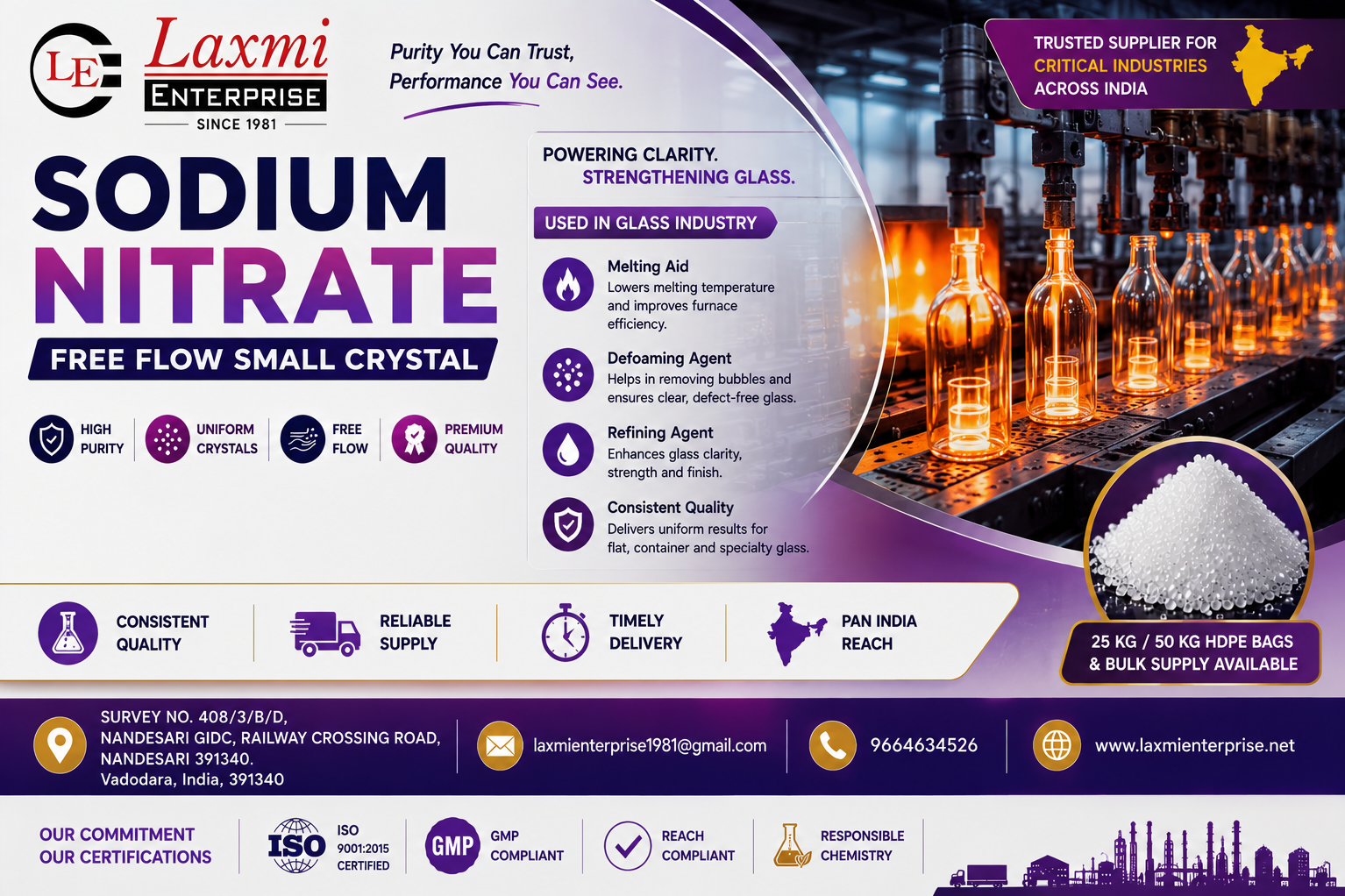
For industrial use, Sodium Nitrate Free Flow is commonly supplied in:
25 kg Bags
50 kg Bags
500 kg Jumbo Bags
Packaging should remain clean, dry, properly sealed, and clearly labeled throughout transportation and storage.
Why Continuous Quality Improvement Matters
Industrial requirements continue to evolve. Manufacturers increasingly expect suppliers to improve:
Product consistency
Documentation accuracy
Packaging quality
Delivery performance
Customer support
Technical guidance
A commitment to continuous improvement helps build long-term partnerships and supports more reliable manufacturing operations.
Technical Recommendations for Industrial Users
To maximize product performance:
Review product specifications before ordering.
Verify each batch using the COA.
Store the product under recommended conditions.
Use appropriate handling equipment.
Follow FIFO inventory practices.
Record batch numbers during production.
Communicate any quality observations to the supplier.
These practices help maintain consistency and improve overall production efficiency.
Technical FAQs
Why is quality assurance important for Sodium Nitrate Free Flow?
Quality assurance ensures that each batch consistently meets the required specifications for purity, moisture, particle size, and other important characteristics, supporting reliable industrial performance.
Why do manufacturers monitor particle size?
Consistent particle size improves blending, material flow, dissolution, and dosing accuracy, which are important for maintaining stable production processes.
What information is typically included in a Certificate of Analysis?
A COA generally includes the batch number, product identification, test results for key quality parameters, specification limits, and confirmation that the product meets the declared standards.
How does batch traceability benefit industrial users?
Traceability allows manufacturers to link raw materials to production records, making it easier to investigate quality issues, conduct audits, and maintain supply chain transparency.
Why should packaging be inspected before use?
Inspecting packaging helps identify damage, moisture exposure, or contamination that could affect product quality or handling performance.
What role does documentation play during quality audits?
Technical documents such as the COA, SDS, and batch records provide evidence that the supplied product meets specified quality requirements and supports traceability throughout the supply chain.
How can consistent quality improve production efficiency?
When raw materials perform consistently, manufacturers spend less time making process adjustments, reducing downtime, minimizing waste, and improving overall operational efficiency.
Why is supplier communication important?
Open communication allows buyers and suppliers to resolve technical questions, discuss quality requirements, coordinate deliveries, and respond quickly to any issues that arise.
For industrial manufacturers, product quality extends beyond chemical composition. A comprehensive quality assurance program ensures that Sodium Nitrate Free Flow consistently meets the physical, chemical, and performance requirements expected in modern manufacturing environments.
Quality assurance begins with raw material evaluation and continues through production, testing, packaging, storage, and dispatch. Consistent quality helps manufacturers reduce production variability, improve product reliability, and maintain customer confidence.
Industrial buyers should work with suppliers that follow documented quality control procedures and provide complete technical documentation with every shipment.
Typical Quality Control Parameters
The following parameters are commonly evaluated before Sodium Nitrate Free Flow is released for dispatch.
Quality Parameter Purpose
Appearance Confirms visual quality and product uniformity
Chemical Purity Verifies Sodium Nitrate content
Moisture Content Supports storage stability and flowability
Particle Size Distribution Improves mixing and dosing performance
Flowability Evaluates handling characteristics
Bulk Density Supports weighing and packaging consistency
Water Insoluble Matter Confirms cleanliness of the product
Chloride Content Checks impurity levels
Sulphate Content Monitors product consistency
Iron Content Helps verify impurity control
Regular testing provides confidence that each batch meets established quality requirements.
Importance of Batch Consistency
Manufacturing operations depend on predictable raw materials. Variations between batches can lead to:
Inconsistent product quality
Process adjustments
Increased production downtime
Higher rejection rates
Additional quality inspections
Reliable suppliers focus on maintaining consistent specifications from batch to batch, helping customers achieve stable production performance.
Role of Quality Documentation
Technical documentation is an essential part of industrial procurement.
Common documents include:
Certificate of Analysis (COA)
Safety Data Sheet (SDS)
Product Specification Sheet
Batch Identification
Product Label
Packing Details
These documents assist with quality verification, traceability, inventory management, customer audits, and regulatory compliance.
Understanding Product Traceability
Traceability enables manufacturers to identify the production history of every shipment.
A traceability system typically includes:
Batch Number
Manufacturing Date
Packing Date (where applicable)
Quantity Supplied
Product Identification
Quality Documentation
Maintaining traceability simplifies quality investigations and strengthens supply chain management.
Packaging Integrity
Packaging is the first line of protection against moisture, contamination, and physical damage.
For industrial use, Sodium Nitrate Free Flow is commonly supplied in:
25 kg Bags
50 kg Bags
500 kg Jumbo Bags
Packaging should remain clean, dry, properly sealed, and clearly labeled throughout transportation and storage.
Why Continuous Quality Improvement Matters
Industrial requirements continue to evolve. Manufacturers increasingly expect suppliers to improve:
Product consistency
Documentation accuracy
Packaging quality
Delivery performance
Customer support
Technical guidance
A commitment to continuous improvement helps build long-term partnerships and supports more reliable manufacturing operations.
Technical Recommendations for Industrial Users
To maximize product performance:
Review product specifications before ordering.
Verify each batch using the COA.
Store the product under recommended conditions.
Use appropriate handling equipment.
Follow FIFO inventory practices.
Record batch numbers during production.
Communicate any quality observations to the supplier.
These practices help maintain consistency and improve overall production efficiency.
Technical FAQs
Why is quality assurance important for Sodium Nitrate Free Flow?
Quality assurance ensures that each batch consistently meets the required specifications for purity, moisture, particle size, and other important characteristics, supporting reliable industrial performance.
Why do manufacturers monitor particle size?
Consistent particle size improves blending, material flow, dissolution, and dosing accuracy, which are important for maintaining stable production processes.
What information is typically included in a Certificate of Analysis?
A COA generally includes the batch number, product identification, test results for key quality parameters, specification limits, and confirmation that the product meets the declared standards.
How does batch traceability benefit industrial users?
Traceability allows manufacturers to link raw materials to production records, making it easier to investigate quality issues, conduct audits, and maintain supply chain transparency.
Why should packaging be inspected before use?
Inspecting packaging helps identify damage, moisture exposure, or contamination that could affect product quality or handling performance.
What role does documentation play during quality audits?
Technical documents such as the COA, SDS, and batch records provide evidence that the supplied product meets specified quality requirements and supports traceability throughout the supply chain.
How can consistent quality improve production efficiency?
When raw materials perform consistently, manufacturers spend less time making process adjustments, reducing downtime, minimizing waste, and improving overall operational efficiency.
Why is supplier communication important?
Open communication allows buyers and suppliers to resolve technical questions, discuss quality requirements, coordinate deliveries, and respond quickly to any issues that arise.
Keywords