Understanding Sodium Nitrate Free Flow in Modern Manufacturing
Modern manufacturing demands raw materials that deliver consistent quality, reliable performance, and predictable results. As industries adopt automation, precision dosing systems, and stricter quality standards, the physical characteristics of raw materials have become just as important as their chemical composition.
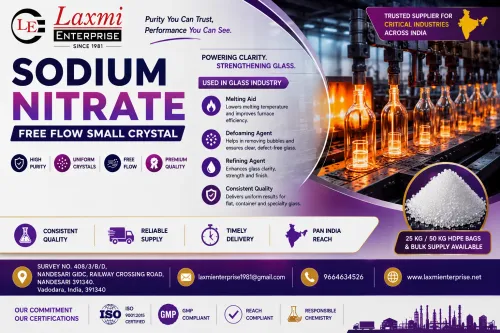
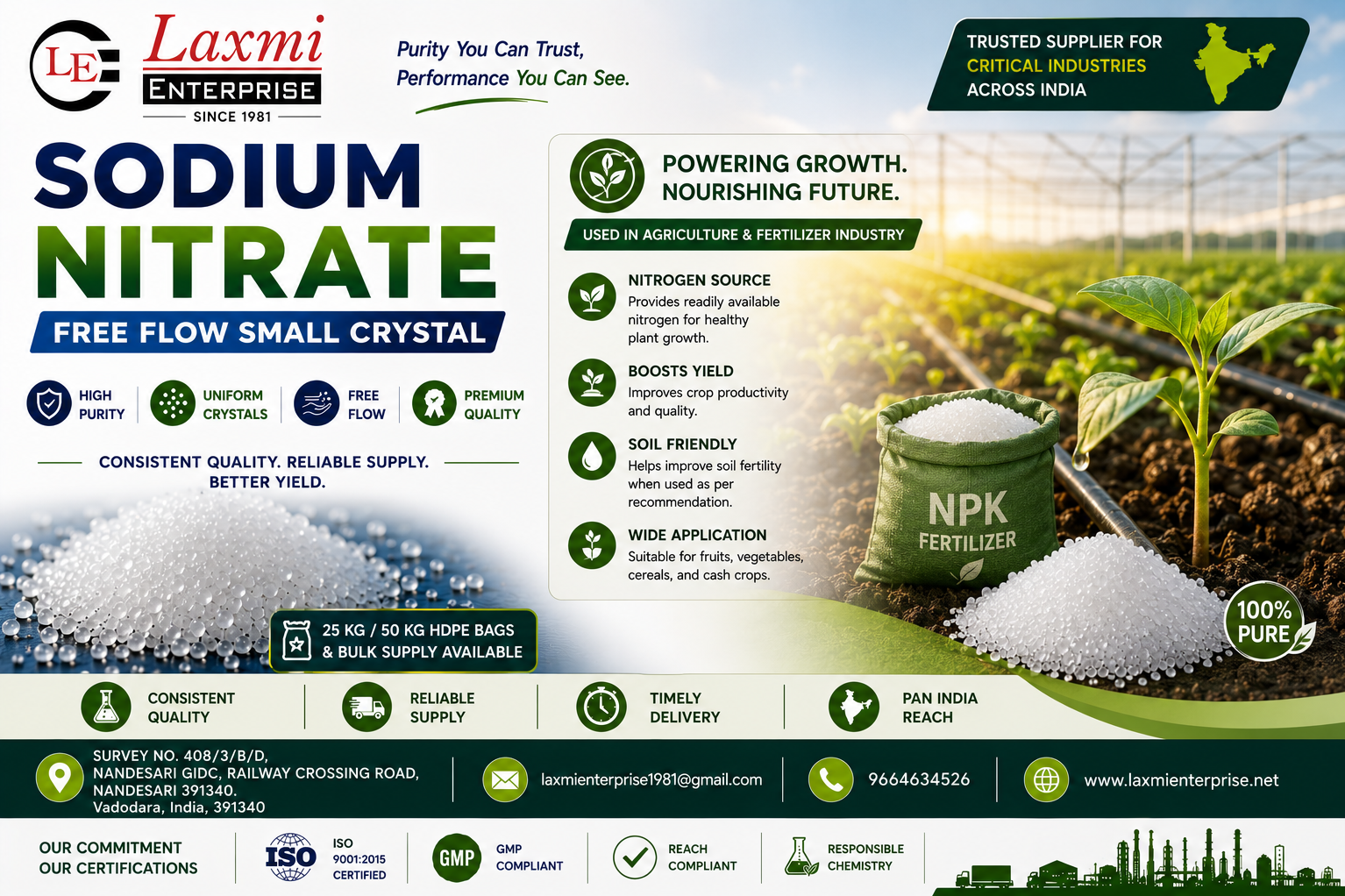
Sodium Nitrate Free Flow has evolved into a preferred industrial chemical because it combines high chemical purity with excellent handling properties. Its uniform crystal size, controlled moisture content, and superior flowability enable manufacturers to improve production efficiency while reducing operational challenges such as caking, hopper blockage, and inconsistent feeding.
Today, Sodium Nitrate is not simply viewed as a commodity chemical. It is considered a performance-driven industrial raw material that supports efficient manufacturing across multiple sectors.
Why Manufacturing Plants Prefer Free Flow Materials
Production downtime is one of the highest hidden costs in manufacturing.
Many production interruptions occur because raw materials:
Bridge inside silos
Form hard lumps
Feed unevenly
Generate excessive dust
Require manual intervention
Free Flow Sodium Nitrate is selected because it helps minimize these issues and supports smoother plant operations.
Manufacturing plants benefit from:
Better production continuity
Improved weighing accuracy
Faster charging of reactors
Reduced cleaning time
Lower maintenance requirements
More predictable production cycles
Role in Automated Manufacturing
Automation has transformed industrial production.
Modern plants commonly use:
Screw feeders
Belt conveyors
Pneumatic conveying systems
Automatic batching systems
Continuous reactors
PLC-controlled dosing systems
These systems depend on raw materials with stable physical characteristics.
Free Flow Sodium Nitrate is well suited for such environments because its consistent flowability supports reliable material movement and helps reduce interruptions associated with inconsistent feeding.
Why Process Consistency Matters
A manufacturing process is only as consistent as its raw materials.
Variations in moisture, particle size, or flowability may influence:
Material handling
Feeding accuracy
Mixing performance
Batch uniformity
Process efficiency
Equipment utilization
Maintaining consistent raw material quality supports more stable production and improves repeatability from batch to batch.
Supporting Sustainable Manufacturing
Many manufacturers are working toward greater resource efficiency and waste reduction.
Consistent raw materials can contribute to these goals by helping to:
Reduce material losses during handling.
Minimize rejected batches caused by process variation.
Improve inventory management.
Optimize production planning.
Lower unnecessary reprocessing.
While sustainability depends on many operational factors, reliable raw material performance can support broader manufacturing efficiency initiatives.
Warehouse Management Best Practices
Proper warehouse management helps maintain product quality throughout storage.
Recommended practices include:
Store materials in designated chemical storage areas.
Protect bags from moisture and direct water exposure.
Maintain clear product identification.
Separate different chemical products according to compatibility.
Keep storage areas clean and well ventilated.
Rotate inventory using FIFO principles.
Inspect packaging periodically.
Well-managed warehouses help preserve the product's free-flowing characteristics and simplify inventory control.
Transportation Considerations
Proper transportation practices help ensure the product reaches the customer in the same condition in which it was dispatched.
Recommended considerations include:
Protect packages from moisture during transit.
Secure loads to prevent movement.
Inspect packaging before loading and unloading.
Handle Jumbo Bags with appropriate lifting equipment.
Verify shipment documentation before dispatch.
These practices contribute to product integrity throughout the supply chain.
Building Long-Term Supplier Relationships
Industrial procurement is not limited to purchasing chemicals.
Successful manufacturers often build long-term relationships with suppliers who consistently provide:
Reliable quality
Stable supply
Technical documentation
Responsive communication
Packaging consistency
Delivery reliability
Product traceability
Strong supplier partnerships can simplify procurement planning and improve operational continuity.
Emerging Industrial Trends
The industrial use of Sodium Nitrate continues to evolve with advances in manufacturing technology.
Growing application areas include:
Advanced specialty chemicals
Renewable energy systems
High-performance industrial glass
Industrial heat transfer systems
Process optimization
Precision chemical formulations
As manufacturing technologies continue to develop, demand for high-quality, consistent raw materials is expected to remain important.
Industrial Knowledge FAQs
Why is consistency important in industrial raw materials?
Consistent raw materials help manufacturers maintain stable production, reduce quality variations, improve process efficiency, and minimize downtime caused by unexpected changes in material performance.
How does Free Flow Sodium Nitrate support automation?
Its controlled particle size and excellent flowability allow the material to move more smoothly through automated feeding, conveying, and dosing systems, reducing the likelihood of interruptions.
Why do manufacturers focus on physical properties as well as chemical purity?
While chemical purity determines composition, physical properties such as particle size, moisture, and flowability influence handling, storage, and production efficiency. Both aspects are important for reliable manufacturing.
Can proper warehouse management improve product performance?
Yes. Appropriate storage practices help preserve free-flowing characteristics, reduce moisture exposure, and maintain product quality until it is used in production.
Why are long-term supplier relationships valuable?
Reliable suppliers provide consistent quality, dependable deliveries, technical support, and documentation, helping manufacturers reduce procurement risks and maintain stable production schedules.
Does packaging influence warehouse efficiency?
Yes. Well-designed 25 kg, 50 kg, and 500 kg Jumbo Bags simplify storage, handling, transportation, and inventory management while helping protect the product from environmental exposure.
How can manufacturers reduce handling-related product losses?
By following good receiving, storage, handling, and inventory practices, manufacturers can reduce packaging damage, prevent contamination, and minimize unnecessary material waste.
Why is documentation important throughout the supply chain?
Technical documents such as the COA and SDS support product verification, traceability, regulatory compliance, and quality assurance from dispatch through final use.
Modern manufacturing demands raw materials that deliver consistent quality, reliable performance, and predictable results. As industries adopt automation, precision dosing systems, and stricter quality standards, the physical characteristics of raw materials have become just as important as their chemical composition.
Sodium Nitrate Free Flow has evolved into a preferred industrial chemical because it combines high chemical purity with excellent handling properties. Its uniform crystal size, controlled moisture content, and superior flowability enable manufacturers to improve production efficiency while reducing operational challenges such as caking, hopper blockage, and inconsistent feeding.
Today, Sodium Nitrate is not simply viewed as a commodity chemical. It is considered a performance-driven industrial raw material that supports efficient manufacturing across multiple sectors.
Why Manufacturing Plants Prefer Free Flow Materials
Production downtime is one of the highest hidden costs in manufacturing.
Many production interruptions occur because raw materials:
Bridge inside silos
Form hard lumps
Feed unevenly
Generate excessive dust
Require manual intervention
Free Flow Sodium Nitrate is selected because it helps minimize these issues and supports smoother plant operations.
Manufacturing plants benefit from:
Better production continuity
Improved weighing accuracy
Faster charging of reactors
Reduced cleaning time
Lower maintenance requirements
More predictable production cycles
Role in Automated Manufacturing
Automation has transformed industrial production.
Modern plants commonly use:
Screw feeders
Belt conveyors
Pneumatic conveying systems
Automatic batching systems
Continuous reactors
PLC-controlled dosing systems
These systems depend on raw materials with stable physical characteristics.
Free Flow Sodium Nitrate is well suited for such environments because its consistent flowability supports reliable material movement and helps reduce interruptions associated with inconsistent feeding.
Why Process Consistency Matters
A manufacturing process is only as consistent as its raw materials.
Variations in moisture, particle size, or flowability may influence:
Material handling
Feeding accuracy
Mixing performance
Batch uniformity
Process efficiency
Equipment utilization
Maintaining consistent raw material quality supports more stable production and improves repeatability from batch to batch.
Supporting Sustainable Manufacturing
Many manufacturers are working toward greater resource efficiency and waste reduction.
Consistent raw materials can contribute to these goals by helping to:
Reduce material losses during handling.
Minimize rejected batches caused by process variation.
Improve inventory management.
Optimize production planning.
Lower unnecessary reprocessing.
While sustainability depends on many operational factors, reliable raw material performance can support broader manufacturing efficiency initiatives.
Warehouse Management Best Practices
Proper warehouse management helps maintain product quality throughout storage.
Recommended practices include:
Store materials in designated chemical storage areas.
Protect bags from moisture and direct water exposure.
Maintain clear product identification.
Separate different chemical products according to compatibility.
Keep storage areas clean and well ventilated.
Rotate inventory using FIFO principles.
Inspect packaging periodically.
Well-managed warehouses help preserve the product's free-flowing characteristics and simplify inventory control.
Transportation Considerations
Proper transportation practices help ensure the product reaches the customer in the same condition in which it was dispatched.
Recommended considerations include:
Protect packages from moisture during transit.
Secure loads to prevent movement.
Inspect packaging before loading and unloading.
Handle Jumbo Bags with appropriate lifting equipment.
Verify shipment documentation before dispatch.
These practices contribute to product integrity throughout the supply chain.
Building Long-Term Supplier Relationships
Industrial procurement is not limited to purchasing chemicals.
Successful manufacturers often build long-term relationships with suppliers who consistently provide:
Reliable quality
Stable supply
Technical documentation
Responsive communication
Packaging consistency
Delivery reliability
Product traceability
Strong supplier partnerships can simplify procurement planning and improve operational continuity.
Emerging Industrial Trends
The industrial use of Sodium Nitrate continues to evolve with advances in manufacturing technology.
Growing application areas include:
Advanced specialty chemicals
Renewable energy systems
High-performance industrial glass
Industrial heat transfer systems
Process optimization
Precision chemical formulations
As manufacturing technologies continue to develop, demand for high-quality, consistent raw materials is expected to remain important.
Industrial Knowledge FAQs
Why is consistency important in industrial raw materials?
Consistent raw materials help manufacturers maintain stable production, reduce quality variations, improve process efficiency, and minimize downtime caused by unexpected changes in material performance.
How does Free Flow Sodium Nitrate support automation?
Its controlled particle size and excellent flowability allow the material to move more smoothly through automated feeding, conveying, and dosing systems, reducing the likelihood of interruptions.
Why do manufacturers focus on physical properties as well as chemical purity?
While chemical purity determines composition, physical properties such as particle size, moisture, and flowability influence handling, storage, and production efficiency. Both aspects are important for reliable manufacturing.
Can proper warehouse management improve product performance?
Yes. Appropriate storage practices help preserve free-flowing characteristics, reduce moisture exposure, and maintain product quality until it is used in production.
Why are long-term supplier relationships valuable?
Reliable suppliers provide consistent quality, dependable deliveries, technical support, and documentation, helping manufacturers reduce procurement risks and maintain stable production schedules.
Does packaging influence warehouse efficiency?
Yes. Well-designed 25 kg, 50 kg, and 500 kg Jumbo Bags simplify storage, handling, transportation, and inventory management while helping protect the product from environmental exposure.
How can manufacturers reduce handling-related product losses?
By following good receiving, storage, handling, and inventory practices, manufacturers can reduce packaging damage, prevent contamination, and minimize unnecessary material waste.
Why is documentation important throughout the supply chain?
Technical documents such as the COA and SDS support product verification, traceability, regulatory compliance, and quality assurance from dispatch through final use.
Keywords