Water Insoluble Matter in Sodium Acetate – Sources, Laboratory Determination, Process Impact, Root Cause Analysis & Quality Improvement
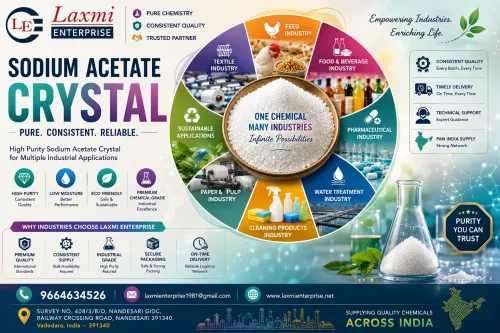
When Sodium Acetate is dissolved in water, it is expected to form a clean, uniform solution. However, quality control laboratories occasionally detect water insoluble matter—solid particles that remain undissolved under prescribed test conditions.
Although these particles are often present in very small quantities, they can affect filtration efficiency, equipment cleanliness, solution clarity, and manufacturing consistency in applications where dissolved chemical solutions are required.
For manufacturers and industrial buyers, understanding water insoluble matter is important because it provides insight into raw material quality, process control, packaging practices, and contamination prevention.
This guide explains what water insoluble matter is, how laboratories evaluate it, possible sources, process implications, corrective actions, and best practices for maintaining consistent product quality.
What Is Water Insoluble Matter?
Water insoluble matter refers to solid material that does not dissolve when Sodium Acetate is prepared as a solution under controlled laboratory conditions.
These particles are different from dissolved impurities because they remain physically separate from the solution.
Examples may include:
Fine dust
Mineral particles
Foreign matter
Process residues
Packaging particles
Environmental contamination
The objective of testing is to determine whether the quantity of insoluble material is within the agreed quality specification.
Why This Parameter Is Important
Although water insoluble matter is often present only in trace quantities, monitoring it provides several benefits.
Routine evaluation helps:
Verify manufacturing cleanliness
Assess filtration efficiency
Detect contamination events
Improve process consistency
Support supplier qualification
Maintain customer confidence
Strengthen quality documentation
For many industrial applications, solution clarity is an important performance characteristic.
How Insoluble Matter Differs from Other Quality Parameters
Each quality parameter evaluates a different characteristic.
Parameter Evaluates
Purity Amount of Sodium Acetate present
Moisture Water associated with the material
pH Acidity or alkalinity of the prepared solution
Chloride Specific ionic impurity
Iron Trace metallic impurity
Water Insoluble Matter Physical particles that remain undissolved
This distinction helps laboratories investigate quality issues more effectively.
Common Sources of Water Insoluble Matter
Understanding the origin of insoluble particles is essential for effective corrective action.
Raw Material Impurities
Incoming raw materials may naturally contain small quantities of insoluble mineral particles or foreign material if supplier controls are inadequate.
Strong supplier qualification programs help reduce this risk.
Manufacturing Equipment
Production equipment may contribute particles if:
Equipment cleaning is inadequate.
Internal surfaces deteriorate.
Mechanical wear occurs.
Preventive maintenance is delayed.
Routine inspection and maintenance help minimize equipment-related contamination.
Environmental Contamination
Particles from the surrounding environment can enter the product during manufacturing or packaging if housekeeping practices are insufficient.
Examples include:
Airborne dust
Fibers
Building debris
Packaging dust
Maintaining clean production areas reduces contamination opportunities.
Packaging Operations
Packaging materials themselves may introduce particles if they are damaged, poorly stored, or handled improperly.
Quality inspections before filling help reduce this possibility.
Warehouse Handling
Damaged bags, open containers, or improper storage may allow external contaminants to enter the product before dispatch.
Warehouse discipline therefore contributes directly to product cleanliness.
Laboratory Determination of Water Insoluble Matter
The objective of laboratory testing is to determine whether any solid material remains after dissolving the product under controlled conditions.
Although individual laboratory procedures may vary, the general process includes:
Verify sample identity.
Prepare a representative test portion.
Dissolve the material using the prescribed procedure.
Separate any remaining solid particles.
Examine and quantify the residue according to the laboratory method.
Compare the result with the product specification.
Record observations and approve documentation.
The emphasis is on consistency and reproducibility.
Importance of Filtration During Testing
Filtration is commonly used to separate undissolved particles from the prepared solution.
Effective filtration requires:
Clean filtration equipment
Suitable filter media
Controlled handling
Proper documentation
Consistent filtration practices improve analytical reliability.
Examining the Residue
Laboratory personnel often evaluate the remaining residue for characteristics such as:
Quantity
Colour
Particle size
Uniformity
Visible contamination
These observations may provide useful information during quality investigations.
Factors That Can Influence Results
Several variables may affect measured insoluble matter.
These include:
Sample preparation
Dissolution conditions
Filtration technique
Equipment cleanliness
Laboratory environment
Operator handling
Sample contamination
Standardized procedures help minimize variability.
Process Implications
Higher levels of insoluble matter may affect industrial operations in several ways.
Filtration Systems
Additional particles may:
Reduce filter life
Increase maintenance frequency
Slow filtration rates
Solution Appearance
Applications requiring clear chemical solutions may be more sensitive to suspended particles.
Maintaining low insoluble matter supports consistent visual quality.
Process Equipment
Solid particles can accumulate in:
Mixing vessels
Pumps
Pipelines
Spray systems
Metering equipment
Routine quality control reduces the likelihood of operational interruptions.
Root Cause Investigation
When elevated insoluble matter is detected, quality teams generally investigate systematically.
Typical investigation areas include:
Raw Material Review
Were incoming materials compliant?
Equipment Inspection
Has equipment cleaning been completed correctly?
Is preventive maintenance current?
Packaging Evaluation
Was packaging damaged?
Were filling operations properly controlled?
Warehouse Assessment
Were storage conditions appropriate?
Was product exposed before sealing?
Laboratory Review
Was the analytical procedure performed according to the approved SOP?
A structured investigation prevents assumptions and supports accurate corrective actions.
Preventive Quality Controls
Manufacturers can reduce contamination by implementing preventive measures such as:
Approved supplier qualification
Incoming material inspection
Preventive equipment maintenance
Controlled production environments
Clean packaging operations
Routine warehouse inspections
Personnel training
Periodic quality audits
These activities strengthen long-term process control.
Trending Insoluble Matter Results
Rather than reviewing individual batches alone, quality systems often monitor historical trends.
Trend analysis helps identify:
Gradual process deterioration
Supplier variation
Seasonal environmental influences
Equipment wear
Continuous improvement opportunities
Trend charts are valuable management tools for quality assurance.
Documentation Requirements
Complete documentation typically includes:
Sample identification
Batch number
Test date
Laboratory method reference
Analytical observations
Calculated result
Specification comparison
Analyst review
Quality approval
Well-maintained records support audits and customer confidence.
Best Practices for Manufacturers
To maintain consistently low water insoluble matter:
Purchase high-quality raw materials.
Maintain clean production equipment.
Follow documented cleaning procedures.
Inspect packaging materials before use.
Control warehouse cleanliness.
Train personnel on contamination prevention.
Review quality trends regularly.
Investigate unusual results promptly.
These practices help improve product consistency across multiple production batches.
Frequently Asked Questions (FAQ)
What is water insoluble matter?
Water insoluble matter consists of particles that remain undissolved after Sodium Acetate is prepared according to the laboratory testing procedure.
Does insoluble matter always indicate poor-quality product?
Not necessarily. Small quantities may be acceptable depending on the agreed specification. Results should always be evaluated against defined quality requirements.
How is insoluble matter different from purity?
Purity measures the amount of Sodium Acetate present, while water insoluble matter evaluates physical particles that remain undissolved in solution.
Can packaging influence insoluble matter?
Yes. Damaged or contaminated packaging may introduce foreign particles if appropriate handling practices are not followed.
Why is filtration used during testing?
Filtration separates undissolved particles from the prepared solution so they can be examined and evaluated according to the laboratory procedure.
Can warehouse conditions affect this parameter?
Yes. Poor housekeeping, damaged packaging, or prolonged exposure during storage may contribute to contamination.
Why should historical trends be reviewed?
Trend analysis helps identify gradual changes in manufacturing, supplier performance, or contamination control before they become significant quality issues.
What should be done if unusually high insoluble matter is detected?
The organization should conduct a documented root cause investigation covering raw materials, manufacturing, packaging, storage, laboratory procedures, and equipment condition before implementing corrective actions.
How can manufacturers minimize water insoluble matter?
By combining supplier qualification, effective equipment maintenance, contamination control, proper packaging, warehouse discipline, and consistent quality management practices.
When Sodium Acetate is dissolved in water, it is expected to form a clean, uniform solution. However, quality control laboratories occasionally detect water insoluble matter—solid particles that remain undissolved under prescribed test conditions.
Although these particles are often present in very small quantities, they can affect filtration efficiency, equipment cleanliness, solution clarity, and manufacturing consistency in applications where dissolved chemical solutions are required.
For manufacturers and industrial buyers, understanding water insoluble matter is important because it provides insight into raw material quality, process control, packaging practices, and contamination prevention.
This guide explains what water insoluble matter is, how laboratories evaluate it, possible sources, process implications, corrective actions, and best practices for maintaining consistent product quality.
What Is Water Insoluble Matter?
Water insoluble matter refers to solid material that does not dissolve when Sodium Acetate is prepared as a solution under controlled laboratory conditions.
These particles are different from dissolved impurities because they remain physically separate from the solution.
Examples may include:
Fine dust
Mineral particles
Foreign matter
Process residues
Packaging particles
Environmental contamination
The objective of testing is to determine whether the quantity of insoluble material is within the agreed quality specification.
Why This Parameter Is Important
Although water insoluble matter is often present only in trace quantities, monitoring it provides several benefits.
Routine evaluation helps:
Verify manufacturing cleanliness
Assess filtration efficiency
Detect contamination events
Improve process consistency
Support supplier qualification
Maintain customer confidence
Strengthen quality documentation
For many industrial applications, solution clarity is an important performance characteristic.
How Insoluble Matter Differs from Other Quality Parameters
Each quality parameter evaluates a different characteristic.
Parameter Evaluates
Purity Amount of Sodium Acetate present
Moisture Water associated with the material
pH Acidity or alkalinity of the prepared solution
Chloride Specific ionic impurity
Iron Trace metallic impurity
Water Insoluble Matter Physical particles that remain undissolved
This distinction helps laboratories investigate quality issues more effectively.
Common Sources of Water Insoluble Matter
Understanding the origin of insoluble particles is essential for effective corrective action.
Raw Material Impurities
Incoming raw materials may naturally contain small quantities of insoluble mineral particles or foreign material if supplier controls are inadequate.
Strong supplier qualification programs help reduce this risk.
Manufacturing Equipment
Production equipment may contribute particles if:
Equipment cleaning is inadequate.
Internal surfaces deteriorate.
Mechanical wear occurs.
Preventive maintenance is delayed.
Routine inspection and maintenance help minimize equipment-related contamination.
Environmental Contamination
Particles from the surrounding environment can enter the product during manufacturing or packaging if housekeeping practices are insufficient.
Examples include:
Airborne dust
Fibers
Building debris
Packaging dust
Maintaining clean production areas reduces contamination opportunities.
Packaging Operations
Packaging materials themselves may introduce particles if they are damaged, poorly stored, or handled improperly.
Quality inspections before filling help reduce this possibility.
Warehouse Handling
Damaged bags, open containers, or improper storage may allow external contaminants to enter the product before dispatch.
Warehouse discipline therefore contributes directly to product cleanliness.
Laboratory Determination of Water Insoluble Matter
The objective of laboratory testing is to determine whether any solid material remains after dissolving the product under controlled conditions.
Although individual laboratory procedures may vary, the general process includes:
Verify sample identity.
Prepare a representative test portion.
Dissolve the material using the prescribed procedure.
Separate any remaining solid particles.
Examine and quantify the residue according to the laboratory method.
Compare the result with the product specification.
Record observations and approve documentation.
The emphasis is on consistency and reproducibility.
Importance of Filtration During Testing
Filtration is commonly used to separate undissolved particles from the prepared solution.
Effective filtration requires:
Clean filtration equipment
Suitable filter media
Controlled handling
Proper documentation
Consistent filtration practices improve analytical reliability.
Examining the Residue
Laboratory personnel often evaluate the remaining residue for characteristics such as:
Quantity
Colour
Particle size
Uniformity
Visible contamination
These observations may provide useful information during quality investigations.
Factors That Can Influence Results
Several variables may affect measured insoluble matter.
These include:
Sample preparation
Dissolution conditions
Filtration technique
Equipment cleanliness
Laboratory environment
Operator handling
Sample contamination
Standardized procedures help minimize variability.
Process Implications
Higher levels of insoluble matter may affect industrial operations in several ways.
Filtration Systems
Additional particles may:
Reduce filter life
Increase maintenance frequency
Slow filtration rates
Solution Appearance
Applications requiring clear chemical solutions may be more sensitive to suspended particles.
Maintaining low insoluble matter supports consistent visual quality.
Process Equipment
Solid particles can accumulate in:
Mixing vessels
Pumps
Pipelines
Spray systems
Metering equipment
Routine quality control reduces the likelihood of operational interruptions.
Root Cause Investigation
When elevated insoluble matter is detected, quality teams generally investigate systematically.
Typical investigation areas include:
Raw Material Review
Were incoming materials compliant?
Equipment Inspection
Has equipment cleaning been completed correctly?
Is preventive maintenance current?
Packaging Evaluation
Was packaging damaged?
Were filling operations properly controlled?
Warehouse Assessment
Were storage conditions appropriate?
Was product exposed before sealing?
Laboratory Review
Was the analytical procedure performed according to the approved SOP?
A structured investigation prevents assumptions and supports accurate corrective actions.
Preventive Quality Controls
Manufacturers can reduce contamination by implementing preventive measures such as:
Approved supplier qualification
Incoming material inspection
Preventive equipment maintenance
Controlled production environments
Clean packaging operations
Routine warehouse inspections
Personnel training
Periodic quality audits
These activities strengthen long-term process control.
Trending Insoluble Matter Results
Rather than reviewing individual batches alone, quality systems often monitor historical trends.
Trend analysis helps identify:
Gradual process deterioration
Supplier variation
Seasonal environmental influences
Equipment wear
Continuous improvement opportunities
Trend charts are valuable management tools for quality assurance.
Documentation Requirements
Complete documentation typically includes:
Sample identification
Batch number
Test date
Laboratory method reference
Analytical observations
Calculated result
Specification comparison
Analyst review
Quality approval
Well-maintained records support audits and customer confidence.
Best Practices for Manufacturers
To maintain consistently low water insoluble matter:
Purchase high-quality raw materials.
Maintain clean production equipment.
Follow documented cleaning procedures.
Inspect packaging materials before use.
Control warehouse cleanliness.
Train personnel on contamination prevention.
Review quality trends regularly.
Investigate unusual results promptly.
These practices help improve product consistency across multiple production batches.
Frequently Asked Questions (FAQ)
What is water insoluble matter?
Water insoluble matter consists of particles that remain undissolved after Sodium Acetate is prepared according to the laboratory testing procedure.
Does insoluble matter always indicate poor-quality product?
Not necessarily. Small quantities may be acceptable depending on the agreed specification. Results should always be evaluated against defined quality requirements.
How is insoluble matter different from purity?
Purity measures the amount of Sodium Acetate present, while water insoluble matter evaluates physical particles that remain undissolved in solution.
Can packaging influence insoluble matter?
Yes. Damaged or contaminated packaging may introduce foreign particles if appropriate handling practices are not followed.
Why is filtration used during testing?
Filtration separates undissolved particles from the prepared solution so they can be examined and evaluated according to the laboratory procedure.
Can warehouse conditions affect this parameter?
Yes. Poor housekeeping, damaged packaging, or prolonged exposure during storage may contribute to contamination.
Why should historical trends be reviewed?
Trend analysis helps identify gradual changes in manufacturing, supplier performance, or contamination control before they become significant quality issues.
What should be done if unusually high insoluble matter is detected?
The organization should conduct a documented root cause investigation covering raw materials, manufacturing, packaging, storage, laboratory procedures, and equipment condition before implementing corrective actions.
How can manufacturers minimize water insoluble matter?
By combining supplier qualification, effective equipment maintenance, contamination control, proper packaging, warehouse discipline, and consistent quality management practices.
Keywords