A Plant Manager's Checklist Before Accepting a Sodium Sulphate Delivery
A truck arrives at the factory gate.
The purchase order matches.
The delivery challan is ready.
The warehouse team begins unloading.
For many factories, this is where the process ends.
For experienced plant managers, this is where an important inspection begins.
Every bag of raw material entering a factory eventually becomes part of the finished product. Once it moves into production, correcting a mistake becomes far more difficult than identifying it during receipt.
That is why successful manufacturing companies treat incoming material inspection as an investment rather than an administrative formality.
A systematic receiving process protects production, reduces unnecessary downtime and gives every department greater confidence in the raw materials entering the plant.
The Delivery Vehicle Deserves the First Inspection
Before the first bag is unloaded, take a few minutes to inspect the delivery vehicle.
Is the load protected properly?
Does the material appear dry?
Are there any visible signs of water exposure?
Has the cargo shifted during transportation?
Has the packaging been damaged while in transit?
These observations often provide useful information before the material even reaches the warehouse.
A careful inspection at this stage can prevent unnecessary handling later.
Verify the Documents Before Unloading
Documentation should always match the material being delivered.
Confirm the purchase order.
Verify the product description.
Check the quantity received.
Review the batch details, if applicable.
Ensure transport documents are complete.
Small documentation errors may create larger inventory and traceability issues later.
Many experienced warehouse managers complete this verification before unloading begins.
Inspect the Packaging Carefully
Packaging protects the product throughout transportation.
A damaged bag does not automatically mean the material is unusable, but it should always be inspected.
Look for torn stitching.
Check for broken seals.
Inspect corners for damage caused during loading or unloading.
Ensure printed labels remain clear and readable.
Good packaging reflects careful handling throughout the supply chain.
Warehouse teams should report damaged bags immediately instead of placing them directly into storage.
Look for Visible Signs of Moisture
Moisture is one of the first things warehouse personnel should check.
Examine the outer packaging.
Look for damp patches.
Check whether bags have become unusually soft.
Inspect pallet surfaces for water marks.
Even if only a few bags appear affected, separating them from the remaining shipment allows quality teams to evaluate them properly.
Early inspection reduces the possibility of unsuitable material entering production.
Confirm Storage Space Before Acceptance
Receiving material without available storage space creates unnecessary handling.
Before unloading begins, ensure that the designated storage area is clean and ready.
Pallets should already be positioned.
Warehouse aisles should remain accessible.
Older inventory should not block newly received material.
Well-organised receiving areas improve both safety and efficiency.
Collect Representative Samples
Many manufacturing companies follow standard incoming quality inspection procedures.
Sampling should be performed according to the company's quality system.
Representative samples provide quality departments with confidence before material enters production.
Routine inspection also creates useful historical records that support future purchasing decisions.
Consistency becomes easier to monitor when proper records are maintained.
Record Every Observation
Experienced warehouse managers understand the importance of documentation.
If damaged packaging is observed, record it.
If transport conditions appear unusual, note the details.
If shortages exist, report them immediately.
Photographs can also be useful whenever visible transport damage is identified.
Good documentation protects both the customer and the supplier by ensuring that observations are recorded accurately.
Communication Should Be Immediate
If any concern is identified during receiving, communication should not be delayed.
Inform the purchase department.
Notify the quality team.
Contact the supplier if necessary.
Most issues become easier to resolve when discussed immediately rather than after the material has already entered production.
Professional suppliers appreciate prompt communication because it allows faster investigation and resolution.
Good Warehouse Practices Begin at the Receiving Dock
Receiving is the first stage of warehouse management.
Proper identification should be applied immediately.
Material should be stored in designated locations.
Inventory records should be updated without delay.
Older stock should remain clearly separated.
Simple receiving discipline contributes to better inventory accuracy throughout the warehouse.
Why Experienced Factories Follow Standard Checklists
Checklists reduce the possibility of overlooking important details.
They also create consistency between different shifts and different warehouse personnel.
Whether the receiving team has five years of experience or twenty-five, following the same inspection procedure helps maintain high standards.
Many successful manufacturing companies rely on standard operating procedures because consistency is easier to achieve when everyone follows the same process.
Choosing the Right Supplier Makes Inspection Easier
A structured receiving process is important regardless of the supplier.
However, experienced warehouse teams often notice that dependable suppliers make receiving much simpler.
Packaging remains consistent.
Documentation is accurate.
Deliveries arrive according to schedule.
Quality remains predictable.
Over time, confidence develops naturally because every shipment follows the same professional standards.
This consistency saves valuable time for warehouse, production and quality departments.
How Laxmi Enterprise Supports Industrial Customers
At Laxmi Enterprise, we understand that every shipment entering a customer's factory becomes part of their manufacturing process.
For that reason, we pay close attention to packaging, documentation, product consistency and timely dispatch.
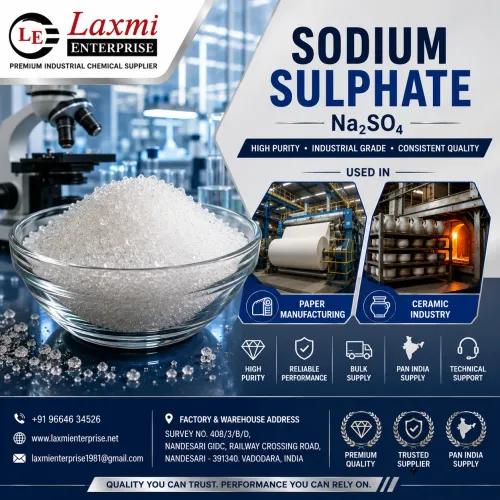
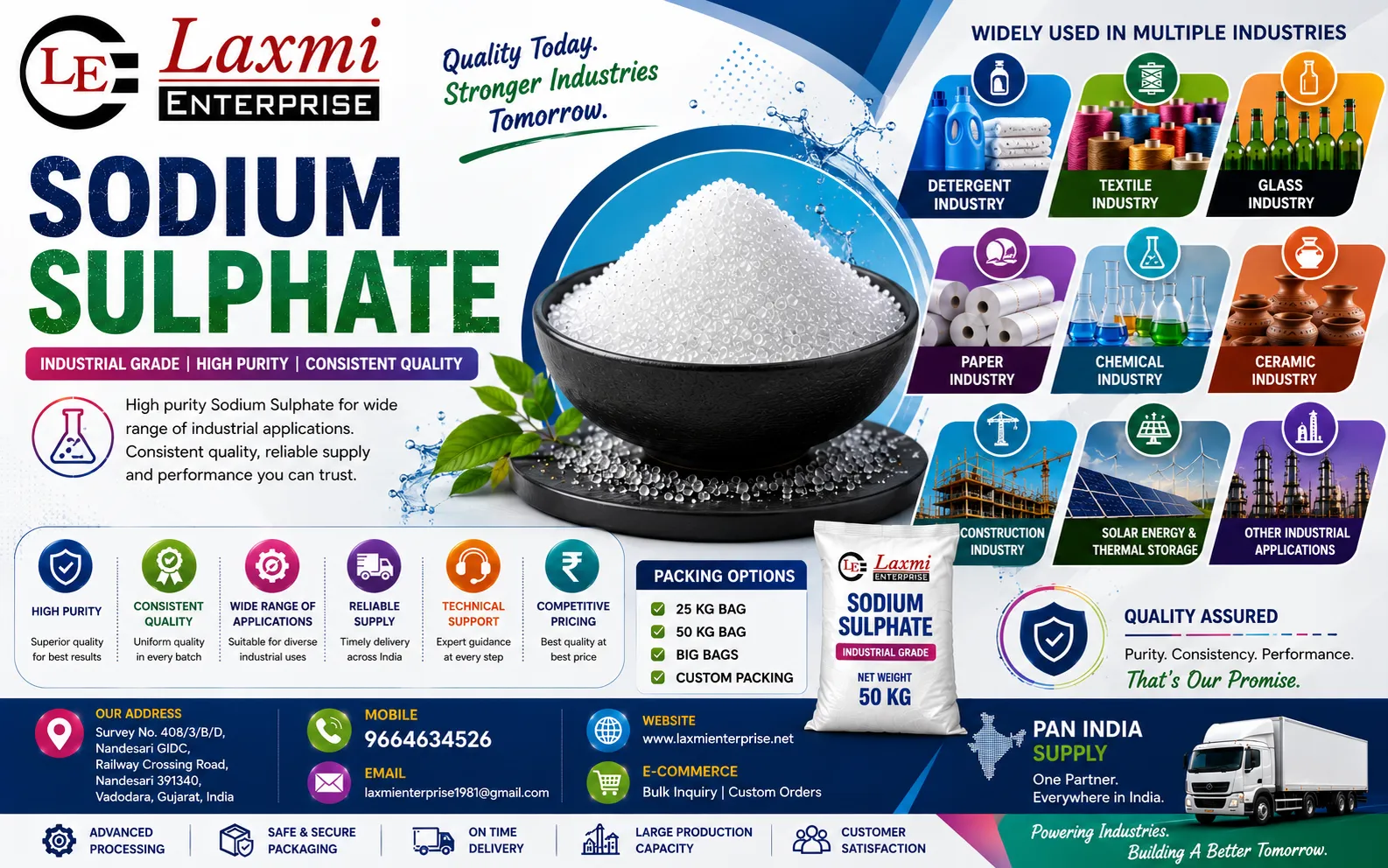
Operating from Nandesari GIDC, Vadodara, we supply Sodium Sulphate and other industrial chemicals to manufacturers across India.
Our customers rely on us because they expect more than quality products.
They expect reliability.
They expect consistency.
They expect a supplier who understands the importance of every delivery.
We work every day to meet those expectations.
Final Thoughts
Incoming material inspection is not about finding faults.
It is about protecting production.
A few extra minutes spent checking packaging, documentation and storage conditions can prevent much larger operational challenges later.
Factories that establish disciplined receiving procedures usually experience better inventory control, stronger quality systems and greater confidence throughout the manufacturing process.
Choosing dependable suppliers and maintaining consistent inspection standards work together to create a stronger, more efficient manufacturing operation.
Frequently Asked Questions
What should be checked before accepting a Sodium Sulphate delivery?
Verify documentation, inspect packaging, check for moisture, confirm quantities, collect representative samples according to company procedures and ensure proper storage arrangements before accepting the material.
Why is incoming inspection important?
Incoming inspection helps identify potential issues before raw materials enter production, reducing the risk of quality problems and production interruptions.
Should damaged bags always be rejected?
Not necessarily. Damaged packaging should be separated, inspected and evaluated according to the company's quality procedures before any decision is made.
Why should warehouse teams document delivery observations?
Accurate documentation improves traceability, supports quality investigations and helps resolve transport or packaging concerns efficiently.
Why do manufacturers choose Laxmi Enterprise?
Manufacturers across India choose Laxmi Enterprise because of our commitment to consistent product quality, professional packaging, dependable deliveries and responsive customer support. Operating from Nandesari GIDC, Vadodara, we help industries maintain efficient manufacturing through reliable industrial chemical supply.
About Laxmi Enterprise
Laxmi Enterprise is a trusted manufacturer, supplier and distributor of industrial chemicals based in Nandesari GIDC, Vadodara, Gujarat. We supply Sodium Sulphate, Sodium Nitrate, Sodium Acetate, Tri Sodium Phosphate and other inorganic chemicals to manufacturers across detergent, textile, glass, paper, ceramic, construction, water treatment and chemical processing industries throughout India.
Our philosophy is built on consistency, integrity and long-term partnerships. Every order we dispatch reflects our commitment to helping manufacturers maintain reliable production, efficient operations and lasting business success.
A truck arrives at the factory gate.
The purchase order matches.
The delivery challan is ready.
The warehouse team begins unloading.
For many factories, this is where the process ends.
For experienced plant managers, this is where an important inspection begins.
Every bag of raw material entering a factory eventually becomes part of the finished product. Once it moves into production, correcting a mistake becomes far more difficult than identifying it during receipt.
That is why successful manufacturing companies treat incoming material inspection as an investment rather than an administrative formality.
A systematic receiving process protects production, reduces unnecessary downtime and gives every department greater confidence in the raw materials entering the plant.
The Delivery Vehicle Deserves the First Inspection
Before the first bag is unloaded, take a few minutes to inspect the delivery vehicle.
Is the load protected properly?
Does the material appear dry?
Are there any visible signs of water exposure?
Has the cargo shifted during transportation?
Has the packaging been damaged while in transit?
These observations often provide useful information before the material even reaches the warehouse.
A careful inspection at this stage can prevent unnecessary handling later.
Verify the Documents Before Unloading
Documentation should always match the material being delivered.
Confirm the purchase order.
Verify the product description.
Check the quantity received.
Review the batch details, if applicable.
Ensure transport documents are complete.
Small documentation errors may create larger inventory and traceability issues later.
Many experienced warehouse managers complete this verification before unloading begins.
Inspect the Packaging Carefully
Packaging protects the product throughout transportation.
A damaged bag does not automatically mean the material is unusable, but it should always be inspected.
Look for torn stitching.
Check for broken seals.
Inspect corners for damage caused during loading or unloading.
Ensure printed labels remain clear and readable.
Good packaging reflects careful handling throughout the supply chain.
Warehouse teams should report damaged bags immediately instead of placing them directly into storage.
Look for Visible Signs of Moisture
Moisture is one of the first things warehouse personnel should check.
Examine the outer packaging.
Look for damp patches.
Check whether bags have become unusually soft.
Inspect pallet surfaces for water marks.
Even if only a few bags appear affected, separating them from the remaining shipment allows quality teams to evaluate them properly.
Early inspection reduces the possibility of unsuitable material entering production.
Confirm Storage Space Before Acceptance
Receiving material without available storage space creates unnecessary handling.
Before unloading begins, ensure that the designated storage area is clean and ready.
Pallets should already be positioned.
Warehouse aisles should remain accessible.
Older inventory should not block newly received material.
Well-organised receiving areas improve both safety and efficiency.
Collect Representative Samples
Many manufacturing companies follow standard incoming quality inspection procedures.
Sampling should be performed according to the company's quality system.
Representative samples provide quality departments with confidence before material enters production.
Routine inspection also creates useful historical records that support future purchasing decisions.
Consistency becomes easier to monitor when proper records are maintained.
Record Every Observation
Experienced warehouse managers understand the importance of documentation.
If damaged packaging is observed, record it.
If transport conditions appear unusual, note the details.
If shortages exist, report them immediately.
Photographs can also be useful whenever visible transport damage is identified.
Good documentation protects both the customer and the supplier by ensuring that observations are recorded accurately.
Communication Should Be Immediate
If any concern is identified during receiving, communication should not be delayed.
Inform the purchase department.
Notify the quality team.
Contact the supplier if necessary.
Most issues become easier to resolve when discussed immediately rather than after the material has already entered production.
Professional suppliers appreciate prompt communication because it allows faster investigation and resolution.
Good Warehouse Practices Begin at the Receiving Dock
Receiving is the first stage of warehouse management.
Proper identification should be applied immediately.
Material should be stored in designated locations.
Inventory records should be updated without delay.
Older stock should remain clearly separated.
Simple receiving discipline contributes to better inventory accuracy throughout the warehouse.
Why Experienced Factories Follow Standard Checklists
Checklists reduce the possibility of overlooking important details.
They also create consistency between different shifts and different warehouse personnel.
Whether the receiving team has five years of experience or twenty-five, following the same inspection procedure helps maintain high standards.
Many successful manufacturing companies rely on standard operating procedures because consistency is easier to achieve when everyone follows the same process.
Choosing the Right Supplier Makes Inspection Easier
A structured receiving process is important regardless of the supplier.
However, experienced warehouse teams often notice that dependable suppliers make receiving much simpler.
Packaging remains consistent.
Documentation is accurate.
Deliveries arrive according to schedule.
Quality remains predictable.
Over time, confidence develops naturally because every shipment follows the same professional standards.
This consistency saves valuable time for warehouse, production and quality departments.
How Laxmi Enterprise Supports Industrial Customers
At Laxmi Enterprise, we understand that every shipment entering a customer's factory becomes part of their manufacturing process.
For that reason, we pay close attention to packaging, documentation, product consistency and timely dispatch.
Operating from Nandesari GIDC, Vadodara, we supply Sodium Sulphate and other industrial chemicals to manufacturers across India.
Our customers rely on us because they expect more than quality products.
They expect reliability.
They expect consistency.
They expect a supplier who understands the importance of every delivery.
We work every day to meet those expectations.
Final Thoughts
Incoming material inspection is not about finding faults.
It is about protecting production.
A few extra minutes spent checking packaging, documentation and storage conditions can prevent much larger operational challenges later.
Factories that establish disciplined receiving procedures usually experience better inventory control, stronger quality systems and greater confidence throughout the manufacturing process.
Choosing dependable suppliers and maintaining consistent inspection standards work together to create a stronger, more efficient manufacturing operation.
Frequently Asked Questions
What should be checked before accepting a Sodium Sulphate delivery?
Verify documentation, inspect packaging, check for moisture, confirm quantities, collect representative samples according to company procedures and ensure proper storage arrangements before accepting the material.
Why is incoming inspection important?
Incoming inspection helps identify potential issues before raw materials enter production, reducing the risk of quality problems and production interruptions.
Should damaged bags always be rejected?
Not necessarily. Damaged packaging should be separated, inspected and evaluated according to the company's quality procedures before any decision is made.
Why should warehouse teams document delivery observations?
Accurate documentation improves traceability, supports quality investigations and helps resolve transport or packaging concerns efficiently.
Why do manufacturers choose Laxmi Enterprise?
Manufacturers across India choose Laxmi Enterprise because of our commitment to consistent product quality, professional packaging, dependable deliveries and responsive customer support. Operating from Nandesari GIDC, Vadodara, we help industries maintain efficient manufacturing through reliable industrial chemical supply.
About Laxmi Enterprise
Laxmi Enterprise is a trusted manufacturer, supplier and distributor of industrial chemicals based in Nandesari GIDC, Vadodara, Gujarat. We supply Sodium Sulphate, Sodium Nitrate, Sodium Acetate, Tri Sodium Phosphate and other inorganic chemicals to manufacturers across detergent, textile, glass, paper, ceramic, construction, water treatment and chemical processing industries throughout India.
Our philosophy is built on consistency, integrity and long-term partnerships. Every order we dispatch reflects our commitment to helping manufacturers maintain reliable production, efficient operations and lasting business success.
Keywords