

Why Choose a Reliable Sodium Nitrate Free Flow Supplier?
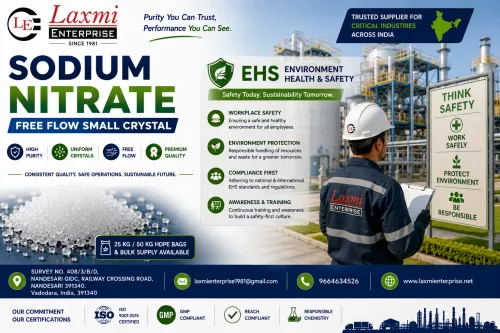
Selecting the right Sodium Nitrate supplier is just as important as selecting the right product. Even when two suppliers offer material with similar purity, differences in quality control, packaging, documentation, logistics, and technical support can significantly influence manufacturing efficiency.
Industrial buyers should evaluate suppliers based on consistency, reliability, and their ability to support long-term production requirements.
A professional supplier should consistently provide:
Stable product quality
Batch-to-batch consistency
Complete technical documentation
Secure industrial packaging
Reliable dispatch schedules
Responsive customer support
Product traceability
Long-term supply capability
These factors help manufacturers reduce operational risks and maintain uninterrupted production.
What Industrial Buyers Should Expect from Their Supplier
A reliable supplier should be able to provide:
Product Consistency
Every batch should maintain comparable physical and chemical properties to reduce production variability.
Quality Documentation
Each shipment should include:
Certificate of Analysis (COA)
Safety Data Sheet (SDS)
Batch Identification
Product Label
Packing Details
Industrial Packaging
Commercial packing options should be suitable for manufacturing environments.
Standard packing includes:
25 kg Bags
50 kg Bags
500 kg Jumbo Bags
Packaging should protect the material from moisture and contamination during transportation and warehouse storage.
Technical Support
Industrial buyers often require assistance with:
Product specifications
Packing recommendations
Storage guidance
Documentation
Application suitability
Logistics planning
A knowledgeable supplier can help answer these technical questions and support procurement decisions.
Future Trends in Sodium Nitrate Applications
Demand for Sodium Nitrate Free Flow is expected to continue growing as industries increasingly adopt automated production systems and seek higher process efficiency.
Emerging and expanding application areas include:
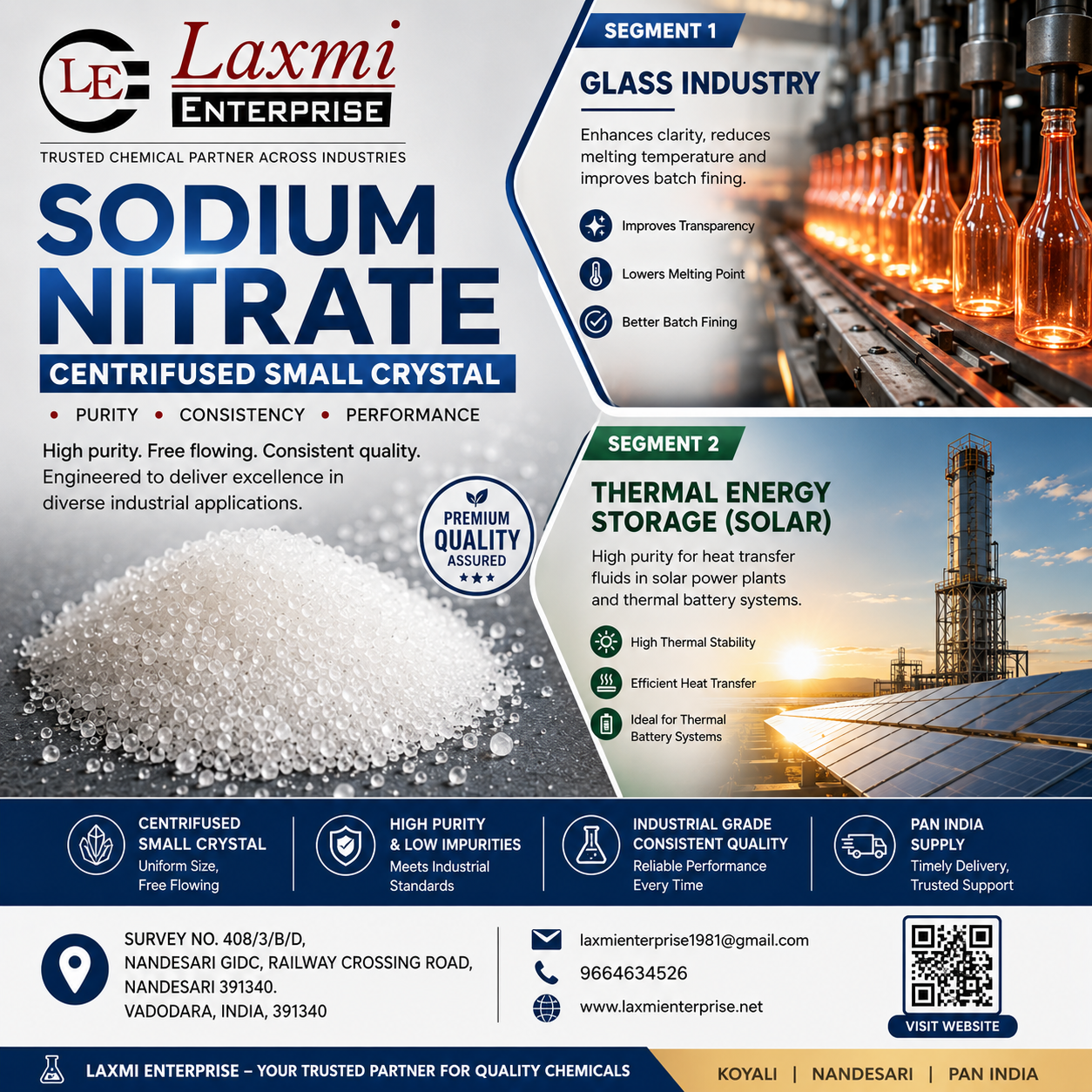
Renewable energy and thermal storage systems
Advanced specialty chemicals
High-performance glass manufacturing
Industrial process optimization
Sustainable chemical production
Precision industrial formulations
As manufacturing technologies evolve, consistent raw material quality will become even more important for maintaining production efficiency and product performance.
Key Technical Takeaways
Sodium Nitrate Free Flow is more than a standard industrial chemical. Its combination of chemical purity, controlled particle size, low moisture content, and excellent flowability makes it an important raw material across multiple manufacturing sectors.
When selecting Sodium Nitrate, buyers should focus on:
Product quality
Batch consistency
Free-flowing characteristics
Technical documentation
Appropriate packaging
Supplier reliability
These considerations contribute to improved production efficiency, reduced downtime, and dependable manufacturing performance.
Conclusion
Sodium Nitrate Free Flow continues to play a vital role in modern industry due to its versatility, reliable chemical properties, and ease of handling. Whether it is used in chemical processing, glass manufacturing, ceramic production, thermal energy storage, metal refining, pigments, or specialty chemicals, selecting the appropriate product specification is essential for achieving consistent production results.
Industrial buyers should evaluate Sodium Nitrate not only by purity but also by its physical characteristics, storage performance, packaging quality, and supplier support. A technically suitable product combined with proper storage and reliable documentation helps manufacturers optimize production while maintaining consistent quality.
As industrial automation continues to expand, demand for high-quality Free Flow Sodium Nitrate is expected to remain strong, making supplier selection and quality assurance increasingly important.
Advanced FAQs
How can I verify the quality of Sodium Nitrate before purchasing?
Request a recent Certificate of Analysis (COA), review the product specifications, confirm the Free Flow grade, and ensure the supplier provides complete technical documentation and batch traceability.
Why is flowability more important than many buyers realize?
Excellent flowability reduces bridging, improves hopper discharge, enhances dosing accuracy, and minimizes production interruptions, making it a key factor in automated manufacturing systems.
Does Sodium Nitrate require special warehouse conditions?
It should be stored in a clean, cool, dry, and well-ventilated warehouse. Protect the product from moisture, damaged packaging, and incompatible materials to preserve its quality.
How often should industrial users review incoming quality?
Many manufacturers inspect every incoming batch or follow an established sampling plan as part of their quality management system. The inspection frequency depends on internal quality procedures and application requirements.
Why is batch traceability important?
Batch traceability allows manufacturers to identify the origin of supplied material, link it to quality records, and support investigations if production issues arise.
What should procurement teams discuss before placing an order?
Key discussion points include:
Product specifications
Purity
Particle size
Flowability
Moisture content
Packing size
Delivery schedule
Documentation requirements
Batch consistency
Why is packaging quality important?
Strong industrial packaging helps protect the product from moisture, physical damage, and contamination during storage and transportation, preserving its free-flowing characteristics.
Can Sodium Nitrate be stored for future production?
Yes. When stored under recommended conditions in its original sealed packaging, Sodium Nitrate remains chemically stable for extended periods. Good inventory practices such as FIFO are recommended.
Why do manufacturers value consistent particle size?
Consistent particle size improves blending, weighing, dissolution, and feeding performance while reducing process variation.
What is the benefit of low dust generation?
Lower dust levels contribute to cleaner handling, reduced material loss, improved workplace conditions, and more efficient packaging and transfer operations.
Why is supplier documentation important during audits?
Quality documents such as the COA, SDS, and batch records support internal quality systems, customer audits, and traceability requirements.
How does proper storage protect Free Flow characteristics?
Keeping the product dry and properly sealed helps prevent moisture absorption, reducing the likelihood of caking and maintaining smooth material flow.
Which packing size is most widely used?
For most industrial applications:
25 kg Bags are preferred for manual handling and batch production.
50 kg Bags are commonly used for regular industrial consumption.
500 kg Jumbo Bags are suitable for bulk users with automated handling systems.
What qualities define a dependable Sodium Nitrate supplier?
A dependable supplier typically provides:
Consistent product quality
Reliable deliveries
Technical documentation
Appropriate packaging
Responsive customer service
Stable long-term supply
Can supplier consistency improve manufacturing efficiency?
Yes. Consistent raw material quality reduces process variation, supports predictable production, and minimizes the need for frequent equipment or formulation adjustments.