ECO-FRIENDLY WATER NEUTRALIZATION AGENTS
Overview
In industrial and municipal water treatment, neutralization refers to adjusting the pH of acidic or alkaline effluents to safe discharge limits (typically pH 6.5 – 8.5). Traditional neutralizing agents like sulfuric acid, hydrochloric acid, or caustic soda (NaOH) can be corrosive, hazardous, and generate secondary pollution.
Eco-friendly alternatives provide gentle pH correction, biodegradability, and operator safety, while maintaining high efficiency.
Common Eco-Friendly Neutralization Agents
Neutralizing Agent Chemical Nature Typical Application Eco-Friendly Benefits
Sodium Acetate (CH₃COONa) Weak organic salt pH buffering and neutralization of acidic effluents Non-toxic, biodegradable, supports biological treatment
Sodium Bicarbonate (NaHCO₃) Mild alkaline compound Neutralization of acidic wastewater, boiler & cooling tower water Produces minimal heat, safe handling, non-corrosive
Calcium Carbonate (CaCO₃) Natural mineral Neutralization of acidic mine drainage and chemical waste Naturally occurring, low-cost, non-hazardous
Magnesium Hydroxide (Mg(OH)₂) Mild base Replacement for caustic soda in acidic wastewater Generates less sludge, safer to handle
Citric Acid (C₆H₈O₇) Organic acid Neutralization of alkaline effluents Biodegradable, food-grade safety, no toxic residues
Acetic Acid (CH₃COOH) Weak acid pH control for alkaline rinse waters Renewable source (vinegar base), non-toxic
Potassium Carbonate (K₂CO₃) Alkaline salt Neutralization of acidic effluents where sodium is undesirable Provides nutrient potassium for biological systems
Selection Guide
Type of Effluent Recommended Eco-Friendly Neutralizer pH Control Range
Acidic effluent (pH < 5) Sodium bicarbonate, magnesium hydroxide 6.0 – 8.0
Alkaline effluent (pH > 9) Citric acid, acetic acid 6.5 – 8.0
Biological treatment feed Sodium acetate 6.0 – 7.5
High-metal content effluent Calcium carbonate, magnesium hydroxide 6.5 – 7.5
Advantages of Eco-Friendly Neutralizers
Biodegradable & non-toxic – minimal environmental footprint.
Operator safety – no strong acid/base hazards.
Compatible with biological ETP/STP systems.
Reduced corrosion of pipes and tanks.
Stable buffering prevents pH shocks and improves downstream treatment efficiency.
Considerations
May require slightly higher dosages than strong acids/bases.
Reaction rates can be slower; suitable for controlled dosing systems.
Solubility and cost vary by application type.
Available Product Range (Laxmi Enterprise)
Product Name Composition Typical Use
EcoNeutral-A Sodium acetate + acetic acid blend Neutralization & buffering of acidic wastewater
EcoNeutral-B Sodium bicarbonate (fine grade) Neutralization of low-pH effluents, boiler water
EcoNeutral-C Citric acid (anhydrous) Neutralization of alkaline rinse & plating water
EcoNeutral-M Magnesium hydroxide slurry Caustic soda replacement for acidic streams
Packaging & Storage
Packaging: 25 kg HDPE bags / 50 kg drums / 200 L carboys (for liquids)
Storage: Store in a cool, dry, ventilated place away from acids.
Shelf life: 12–24 months depending on formulation.
Would you like me to prepare this as a formatted product datasheet (PDF) titled
“Eco-Friendly Water Neutralization Agents – Laxmi Enterprise”
including your logo space, product highlights, and application chart for marketing or catalog use?
Sodium Acetate for Electroplating Processes
* Overview
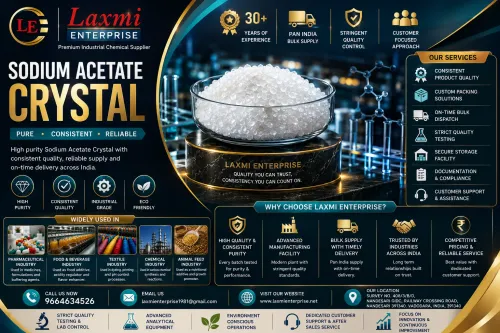
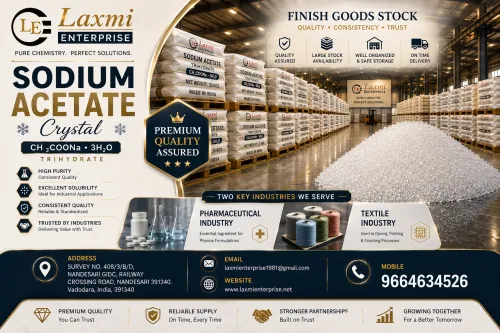
Sodium acetate (CH₃COONa) is an important auxiliary chemical in electroplating and metal finishing operations. It serves multiple functions — as a pH buffer, conductivity enhancer, and complexing agent — ensuring uniform metal deposition, bright finishes, and stable bath chemistry. Its mild alkaline and biodegradable nature makes it a safer, eco-friendly alternative to harsher inorganic additives.
⚙️ Functions of Sodium Acetate in Electroplating
1. pH Buffering Agent
Maintains stable bath pH during plating operations, especially in nickel, zinc, silver, and copper baths.
Prevents large pH fluctuations caused by hydrogen evolution at the cathode.
Optimal pH control ensures even metal deposition and reduces burning or pitting.
2. Conductivity Enhancer
Sodium acetate increases the ionic strength of the electrolyte, improving current distribution and throwing power.
Results in a more uniform coating thickness on complex or recessed surfaces.
3. Complexing/Buffering Agent in Electroless and Bright Baths
In electroless nickel or copper plating, it acts as a complexing agent, stabilizing metal ions in solution.
Helps regulate metal ion release, preventing bath decomposition.
4. Additive for Post-Treatment Rinses
After electroplating, sodium acetate solutions can be used as a neutralizing rinse to remove acid residues, preventing surface stains or corrosion.
Stabilizes pH before passivation or chromating steps.
5. Corrosion Inhibition and Surface Conditioning
In zinc and cadmium plating systems, sodium acetate aids in forming smoother crystalline deposits and reduces hydrogen embrittlement risks.
Advantages
Environmentally friendly and biodegradable.
Provides stable and uniform deposition by controlling pH.
Reduces burning, pitting, and uneven thickness.
Non-corrosive and easy to handle.
Enhances bath life and reduces frequency of replenishment.
Limitations
Not suitable as the primary complexing agent for high-concentration metal baths.
Requires monitoring of acetate build-up in closed-loop systems.
Slightly raises bath conductivity, which may need current adjustments.
Packaging
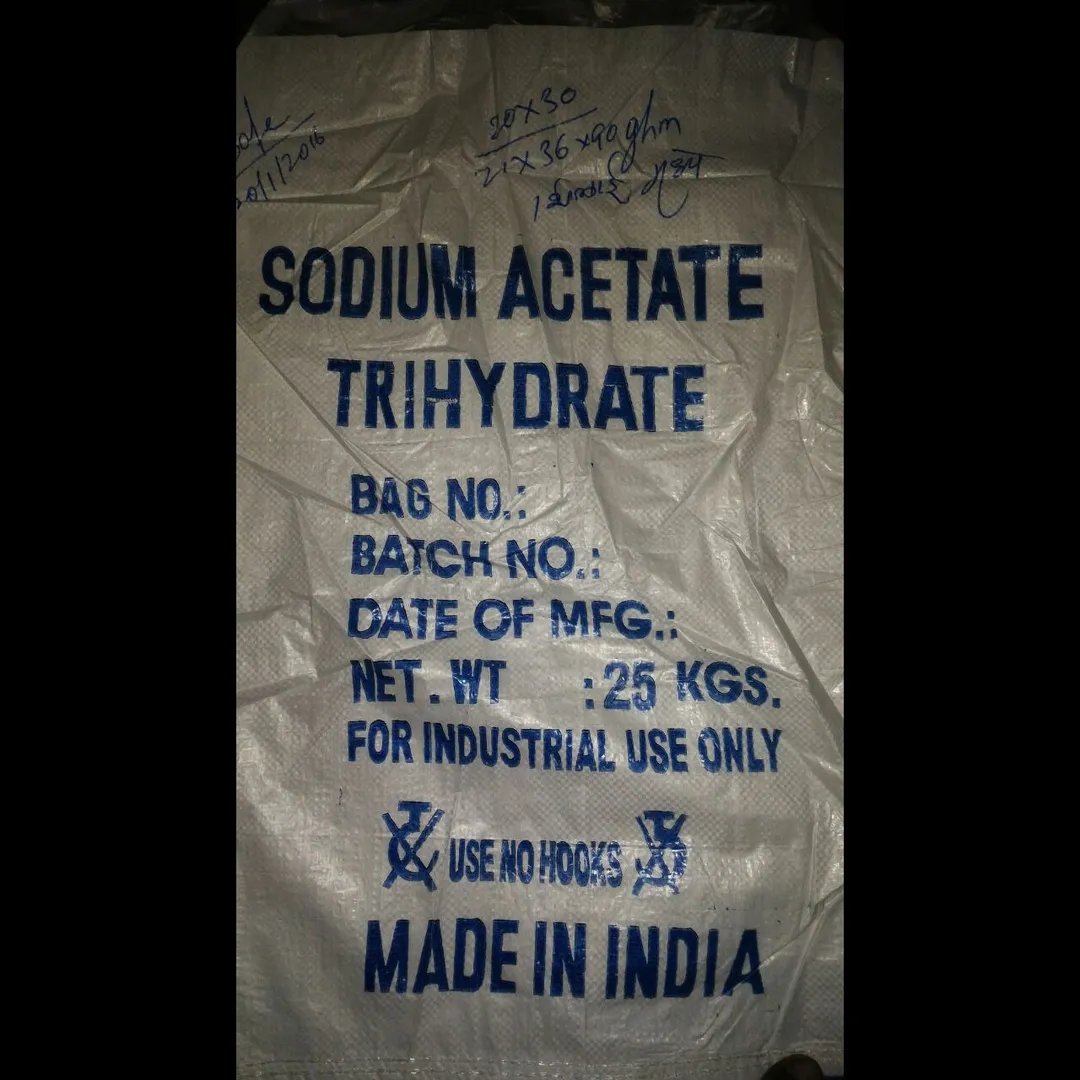
25 kg HDPE bags or 50 kg fiber drums
Custom packaging available for OEM applications
✅ Applications Summary
Nickel acetate sealing for anodized aluminum
Copper and zinc acetate plating baths
Electroless nickel and chemical plating stabilizer
Post-plating neutralization rinse
pH buffering and conductivity improvement in metal finishing
Would you like me to format this into a professional product datasheet (PDF) titled
“Sodium Acetate – Electroplating Grade”
including technical specifications, application guide, and safety information for inclusion in your Laxmi Enterprise catalog?
• sodium acetate CAS 127-09-3 (anhydrous)
• sodium acetate CAS 6131-90-4 (trihydrate)
• sodium acetate EC 204-823-8
• E number E262
• sodium acetate supplier
• sodium acetate manufacturer
• sodium acetate distributor
• buy sodium acetate online
• sodium acetate price per kg
• bulk sodium acetate
LAXMI ENTERPRISE VADODRA GUJARAT INDIA
Keywords