

How Much Sodium Sulphate Do You Need? Industrial Procurement Planning & Consumption Guide (2026)
Primary Keyword: Sodium Sulphate Procurement Guide
Secondary Keywords: Bulk Sodium Sulphate Purchase, Sodium Sulphate Consumption Planning, Industrial Chemical Procurement, Sodium Sulphate Supplier India, Bulk Chemical Planning
Technical Product Identity
Property Details
Product Name Sodium Sulphate
Chemical Formula Na₂SO₄
CAS Number 7757-82-6
HSN Code (India) 2833 11 00
Molecular Weight 142.04 g/mol
EINECS Number 231-820-9
Appearance White crystalline powder or granules
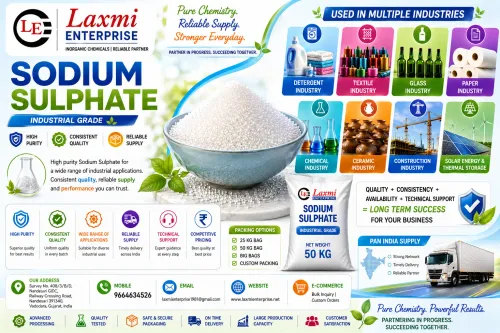
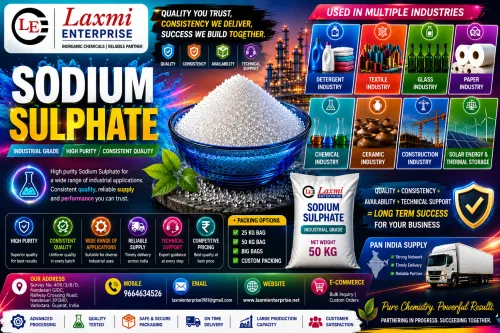
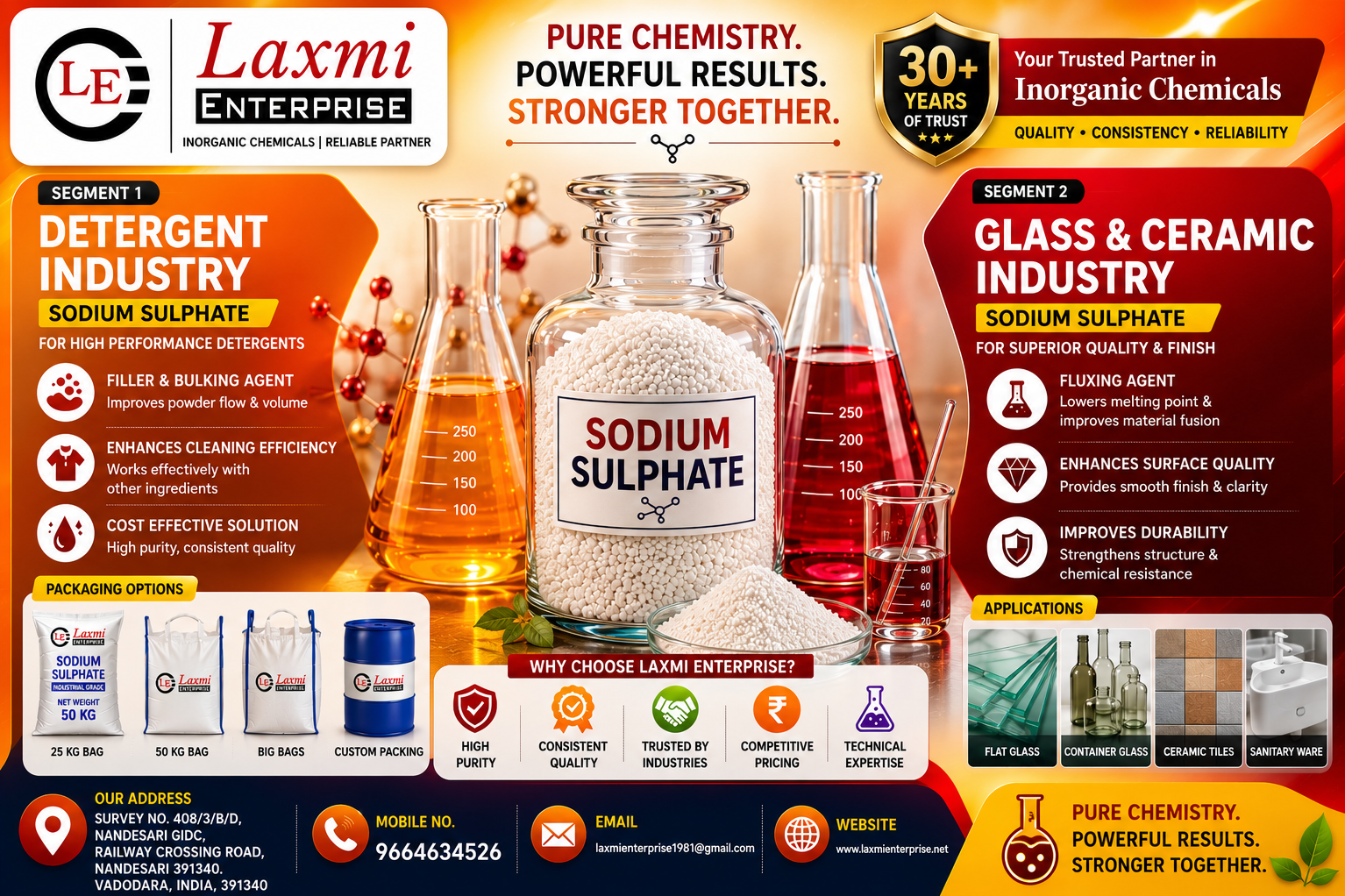
Supply Forms 25 kg Bags, 50 kg Bags, 500 kg FIBC, 1000 kg FIBC, Bulk Supply (where applicable)
Quick Answer
Planning Sodium Sulphate procurement involves estimating production demand, defining quality specifications, selecting suitable packaging, and scheduling deliveries. Instead of ordering only when inventory is low, manufacturers benefit from forecasting consumption, maintaining appropriate safety stock, and coordinating supply with production schedules.
Why Procurement Planning Matters
Raw material planning affects:
Production continuity.
Inventory carrying costs.
Warehouse utilization.
Emergency purchasing.
Freight efficiency.
Supplier scheduling.
A structured procurement plan can reduce operational disruptions and improve purchasing efficiency.
Step 1 – Estimate Production Requirements
Quick Answer
Begin with expected production volumes and the validated formulation or process used at your facility. Consumption rates vary by industry and process, so procurement planning should be based on your own manufacturing data rather than generic assumptions.
Useful planning inputs include:
Monthly production targets.
Historical consumption.
Seasonal demand.
Planned maintenance shutdowns.
New product launches.
Step 2 – Define the Technical Specification
Before requesting quotations, document:
Required application.
Product grade.
Purity requirements.
Moisture limits.
Water-insoluble matter limits.
Packaging preference.
Documentation requirements (COA, TDS, SDS/MSDS).
A clear specification reduces the risk of procurement errors.
Step 3 – Select the Right Packaging
Quick Answer
Packaging should match your warehouse infrastructure, handling equipment, and consumption rate.
Packaging Typical Use
25 kg Bags Laboratory, pilot production, low-volume users
50 kg Bags Medium-scale manufacturing
500 kg FIBC Automated handling and medium-volume operations
1000 kg FIBC High-volume industrial plants
Bulk Supply Facilities with dedicated bulk handling systems
Step 4 – Plan Safety Stock
Safety stock helps protect production from:
Transport delays.
Unexpected demand increases.
Supplier lead-time variations.
Weather-related disruptions.
The appropriate safety stock level depends on your production schedule, supplier performance, and inventory strategy.
Step 5 – Schedule Deliveries
Instead of relying on one large annual shipment, many manufacturers schedule deliveries based on operational needs.
Common approaches include:
Weekly deliveries.
Fortnightly deliveries.
Monthly deliveries.
Quarterly replenishment.
Annual contracts with scheduled releases.
The most suitable schedule depends on storage capacity and production patterns.
Industry Examples
Detergent Manufacturing
Procurement teams often coordinate deliveries with:
Production campaigns.
Packaging capacity.
Warehouse space.
Raw material inventory.
Glass Manufacturing
Glass plants typically align raw material deliveries with batch preparation and furnace operations.
Textile Processing
Textile dye houses may adjust procurement according to seasonal production, customer orders, and dyeing schedules.
Kraft Pulp Mills
Paper and pulp producers often integrate Sodium Sulphate procurement into broader chemical inventory planning.
Logistics Planning
Quick Answer
Efficient logistics involve selecting appropriate shipment sizes, confirming unloading facilities, and coordinating delivery windows to minimize disruptions.
Important considerations include:
Vehicle access.
Warehouse receiving capacity.
Forklift or crane availability.
Storage conditions.
Delivery documentation.
Documentation for Procurement
A complete procurement package commonly includes:
Purchase Order.
Certificate of Analysis (COA).
Technical Data Sheet (TDS).
Safety Data Sheet (SDS/MSDS).
Packing List.
Commercial Invoice.
Batch Identification.
Maintaining organized records supports traceability and audit readiness.
Common Procurement Mistakes
Avoid:
Ordering without a written specification.
Underestimating lead times.
Ignoring packaging compatibility.
Failing to review COA documentation.
Keeping insufficient safety stock.
Selecting suppliers based only on the lowest price.
Pan-India Supply
Manufacturers across Gujarat, Maharashtra, Rajasthan, Delhi NCR, Uttar Pradesh, Punjab, Haryana, Madhya Pradesh, Chhattisgarh, Odisha, West Bengal, Karnataka, Telangana, Andhra Pradesh, Tamil Nadu, Kerala, Jharkhand, and Assam require dependable Sodium Sulphate supply.
Laxmi Enterprise, based in Nandesari GIDC, Vadodara, Gujarat, supplies Sodium Sulphate (CAS No. 7757-82-6, HSN Code 2833 11 00) across Pan India, offering flexible packaging, technical documentation, and logistics support to industrial customers.
Procurement Planning Checklist
Before placing an order:
✔ Define monthly consumption.
✔ Confirm the required application.
✔ Verify CAS Number: 7757-82-6.
✔ Verify HSN Code: 2833 11 00.
✔ Finalize packaging requirements.
✔ Review COA, TDS, and SDS/MSDS requirements.
✔ Plan safety stock.
✔ Schedule deliveries.
✔ Confirm unloading arrangements.
Frequently Asked Questions
How often should I order Sodium Sulphate?
The frequency depends on your production volume, storage capacity, supplier lead time, and inventory strategy.
Should I maintain safety stock?
Many manufacturers maintain safety stock to reduce the impact of supply disruptions. The appropriate level depends on operational requirements.
Which packaging is best for high-volume plants?
Large facilities often choose FIBC bags or bulk supply where suitable infrastructure exists.
Why include the CAS Number and HSN Code?
The CAS Number (7757-82-6) confirms the chemical identity, while the HSN Code (2833 11 00) supports commercial documentation, GST, and logistics in India.
Conclusion
Effective Sodium Sulphate procurement combines accurate demand forecasting, clear technical specifications, suitable packaging, planned logistics, and complete documentation. A structured approach helps manufacturers reduce procurement risk, optimize inventory, and support uninterrupted production.
For industrial buyers across Pan India, Laxmi Enterprise, located in Nandesari GIDC, Vadodara, Gujarat, supplies Sodium Sulphate (CAS No. 7757-82-6, HSN Code 2833 11 00) with technical documentation, flexible packaging options, and dependable logistics for detergent, glass, textile, kraft pulp, and chemical manufacturing industries.