How to Inspect Sodium Nitrate Before Accepting an Industrial Shipment
Receiving a shipment of Sodium Nitrate is not the final step in the procurement process. It is the beginning of the quality verification process.
Many manufacturing companies have strong production systems but weak incoming material inspection procedures. As a result, unsuitable raw materials may enter the warehouse and eventually reach production. This can increase quality investigations, delay manufacturing schedules and create unnecessary operational costs.
Experienced manufacturers understand that incoming inspection is one of the simplest ways to reduce production risk.
A structured inspection process helps procurement teams, warehouse personnel and quality control departments verify that the received material matches the purchase order and is suitable for manufacturing.
This article explains a practical inspection process that industrial buyers can adopt before approving a Sodium Nitrate shipment for production.
Why Incoming Inspection Is Important
Every manufacturing process depends on consistent raw materials.
Once a shipment is accepted into inventory, it often becomes part of scheduled production.
If problems are discovered after production begins, the cost of investigation and corrective action may be significantly higher than identifying them during receiving.
A systematic inspection process helps manufacturers
Protect production quality
Reduce procurement risk
Improve inventory control
Strengthen supplier accountability
Support quality management systems
Build long term supplier confidence
Incoming inspection is therefore not only a quality activity. It is an important business process.
Step One Verify Purchase Order Details
Before unloading the material, compare the shipment with the approved purchase order.
Verify
Product name
Ordered quantity
Packaging type
Supplier name
Delivery location
Batch identification if applicable
Purchase order reference
This simple verification helps avoid receiving the wrong product or incorrect quantities.
Step Two Inspect Packaging Condition
Packaging protects Sodium Nitrate during transportation and storage.
Warehouse personnel should inspect every shipment before acceptance.
Look for
Torn bags
Broken stitching
Water damage
Wet packaging
Improper sealing
Contaminated outer surfaces
Collapsed bags
Damaged pallets if palletized
Proper packaging reduces the possibility of contamination during storage.
Step Three Check Product Identification
Every industrial shipment should be properly identified.
Verify that labels clearly indicate
Product name
Supplier name
Batch or lot identification where applicable
Net weight
Manufacturing information if provided
Clear identification improves warehouse traceability and simplifies inventory management.
Step Four Perform a Visual Inspection
A simple visual inspection often provides useful information.
Without opening unnecessary bags, quality personnel should examine representative samples according to company procedures.
Look for
Uniform white crystalline appearance
Foreign material
Visible contamination
Excessive dust caused by damaged packaging
Signs of moisture
Abnormal appearance compared with previous approved shipments
Visual inspection does not replace laboratory testing, but it is an important first step.
Step Five Review Supporting Documentation
Professional industrial suppliers generally provide documentation required by customers.
Depending on company procedures, this may include
Commercial invoice
Delivery challan
Product specification
Certificate of Analysis when agreed
Batch information where applicable
Safety documentation if required
Documentation should match the delivered material.
Step Six Follow Internal Sampling Procedures
Many manufacturers collect representative samples according to their internal quality management procedures.
Sampling methods vary between organizations.
Representative sampling helps quality departments evaluate whether incoming material meets internal acceptance requirements.
Companies should always follow their documented quality procedures when collecting samples.
Step Seven Laboratory Verification
Where required by company policy, quality control laboratories may verify selected quality parameters before releasing material for production.
The specific tests depend on the manufacturer's application and quality system.
Companies should establish acceptance criteria appropriate for their manufacturing process.
Laboratory verification provides additional confidence before production begins.
Step Eight Approve Material for Warehouse Release
After inspection and quality review, the material may be released according to company procedures.
Approved material should be stored correctly.
Rejected material should be clearly identified and isolated until commercial discussions with the supplier are completed.
Proper segregation reduces the possibility of accidental use.
Common Mistakes During Incoming Inspection
Many companies unintentionally increase production risk by making avoidable mistakes.
Accepting shipments without inspection.
Checking only the delivery quantity.
Ignoring packaging damage.
Failing to verify documentation.
Mixing new material with existing inventory before approval.
Using unapproved material in production.
Poor warehouse identification.
Not recording inspection observations.
Simple improvements in inspection procedures can significantly strengthen quality assurance.
Best Practices Followed by Experienced Manufacturers
Leading manufacturers usually follow consistent receiving procedures.
Inspection begins before unloading.
Warehouse personnel work closely with quality departments.
Documentation is verified immediately.
Packaging condition is recorded.
Representative sampling follows internal procedures.
Inspection records are maintained.
Approved material is identified before storage.
These practices improve traceability and strengthen procurement systems.
Warehouse Storage After Acceptance
Proper storage helps preserve product quality.
Recommended warehouse practices include
Store indoors
Protect from moisture
Maintain clean storage conditions
Keep packaging sealed until use
Use first in first out inventory management where appropriate
Avoid stacking methods that damage packaging
Maintain proper warehouse records
Good warehouse management supports both quality and operational efficiency.
Procurement Insight
Experienced procurement managers often evaluate supplier performance using more than product quality.
They also review
Delivery consistency
Packaging performance
Documentation accuracy
Communication
Responsiveness
Corrective action when required
Long term reliability
These factors influence the overall value of the supplier relationship.
Expert Observation
One characteristic shared by well managed manufacturing companies is discipline during incoming inspection.
They do not assume every shipment is acceptable simply because previous deliveries met expectations.
Instead, they apply the same receiving procedure to every delivery.
This disciplined approach helps maintain production consistency while strengthening relationships with suppliers who consistently meet expectations.
How Laxmi Enterprise Supports Quality Focused Manufacturers
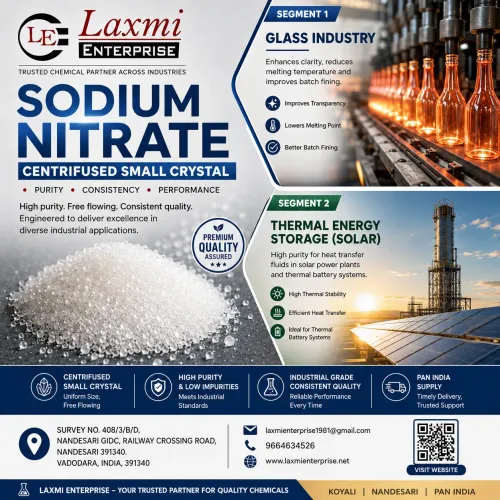
Laxmi Enterprise supplies industrial grade Sodium Nitrate from Nandesari GIDC, Vadodara to customers across India.
We understand that industrial buyers require confidence before approving material for production.
Our focus includes
Consistent product quality
Professional packaging
Reliable dispatch planning
Organized documentation
Responsive commercial support
Long term customer relationships
We believe dependable supply begins long before production starts.
It begins with consistent quality and transparent business practices.
Final Thoughts
Incoming inspection is one of the simplest and most effective quality control activities available to industrial manufacturers.
By verifying packaging, documentation, product identification and internal quality requirements before accepting a shipment, manufacturers can reduce production risk and improve procurement confidence.
A structured inspection process benefits every department, from purchasing and warehouse operations to production and quality assurance.
Companies that invest time in incoming inspection often experience fewer production interruptions and stronger long term supplier relationships.
Frequently Asked Questions
What should be checked before accepting a Sodium Nitrate shipment
Verify the purchase order, packaging condition, product identification, quantity, supporting documentation and follow your company's quality inspection procedure.
Why is incoming inspection important
It helps identify issues before the material enters production, reducing quality risks and supporting consistent manufacturing.
Should every shipment be inspected
Most manufacturers establish receiving inspection procedures so that every shipment is verified according to their internal quality management system.
Can packaging damage affect product quality
Damaged packaging may expose the product to moisture or contamination during transportation and storage.
What documents should accompany a shipment
Depending on commercial arrangements, documentation may include a commercial invoice, delivery documents, product specifications, Certificate of Analysis if agreed and other required records.
Should laboratory testing always be performed
Testing requirements depend on the manufacturer's quality procedures, application and risk assessment.
What should warehouse staff check first
Product identification, quantity, packaging condition and visible signs of damage before accepting the shipment.
How should approved Sodium Nitrate be stored
Store in a clean, dry and well ventilated warehouse with sealed packaging and proper inventory control.
What are common receiving mistakes
Accepting material without inspection, ignoring damaged packaging, failing to verify documentation and mixing unapproved material with approved inventory.
How can procurement teams evaluate supplier performance
By reviewing quality consistency, delivery performance, packaging quality, documentation, communication and responsiveness over time.
Why do manufacturers prefer experienced Sodium Nitrate suppliers
Experienced suppliers generally understand industrial quality expectations, documentation requirements and the importance of reliable deliveries.
Does Laxmi Enterprise support industrial quality requirements
Laxmi Enterprise works with industrial customers by providing consistent product quality, organized documentation, dependable logistics and responsive customer support according to customer requirements.
About Laxmi Enterprise
Laxmi Enterprise is a manufacturer, supplier and distributor of industrial chemicals located at Survey No. 408/3/B/D, Nandesari GIDC, Railway Crossing Road, Nandesari, Vadodara, Gujarat 391340.
We supply Sodium Nitrate, Sodium Sulphate, Sodium Acetate, Tri Sodium Phosphate and other industrial chemicals to manufacturers across India. Our objective is to support customers with reliable product quality, dependable supply, professional service and long term business relationships built on trust and consistency.
Receiving a shipment of Sodium Nitrate is not the final step in the procurement process. It is the beginning of the quality verification process.
Many manufacturing companies have strong production systems but weak incoming material inspection procedures. As a result, unsuitable raw materials may enter the warehouse and eventually reach production. This can increase quality investigations, delay manufacturing schedules and create unnecessary operational costs.
Experienced manufacturers understand that incoming inspection is one of the simplest ways to reduce production risk.
A structured inspection process helps procurement teams, warehouse personnel and quality control departments verify that the received material matches the purchase order and is suitable for manufacturing.
This article explains a practical inspection process that industrial buyers can adopt before approving a Sodium Nitrate shipment for production.
Why Incoming Inspection Is Important
Every manufacturing process depends on consistent raw materials.
Once a shipment is accepted into inventory, it often becomes part of scheduled production.
If problems are discovered after production begins, the cost of investigation and corrective action may be significantly higher than identifying them during receiving.
A systematic inspection process helps manufacturers
Protect production quality
Reduce procurement risk
Improve inventory control
Strengthen supplier accountability
Support quality management systems
Build long term supplier confidence
Incoming inspection is therefore not only a quality activity. It is an important business process.
Step One Verify Purchase Order Details
Before unloading the material, compare the shipment with the approved purchase order.
Verify
Product name
Ordered quantity
Packaging type
Supplier name
Delivery location
Batch identification if applicable
Purchase order reference
This simple verification helps avoid receiving the wrong product or incorrect quantities.
Step Two Inspect Packaging Condition
Packaging protects Sodium Nitrate during transportation and storage.
Warehouse personnel should inspect every shipment before acceptance.
Look for
Torn bags
Broken stitching
Water damage
Wet packaging
Improper sealing
Contaminated outer surfaces
Collapsed bags
Damaged pallets if palletized
Proper packaging reduces the possibility of contamination during storage.
Step Three Check Product Identification
Every industrial shipment should be properly identified.
Verify that labels clearly indicate
Product name
Supplier name
Batch or lot identification where applicable
Net weight
Manufacturing information if provided
Clear identification improves warehouse traceability and simplifies inventory management.
Step Four Perform a Visual Inspection
A simple visual inspection often provides useful information.
Without opening unnecessary bags, quality personnel should examine representative samples according to company procedures.
Look for
Uniform white crystalline appearance
Foreign material
Visible contamination
Excessive dust caused by damaged packaging
Signs of moisture
Abnormal appearance compared with previous approved shipments
Visual inspection does not replace laboratory testing, but it is an important first step.
Step Five Review Supporting Documentation
Professional industrial suppliers generally provide documentation required by customers.
Depending on company procedures, this may include
Commercial invoice
Delivery challan
Product specification
Certificate of Analysis when agreed
Batch information where applicable
Safety documentation if required
Documentation should match the delivered material.
Step Six Follow Internal Sampling Procedures
Many manufacturers collect representative samples according to their internal quality management procedures.
Sampling methods vary between organizations.
Representative sampling helps quality departments evaluate whether incoming material meets internal acceptance requirements.
Companies should always follow their documented quality procedures when collecting samples.
Step Seven Laboratory Verification
Where required by company policy, quality control laboratories may verify selected quality parameters before releasing material for production.
The specific tests depend on the manufacturer's application and quality system.
Companies should establish acceptance criteria appropriate for their manufacturing process.
Laboratory verification provides additional confidence before production begins.
Step Eight Approve Material for Warehouse Release
After inspection and quality review, the material may be released according to company procedures.
Approved material should be stored correctly.
Rejected material should be clearly identified and isolated until commercial discussions with the supplier are completed.
Proper segregation reduces the possibility of accidental use.
Common Mistakes During Incoming Inspection
Many companies unintentionally increase production risk by making avoidable mistakes.
Accepting shipments without inspection.
Checking only the delivery quantity.
Ignoring packaging damage.
Failing to verify documentation.
Mixing new material with existing inventory before approval.
Using unapproved material in production.
Poor warehouse identification.
Not recording inspection observations.
Simple improvements in inspection procedures can significantly strengthen quality assurance.
Best Practices Followed by Experienced Manufacturers
Leading manufacturers usually follow consistent receiving procedures.
Inspection begins before unloading.
Warehouse personnel work closely with quality departments.
Documentation is verified immediately.
Packaging condition is recorded.
Representative sampling follows internal procedures.
Inspection records are maintained.
Approved material is identified before storage.
These practices improve traceability and strengthen procurement systems.
Warehouse Storage After Acceptance
Proper storage helps preserve product quality.
Recommended warehouse practices include
Store indoors
Protect from moisture
Maintain clean storage conditions
Keep packaging sealed until use
Use first in first out inventory management where appropriate
Avoid stacking methods that damage packaging
Maintain proper warehouse records
Good warehouse management supports both quality and operational efficiency.
Procurement Insight
Experienced procurement managers often evaluate supplier performance using more than product quality.
They also review
Delivery consistency
Packaging performance
Documentation accuracy
Communication
Responsiveness
Corrective action when required
Long term reliability
These factors influence the overall value of the supplier relationship.
Expert Observation
One characteristic shared by well managed manufacturing companies is discipline during incoming inspection.
They do not assume every shipment is acceptable simply because previous deliveries met expectations.
Instead, they apply the same receiving procedure to every delivery.
This disciplined approach helps maintain production consistency while strengthening relationships with suppliers who consistently meet expectations.
How Laxmi Enterprise Supports Quality Focused Manufacturers
Laxmi Enterprise supplies industrial grade Sodium Nitrate from Nandesari GIDC, Vadodara to customers across India.
We understand that industrial buyers require confidence before approving material for production.
Our focus includes
Consistent product quality
Professional packaging
Reliable dispatch planning
Organized documentation
Responsive commercial support
Long term customer relationships
We believe dependable supply begins long before production starts.
It begins with consistent quality and transparent business practices.
Final Thoughts
Incoming inspection is one of the simplest and most effective quality control activities available to industrial manufacturers.
By verifying packaging, documentation, product identification and internal quality requirements before accepting a shipment, manufacturers can reduce production risk and improve procurement confidence.
A structured inspection process benefits every department, from purchasing and warehouse operations to production and quality assurance.
Companies that invest time in incoming inspection often experience fewer production interruptions and stronger long term supplier relationships.
Frequently Asked Questions
What should be checked before accepting a Sodium Nitrate shipment
Verify the purchase order, packaging condition, product identification, quantity, supporting documentation and follow your company's quality inspection procedure.
Why is incoming inspection important
It helps identify issues before the material enters production, reducing quality risks and supporting consistent manufacturing.
Should every shipment be inspected
Most manufacturers establish receiving inspection procedures so that every shipment is verified according to their internal quality management system.
Can packaging damage affect product quality
Damaged packaging may expose the product to moisture or contamination during transportation and storage.
What documents should accompany a shipment
Depending on commercial arrangements, documentation may include a commercial invoice, delivery documents, product specifications, Certificate of Analysis if agreed and other required records.
Should laboratory testing always be performed
Testing requirements depend on the manufacturer's quality procedures, application and risk assessment.
What should warehouse staff check first
Product identification, quantity, packaging condition and visible signs of damage before accepting the shipment.
How should approved Sodium Nitrate be stored
Store in a clean, dry and well ventilated warehouse with sealed packaging and proper inventory control.
What are common receiving mistakes
Accepting material without inspection, ignoring damaged packaging, failing to verify documentation and mixing unapproved material with approved inventory.
How can procurement teams evaluate supplier performance
By reviewing quality consistency, delivery performance, packaging quality, documentation, communication and responsiveness over time.
Why do manufacturers prefer experienced Sodium Nitrate suppliers
Experienced suppliers generally understand industrial quality expectations, documentation requirements and the importance of reliable deliveries.
Does Laxmi Enterprise support industrial quality requirements
Laxmi Enterprise works with industrial customers by providing consistent product quality, organized documentation, dependable logistics and responsive customer support according to customer requirements.
About Laxmi Enterprise
Laxmi Enterprise is a manufacturer, supplier and distributor of industrial chemicals located at Survey No. 408/3/B/D, Nandesari GIDC, Railway Crossing Road, Nandesari, Vadodara, Gujarat 391340.
We supply Sodium Nitrate, Sodium Sulphate, Sodium Acetate, Tri Sodium Phosphate and other industrial chemicals to manufacturers across India. Our objective is to support customers with reliable product quality, dependable supply, professional service and long term business relationships built on trust and consistency.
Keywords