
How to Reduce Production Downtime by Choosing the Right Sodium Sulphate Supplier
Every manufacturing company measures downtime.
Some calculate it in minutes.
Some calculate it in hours.
Others calculate it in lost production, delayed dispatches and missed customer commitments.
Regardless of how it is measured, downtime is one of the most expensive events in any factory.
A production line that is not running continues to consume resources.
Employees remain on the shop floor.
Machines wait for raw materials.
Utility costs continue.
Customer deadlines move closer.
The financial impact begins immediately.
Many manufacturers focus on preventing downtime through preventive maintenance, automation and operator training.
These are all essential.
However, there is another factor that quietly influences production continuity every day.
The reliability of the raw material supplier.
An inconsistent supply of Sodium Sulphate can affect production planning, inventory management and operational efficiency long before the material reaches the production line.
That is why experienced manufacturers consider supplier selection an important part of production risk management.
Production Does Not Stop Without a Reason
Manufacturing interruptions rarely happen because of one major event.
Most downtime begins with a series of small issues.
A delayed truck.
An incomplete shipment.
Damaged packaging.
Poor communication.
An unexpected shortage.
Each issue may appear manageable on its own.
Together they create production delays that affect the entire factory.
Understanding these risks helps manufacturers prevent them instead of reacting after production has already been interrupted.
The Real Cost of Downtime
Many businesses calculate downtime by looking only at production losses.
The actual cost is much higher.
Production schedules are revised.
Machine utilisation decreases.
Warehouse operations become less efficient.
Purchase departments begin searching for alternative suppliers.
Quality inspections increase.
Sales teams communicate revised delivery dates.
Customer confidence may also be affected.
Downtime influences almost every department.
Preventing it should therefore become a company-wide objective.
Reliable Supply Creates Production Confidence
Every production manager prefers stability.
Knowing that raw materials will arrive according to schedule allows production planning to become much more accurate.
Operators begin each shift with confidence.
Warehouse teams prepare receiving areas in advance.
Maintenance schedules remain unchanged.
Finished goods are produced according to customer commitments.
Reliable suppliers make this possible by consistently meeting delivery schedules and maintaining product availability.
Consistency reduces uncertainty.
Uncertainty is one of the biggest causes of operational disruption.
Inventory Planning Plays an Important Role
Some manufacturers respond to unreliable suppliers by increasing inventory.
This approach may reduce immediate risk, but it also creates new challenges.
Warehouse space becomes limited.
Working capital remains tied up.
Stock management becomes more complex.
Inventory carrying costs increase.
A better approach is building relationships with dependable suppliers.
Reliable deliveries allow manufacturers to maintain balanced inventory levels while reducing production risk.
This creates both operational and financial advantages.
Communication Prevents Unnecessary Delays
Even the strongest supply chains occasionally experience unexpected situations.
Road closures.
Vehicle breakdowns.
Weather conditions.
Transport restrictions.
Professional suppliers understand that communication becomes especially important during these situations.
Early information allows manufacturers to adjust production plans before operations are affected.
Late communication creates unnecessary pressure.
Honest communication builds confidence even when challenges occur.
Supplier Experience Reduces Manufacturing Risk
Experience cannot eliminate every problem.
It helps businesses respond more effectively.
Suppliers who have worked with industrial customers for many years understand production priorities.
They understand dispatch planning.
They recognise seasonal demand patterns.
They appreciate the importance of maintaining inventory.
This experience allows them to support customers more effectively during periods of high demand or changing market conditions.
Business continuity often depends on experienced decision-making.
Warehouse Efficiency Supports Continuous Production
Downtime does not always begin in production.
Sometimes it begins in the warehouse.
Poorly organised receiving procedures.
Improper storage.
Incorrect inventory records.
Slow material movement.
These issues delay the availability of raw materials even when deliveries arrive on time.
Manufacturers should therefore evaluate warehouse efficiency alongside supplier performance.
A reliable supply chain depends on both.
Quality Consistency Reduces Process Interruptions
Unexpected production adjustments often begin with inconsistent raw materials.
Machine settings require modification.
Production rates change.
Quality inspections increase.
Operators spend more time monitoring the process.
Consistent Sodium Sulphate helps production teams maintain stable operating conditions.
This reduces unnecessary interruptions and improves manufacturing efficiency over time.
Quality consistency is therefore directly connected to production continuity.
Long-Term Partnerships Strengthen Production Planning
Manufacturers who work with the same dependable supplier for many years often notice operational improvements that are difficult to measure.
Production forecasting becomes easier.
Delivery schedules become predictable.
Communication becomes faster.
Planning becomes more accurate.
The supplier understands seasonal demand.
The customer understands dispatch capability.
This shared knowledge creates a more resilient supply chain.
Business relationships become stronger because both companies learn how to support each other more effectively.
How Manufacturing Leaders Think About Supplier Selection
Experienced factory owners rarely ask only one question.
What is the price?
Instead, they ask several questions.
Can this supplier support our business during peak production?
Can they maintain quality throughout the year?
Can they deliver according to schedule?
Can they respond quickly when production requirements change?
Can they grow with our business?
These questions focus on operational stability rather than short-term savings.
That perspective often leads to stronger manufacturing performance.
How Laxmi Enterprise Supports Continuous Manufacturing
At Laxmi Enterprise, we understand that our customers depend on uninterrupted production.
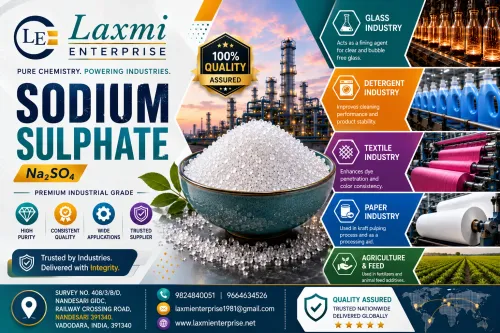
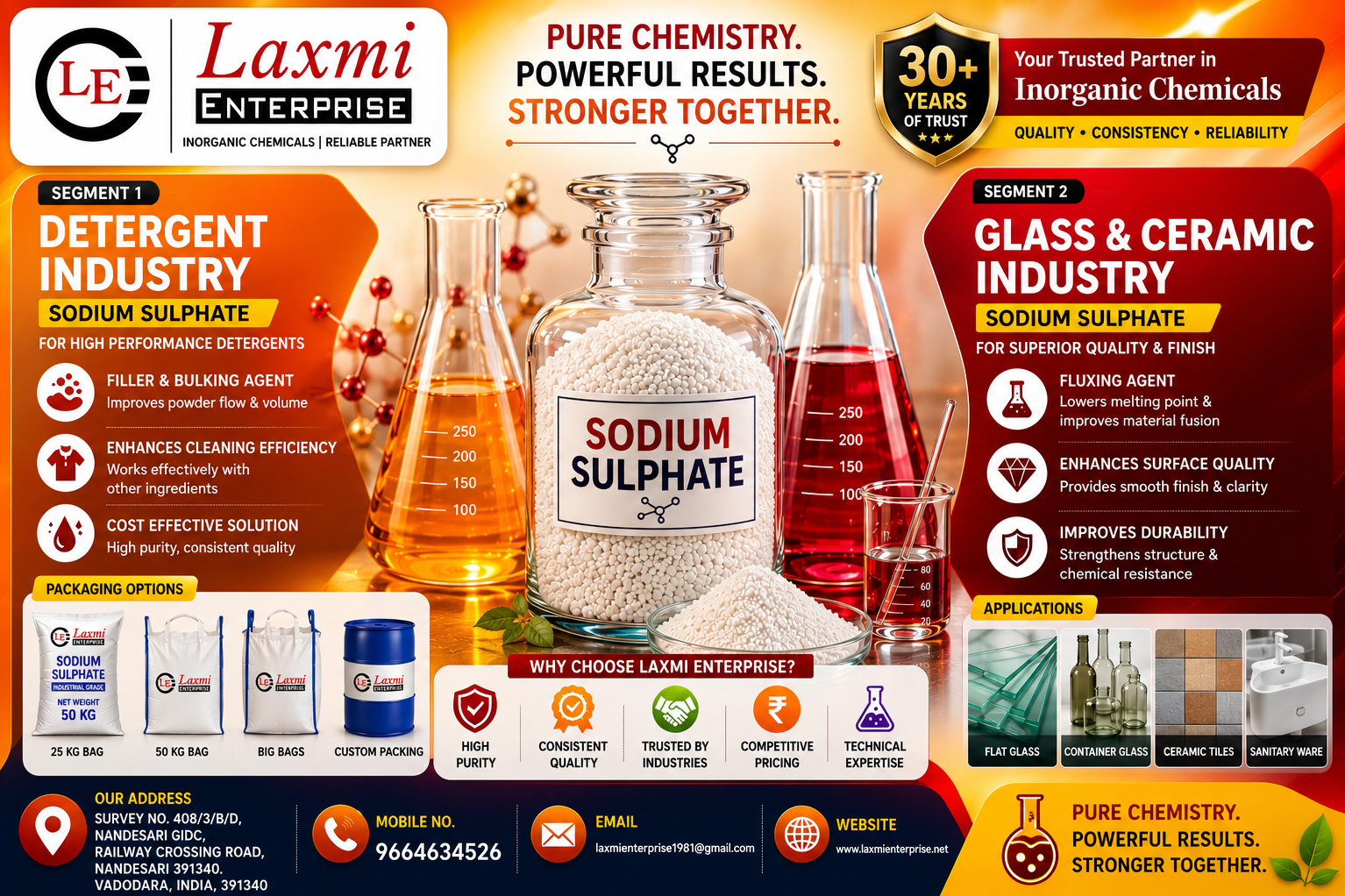
Operating from Nandesari GIDC, Vadodara, we supply Sodium Sulphate and other industrial chemicals to manufacturers across India.
Our focus extends beyond supplying products.
We work to maintain dependable inventory, organised dispatch planning, professional packaging and timely deliveries because we know these factors influence production efficiency inside our customers' factories.
Many of our customers operate continuous manufacturing processes where every delivery matters.
Our objective is to become a reliable part of their production planning through consistent quality, responsive communication and dependable service.
Final Thoughts
Reducing production downtime requires more than efficient machinery.
It requires dependable suppliers.
Professional warehouse management.
Effective inventory planning.
Clear communication.
Consistent raw material quality.
Each element contributes to uninterrupted manufacturing.
Companies that invest in strong supplier relationships often experience smoother operations, better production planning and higher customer satisfaction.
Choosing the right Sodium Sulphate supplier is therefore not only a procurement decision.
It is a strategic investment in manufacturing reliability.
Frequently Asked Questions
How can a reliable Sodium Sulphate supplier reduce production downtime?
Reliable suppliers support uninterrupted production through consistent quality, timely deliveries, organised inventory planning and professional communication.
What are the common supply-related causes of production downtime?
Late deliveries, inconsistent raw materials, poor communication, inadequate inventory planning and damaged packaging are among the most common causes.
Should manufacturers increase inventory to prevent downtime?
Maintaining appropriate inventory is important, but working with dependable suppliers often provides a more efficient long-term solution than simply increasing stock levels.
Why are long-term supplier relationships valuable?
Long-term suppliers understand customer production schedules, maintain consistent service and help manufacturers improve planning while reducing operational uncertainty.
Why do manufacturers across India choose Laxmi Enterprise?
Manufacturers choose Laxmi Enterprise because we understand that production continuity depends on reliable supply. Operating from Nandesari GIDC, Vadodara, we provide consistent-quality Sodium Sulphate, dependable deliveries, professional customer support and long-term supply partnerships that help industries manufacture with confidence.
About Laxmi Enterprise
Laxmi Enterprise is a trusted manufacturer, supplier and distributor of industrial chemicals located in Nandesari GIDC, Vadodara, Gujarat. We supply Sodium Sulphate, Sodium Nitrate, Sodium Acetate, Tri Sodium Phosphate and other industrial chemicals to manufacturers across detergent, glass, textile, paper, ceramic, construction, water treatment and chemical processing industries throughout India.
With decades of industry experience, we believe that reliable manufacturing begins with reliable supply. Through consistent product quality, dependable logistics, transparent communication and customer-focused service, we help manufacturers strengthen their operations and achieve sustainable long-term growth.