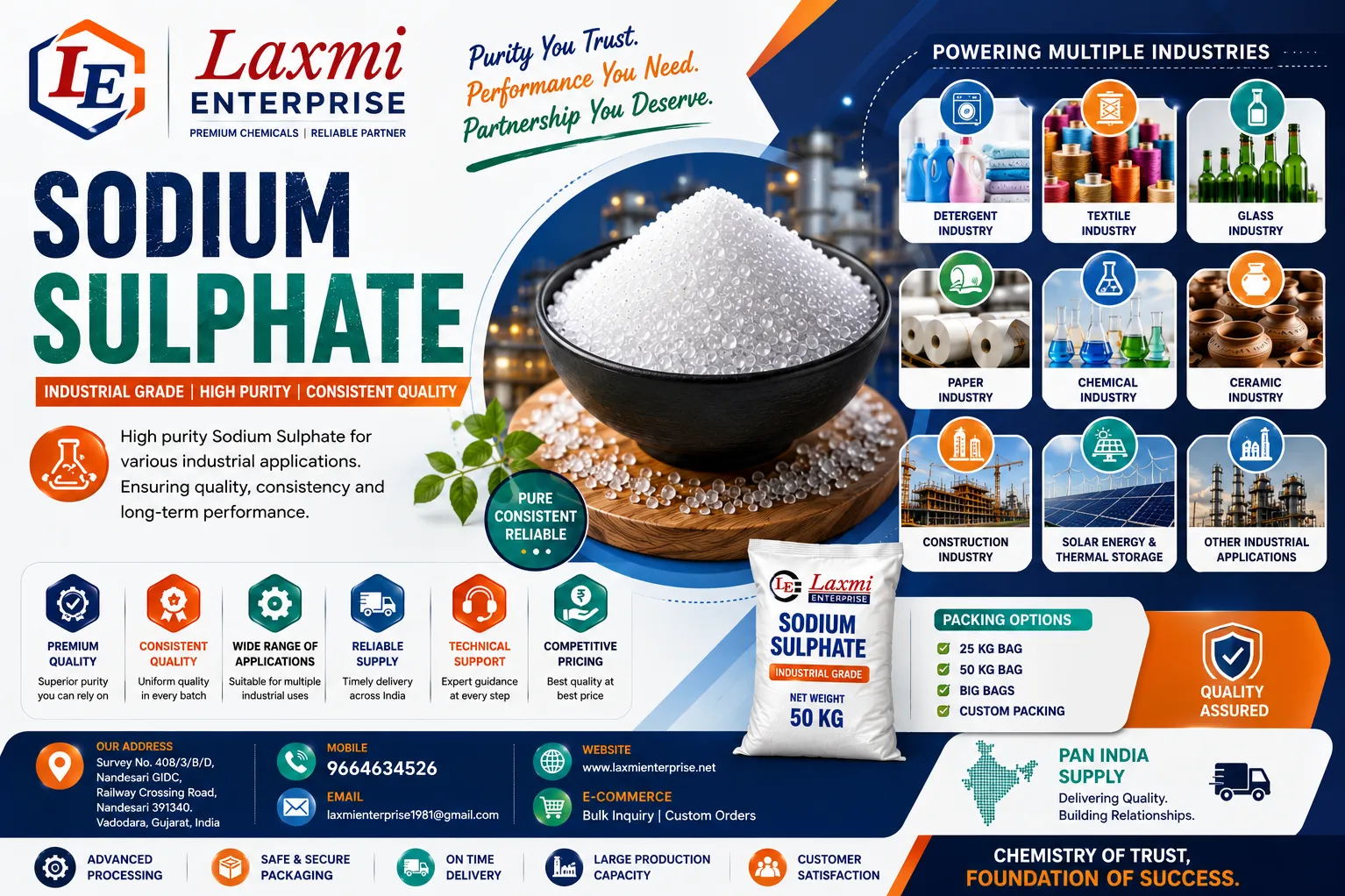
How to Store Sodium Sulphate During the Monsoon: Practical Tips for Indian Manufacturers
Every year, as the monsoon arrives, production teams across India prepare for a familiar set of challenges.
Humidity increases.
Warehouses become more difficult to manage.
Packaging materials require extra attention.
Raw materials need better protection.
For manufacturers using industrial chemicals, the rainy season is more than just a change in weather. It is a period that demands better planning, disciplined storage practices and closer coordination between procurement, warehouse and production teams.
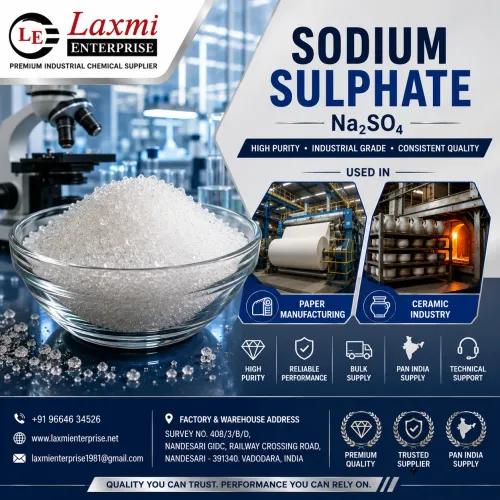
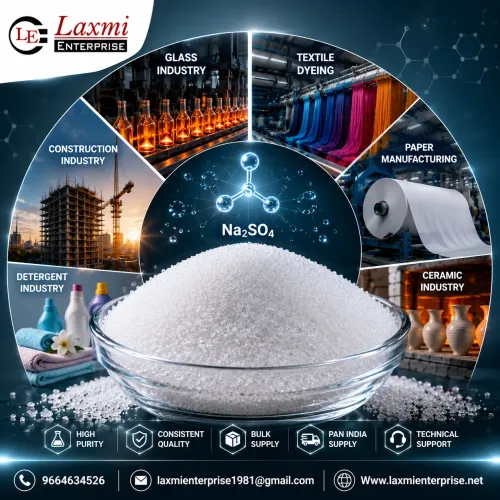
Sodium Sulphate is widely used in industries such as detergents, textiles, glass, paper and chemical processing. While it is a stable industrial chemical, improper storage can affect its handling characteristics and make routine operations more difficult.
Fortunately, most monsoon-related issues can be prevented through simple warehouse practices rather than expensive investments.
Preparation Begins Before the First Rain
One of the biggest mistakes manufacturers make is waiting until heavy rainfall begins before checking warehouse conditions.
By that stage, moisture has often already entered storage areas.
Experienced warehouse managers usually begin preparations well before the monsoon season.
Roof inspections are completed.
Drainage systems are cleaned.
Damaged pallets are replaced.
Warehouse ventilation is checked.
Packaging materials are reviewed.
Small preventive measures taken before the rainy season often prevent much larger problems later.
The Warehouse Is Part of the Production Process
Many people think manufacturing ends when raw materials are unloaded into the warehouse.
In reality, the warehouse is an important extension of the production system.
If materials are stored correctly, production receives consistent raw materials.
If storage conditions deteriorate, production teams may begin facing unnecessary handling challenges.
Good warehouse management supports good manufacturing.
The two should never be considered separately.
Keep Material Away from Direct Floor Contact
Concrete floors naturally absorb and release moisture depending on weather conditions.
Placing industrial chemical bags directly on the floor increases the possibility of moisture affecting the packaging over time.
Using pallets is one of the simplest and most effective storage practices.
A small gap between the floor and the bags improves air circulation and provides additional protection during periods of high humidity.
Many experienced warehouse supervisors consider pallet storage a basic requirement rather than an optional practice.
Maintain Proper Distance from Walls
Warehouse walls can also become sources of moisture during prolonged rainfall.
Bags stacked tightly against exterior walls may absorb dampness if water enters through small cracks or condensation develops.
Leaving adequate space between stored material and warehouse walls allows better air movement and simplifies routine inspection.
It also makes cleaning and inventory management easier.
Do Not Ignore Warehouse Ventilation
Humidity cannot always be eliminated, but it can often be managed.
Good ventilation reduces moisture accumulation inside storage areas.
Air circulation becomes particularly important during periods of continuous rainfall.
Warehouses should remain clean, organised and free from unnecessary obstructions that restrict airflow.
Simple ventilation improvements often produce noticeable benefits during the monsoon season.
Inspect Packaging Regularly
Warehouse teams sometimes assume that once material has been received, no further inspection is necessary until production requires it.
Regular visual inspections are worthwhile.
Damaged bags should be identified quickly.
Any signs of moisture should be investigated immediately.
Early detection usually prevents larger inventory losses.
Routine inspections also improve overall warehouse discipline.
Follow First-In, First-Out Inventory Practices
Inventory rotation is important throughout the year, but it becomes especially valuable during the monsoon.
Materials received earlier should normally be consumed before newly delivered stock.
This approach reduces unnecessary storage periods and helps maintain organised inventory.
Many manufacturers already follow this practice because it supports both quality management and inventory control.
The Importance of Receiving Material from Dependable Suppliers
Storage practices alone cannot solve every challenge.
Packaging quality also plays an important role.
Suppliers who use strong industrial packaging help protect products during transportation as well as warehouse storage.
Reliable suppliers also understand seasonal challenges and prepare dispatches accordingly.
When product quality, packaging and storage practices work together, manufacturers experience fewer operational issues during periods of high humidity.
Warehouse Discipline Is Everyone's Responsibility
Successful warehouses do not depend on one individual.
Storekeepers.
Warehouse supervisors.
Purchase departments.
Quality teams.
Production managers.
Each department contributes to protecting raw materials until they enter production.
Simple habits such as keeping storage areas clean, reporting damaged packaging quickly and maintaining organised inventory create a culture of responsibility throughout the factory.
Good warehouse management is built through consistent daily practices rather than occasional inspections.
Planning Ahead Reduces Stress
Manufacturers who prepare early usually experience fewer problems during the rainy season.
Purchase departments review inventory levels.
Suppliers are informed about expected requirements.
Warehouse maintenance is completed.
Production teams understand handling procedures.
When preparation is completed before the monsoon begins, operations continue with much greater confidence.
Planning always costs less than responding to emergencies.
How Laxmi Enterprise Supports Customers Throughout the Year
At Laxmi Enterprise, we understand that supplying industrial chemicals involves much more than dispatching products.
Our customers expect material to reach their factories in good condition regardless of the season.
Operating from Nandesari GIDC, Vadodara, we supply Sodium Sulphate and other industrial chemicals to manufacturers across India.
We recognise the challenges that different weather conditions create and work to ensure that our products are packed, handled and dispatched with the care expected by industrial customers.
Our objective is to help manufacturers receive dependable products that support uninterrupted production throughout the year.
Final Thoughts
The monsoon season presents challenges for every manufacturing business.
Fortunately, most storage-related problems can be prevented through preparation, discipline and good warehouse management.
Keeping materials dry.
Using pallets.
Maintaining ventilation.
Inspecting packaging.
Rotating inventory.
Working with dependable suppliers.
These practices require attention rather than major investment.
For manufacturers, protecting raw materials is ultimately about protecting production, product quality and customer confidence.
Frequently Asked Questions
How should Sodium Sulphate be stored during the monsoon?
It should be stored in a clean, dry and well-ventilated warehouse, protected from moisture and kept on pallets instead of directly on the floor.
Why should industrial chemicals not be placed directly on concrete floors?
Concrete floors can transfer moisture to packaging, especially during periods of high humidity. Pallets provide additional protection and improve air circulation.
Does warehouse ventilation make a difference?
Yes. Good ventilation helps reduce moisture accumulation and supports better storage conditions throughout the rainy season.
Why is inventory rotation important during the monsoon?
Using older stock first reduces long storage periods and helps maintain organised inventory while lowering the risk of storage-related issues.
Why do manufacturers choose Laxmi Enterprise?
Manufacturers across India choose Laxmi Enterprise because of our commitment to consistent quality, dependable deliveries, professional packaging and reliable customer support. From our operations in Nandesari GIDC, Vadodara, we supply industrial chemicals that help customers maintain efficient manufacturing throughout the year.
About Laxmi Enterprise
Laxmi Enterprise is a trusted manufacturer, supplier and distributor of industrial chemicals based in Nandesari GIDC, Vadodara, Gujarat. We supply Sodium Sulphate, Sodium Nitrate, Sodium Acetate, Tri Sodium Phosphate and other industrial chemicals to manufacturers across detergent, textile, glass, paper, ceramic, construction, water treatment and chemical processing industries throughout India.
We believe that dependable products, consistent service and long-term customer relationships are the foundation of successful manufacturing partnerships.
Every year, as the monsoon arrives, production teams across India prepare for a familiar set of challenges.
Humidity increases.
Warehouses become more difficult to manage.
Packaging materials require extra attention.
Raw materials need better protection.
For manufacturers using industrial chemicals, the rainy season is more than just a change in weather. It is a period that demands better planning, disciplined storage practices and closer coordination between procurement, warehouse and production teams.
Sodium Sulphate is widely used in industries such as detergents, textiles, glass, paper and chemical processing. While it is a stable industrial chemical, improper storage can affect its handling characteristics and make routine operations more difficult.
Fortunately, most monsoon-related issues can be prevented through simple warehouse practices rather than expensive investments.
Preparation Begins Before the First Rain
One of the biggest mistakes manufacturers make is waiting until heavy rainfall begins before checking warehouse conditions.
By that stage, moisture has often already entered storage areas.
Experienced warehouse managers usually begin preparations well before the monsoon season.
Roof inspections are completed.
Drainage systems are cleaned.
Damaged pallets are replaced.
Warehouse ventilation is checked.
Packaging materials are reviewed.
Small preventive measures taken before the rainy season often prevent much larger problems later.
The Warehouse Is Part of the Production Process
Many people think manufacturing ends when raw materials are unloaded into the warehouse.
In reality, the warehouse is an important extension of the production system.
If materials are stored correctly, production receives consistent raw materials.
If storage conditions deteriorate, production teams may begin facing unnecessary handling challenges.
Good warehouse management supports good manufacturing.
The two should never be considered separately.
Keep Material Away from Direct Floor Contact
Concrete floors naturally absorb and release moisture depending on weather conditions.
Placing industrial chemical bags directly on the floor increases the possibility of moisture affecting the packaging over time.
Using pallets is one of the simplest and most effective storage practices.
A small gap between the floor and the bags improves air circulation and provides additional protection during periods of high humidity.
Many experienced warehouse supervisors consider pallet storage a basic requirement rather than an optional practice.
Maintain Proper Distance from Walls
Warehouse walls can also become sources of moisture during prolonged rainfall.
Bags stacked tightly against exterior walls may absorb dampness if water enters through small cracks or condensation develops.
Leaving adequate space between stored material and warehouse walls allows better air movement and simplifies routine inspection.
It also makes cleaning and inventory management easier.
Do Not Ignore Warehouse Ventilation
Humidity cannot always be eliminated, but it can often be managed.
Good ventilation reduces moisture accumulation inside storage areas.
Air circulation becomes particularly important during periods of continuous rainfall.
Warehouses should remain clean, organised and free from unnecessary obstructions that restrict airflow.
Simple ventilation improvements often produce noticeable benefits during the monsoon season.
Inspect Packaging Regularly
Warehouse teams sometimes assume that once material has been received, no further inspection is necessary until production requires it.
Regular visual inspections are worthwhile.
Damaged bags should be identified quickly.
Any signs of moisture should be investigated immediately.
Early detection usually prevents larger inventory losses.
Routine inspections also improve overall warehouse discipline.
Follow First-In, First-Out Inventory Practices
Inventory rotation is important throughout the year, but it becomes especially valuable during the monsoon.
Materials received earlier should normally be consumed before newly delivered stock.
This approach reduces unnecessary storage periods and helps maintain organised inventory.
Many manufacturers already follow this practice because it supports both quality management and inventory control.
The Importance of Receiving Material from Dependable Suppliers
Storage practices alone cannot solve every challenge.
Packaging quality also plays an important role.
Suppliers who use strong industrial packaging help protect products during transportation as well as warehouse storage.
Reliable suppliers also understand seasonal challenges and prepare dispatches accordingly.
When product quality, packaging and storage practices work together, manufacturers experience fewer operational issues during periods of high humidity.
Warehouse Discipline Is Everyone's Responsibility
Successful warehouses do not depend on one individual.
Storekeepers.
Warehouse supervisors.
Purchase departments.
Quality teams.
Production managers.
Each department contributes to protecting raw materials until they enter production.
Simple habits such as keeping storage areas clean, reporting damaged packaging quickly and maintaining organised inventory create a culture of responsibility throughout the factory.
Good warehouse management is built through consistent daily practices rather than occasional inspections.
Planning Ahead Reduces Stress
Manufacturers who prepare early usually experience fewer problems during the rainy season.
Purchase departments review inventory levels.
Suppliers are informed about expected requirements.
Warehouse maintenance is completed.
Production teams understand handling procedures.
When preparation is completed before the monsoon begins, operations continue with much greater confidence.
Planning always costs less than responding to emergencies.
How Laxmi Enterprise Supports Customers Throughout the Year
At Laxmi Enterprise, we understand that supplying industrial chemicals involves much more than dispatching products.
Our customers expect material to reach their factories in good condition regardless of the season.
Operating from Nandesari GIDC, Vadodara, we supply Sodium Sulphate and other industrial chemicals to manufacturers across India.
We recognise the challenges that different weather conditions create and work to ensure that our products are packed, handled and dispatched with the care expected by industrial customers.
Our objective is to help manufacturers receive dependable products that support uninterrupted production throughout the year.
Final Thoughts
The monsoon season presents challenges for every manufacturing business.
Fortunately, most storage-related problems can be prevented through preparation, discipline and good warehouse management.
Keeping materials dry.
Using pallets.
Maintaining ventilation.
Inspecting packaging.
Rotating inventory.
Working with dependable suppliers.
These practices require attention rather than major investment.
For manufacturers, protecting raw materials is ultimately about protecting production, product quality and customer confidence.
Frequently Asked Questions
How should Sodium Sulphate be stored during the monsoon?
It should be stored in a clean, dry and well-ventilated warehouse, protected from moisture and kept on pallets instead of directly on the floor.
Why should industrial chemicals not be placed directly on concrete floors?
Concrete floors can transfer moisture to packaging, especially during periods of high humidity. Pallets provide additional protection and improve air circulation.
Does warehouse ventilation make a difference?
Yes. Good ventilation helps reduce moisture accumulation and supports better storage conditions throughout the rainy season.
Why is inventory rotation important during the monsoon?
Using older stock first reduces long storage periods and helps maintain organised inventory while lowering the risk of storage-related issues.
Why do manufacturers choose Laxmi Enterprise?
Manufacturers across India choose Laxmi Enterprise because of our commitment to consistent quality, dependable deliveries, professional packaging and reliable customer support. From our operations in Nandesari GIDC, Vadodara, we supply industrial chemicals that help customers maintain efficient manufacturing throughout the year.
About Laxmi Enterprise
Laxmi Enterprise is a trusted manufacturer, supplier and distributor of industrial chemicals based in Nandesari GIDC, Vadodara, Gujarat. We supply Sodium Sulphate, Sodium Nitrate, Sodium Acetate, Tri Sodium Phosphate and other industrial chemicals to manufacturers across detergent, textile, glass, paper, ceramic, construction, water treatment and chemical processing industries throughout India.
We believe that dependable products, consistent service and long-term customer relationships are the foundation of successful manufacturing partnerships.
Keywords