Industrial Grade vs High Purity Sodium Nitrate How to Select the Right Grade for Your Manufacturing Process
Introduction
One of the most common questions asked by industrial buyers is not about price.
It is about quality.
Production managers, purchase executives and quality control teams frequently ask whether they should purchase industrial grade Sodium Nitrate, high purity Sodium Nitrate or another specification.
The answer depends on the manufacturing process.
Different industries have different technical requirements.
A glass manufacturer may prioritize one set of characteristics, while a laboratory, specialty chemical producer or heat treatment facility may evaluate completely different properties.
Choosing a product that matches the application helps improve production consistency, reduce unnecessary costs and strengthen long term manufacturing performance.
Understanding these differences allows buyers to make better procurement decisions.
What Does Industrial Grade Mean
Industrial grade Sodium Nitrate is manufactured for commercial and industrial applications where the product is used as a process chemical or manufacturing raw material.
The exact specification varies depending on the intended use and the supplier's manufacturing process.
Industrial buyers typically evaluate:
Product consistency
Purity
Moisture level
Particle size
Packaging quality
Batch to batch uniformity
Availability
Reliable industrial grade material supports stable manufacturing without requiring unnecessary premium specifications.
What Is High Purity Sodium Nitrate
High purity Sodium Nitrate generally contains lower levels of impurities than standard industrial grades.
Some industries require tighter quality specifications because even very small variations may influence production results.
Examples include certain laboratory applications, analytical work or specialized manufacturing processes where purity requirements are defined by the customer's own quality standards.
Rather than assuming the highest purity is always the best choice, buyers should purchase the specification appropriate for their application.
Why Selecting the Correct Grade Matters
Buying a specification that exceeds production requirements may unnecessarily increase procurement costs.
Purchasing a grade that does not meet process requirements may create production challenges.
The objective is to select the specification that delivers reliable manufacturing performance while remaining commercially practical.
Experienced procurement teams therefore work closely with production departments before approving product specifications.
Important Quality Parameters Buyers Should Evaluate
Quality should never be judged by appearance alone.
Professional buyers typically evaluate several characteristics before approving a supplier.
Product Purity
Purity helps determine whether the material is suitable for the intended manufacturing process.
Consistent purity also supports repeatable production.
Physical Appearance
Industrial Sodium Nitrate is generally supplied as a white crystalline material.
Uniform appearance often reflects consistent manufacturing and proper storage practices.
Particle Size
Particle size influences blending, handling, storage and automated feeding systems.
Uniform particle distribution generally supports smoother production.
Moisture Condition
Proper moisture control helps maintain free flowing material during storage and handling.
Well maintained storage conditions reduce the possibility of caking.
Packaging Quality
Strong industrial packaging protects the product during transportation and warehouse storage.
Good packaging also improves inventory management.
Questions Procurement Teams Should Ask Suppliers
Before placing a purchase order, buyers should consider asking:
Is the supplied grade suitable for my application?
Can the supplier maintain consistent specifications?
Is batch consistency monitored?
What packaging options are available?
Can regular monthly deliveries be supported?
Is inventory maintained for repeat orders?
Can documentation be supplied according to company requirements?
Professional suppliers welcome these discussions because they help customers purchase the correct product.
Choosing a Grade Based on Application
Different manufacturing sectors may evaluate Sodium Nitrate differently.
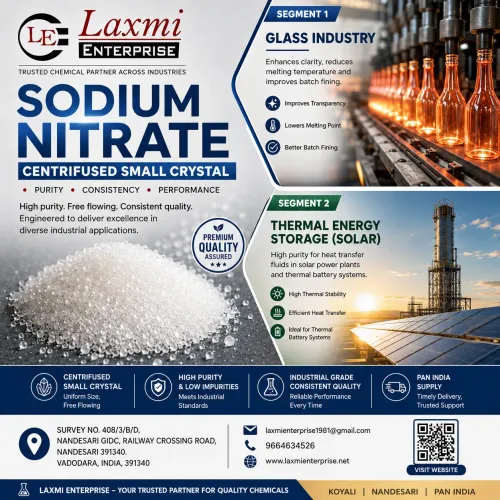
Glass manufacturers often focus on consistent batch performance and dependable supply.
Chemical manufacturers may prioritize predictable product quality and reliable documentation.
Heat treatment facilities generally require stable product characteristics for repeatable production.
Research organizations may require tighter quality specifications depending on the nature of their work.
The correct grade therefore depends on the customer's manufacturing process rather than a universal standard.
Procurement Mistakes to Avoid
One common mistake is purchasing a higher specification simply because it sounds better.
Another is purchasing solely on price without confirming suitability.
Successful buyers first understand the production requirement.
They then select a supplier capable of delivering that specification consistently.
This approach improves production reliability while controlling procurement costs.
Storage After Delivery
Once Sodium Nitrate arrives at the manufacturing facility, proper storage helps maintain product quality.
Store the product in a dry warehouse.
Keep bags properly sealed.
Avoid unnecessary moisture exposure.
Use stock rotation procedures.
Maintain clean storage conditions.
Good warehouse practices help preserve product quality throughout the storage period.
How Laxmi Enterprise Supports Industrial Buyers
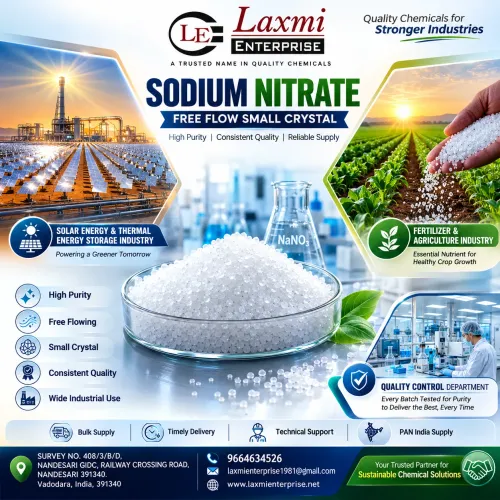
Laxmi Enterprise supplies Sodium Nitrate to industrial customers across India from Nandesari GIDC, Vadodara.
We understand that every customer has different manufacturing requirements.
Our approach focuses on understanding the application before recommending suitable supply arrangements.
Customers rely on us for consistent product quality, dependable logistics, organized documentation and responsive commercial support.
Our objective is to become a reliable long term supply partner rather than simply a product vendor.
Final Thoughts
Selecting the correct Sodium Nitrate grade begins with understanding the manufacturing process.
The best purchasing decision is not always the lowest price or the highest specification.
It is the specification that consistently supports production requirements.
Companies that evaluate product quality, supplier capability and application suitability together often achieve better manufacturing performance and stronger long term procurement outcomes.
Frequently Asked Questions About Sodium Nitrate Grades
What is industrial grade Sodium Nitrate
Industrial grade Sodium Nitrate is intended for manufacturing and industrial process applications where consistent quality and reliable supply are required.
Is industrial grade suitable for every application
No. The appropriate grade depends on the customer's manufacturing process and technical requirements.
Does higher purity always mean better performance
Not necessarily. The most suitable specification depends on the application. Purchasing a higher specification than required may increase costs without providing additional production benefits.
How do buyers determine the correct grade
Buyers should review their production requirements, internal quality standards and discuss specifications with their supplier.
Why is batch consistency important
Batch consistency helps manufacturers maintain repeatable production and reduces unnecessary process adjustments.
Does particle size matter
Yes. Particle size can influence handling, blending, storage and automated feeding systems.
Why is moisture control important
Proper moisture control helps maintain free flowing material and improves storage performance.
Can suppliers provide different packaging options
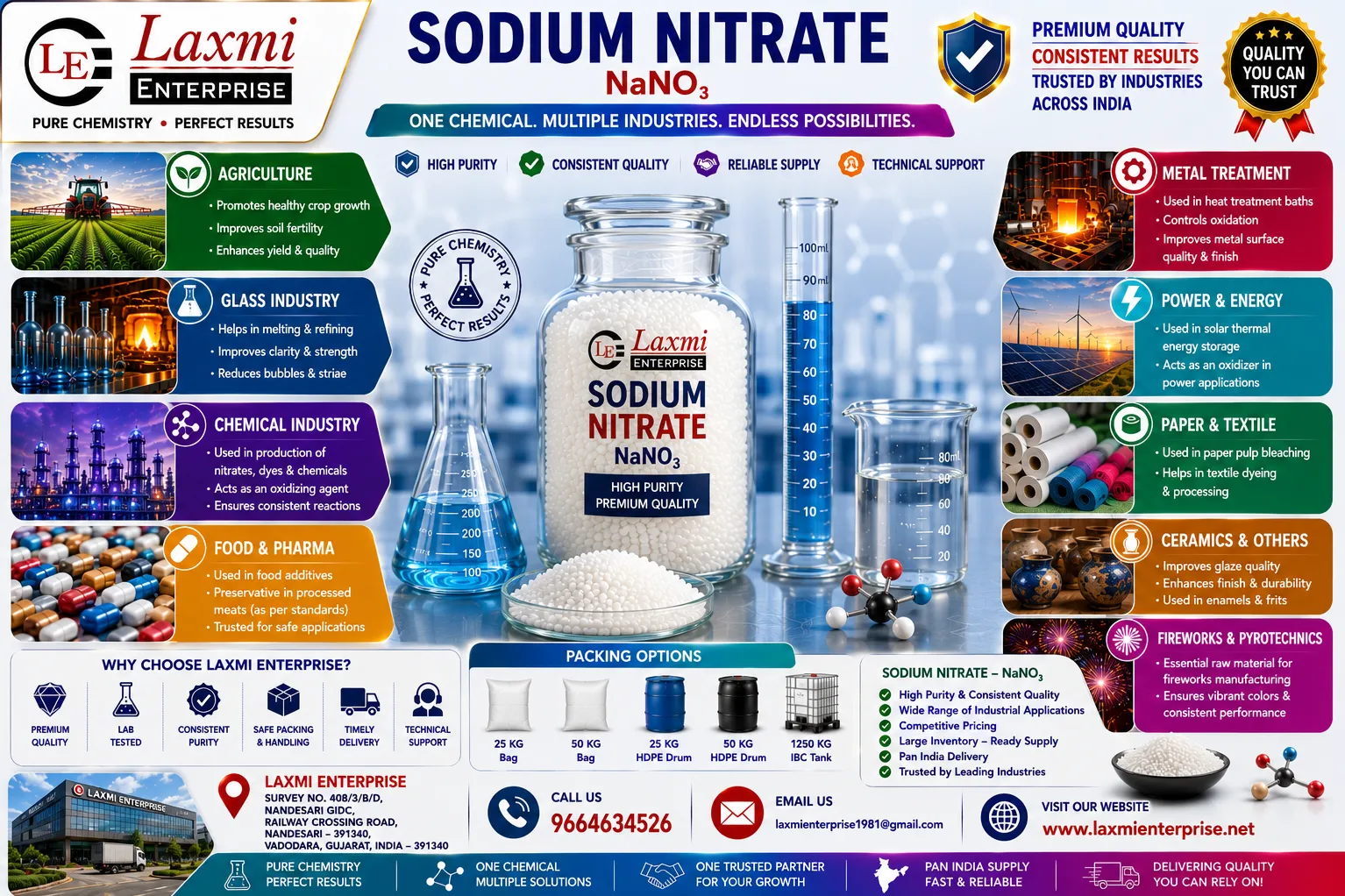
Yes. Packaging may include twenty five kilogram bags, fifty kilogram bags, jumbo bags and bulk industrial supply depending on customer requirements.
What should be included when requesting a quotation
Product grade, required quantity, packaging preference, delivery location, intended application and expected delivery schedule.
Can industrial buyers establish long term supply agreements
Yes. Many manufacturers use planned procurement arrangements to support continuous production.
How can buyers compare suppliers
Evaluate quality consistency, delivery reliability, documentation, inventory availability, technical understanding and customer service rather than price alone.
Does Laxmi Enterprise help customers select the right grade
Yes. We work with customers to understand their application and recommend suitable commercial supply arrangements based on their production requirements.
Expert Procurement Insight
A common observation across industrial procurement is that many production issues attributed to machinery or operators are eventually traced back to inconsistent raw materials. Establishing clear product specifications and working with a supplier that consistently meets them can reduce unnecessary troubleshooting and improve manufacturing stability over time.
About Laxmi Enterprise
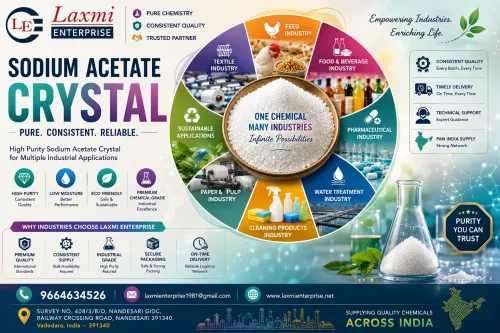
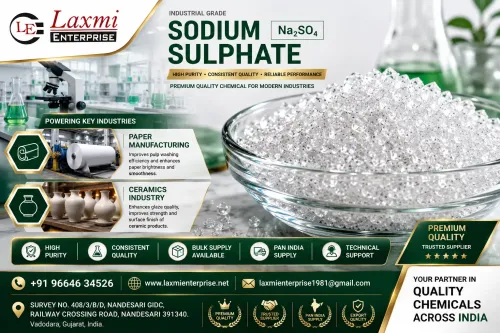
Laxmi Enterprise is a manufacturer, supplier and distributor of industrial chemicals based in Nandesari GIDC, Vadodara, Gujarat. We supply Sodium Nitrate, Sodium Sulphate, Sodium Acetate, Tri Sodium Phosphate and other industrial chemicals to manufacturers across India.
We focus on consistent product quality, dependable logistics, responsive customer support and long-term business relationships that help industrial customers maintain reliable production and efficient procurement.
Introduction
One of the most common questions asked by industrial buyers is not about price.
It is about quality.
Production managers, purchase executives and quality control teams frequently ask whether they should purchase industrial grade Sodium Nitrate, high purity Sodium Nitrate or another specification.
The answer depends on the manufacturing process.
Different industries have different technical requirements.
A glass manufacturer may prioritize one set of characteristics, while a laboratory, specialty chemical producer or heat treatment facility may evaluate completely different properties.
Choosing a product that matches the application helps improve production consistency, reduce unnecessary costs and strengthen long term manufacturing performance.
Understanding these differences allows buyers to make better procurement decisions.
What Does Industrial Grade Mean
Industrial grade Sodium Nitrate is manufactured for commercial and industrial applications where the product is used as a process chemical or manufacturing raw material.
The exact specification varies depending on the intended use and the supplier's manufacturing process.
Industrial buyers typically evaluate:
Product consistency
Purity
Moisture level
Particle size
Packaging quality
Batch to batch uniformity
Availability
Reliable industrial grade material supports stable manufacturing without requiring unnecessary premium specifications.
What Is High Purity Sodium Nitrate
High purity Sodium Nitrate generally contains lower levels of impurities than standard industrial grades.
Some industries require tighter quality specifications because even very small variations may influence production results.
Examples include certain laboratory applications, analytical work or specialized manufacturing processes where purity requirements are defined by the customer's own quality standards.
Rather than assuming the highest purity is always the best choice, buyers should purchase the specification appropriate for their application.
Why Selecting the Correct Grade Matters
Buying a specification that exceeds production requirements may unnecessarily increase procurement costs.
Purchasing a grade that does not meet process requirements may create production challenges.
The objective is to select the specification that delivers reliable manufacturing performance while remaining commercially practical.
Experienced procurement teams therefore work closely with production departments before approving product specifications.
Important Quality Parameters Buyers Should Evaluate
Quality should never be judged by appearance alone.
Professional buyers typically evaluate several characteristics before approving a supplier.
Product Purity
Purity helps determine whether the material is suitable for the intended manufacturing process.
Consistent purity also supports repeatable production.
Physical Appearance
Industrial Sodium Nitrate is generally supplied as a white crystalline material.
Uniform appearance often reflects consistent manufacturing and proper storage practices.
Particle Size
Particle size influences blending, handling, storage and automated feeding systems.
Uniform particle distribution generally supports smoother production.
Moisture Condition
Proper moisture control helps maintain free flowing material during storage and handling.
Well maintained storage conditions reduce the possibility of caking.
Packaging Quality
Strong industrial packaging protects the product during transportation and warehouse storage.
Good packaging also improves inventory management.
Questions Procurement Teams Should Ask Suppliers
Before placing a purchase order, buyers should consider asking:
Is the supplied grade suitable for my application?
Can the supplier maintain consistent specifications?
Is batch consistency monitored?
What packaging options are available?
Can regular monthly deliveries be supported?
Is inventory maintained for repeat orders?
Can documentation be supplied according to company requirements?
Professional suppliers welcome these discussions because they help customers purchase the correct product.
Choosing a Grade Based on Application
Different manufacturing sectors may evaluate Sodium Nitrate differently.
Glass manufacturers often focus on consistent batch performance and dependable supply.
Chemical manufacturers may prioritize predictable product quality and reliable documentation.
Heat treatment facilities generally require stable product characteristics for repeatable production.
Research organizations may require tighter quality specifications depending on the nature of their work.
The correct grade therefore depends on the customer's manufacturing process rather than a universal standard.
Procurement Mistakes to Avoid
One common mistake is purchasing a higher specification simply because it sounds better.
Another is purchasing solely on price without confirming suitability.
Successful buyers first understand the production requirement.
They then select a supplier capable of delivering that specification consistently.
This approach improves production reliability while controlling procurement costs.
Storage After Delivery
Once Sodium Nitrate arrives at the manufacturing facility, proper storage helps maintain product quality.
Store the product in a dry warehouse.
Keep bags properly sealed.
Avoid unnecessary moisture exposure.
Use stock rotation procedures.
Maintain clean storage conditions.
Good warehouse practices help preserve product quality throughout the storage period.
How Laxmi Enterprise Supports Industrial Buyers
Laxmi Enterprise supplies Sodium Nitrate to industrial customers across India from Nandesari GIDC, Vadodara.
We understand that every customer has different manufacturing requirements.
Our approach focuses on understanding the application before recommending suitable supply arrangements.
Customers rely on us for consistent product quality, dependable logistics, organized documentation and responsive commercial support.
Our objective is to become a reliable long term supply partner rather than simply a product vendor.
Final Thoughts
Selecting the correct Sodium Nitrate grade begins with understanding the manufacturing process.
The best purchasing decision is not always the lowest price or the highest specification.
It is the specification that consistently supports production requirements.
Companies that evaluate product quality, supplier capability and application suitability together often achieve better manufacturing performance and stronger long term procurement outcomes.
Frequently Asked Questions About Sodium Nitrate Grades
What is industrial grade Sodium Nitrate
Industrial grade Sodium Nitrate is intended for manufacturing and industrial process applications where consistent quality and reliable supply are required.
Is industrial grade suitable for every application
No. The appropriate grade depends on the customer's manufacturing process and technical requirements.
Does higher purity always mean better performance
Not necessarily. The most suitable specification depends on the application. Purchasing a higher specification than required may increase costs without providing additional production benefits.
How do buyers determine the correct grade
Buyers should review their production requirements, internal quality standards and discuss specifications with their supplier.
Why is batch consistency important
Batch consistency helps manufacturers maintain repeatable production and reduces unnecessary process adjustments.
Does particle size matter
Yes. Particle size can influence handling, blending, storage and automated feeding systems.
Why is moisture control important
Proper moisture control helps maintain free flowing material and improves storage performance.
Can suppliers provide different packaging options
Yes. Packaging may include twenty five kilogram bags, fifty kilogram bags, jumbo bags and bulk industrial supply depending on customer requirements.
What should be included when requesting a quotation
Product grade, required quantity, packaging preference, delivery location, intended application and expected delivery schedule.
Can industrial buyers establish long term supply agreements
Yes. Many manufacturers use planned procurement arrangements to support continuous production.
How can buyers compare suppliers
Evaluate quality consistency, delivery reliability, documentation, inventory availability, technical understanding and customer service rather than price alone.
Does Laxmi Enterprise help customers select the right grade
Yes. We work with customers to understand their application and recommend suitable commercial supply arrangements based on their production requirements.
Expert Procurement Insight
A common observation across industrial procurement is that many production issues attributed to machinery or operators are eventually traced back to inconsistent raw materials. Establishing clear product specifications and working with a supplier that consistently meets them can reduce unnecessary troubleshooting and improve manufacturing stability over time.
About Laxmi Enterprise
Laxmi Enterprise is a manufacturer, supplier and distributor of industrial chemicals based in Nandesari GIDC, Vadodara, Gujarat. We supply Sodium Nitrate, Sodium Sulphate, Sodium Acetate, Tri Sodium Phosphate and other industrial chemicals to manufacturers across India.
We focus on consistent product quality, dependable logistics, responsive customer support and long-term business relationships that help industrial customers maintain reliable production and efficient procurement.
Keywords