

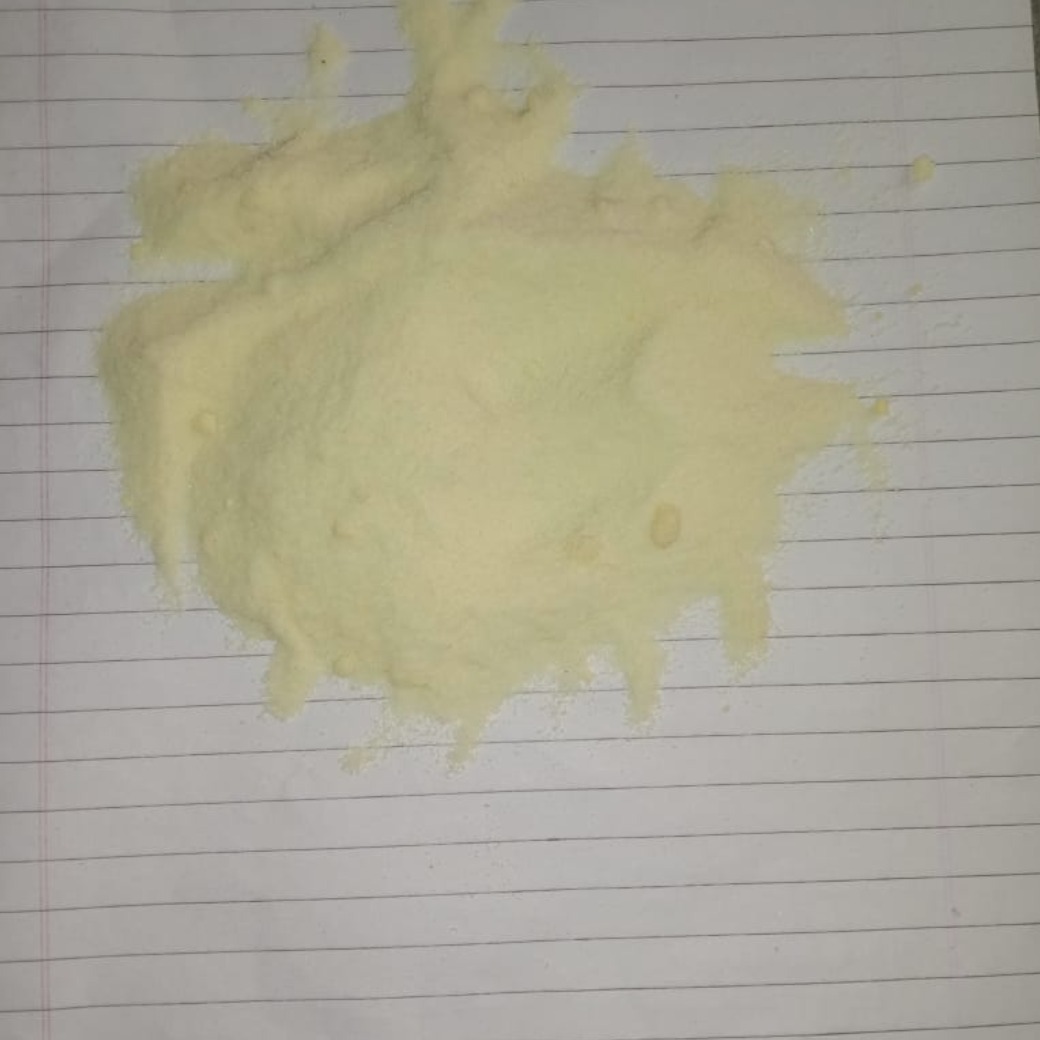
NITRATE-BASED FERTILIZERS FOR CROPS
. Overview
Nitrate-based fertilizers are among the most efficient and fast-acting nitrogen sources available to farmers. They supply plants with nitrate nitrogen (NO₃⁻) — a form that is directly absorbable by plant roots, promoting quick growth, high yields, and healthy crop development.
Unlike urea or ammonium fertilizers, nitrate fertilizers are immediately available and do not require conversion in soil, making them ideal for precision agriculture and time-sensitive crop stages.
Handling Precautions
Avoid contact with combustible or organic materials (paper, cloth, oil, sawdust, etc.).
Handle with clean, dry tools and equipment.
Do not eat, drink, or smoke while handling.
Avoid generating dust; use local exhaust ventilation.
Keep containers tightly closed after use to prevent moisture absorption (NaNO₃ is hygroscopic).
Spill or Leak Procedure
Evacuate unnecessary personnel.
Avoid raising dust; collect material using clean, dry, non-combustible tools.
Place in clean containers for reuse or disposal.
Wash spill area with plenty of water, avoiding runoff into drains or waterways.
Dispose of contaminated materials per local regulations (hazardous waste handling).
Regulatory Compliance
OSHA / GHS Classification: Oxidizing solid, Category 3
EPA (USA): Listed inorganic nitrate – may require spill reporting
EU Regulation (CLP): Ox. Sol. 3 (H272: May intensify fire; oxidizer)
Indian Standards: Follow Factories Act 1948 and CPCB Hazardous Waste Management Rules for storage and handling.
Summary – Best Storage Practices
Keep cool, dry, and away from combustibles
Ensure proper labeling and segregation
Maintain PPE and fire control readiness
Follow local safety and transport laws (UN1498, Class 5.1)
NITRATE → NITRITE SYSTEM IN CURED MEATS
. Overview
In meat curing, sodium nitrate (NaNO₃) and potassium nitrate (KNO₃) are used as curing agents that gradually release nitrite (NO₂⁻) over time.
This nitrate → nitrite conversion system ensures a controlled, long-term supply of nitrite, which is essential for:
Preventing Clostridium botulinum growth (food safety)
Developing characteristic cured color and flavor
Enhancing shelf life and product stability
. The Chemical Conversion Process
Step 1. Nitrate Reduction
Nitrate (NO₃⁻) is biologically reduced to nitrite (NO₂⁻) by nitrate-reducing bacteria naturally present or added to cured meat (e.g., Micrococcus, Staphylococcus carnosus).
This reduction occurs slowly during fermentation or aging, allowing gradual nitrite release in dry-cured meats (like salami, hams, and sausages).
Step 2. Nitrite to Nitric Oxide (NO)
Once nitrite is formed, it is chemically reduced (often by ascorbate or meat pigments) to nitric oxide (NO) — the key active species responsible for curing effects.
Step 3. Formation of Cured Pigment
Nitric oxide binds with myoglobin, the red pigment in meat, forming nitrosomyoglobin, which gives cured meat its stable pink-red color.
Reaction:
Myoglobin + NO → Nitrosomyoglobin
Myoglobin + NO → Nitrosomyoglobin
When the meat is cooked, this complex becomes nitrosylhemochrome, producing the typical cured color and aroma.
. Functional Roles in Curing
Function Role of Nitrate/Nitrite System
Antimicrobial Inhibits Clostridium botulinum and spoilage bacteria
Color Fixation Produces stable pink color via nitrosyl pigments
Flavor Development Contributes to the distinct “cured meat” taste
Antioxidant Effect Slows lipid oxidation, preventing rancidity
Shelf Life Extension Preserves freshness during storage and transport
. When Nitrate is Preferred
Used mainly in slow-cured, fermented, or dry-aged meats (e.g., Parma ham, dry sausage).
Provides a long-term nitrite source, ensuring continued protection during extended curing.
Not suitable for quick-cured products because conversion requires bacterial activity and time.
For rapid curing, sodium nitrite (NaNO₂) is added directly instead.
. Controlling Factors
Parameter Effect on Conversion
Temperature (10–25°C) Optimal range for bacterial nitrate reduction
pH (5.0–6.0) Lower pH favors nitrite and nitric oxide formation
Presence of Reducing Agents Ascorbate or erythorbate accelerates NO generation and stabilizes color
Salt Concentration Moderate salt improves microbial control and curing balance
Time & Microflora Longer ripening times and active microflora improve conversion efficiency
. Safety & Regulatory Considerations
Excess nitrite can form nitrosamines when exposed to high heat or acidic conditions.
To minimize risk:
Use ascorbic acid / sodium ascorbate as inhibitors.
Follow permitted limits (e.g., EU, USDA, or FSSAI standards).
Apply the lowest effective dose for color and safety.
Typical nitrate limits (as NaNO₃):
EU: ≤ 150 mg/kg in cured meats (varies by product type)
US: Up to 500 ppm in dry-cured meats (with bacterial conversion controls)
. Advantages of the Nitrate → Nitrite System
✅ Controlled nitrite release → safer long-term curing
✅ Enhanced microbial safety in aged meats
✅ Stable cured color and flavor
✅ Reduced need for repeated nitrite dosing
✅ Consistent product quality over extended ripening periods
. Summary
The nitrate → nitrite system is a cornerstone of traditional meat curing science.
By utilizing sodium or potassium nitrate with bacterial reducers and reducing agents, processors achieve:
Safe, stable, and flavorful cured meats
Extended shelf life
Compliance with food safety regulations
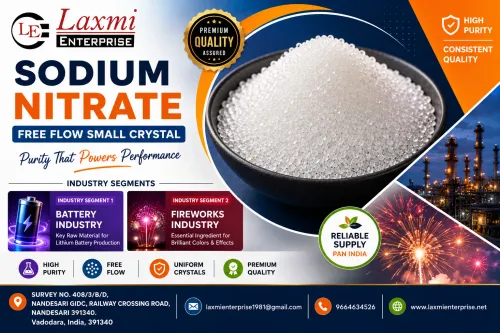
. Laxmi Enterprise – Food-Grade Sodium Nitrate
Purity: ≥99% (Food / Pharma Grade)
Applications: Meat curing, color stabilization, preservation
Packaging: 25 kg HDPE bags with inner liner
Compliance: FSSAI, BIS, and international food-grade standards
SODIUM NITRATE – STORAGE & SAFETY REGULATIONS
. Chemical Identity
Property Details
Chemical Name Sodium Nitrate
Chemical Formula NaNO₃
CAS Number 7631-99-4
UN Number 1498
Hazard Class (UN) 5.1 – Oxidizing Substance
Packing Group III (Moderate hazard)
Appearance White crystalline or granular solid
Solubility Highly soluble in water
Odor Odorless
NITRATE BASED IN LAXMI ENTERPRISE.VADODRA, GUJARAT, INDIA.