Safe Handling of Sodium Nitrate in Industrial Facilities: Material Handling, Occupational Safety, Risk Assessment, Emergency Response, and International Best Practices
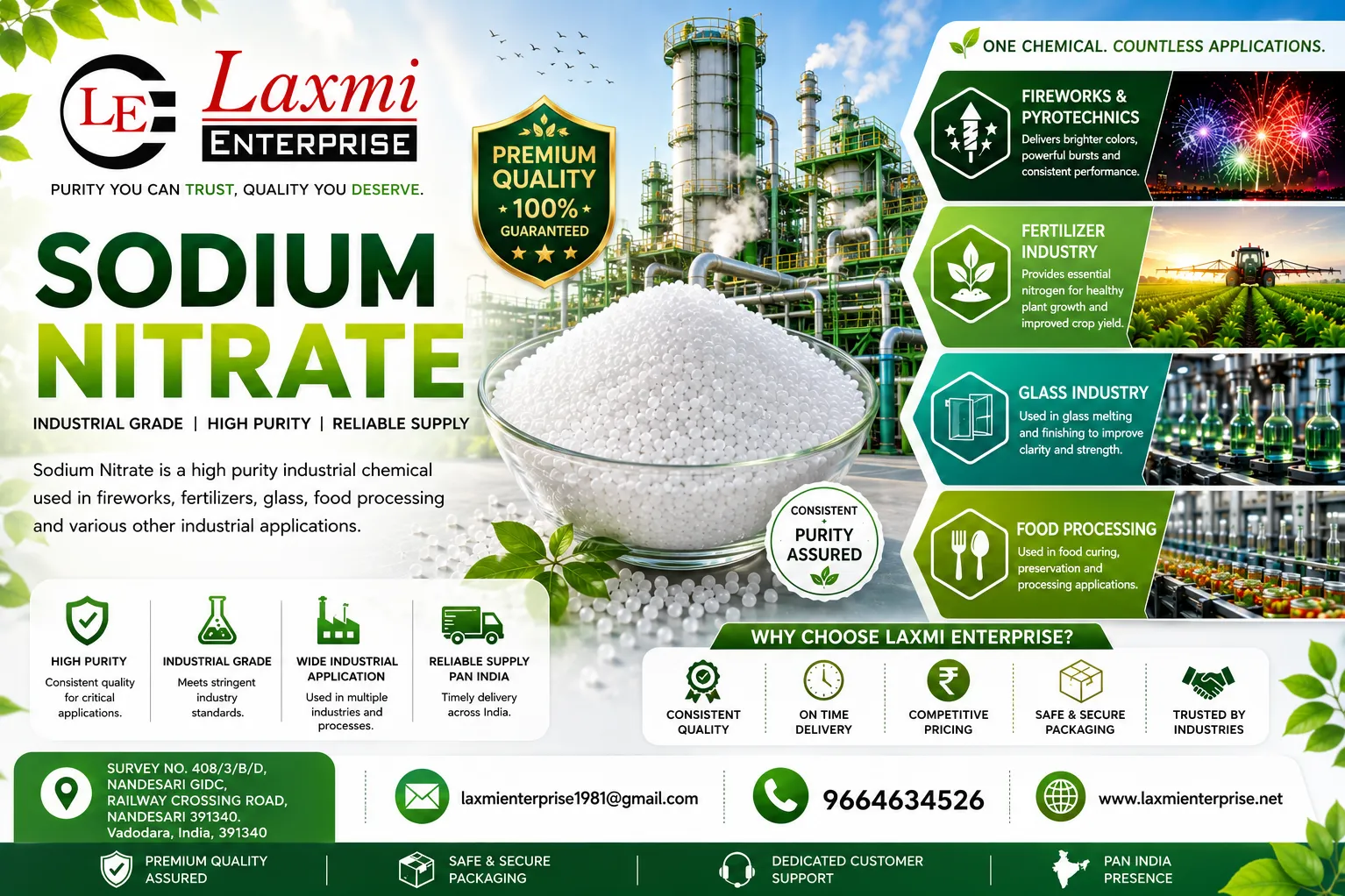
Industrial chemicals deliver their greatest value when they are handled correctly. Sodium nitrate is one of the most widely used inorganic nitrate compounds across industries including glass manufacturing, specialty chemicals, mining, metal heat treatment, metal finishing, laboratory chemicals, water treatment, and fertilizer production. Although sodium nitrate is chemically stable under recommended storage conditions, improper handling can create operational, quality, and safety challenges.
One of the most common misconceptions is that a chemically stable product is completely risk-free. In reality, industrial safety depends not only on the properties of the chemical but also on how it is transported, unloaded, stored, transferred, weighed, mixed, and used within a manufacturing facility.
A well-designed sodium nitrate handling system combines engineering controls, employee training, equipment maintenance, process discipline, and emergency preparedness. These elements reduce operational risks, protect product quality, improve workplace safety, and support uninterrupted production.
This guide provides a comprehensive overview of industrial sodium nitrate handling practices based on engineering principles, occupational safety concepts, and modern manufacturing standards.
Understanding Sodium Nitrate as an Industrial Chemical
Before establishing handling procedures, personnel should understand the basic characteristics of sodium nitrate.
Sodium nitrate is:
An inorganic nitrate salt
A strong oxidizing substance
Highly soluble in water
White crystalline material
Stable under recommended storage conditions
Compatible with numerous industrial processes
Because it is an oxidizer, sodium nitrate does not itself burn under normal conditions, but it can increase the intensity of combustion if involved in a fire with combustible materials. This property influences warehouse layout, segregation practices, and emergency planning.
Why Safe Handling Is Important
Proper handling protects:
Employees
Manufacturing equipment
Product quality
Warehouse operations
Production continuity
Customer confidence
Regulatory compliance
Effective handling procedures also reduce:
Material loss
Dust generation
Packaging damage
Product contamination
Equipment downtime
Cleanup costs
Building a Chemical Safety Culture
Safety is not achieved through personal protective equipment alone.
A strong industrial safety culture includes:
Leadership commitment
Written procedures
Employee competency
Routine inspections
Incident reporting
Preventive maintenance
Continuous improvement
Organizations with mature safety systems experience fewer incidents and more consistent production.
Hazard Identification Before Handling
Every facility should conduct a formal risk assessment before introducing sodium nitrate into a production process.
The assessment should consider:
Storage conditions
Material transfer methods
Dust generation
Nearby combustible materials
Mechanical handling equipment
Environmental conditions
Emergency response capability
Hazards should be identified, evaluated, and controlled before routine operations begin.
Receiving Incoming Shipments
Quality handling begins when material arrives at the facility.
Receiving personnel should inspect:
Packaging condition
Batch identification
Product labels
Quantity
Signs of moisture exposure
Physical damage
Shipping documentation
Any damaged or compromised packages should be isolated and evaluated according to the site's quality and safety procedures before use.
Manual Material Handling
Improper lifting practices contribute significantly to workplace injuries.
When manually handling sodium nitrate bags:
Use proper lifting techniques.
Avoid twisting while carrying loads.
Use mechanical aids where practical.
Keep pathways clear.
Store bags securely before opening.
Good ergonomics improve worker safety and productivity.
Mechanical Material Handling
Most industrial facilities use equipment such as:
Forklifts
Pallet trucks
Conveyors
Vacuum transfer systems
Bulk bag unloaders
Screw feeders
Equipment should be maintained according to the manufacturer's recommendations and inspected regularly to prevent damage to packaging and reduce the risk of spills.
Dust Control During Handling
Although sodium nitrate is commonly supplied as crystalline material, dust may be generated during activities such as:
Bag opening
Product transfer
Screening
Mixing
Weighing
Excessive dust can:
Reduce housekeeping standards
Increase material loss
Irritate the eyes or respiratory tract
Contaminate nearby work areas
Facilities often use engineering controls such as enclosed transfer systems and local exhaust ventilation to minimize airborne dust where appropriate.
Product Transfer Operations
Material transfer should be planned to minimize:
Product loss
Moisture exposure
Cross-contamination
Dust release
Best practices include:
Closed transfer systems where feasible
Clean transfer equipment
Clearly labeled containers
Dedicated handling tools for different chemicals
Prompt cleanup of spills using site-approved procedures
Preventing Cross-Contamination
Cross-contamination can affect both product quality and customer satisfaction.
Manufacturers commonly prevent contamination by:
Using dedicated equipment where required
Cleaning transfer equipment between products
Segregating raw materials
Clearly identifying storage locations
Maintaining documented cleaning procedures
This is especially important in facilities manufacturing multiple chemical products.
Personal Protective Equipment (PPE)
Personal Protective Equipment is one part of a broader safety system.
The appropriate PPE depends on the specific task and the facility's risk assessment.
Depending on the operation, organizations may require:
Safety glasses or chemical splash goggles
Protective gloves suitable for the task
Protective clothing
Safety footwear
Respiratory protection where airborne dust levels require it
Employers should select PPE based on applicable regulations, the Safety Data Sheet (SDS), and their workplace hazard assessment.
Safe Housekeeping Practices
Good housekeeping reduces operational risks.
Facilities should:
Remove spilled material promptly
Keep aisles unobstructed
Maintain clean equipment
Dispose of waste according to site procedures
Prevent accumulation of dust
A clean workplace supports both safety and product quality.
Spill Management
Every facility should establish written spill response procedures.
Typical response elements include:
Restrict access to the affected area
Avoid unnecessary dust generation
Recover uncontaminated material where appropriate and permitted by site procedures
Collect contaminated material for proper disposal according to local regulations
Clean the affected area before restarting operations
Personnel should receive training on the site's specific spill response procedures.
Fire Safety Considerations
Sodium nitrate is classified as an oxidizing substance.
Because oxidizers can intensify combustion, facilities should:
Store sodium nitrate separately from incompatible combustible materials where required
Maintain good housekeeping
Follow local fire protection regulations
Train employees in emergency response procedures
Fire response should always follow the guidance provided by the site's emergency plan and the applicable Safety Data Sheet.
Emergency Response Planning
Every industrial facility should maintain an emergency response program that includes:
Emergency contact procedures
Incident reporting
Evacuation routes
First-aid arrangements
Fire response coordination
Spill response procedures
Employee training
Regular drills improve preparedness and response efficiency.
Employee Training
Training is one of the most effective methods for preventing incidents.
Employees involved in sodium nitrate handling should understand:
Product characteristics
Safe handling procedures
Storage requirements
Emergency actions
Spill response
Housekeeping practices
PPE requirements
Reporting procedures
Refresher training should be provided periodically and whenever procedures change.
Safe Warehouse Practices
Warehouse operations should include:
Clearly identified storage locations
Segregation from incompatible materials
Moisture protection
Routine inspections
Inventory rotation
Secure stacking
Good ventilation
Well-managed warehouses reduce product deterioration and improve operational safety.
Risk Assessment and Continuous Improvement
Safety management should not be static.
Facilities should regularly review:
Incident reports
Near-miss events
Audit findings
Inspection results
Process modifications
Employee feedback
Corrective and preventive actions help strengthen long-term operational performance.
Safety Documentation
Typical documentation includes:
Standard Operating Procedures (SOPs)
Safety Data Sheets (SDS)
Risk assessments
Training records
Inspection reports
Incident investigations
Preventive maintenance records
Well-maintained documentation supports audits and regulatory compliance.
Automation and Safer Material Handling
Modern manufacturing increasingly uses automation to reduce manual handling.
Examples include:
Automated bag unloading
Enclosed conveying systems
Robotic palletizing
Automated weighing systems
Digital inventory tracking
Automation can improve consistency, reduce product loss, and lower employee exposure to repetitive manual tasks.
Environmental Considerations
Responsible facilities also consider environmental protection by:
Preventing unnecessary product releases
Managing waste appropriately
Maintaining clean loading areas
Controlling stormwater contamination
Following applicable environmental regulations
Environmental stewardship supports sustainable industrial operations.
Supplier and Customer Collaboration
Safe handling extends beyond the manufacturing plant.
Suppliers and customers should communicate regarding:
Packaging requirements
Transportation conditions
Storage recommendations
Product specifications
Handling precautions
Emergency contact information
Good communication helps maintain product quality throughout the supply chain.
Best Practices Checklist
Industrial facilities handling sodium nitrate should aim to:
Train all relevant personnel
Maintain written handling procedures
Inspect incoming shipments
Protect material from moisture
Minimize dust generation
Use appropriate engineering controls
Select suitable PPE based on risk assessment
Maintain good housekeeping
Conduct regular safety audits
Review and improve procedures continuously
Conclusion
Safe handling of sodium nitrate is achieved through a combination of engineering controls, employee training, effective housekeeping, proper storage, documented procedures, and ongoing risk assessment. Facilities that integrate these practices into their daily operations not only improve workplace safety but also protect product quality, reduce operational disruptions, and strengthen regulatory compliance. By treating safe handling as an integral part of manufacturing excellence rather than a standalone activity, organizations can achieve safer, more efficient, and more reliable industrial operations.
Frequently Asked Questions
Is sodium nitrate considered a hazardous chemical?
Sodium nitrate is an oxidizing chemical, and appropriate handling, storage, and emergency procedures should be followed in accordance with applicable regulations and the Safety Data Sheet.
Why is dust control important during handling?
Dust control improves housekeeping, reduces product loss, minimizes workplace contamination, and can reduce employee exposure during material handling operations.
What should be inspected when receiving sodium nitrate shipments?
Facilities should inspect packaging integrity, labeling, batch identification, quantity, documentation, and signs of moisture exposure or physical damage.
Does every operation require the same PPE?
No. PPE requirements depend on the specific task, workplace conditions, and the facility's risk assessment. Employers should follow applicable regulations and the Safety Data Sheet.
Why should sodium nitrate be segregated from incompatible materials?
Proper segregation reduces the likelihood of contamination and supports safe storage because sodium nitrate is an oxidizing substance.
What is the purpose of employee training?
Training helps employees understand safe handling procedures, emergency actions, housekeeping practices, and correct operating methods, reducing the likelihood of incidents.
How can automation improve safety?
Automation reduces manual handling, improves process consistency, minimizes product loss, and can lower employee exposure during repetitive or dust-generating operations.
Why are Standard Operating Procedures important?
SOPs provide consistent instructions for handling, storage, inspection, emergency response, and documentation, helping ensure safe and reliable operations.
Industrial chemicals deliver their greatest value when they are handled correctly. Sodium nitrate is one of the most widely used inorganic nitrate compounds across industries including glass manufacturing, specialty chemicals, mining, metal heat treatment, metal finishing, laboratory chemicals, water treatment, and fertilizer production. Although sodium nitrate is chemically stable under recommended storage conditions, improper handling can create operational, quality, and safety challenges.
One of the most common misconceptions is that a chemically stable product is completely risk-free. In reality, industrial safety depends not only on the properties of the chemical but also on how it is transported, unloaded, stored, transferred, weighed, mixed, and used within a manufacturing facility.
A well-designed sodium nitrate handling system combines engineering controls, employee training, equipment maintenance, process discipline, and emergency preparedness. These elements reduce operational risks, protect product quality, improve workplace safety, and support uninterrupted production.
This guide provides a comprehensive overview of industrial sodium nitrate handling practices based on engineering principles, occupational safety concepts, and modern manufacturing standards.
Understanding Sodium Nitrate as an Industrial Chemical
Before establishing handling procedures, personnel should understand the basic characteristics of sodium nitrate.
Sodium nitrate is:
An inorganic nitrate salt
A strong oxidizing substance
Highly soluble in water
White crystalline material
Stable under recommended storage conditions
Compatible with numerous industrial processes
Because it is an oxidizer, sodium nitrate does not itself burn under normal conditions, but it can increase the intensity of combustion if involved in a fire with combustible materials. This property influences warehouse layout, segregation practices, and emergency planning.
Why Safe Handling Is Important
Proper handling protects:
Employees
Manufacturing equipment
Product quality
Warehouse operations
Production continuity
Customer confidence
Regulatory compliance
Effective handling procedures also reduce:
Material loss
Dust generation
Packaging damage
Product contamination
Equipment downtime
Cleanup costs
Building a Chemical Safety Culture
Safety is not achieved through personal protective equipment alone.
A strong industrial safety culture includes:
Leadership commitment
Written procedures
Employee competency
Routine inspections
Incident reporting
Preventive maintenance
Continuous improvement
Organizations with mature safety systems experience fewer incidents and more consistent production.
Hazard Identification Before Handling
Every facility should conduct a formal risk assessment before introducing sodium nitrate into a production process.
The assessment should consider:
Storage conditions
Material transfer methods
Dust generation
Nearby combustible materials
Mechanical handling equipment
Environmental conditions
Emergency response capability
Hazards should be identified, evaluated, and controlled before routine operations begin.
Receiving Incoming Shipments
Quality handling begins when material arrives at the facility.
Receiving personnel should inspect:
Packaging condition
Batch identification
Product labels
Quantity
Signs of moisture exposure
Physical damage
Shipping documentation
Any damaged or compromised packages should be isolated and evaluated according to the site's quality and safety procedures before use.
Manual Material Handling
Improper lifting practices contribute significantly to workplace injuries.
When manually handling sodium nitrate bags:
Use proper lifting techniques.
Avoid twisting while carrying loads.
Use mechanical aids where practical.
Keep pathways clear.
Store bags securely before opening.
Good ergonomics improve worker safety and productivity.
Mechanical Material Handling
Most industrial facilities use equipment such as:
Forklifts
Pallet trucks
Conveyors
Vacuum transfer systems
Bulk bag unloaders
Screw feeders
Equipment should be maintained according to the manufacturer's recommendations and inspected regularly to prevent damage to packaging and reduce the risk of spills.
Dust Control During Handling
Although sodium nitrate is commonly supplied as crystalline material, dust may be generated during activities such as:
Bag opening
Product transfer
Screening
Mixing
Weighing
Excessive dust can:
Reduce housekeeping standards
Increase material loss
Irritate the eyes or respiratory tract
Contaminate nearby work areas
Facilities often use engineering controls such as enclosed transfer systems and local exhaust ventilation to minimize airborne dust where appropriate.
Product Transfer Operations
Material transfer should be planned to minimize:
Product loss
Moisture exposure
Cross-contamination
Dust release
Best practices include:
Closed transfer systems where feasible
Clean transfer equipment
Clearly labeled containers
Dedicated handling tools for different chemicals
Prompt cleanup of spills using site-approved procedures
Preventing Cross-Contamination
Cross-contamination can affect both product quality and customer satisfaction.
Manufacturers commonly prevent contamination by:
Using dedicated equipment where required
Cleaning transfer equipment between products
Segregating raw materials
Clearly identifying storage locations
Maintaining documented cleaning procedures
This is especially important in facilities manufacturing multiple chemical products.
Personal Protective Equipment (PPE)
Personal Protective Equipment is one part of a broader safety system.
The appropriate PPE depends on the specific task and the facility's risk assessment.
Depending on the operation, organizations may require:
Safety glasses or chemical splash goggles
Protective gloves suitable for the task
Protective clothing
Safety footwear
Respiratory protection where airborne dust levels require it
Employers should select PPE based on applicable regulations, the Safety Data Sheet (SDS), and their workplace hazard assessment.
Safe Housekeeping Practices
Good housekeeping reduces operational risks.
Facilities should:
Remove spilled material promptly
Keep aisles unobstructed
Maintain clean equipment
Dispose of waste according to site procedures
Prevent accumulation of dust
A clean workplace supports both safety and product quality.
Spill Management
Every facility should establish written spill response procedures.
Typical response elements include:
Restrict access to the affected area
Avoid unnecessary dust generation
Recover uncontaminated material where appropriate and permitted by site procedures
Collect contaminated material for proper disposal according to local regulations
Clean the affected area before restarting operations
Personnel should receive training on the site's specific spill response procedures.
Fire Safety Considerations
Sodium nitrate is classified as an oxidizing substance.
Because oxidizers can intensify combustion, facilities should:
Store sodium nitrate separately from incompatible combustible materials where required
Maintain good housekeeping
Follow local fire protection regulations
Train employees in emergency response procedures
Fire response should always follow the guidance provided by the site's emergency plan and the applicable Safety Data Sheet.
Emergency Response Planning
Every industrial facility should maintain an emergency response program that includes:
Emergency contact procedures
Incident reporting
Evacuation routes
First-aid arrangements
Fire response coordination
Spill response procedures
Employee training
Regular drills improve preparedness and response efficiency.
Employee Training
Training is one of the most effective methods for preventing incidents.
Employees involved in sodium nitrate handling should understand:
Product characteristics
Safe handling procedures
Storage requirements
Emergency actions
Spill response
Housekeeping practices
PPE requirements
Reporting procedures
Refresher training should be provided periodically and whenever procedures change.
Safe Warehouse Practices
Warehouse operations should include:
Clearly identified storage locations
Segregation from incompatible materials
Moisture protection
Routine inspections
Inventory rotation
Secure stacking
Good ventilation
Well-managed warehouses reduce product deterioration and improve operational safety.
Risk Assessment and Continuous Improvement
Safety management should not be static.
Facilities should regularly review:
Incident reports
Near-miss events
Audit findings
Inspection results
Process modifications
Employee feedback
Corrective and preventive actions help strengthen long-term operational performance.
Safety Documentation
Typical documentation includes:
Standard Operating Procedures (SOPs)
Safety Data Sheets (SDS)
Risk assessments
Training records
Inspection reports
Incident investigations
Preventive maintenance records
Well-maintained documentation supports audits and regulatory compliance.
Automation and Safer Material Handling
Modern manufacturing increasingly uses automation to reduce manual handling.
Examples include:
Automated bag unloading
Enclosed conveying systems
Robotic palletizing
Automated weighing systems
Digital inventory tracking
Automation can improve consistency, reduce product loss, and lower employee exposure to repetitive manual tasks.
Environmental Considerations
Responsible facilities also consider environmental protection by:
Preventing unnecessary product releases
Managing waste appropriately
Maintaining clean loading areas
Controlling stormwater contamination
Following applicable environmental regulations
Environmental stewardship supports sustainable industrial operations.
Supplier and Customer Collaboration
Safe handling extends beyond the manufacturing plant.
Suppliers and customers should communicate regarding:
Packaging requirements
Transportation conditions
Storage recommendations
Product specifications
Handling precautions
Emergency contact information
Good communication helps maintain product quality throughout the supply chain.
Best Practices Checklist
Industrial facilities handling sodium nitrate should aim to:
Train all relevant personnel
Maintain written handling procedures
Inspect incoming shipments
Protect material from moisture
Minimize dust generation
Use appropriate engineering controls
Select suitable PPE based on risk assessment
Maintain good housekeeping
Conduct regular safety audits
Review and improve procedures continuously
Conclusion
Safe handling of sodium nitrate is achieved through a combination of engineering controls, employee training, effective housekeeping, proper storage, documented procedures, and ongoing risk assessment. Facilities that integrate these practices into their daily operations not only improve workplace safety but also protect product quality, reduce operational disruptions, and strengthen regulatory compliance. By treating safe handling as an integral part of manufacturing excellence rather than a standalone activity, organizations can achieve safer, more efficient, and more reliable industrial operations.
Frequently Asked Questions
Is sodium nitrate considered a hazardous chemical?
Sodium nitrate is an oxidizing chemical, and appropriate handling, storage, and emergency procedures should be followed in accordance with applicable regulations and the Safety Data Sheet.
Why is dust control important during handling?
Dust control improves housekeeping, reduces product loss, minimizes workplace contamination, and can reduce employee exposure during material handling operations.
What should be inspected when receiving sodium nitrate shipments?
Facilities should inspect packaging integrity, labeling, batch identification, quantity, documentation, and signs of moisture exposure or physical damage.
Does every operation require the same PPE?
No. PPE requirements depend on the specific task, workplace conditions, and the facility's risk assessment. Employers should follow applicable regulations and the Safety Data Sheet.
Why should sodium nitrate be segregated from incompatible materials?
Proper segregation reduces the likelihood of contamination and supports safe storage because sodium nitrate is an oxidizing substance.
What is the purpose of employee training?
Training helps employees understand safe handling procedures, emergency actions, housekeeping practices, and correct operating methods, reducing the likelihood of incidents.
How can automation improve safety?
Automation reduces manual handling, improves process consistency, minimizes product loss, and can lower employee exposure during repetitive or dust-generating operations.
Why are Standard Operating Procedures important?
SOPs provide consistent instructions for handling, storage, inspection, emergency response, and documentation, helping ensure safe and reliable operations.
Keywords