

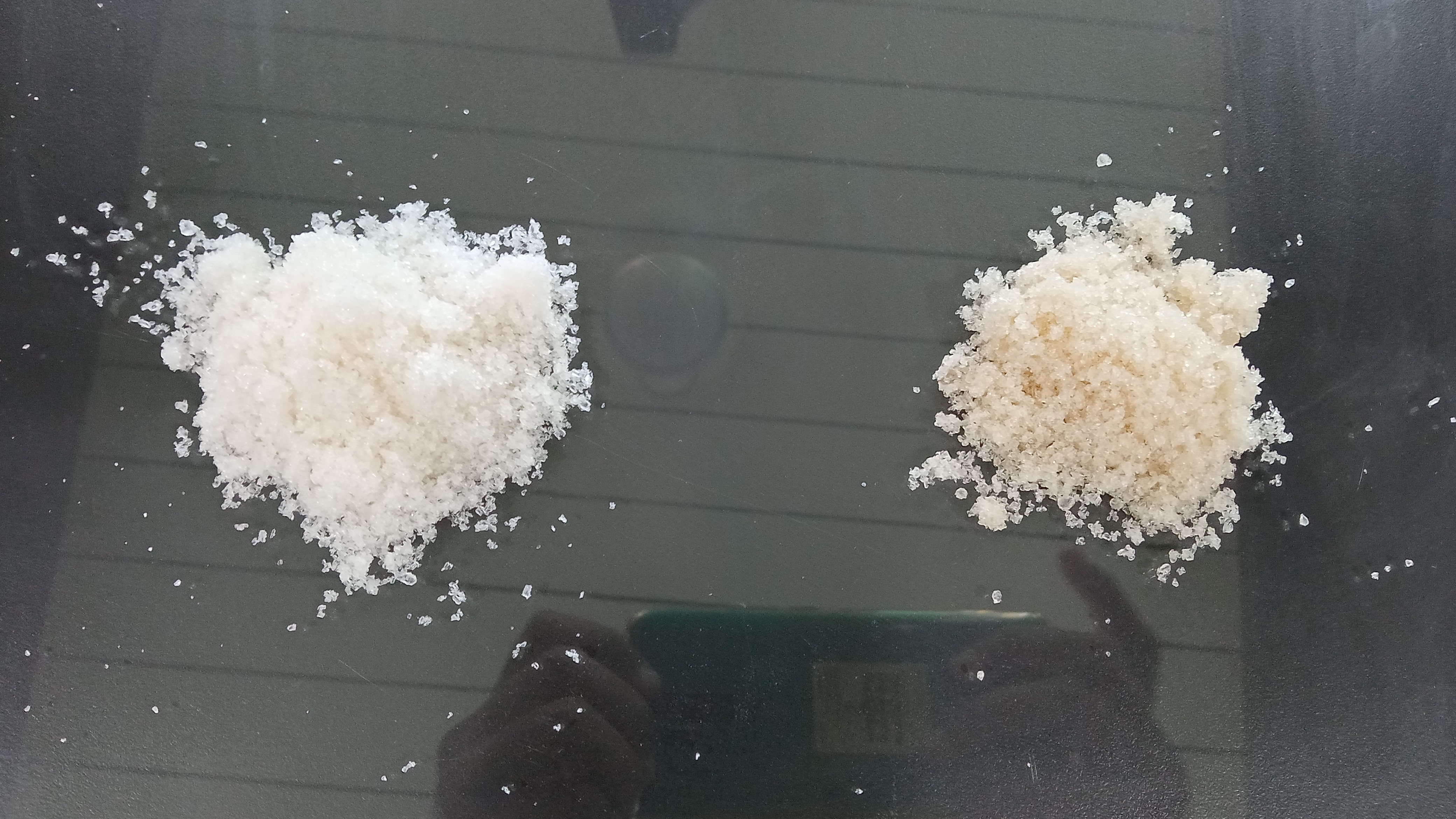
Sodium Acetate for Dehydration Applications
. Overview
• sodium acetate
• sodium acetate anhydrous
• sodium acetate trihydrate
• sodium acetate buffer
• sodium acetate CAS 127-09-3
• sodium acetate E262
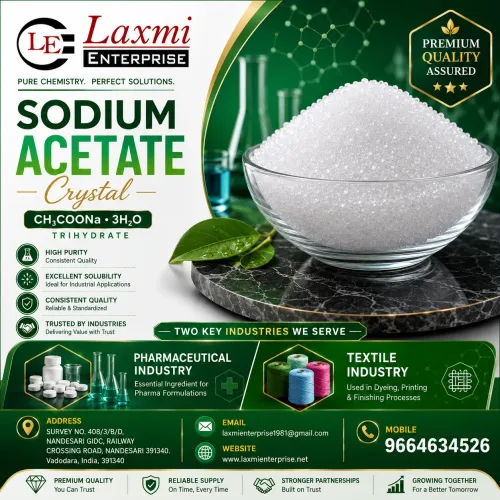
Sodium Acetate is a white crystalline salt commonly used as a dehydrating and moisture control agent in various industrial, chemical, and laboratory applications. It offers excellent hygroscopic properties and thermal stability, making it suitable for controlled drying and moisture regulation in sensitive environments.
. Chemical Information
Property Description
Chemical Name Sodium Acetate
Formula CH₃COONa
Molecular Weight 82.03 g/mol (anhydrous)
CAS Number 127-09-3
Appearance White crystalline powder
Solubility Highly soluble in water and ethanol
pH (1% solution) 7.5–9.0
. Role in Dehydration Processes
Moisture Absorption and Control
Anhydrous sodium acetate acts as a mild desiccant, capable of absorbing moisture from its surroundings.
Used to maintain low humidity in packaging and storage of moisture-sensitive materials.
Ideal for pharmaceuticals, food powders, and chemical reagents that require a dry environment.
Thermal Dehydration Systems
In heat storage and release systems, sodium acetate trihydrate (CH₃COONa·3H₂O) can be dehydrated by heating and later recrystallized, releasing stored thermal energy.
This reversible dehydration–hydration cycle makes it useful in phase change materials (PCM) and heat packs.
Catalyst and Reaction Medium Drying
Used in organic synthesis and analytical chemistry to remove traces of water from solvent systems.
Provides a stable environment for anhydrous reactions, particularly in acetylation and esterification.
Dehydration Aid in Food and Chemical Processing
Used to reduce moisture activity in processed foods and chemical intermediates, improving product stability and shelf life.
Functions as a buffer and drying aid in powder blending and granulation.
Laboratory Drying Applications
Acts as a secondary drying agent where moderate moisture removal is required without strong reactivity.
Preferred when neutral pH and non-corrosive conditions are needed.
. Advantages
Stable, non-toxic, and food-safe (when food-grade)
Excellent moisture regulation properties
Acts as both buffering and drying agent
Suitable for thermal energy and moisture control systems
. Typical Uses by Industry
Industry Application
Food Processing Moisture control, flavor stability, shelf-life extension
Pharmaceuticals Drying agent and pH buffer in formulations
Chemicals Dehydration aid in organic synthesis
Thermal Energy Systems Dehydration–hydration cycle for heat storage
Packaging Desiccant in sealed product environments
. Technical Specifications
Parameter Specification
Purity ≥ 99%
Moisture ≤ 1.0%
pH (1% Solution) 7.5–9.0
Melting Point 324°C (anhydrous)
Bulk Density 0.9–1.1 g/cm³
Solubility 123 g/100 g water (20°C)
. Safety & Handling
Non-flammable, non-corrosive
Avoid dust generation; use protective gloves and goggles during handling
Store in cool, dry, and airtight containers to prevent hydration
. Packaging Options
25 kg / 50 kg HDPE bags with inner liner
Food-grade / industrial-grade available upon request
Bulk supply for continuous dehydration or thermal systems
Sodium Acetate for Dehydration Applications
🔹 Overview
Sodium Acetate is a white crystalline salt commonly used as a dehydrating and moisture control agent in various industrial, chemical, and laboratory applications. It offers excellent hygroscopic properties and thermal stability, making it suitable for controlled drying and moisture regulation in sensitive environments.
🔹 Chemical Information
Property Description
Chemical Name Sodium Acetate
Formula CH₃COONa
Molecular Weight 82.03 g/mol (anhydrous)
CAS Number 127-09-3
Appearance White crystalline powder
Solubility Highly soluble in water and ethanol
pH (1% solution) 7.5–9.0
🔹 Role in Dehydration Processes
Moisture Absorption and Control
Anhydrous sodium acetate acts as a mild desiccant, capable of absorbing moisture from its surroundings.
Used to maintain low humidity in packaging and storage of moisture-sensitive materials.
Ideal for pharmaceuticals, food powders, and chemical reagents that require a dry environment.
Thermal Dehydration Systems
In heat storage and release systems, sodium acetate trihydrate (CH₃COONa·3H₂O) can be dehydrated by heating and later recrystallized, releasing stored thermal energy.
This reversible dehydration–hydration cycle makes it useful in phase change materials (PCM) and heat packs.
Catalyst and Reaction Medium Drying
Used in organic synthesis and analytical chemistry to remove traces of water from solvent systems.
Provides a stable environment for anhydrous reactions, particularly in acetylation and esterification.
Dehydration Aid in Food and Chemical Processing
Used to reduce moisture activity in processed foods and chemical intermediates, improving product stability and shelf life.
Functions as a buffer and drying aid in powder blending and granulation.
Laboratory Drying Applications
Acts as a secondary drying agent where moderate moisture removal is required without strong reactivity.
Preferred when neutral pH and non-corrosive conditions are needed.
🔹 Advantages
Stable, non-toxic, and food-safe (when food-grade)
Excellent moisture regulation properties
Acts as both buffering and drying agent
Suitable for thermal energy and moisture control systems
🔹 Typical Uses by Industry
Industry Application
Food Processing Moisture control, flavor stability, shelf-life extension
Pharmaceuticals Drying agent and pH buffer in formulations
Chemicals Dehydration aid in organic synthesis
Thermal Energy Systems Dehydration–hydration cycle for heat storage
Packaging Desiccant in sealed product environments
🔹 Technical Specifications
Parameter Specification
Purity ≥ 99%
Moisture ≤ 1.0%
pH (1% Solution) 7.5–9.0
Melting Point 324°C (anhydrous)
Bulk Density 0.9–1.1 g/cm³
Solubility 123 g/100 g water (20°C)
🔹 Safety & Handling
Non-flammable, non-corrosive
Avoid dust generation; use protective gloves and goggles during handling
Store in cool, dry, and airtight containers to prevent hydration
🔹 Packaging Options
25 kg / 50 kg HDPE bags with inner liner
Food-grade / industrial-grade available upon request
Bulk supply for continuous dehydration or thermal systems
Sodium Acetate as a Corrosion Inhibitor
🔹 Overview
Sodium Acetate is widely used in industrial water treatment, metal processing, and cooling systems as a corrosion inhibitor. It protects metals like steel, copper, and aluminum from oxidative and acidic attack by forming a protective film on the metal surface.
🔹 Chemical Information
Property Value
Chemical Name Sodium Acetate
Formula CH₃COONa
Molecular Weight 82.03 g/mol
CAS Number 127-09-3
Appearance White crystalline powder
Solubility Highly soluble in water
pH (1% solution) 7.5–9.0
🔹 Mechanism of Corrosion Inhibition
Protective Film Formation
Sodium acetate dissociates in water into acetate ions (CH₃COO⁻) and sodium ions (Na⁺).
Acetate ions adsorb onto the metal surface, forming a thin, protective layer that prevents direct contact with water, oxygen, or other corrosive species.
pH Stabilization
Maintains slightly alkaline conditions in aqueous systems, reducing the risk of acid-induced corrosion.
Synergistic Effects
Often used with other inhibitors (like phosphates or nitrites) to enhance protection in cooling water, boiler systems, and metal finishing baths.
🔹 Applications
Industry Application
Industrial Water Treatment Protects piping, boilers, and heat exchangers from corrosion
Metal Processing Inhibits corrosion during pickling, electroplating, or metal storage
Cooling Systems Prevents rust in open and closed recirculating cooling systems
Oil & Gas Protects pipelines and storage tanks from oxidation and pitting
Food Industry Used in food-contact equipment as a mild, non-toxic inhibitor
🔹 Benefits
Reduces metal degradation and maintenance costs
Non-toxic and environmentally safe, suitable for food-grade applications
Enhances equipment lifespan in aqueous systems
Compatible with other corrosion control agents
🔹 Typical Usage
Concentration: Usually 0.1–2.0% w/v depending on system type and metal composition.
Form: Added as anhydrous powder or solution directly to water systems.
Application: Continuous or batch dosing in industrial processes.
🔹 Technical Specifications
Parameter Typical Value
Purity ≥ 99%
Moisture ≤ 1%
pH (1% solution) 7.5–9.0
Appearance White crystalline powder
Solubility 76 g/100 g water at 20°C
🔹 Safety & Handling
Non-flammable, non-corrosive
Handle dust with care; use gloves, mask, and eye protection
Store in airtight, dry containers to prevent caking
🔹 Packaging
25 kg / 50 kg HDPE bags with inner liner
Bulk supply available for industrial water treatment and metal protection systems