Sodium Acetate in the Snack Food Industry
Applications in Seasonings, Flavor Systems, Processing Efficiency, Quality Control, Ingredient Selection & Commercial Snack Manufacturing
The global snack food industry is one of the fastest-growing sectors in food manufacturing. Consumers expect every packet of potato chips, extruded snacks, popcorn, crackers, tortilla chips, and savory snack mixes to deliver the same taste, aroma, texture, and appearance every time they purchase the product.
Maintaining this level of consistency is challenging because snack manufacturing involves multiple variables, including raw material quality, frying or baking conditions, seasoning application, packaging performance, and storage stability. Even small changes in ingredient quality can affect flavor distribution, production efficiency, and customer satisfaction.
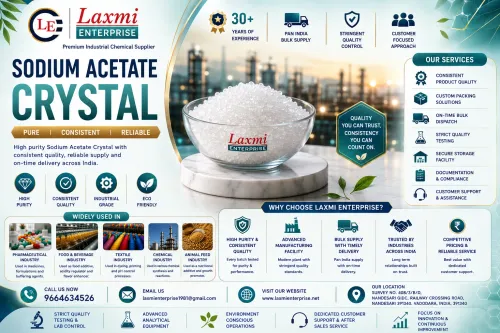
Food-grade Sodium Acetate is used in selected savory snack formulations because of its functional properties. Depending on the recipe, it may contribute to acidity regulation, buffering, flavor development in certain seasoning systems, and overall formulation consistency. Its performance should always be evaluated as part of the complete formulation and used in accordance with applicable food regulations.
This article explains how Sodium Acetate fits into commercial snack production, what food manufacturers expect from ingredient suppliers, how quality is maintained throughout production, and which procurement practices help ensure reliable manufacturing performance.
The Growth of the Snack Food Industry
Snack foods are no longer limited to occasional treats. They have become an important part of daily consumption in many markets.
Today's snack industry includes:
Potato chips
Extruded corn snacks
Tortilla chips
Popcorn
Crackers
Pretzels
Rice snacks
Savory biscuits
Roasted snack products
Ready-to-eat snack mixes
As production volumes increase, manufacturers place greater emphasis on ingredient consistency and process control.
Why Ingredient Consistency Is Critical
A commercial snack plant may produce thousands of packets every hour.
Customers expect every packet to have:
Uniform seasoning
Consistent flavor
Similar appearance
Reliable texture
Stable shelf quality
Achieving this consistency depends on standardized manufacturing processes and reliable ingredient performance.
Even minor differences in ingredient characteristics may require production adjustments that reduce manufacturing efficiency.
Food Technology Insight
Consumers may never see the manufacturing process, but they immediately notice inconsistency in taste or appearance. For snack manufacturers, ingredient consistency is directly linked to brand reputation.
Why Sodium Acetate Is Used in Snack Foods
Food-grade Sodium Acetate may be included in selected snack seasonings because of its functional properties.
Depending on the product formulation, it may contribute to:
Flavor development in savory products
Acidity regulation
Buffering systems
Consistent seasoning performance
Product formulation stability
The ingredient is selected as part of a carefully developed seasoning system rather than acting as a standalone solution.
Common Snack Food Applications
Potato Chips
Seasoned potato chips require even distribution of flavor throughout the production batch.
Manufacturers evaluate ingredients based on:
Flavor consistency
Mixing performance
Batch reproducibility
Production efficiency
Reliable ingredient quality helps maintain these objectives.
Extruded Snacks
Extruded corn and cereal snacks pass through multiple processing stages before seasoning is applied.
Consistent ingredient quality supports stable seasoning systems and repeatable manufacturing.
Popcorn
Commercial popcorn products often use specialized seasoning blends.
Ingredient quality influences blending efficiency and consistency during production.
Savory Crackers
Manufacturers of savory crackers focus on delivering a consistent eating experience.
Functional ingredients are evaluated as part of the overall seasoning and formulation strategy.
Ready-to-Eat Snack Mixes
Snack mixes combine multiple ingredients into one finished product.
Maintaining flavor consistency across different production batches requires disciplined ingredient management and supplier qualification.
The Importance of Seasoning Systems
Seasonings are carefully engineered formulations rather than simple mixtures of ingredients.
Food technologists evaluate seasoning systems based on:
Flavor profile
Ingredient compatibility
Mixing performance
Manufacturing repeatability
Stability during storage
Performance during packaging
Each ingredient contributes to the overall formulation.
Engineering Insight
Successful seasoning systems are designed so that every packet tastes like the one before it. This level of consistency is achieved through formulation science, controlled manufacturing, and reliable ingredient quality—not by chance.
Ingredient Selection
When selecting Sodium Acetate for snack food applications, manufacturers commonly evaluate:
Food-grade compliance
Batch consistency
Product specifications
Traceability
Packaging quality
Supplier reliability
Technical documentation
Long-term availability
These factors help reduce manufacturing risks and improve production efficiency.
Incoming Quality Control
Before ingredients are approved for production, quality teams typically perform:
Documentation Review
Review of:
Certificate of Analysis (COA)
Product specification
Batch identification
Supplier documentation
Packaging Inspection
Checking:
Packaging integrity
Moisture protection
Correct labeling
Physical condition
Identity Verification
Confirming that the ingredient matches the approved specification before use.
Storage Inspection
Ensuring ingredients have been stored under suitable conditions before production.
Manufacturing Considerations
Snack food manufacturers emphasize:
Accurate ingredient weighing
Consistent seasoning preparation
Standardized production procedures
Batch documentation
Process monitoring
Quality verification
Well-controlled production improves product consistency and operational efficiency.
Packaging Considerations
Ingredient packaging should protect Sodium Acetate from:
Moisture
Physical damage
Contamination
Misidentification
Proper packaging helps maintain ingredient quality throughout transportation and warehouse storage.
Traceability
Complete traceability enables manufacturers to connect:
Ingredient supplier
Incoming batch
Production records
Finished snack product
Customer shipment
This information supports quality investigations and regulatory compliance.
Procurement Insight
A supplier that provides consistent documentation, reliable deliveries, and complete traceability often contributes more value than one offering only the lowest purchase price.
Storage Recommendations
Food-grade Sodium Acetate should generally be:
Stored in a clean and dry warehouse.
Protected from moisture and excessive humidity.
Kept in original sealed packaging until required.
Rotated using established inventory procedures.
Handled according to the manufacturer's storage recommendations.
Proper storage preserves ingredient quality throughout its recommended storage period.
Sustainability in Snack Manufacturing
Leading snack manufacturers increasingly evaluate suppliers based on:
Packaging efficiency
Manufacturing consistency
Waste reduction initiatives
Supply reliability
Responsible sourcing
Long-term business partnerships
Reliable ingredient quality also helps reduce manufacturing waste caused by product variation.
Illustrative Industrial Example
A potato chip manufacturer receives seasoning ingredients from multiple approved suppliers.
Although all materials comply with the product specification, one supplier's batches exhibit greater variation in physical characteristics.
The production team notices slight differences in seasoning flow through automated equipment, requiring additional adjustments during manufacturing.
After implementing tighter supplier qualification criteria and enhanced incoming inspections, seasoning performance becomes more consistent, production interruptions decrease, and overall manufacturing efficiency improves.
This example demonstrates why ingredient consistency is as important as formulation design.
Common Manufacturing Challenges
Challenge Possible Cause Business Impact Recommended Action
Uneven seasoning distribution Ingredient variability Product inconsistency Improve supplier qualification and process control
Moisture exposure Damaged packaging Reduced ingredient quality Strengthen storage and warehouse practices
Batch-to-batch variation Supplier inconsistency Increased production adjustments Review supplier performance regularly
Documentation gaps Missing or incomplete records Audit observations Standardize incoming quality procedures
Supply interruptions Procurement planning issues Production delays Maintain qualified alternative suppliers
Best Practices for Snack Food Manufacturers
Leading manufacturers typically:
Purchase ingredients from approved suppliers.
Review Certificates of Analysis before production.
Verify incoming ingredients through documented inspection procedures.
Maintain complete traceability.
Monitor supplier performance using quality metrics.
Store ingredients according to manufacturer recommendations.
Conduct periodic supplier audits where appropriate.
Best Practices for Procurement Teams
When evaluating a Sodium Acetate supplier, ask:
Is the product manufactured for food applications?
Are Certificates of Analysis supplied with every batch?
How is batch consistency monitored?
What quality management systems support production?
How is traceability maintained?
Can the supplier provide long-term supply continuity?
What technical support is available for formulation or quality questions?
Key Takeaways
The snack food industry depends on consistent ingredients, repeatable manufacturing, and disciplined quality systems. Food-grade Sodium Acetate is used in selected seasoning formulations because of its functional properties and dependable performance when incorporated into validated recipes. Manufacturers that combine strong supplier qualification, comprehensive quality control, complete traceability, and reliable logistics are better positioned to produce snack products that consistently meet consumer expectations.
Frequently Asked Questions (FAQ)
1. Why is Sodium Acetate used in snack foods?
Food-grade Sodium Acetate is used in selected savory snack formulations for functions such as flavor development in certain products, acidity regulation, buffering, and formulation consistency where permitted by applicable food regulations.
2. Which snack products commonly use Sodium Acetate?
Depending on product formulation and regulatory requirements, it may be used in products such as potato chips, popcorn seasonings, extruded snacks, savory crackers, tortilla chips, and snack seasoning blends.
3. Why is ingredient consistency important in snack manufacturing?
Consistent ingredients help maintain uniform seasoning distribution, predictable flavor profiles, efficient production, and reliable product quality across multiple manufacturing batches.
4. How should food-grade Sodium Acetate be stored?
It should generally be stored in a clean, dry environment, protected from moisture, kept in sealed packaging, and handled according to the manufacturer's storage recommendations.
5. What quality documents should accompany each shipment?
Manufacturers commonly review the Certificate of Analysis (COA), product specification, batch number, and other supporting documentation required by their quality management system.
6. How does traceability benefit snack manufacturers?
Traceability connects ingredient batches with finished products, helping manufacturers investigate quality issues, support audits, and respond efficiently if product recalls become necessary.
7. Does changing ingredient suppliers affect production?
It can. Even when suppliers meet the same specification, differences in physical characteristics or manufacturing consistency may influence seasoning performance and production efficiency.
8. What should procurement teams evaluate besides price?
Evaluate product quality, batch consistency, documentation, traceability, packaging quality, delivery reliability, technical support, and long-term supply capability.
9. Why is packaging important for seasoning ingredients?
Appropriate packaging helps protect ingredients from moisture, contamination, and physical damage while maintaining quality during storage and transportation.
10. How do manufacturers improve seasoning consistency?
Manufacturers improve consistency through validated formulations, controlled mixing procedures, qualified suppliers, incoming quality inspections, standardized production processes, and continuous process monitoring.
11. Can ingredient quality affect production efficiency?
Yes. Consistent ingredient quality reduces process adjustments, improves manufacturing stability, minimizes waste, and supports higher production efficiency.
12. What characteristics define a reliable Sodium Acetate supplier?
Reliable suppliers consistently deliver food-grade material that meets agreed specifications, provide complete documentation, maintain effective traceability, offer dependable deliveries, and support customers with technical expertise.
Expert Conclusion
In the competitive snack food industry, consistency is a key differentiator. Consumers expect every packet to deliver the same flavor, texture, and quality, regardless of where or when it is produced. Food-grade Sodium Acetate, when used as part of a well-designed seasoning system and sourced from qualified suppliers, can contribute to these objectives. Manufacturers that invest in supplier qualification, quality assurance, traceability, and process control are better positioned to maintain efficient production, protect brand reputation, and deliver products that consistently satisfy consumer expectations.
Applications in Seasonings, Flavor Systems, Processing Efficiency, Quality Control, Ingredient Selection & Commercial Snack Manufacturing
The global snack food industry is one of the fastest-growing sectors in food manufacturing. Consumers expect every packet of potato chips, extruded snacks, popcorn, crackers, tortilla chips, and savory snack mixes to deliver the same taste, aroma, texture, and appearance every time they purchase the product.
Maintaining this level of consistency is challenging because snack manufacturing involves multiple variables, including raw material quality, frying or baking conditions, seasoning application, packaging performance, and storage stability. Even small changes in ingredient quality can affect flavor distribution, production efficiency, and customer satisfaction.
Food-grade Sodium Acetate is used in selected savory snack formulations because of its functional properties. Depending on the recipe, it may contribute to acidity regulation, buffering, flavor development in certain seasoning systems, and overall formulation consistency. Its performance should always be evaluated as part of the complete formulation and used in accordance with applicable food regulations.
This article explains how Sodium Acetate fits into commercial snack production, what food manufacturers expect from ingredient suppliers, how quality is maintained throughout production, and which procurement practices help ensure reliable manufacturing performance.
The Growth of the Snack Food Industry
Snack foods are no longer limited to occasional treats. They have become an important part of daily consumption in many markets.
Today's snack industry includes:
Potato chips
Extruded corn snacks
Tortilla chips
Popcorn
Crackers
Pretzels
Rice snacks
Savory biscuits
Roasted snack products
Ready-to-eat snack mixes
As production volumes increase, manufacturers place greater emphasis on ingredient consistency and process control.
Why Ingredient Consistency Is Critical
A commercial snack plant may produce thousands of packets every hour.
Customers expect every packet to have:
Uniform seasoning
Consistent flavor
Similar appearance
Reliable texture
Stable shelf quality
Achieving this consistency depends on standardized manufacturing processes and reliable ingredient performance.
Even minor differences in ingredient characteristics may require production adjustments that reduce manufacturing efficiency.
Food Technology Insight
Consumers may never see the manufacturing process, but they immediately notice inconsistency in taste or appearance. For snack manufacturers, ingredient consistency is directly linked to brand reputation.
Why Sodium Acetate Is Used in Snack Foods
Food-grade Sodium Acetate may be included in selected snack seasonings because of its functional properties.
Depending on the product formulation, it may contribute to:
Flavor development in savory products
Acidity regulation
Buffering systems
Consistent seasoning performance
Product formulation stability
The ingredient is selected as part of a carefully developed seasoning system rather than acting as a standalone solution.
Common Snack Food Applications
Potato Chips
Seasoned potato chips require even distribution of flavor throughout the production batch.
Manufacturers evaluate ingredients based on:
Flavor consistency
Mixing performance
Batch reproducibility
Production efficiency
Reliable ingredient quality helps maintain these objectives.
Extruded Snacks
Extruded corn and cereal snacks pass through multiple processing stages before seasoning is applied.
Consistent ingredient quality supports stable seasoning systems and repeatable manufacturing.
Popcorn
Commercial popcorn products often use specialized seasoning blends.
Ingredient quality influences blending efficiency and consistency during production.
Savory Crackers
Manufacturers of savory crackers focus on delivering a consistent eating experience.
Functional ingredients are evaluated as part of the overall seasoning and formulation strategy.
Ready-to-Eat Snack Mixes
Snack mixes combine multiple ingredients into one finished product.
Maintaining flavor consistency across different production batches requires disciplined ingredient management and supplier qualification.
The Importance of Seasoning Systems
Seasonings are carefully engineered formulations rather than simple mixtures of ingredients.
Food technologists evaluate seasoning systems based on:
Flavor profile
Ingredient compatibility
Mixing performance
Manufacturing repeatability
Stability during storage
Performance during packaging
Each ingredient contributes to the overall formulation.
Engineering Insight
Successful seasoning systems are designed so that every packet tastes like the one before it. This level of consistency is achieved through formulation science, controlled manufacturing, and reliable ingredient quality—not by chance.
Ingredient Selection
When selecting Sodium Acetate for snack food applications, manufacturers commonly evaluate:
Food-grade compliance
Batch consistency
Product specifications
Traceability
Packaging quality
Supplier reliability
Technical documentation
Long-term availability
These factors help reduce manufacturing risks and improve production efficiency.
Incoming Quality Control
Before ingredients are approved for production, quality teams typically perform:
Documentation Review
Review of:
Certificate of Analysis (COA)
Product specification
Batch identification
Supplier documentation
Packaging Inspection
Checking:
Packaging integrity
Moisture protection
Correct labeling
Physical condition
Identity Verification
Confirming that the ingredient matches the approved specification before use.
Storage Inspection
Ensuring ingredients have been stored under suitable conditions before production.
Manufacturing Considerations
Snack food manufacturers emphasize:
Accurate ingredient weighing
Consistent seasoning preparation
Standardized production procedures
Batch documentation
Process monitoring
Quality verification
Well-controlled production improves product consistency and operational efficiency.
Packaging Considerations
Ingredient packaging should protect Sodium Acetate from:
Moisture
Physical damage
Contamination
Misidentification
Proper packaging helps maintain ingredient quality throughout transportation and warehouse storage.
Traceability
Complete traceability enables manufacturers to connect:
Ingredient supplier
Incoming batch
Production records
Finished snack product
Customer shipment
This information supports quality investigations and regulatory compliance.
Procurement Insight
A supplier that provides consistent documentation, reliable deliveries, and complete traceability often contributes more value than one offering only the lowest purchase price.
Storage Recommendations
Food-grade Sodium Acetate should generally be:
Stored in a clean and dry warehouse.
Protected from moisture and excessive humidity.
Kept in original sealed packaging until required.
Rotated using established inventory procedures.
Handled according to the manufacturer's storage recommendations.
Proper storage preserves ingredient quality throughout its recommended storage period.
Sustainability in Snack Manufacturing
Leading snack manufacturers increasingly evaluate suppliers based on:
Packaging efficiency
Manufacturing consistency
Waste reduction initiatives
Supply reliability
Responsible sourcing
Long-term business partnerships
Reliable ingredient quality also helps reduce manufacturing waste caused by product variation.
Illustrative Industrial Example
A potato chip manufacturer receives seasoning ingredients from multiple approved suppliers.
Although all materials comply with the product specification, one supplier's batches exhibit greater variation in physical characteristics.
The production team notices slight differences in seasoning flow through automated equipment, requiring additional adjustments during manufacturing.
After implementing tighter supplier qualification criteria and enhanced incoming inspections, seasoning performance becomes more consistent, production interruptions decrease, and overall manufacturing efficiency improves.
This example demonstrates why ingredient consistency is as important as formulation design.
Common Manufacturing Challenges
Challenge Possible Cause Business Impact Recommended Action
Uneven seasoning distribution Ingredient variability Product inconsistency Improve supplier qualification and process control
Moisture exposure Damaged packaging Reduced ingredient quality Strengthen storage and warehouse practices
Batch-to-batch variation Supplier inconsistency Increased production adjustments Review supplier performance regularly
Documentation gaps Missing or incomplete records Audit observations Standardize incoming quality procedures
Supply interruptions Procurement planning issues Production delays Maintain qualified alternative suppliers
Best Practices for Snack Food Manufacturers
Leading manufacturers typically:
Purchase ingredients from approved suppliers.
Review Certificates of Analysis before production.
Verify incoming ingredients through documented inspection procedures.
Maintain complete traceability.
Monitor supplier performance using quality metrics.
Store ingredients according to manufacturer recommendations.
Conduct periodic supplier audits where appropriate.
Best Practices for Procurement Teams
When evaluating a Sodium Acetate supplier, ask:
Is the product manufactured for food applications?
Are Certificates of Analysis supplied with every batch?
How is batch consistency monitored?
What quality management systems support production?
How is traceability maintained?
Can the supplier provide long-term supply continuity?
What technical support is available for formulation or quality questions?
Key Takeaways
The snack food industry depends on consistent ingredients, repeatable manufacturing, and disciplined quality systems. Food-grade Sodium Acetate is used in selected seasoning formulations because of its functional properties and dependable performance when incorporated into validated recipes. Manufacturers that combine strong supplier qualification, comprehensive quality control, complete traceability, and reliable logistics are better positioned to produce snack products that consistently meet consumer expectations.
Frequently Asked Questions (FAQ)
1. Why is Sodium Acetate used in snack foods?
Food-grade Sodium Acetate is used in selected savory snack formulations for functions such as flavor development in certain products, acidity regulation, buffering, and formulation consistency where permitted by applicable food regulations.
2. Which snack products commonly use Sodium Acetate?
Depending on product formulation and regulatory requirements, it may be used in products such as potato chips, popcorn seasonings, extruded snacks, savory crackers, tortilla chips, and snack seasoning blends.
3. Why is ingredient consistency important in snack manufacturing?
Consistent ingredients help maintain uniform seasoning distribution, predictable flavor profiles, efficient production, and reliable product quality across multiple manufacturing batches.
4. How should food-grade Sodium Acetate be stored?
It should generally be stored in a clean, dry environment, protected from moisture, kept in sealed packaging, and handled according to the manufacturer's storage recommendations.
5. What quality documents should accompany each shipment?
Manufacturers commonly review the Certificate of Analysis (COA), product specification, batch number, and other supporting documentation required by their quality management system.
6. How does traceability benefit snack manufacturers?
Traceability connects ingredient batches with finished products, helping manufacturers investigate quality issues, support audits, and respond efficiently if product recalls become necessary.
7. Does changing ingredient suppliers affect production?
It can. Even when suppliers meet the same specification, differences in physical characteristics or manufacturing consistency may influence seasoning performance and production efficiency.
8. What should procurement teams evaluate besides price?
Evaluate product quality, batch consistency, documentation, traceability, packaging quality, delivery reliability, technical support, and long-term supply capability.
9. Why is packaging important for seasoning ingredients?
Appropriate packaging helps protect ingredients from moisture, contamination, and physical damage while maintaining quality during storage and transportation.
10. How do manufacturers improve seasoning consistency?
Manufacturers improve consistency through validated formulations, controlled mixing procedures, qualified suppliers, incoming quality inspections, standardized production processes, and continuous process monitoring.
11. Can ingredient quality affect production efficiency?
Yes. Consistent ingredient quality reduces process adjustments, improves manufacturing stability, minimizes waste, and supports higher production efficiency.
12. What characteristics define a reliable Sodium Acetate supplier?
Reliable suppliers consistently deliver food-grade material that meets agreed specifications, provide complete documentation, maintain effective traceability, offer dependable deliveries, and support customers with technical expertise.
Expert Conclusion
In the competitive snack food industry, consistency is a key differentiator. Consumers expect every packet to deliver the same flavor, texture, and quality, regardless of where or when it is produced. Food-grade Sodium Acetate, when used as part of a well-designed seasoning system and sourced from qualified suppliers, can contribute to these objectives. Manufacturers that invest in supplier qualification, quality assurance, traceability, and process control are better positioned to maintain efficient production, protect brand reputation, and deliver products that consistently satisfy consumer expectations.
Keywords