
SODIUM NITRATE FOR FERTIGATION SYSTEMS
1. Introduction
Sodium Nitrate (NaNO₃), also known as Chile Saltpeter, is a highly soluble nitrate-based fertilizer used in modern fertigation systems to provide a rapid and efficient source of nitrate nitrogen (NO₃⁻) for plants.
It delivers instant nitrogen availability and is ideal for precision agriculture, especially in vegetable, fruit, and greenhouse crops.
Fertigation Advantages
.Instantly available nitrogen — no conversion needed like ammonium or urea.
.Highly soluble — dissolves easily for stock solution preparation.
.Compatible with most water-soluble fertilizers.
.No ammonia volatilization losses.
. Quick crop response — visible greening within days.
Compatibility & Mixing
Compatible with most water-soluble fertilizers such as calcium nitrate, magnesium nitrate, and potassium sulfate.
Avoid mixing with phosphates or sulfates in the same tank to prevent precipitation.
Always perform a jar test before large-scale mixing.
Store and mix in non-metallic tanks with clean water.
Packaging & Supply
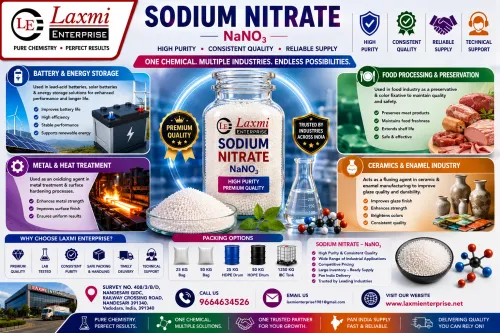
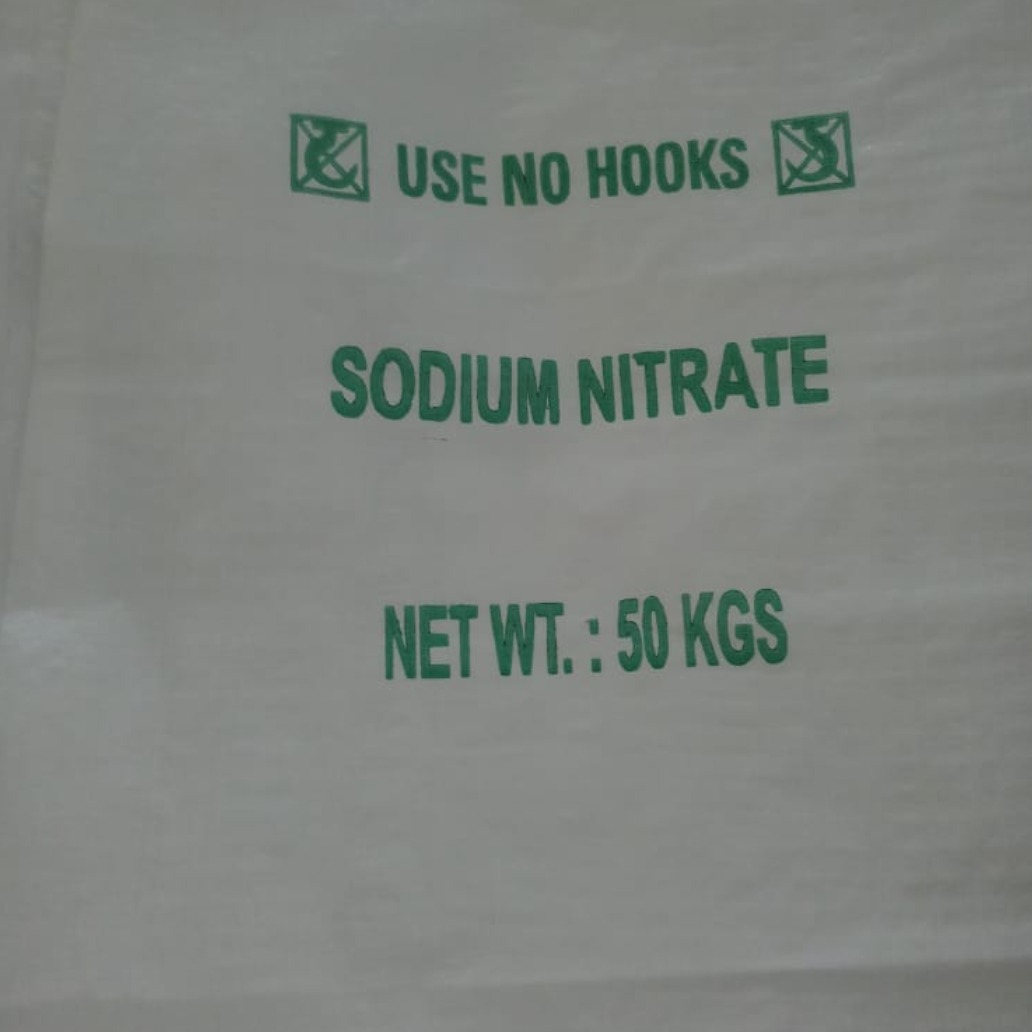
25 / 50 kg HDPE Bags with Liner
1 MT Jumbo Bags for bulk users
High Purity Grade (≥ 99%)
Available in crystalline or granular form
Safety & Handling
Classified as an Oxidizing Solid (Class 5.1)
Keep away from combustible materials and organic matter.
Store in cool, dry, ventilated area away from direct sunlight.
Use gloves, goggles, and dust mask while handling.
Advantages for Dealers & Growers
Fast plant response ensures visible crop vigor and yield improvement.
Compatible with fertigation automation systems.
Clean, dust-free crystalline material ensures no clogging in drippers.
Trusted by greenhouse vegetable and fruit growers worldwide.
Summary – Key Benefits
Feature Benefit
16.5% Nitrate Nitrogen Instant uptake and visible growth response
99% Solubility Ideal for fertigation and hydroponics
High Purity Grade Ensures consistent nutrient supply
Compatible with Most Fertilizers Flexible blending and dosing
Cost-effective Nitrate Source Excellent for short fertigation cycles
General Compatibility Principles
. Compatible with:
Most neutral or nitrate-based fertilizers
Chloride-free products
Calcium-, magnesium-, or potassium-based nitrates
. Incompatible with:
Phosphate and sulfate-based fertilizers (may form insoluble salts)
Concentrated acidic or reducing agents
Suspension-grade micronutrient formulations (if pH < 5)
*💧 Rule of thumb:
If the product contains Ca²⁺, SO₄²⁻, or PO₄³⁻ ions, avoid direct mixing with NaNO₃ in concentrated solution.
Fertigation Tank Management
.
Best practice:
In fertigation systems, use two separate tanks:
Tank A: Nitrates and chlorides (e.g., Sodium Nitrate, Calcium Nitrate, Potassium Nitrate)
Tank B: Phosphates and sulfates (e.g., MKP, MAP, Potassium Sulphate, Magnesium Sulphate)
. Never mix Sodium Nitrate directly with phosphate or sulfate fertilizers in the same stock tank.
. They can, however, be injected separ
ately into irrigation lines using dual dosing pumps.
Mixing Procedure (Safe Practice)
Fill the tank halfway with clean water.
Add Sodium Nitrate slowly while stirring continuously.
Ensure complete dissolution before adding any other fertilizer.
Do not mix with phosphates or sulfates in concentrated form.
Maintain solution pH between 6.0 – 7.5 for maximum solubility.
Keep stock solution temperature below 35°C to prevent crystallization.
Storage & Handling
Store Sodium Nitrate in cool, dry, ventilated areas.
Avoid contact with combustible or organic materials.
Use plastic or fiberglass tanks for solution storage (avoid metal tanks).
Ensure tight sealing to prevent moisture absorption and caking.
Conclusion
Sodium Nitrate is fully compatible with most nitrate-based and neutral fertilizers, making it excellent for Tank A solutions in fertigation systems.
Avoid mixing with phosphates, sulfates, or acidic fertilizers in the same solution — use separate tanks to prevent precipitation and emitter blockage.
When used correctly, Sodium Nitrate offers instant nitrate nitrogen availability, high solubility, and excellent performance in precision fertigation setups.
SODIUM NITRATE COMPATIBILITY WITH WATER-SOLUBLE FERTILIZERS
1. Overview
Sodium Nitrate (NaNO₃) is a fully water-soluble nitrate fertilizer supplying 100% nitrate nitrogen (NO₃⁻) for rapid plant uptake.
It is widely used in fertigation, hydroponics, and foliar nutrition programs.
However, its mixing compatibility with other water-soluble fertilizers must be managed carefully to prevent precipitation or clogging in fertigation systems.
2. General Compatibility Guidelines
Compatible With Condition / Note
. Nitrate-based fertilizers Fully compatible (e.g., Calcium Nitrate, Potassium Nitrate, Magnesium Nitrate).
. Urea & Ammonium Nitrate Compatible in diluted solutions. Avoid concentrated storage mixtures.
. Sulphate-based fertilizers Limited compatibility; avoid concentrated mixing. Dilute separately.
. Phosphate-based fertilizers Incompatible; forms insoluble sodium phosphate precipitates.
. Suspension-grade micronutrients Avoid mixing; possible sedimentation at low pH.
. EDTA-chelated micronutrients Safe if pH is between 6–7.
3. Fertigation Tank Mixing Table
Fertilizer Name Chemical Formula Compatibility with NaNO₃ Remarks
Calcium Nitrate Ca(NO₃)₂ . Compatible Ideal for Tank A (nitrate solutions).
Potassium Nitrate KNO₃ . Compatible Can be mixed safely in any ratio.
Magnesium Nitrate Mg(NO₃)₂ . Compatible Safe; enhances magnesium and nitrogen supply.
Urea CO(NH₂)₂ . Compatible (dilute) Short-term storage only.
Ammonium Nitrate NH₄NO₃ . Compatible Suitable for nitrate + ammonium balance.
Mono Ammonium Phosphate (MAP) NH₄H₂PO₄ * Incompatible Forms sodium phosphate; use separate tank.
Mono Potassium Phosphate (MKP) KH₂PO₄ * Incompatible Causes precipitation; separate stock tank needed.
Phosphoric Acid H₃PO₄ * Incompatible Reacts to form insoluble salts.
Potassium Sulphate K₂SO₄ * Limited Dilute separately; risk of crystallization.
Ammonium Sulphate (NH₄)₂SO₄ * Incompatible Produces sodium sulphate; may clog emitters.
Magnesium Sulphate (Epsom Salt) MgSO₄·7H₂O * Limited Prepare separately and mix in irrigation line.
Micronutrient Chelates (EDTA) — * Compatible Maintain pH 6–7 for stability.
Iron / Zinc / Copper Sulphate — * Incompatible Forms insoluble sulphates; avoid direct mixing.
4. Fertigation System Management
💧 Use Two-Tank System for Safe Mixing
Tank A (Nitrate Tank) Tank B (Phosphate/Sulphate Tank)
Sodium Nitrate MKP (Mono Potassium Phosphate)
Calcium Nitrate Potassium Sulphate
Potassium Nitrate Magnesium Sulphate
EDTA Micronutrients MAP / Phosphoric Acid
Tank A: Nitrate-based fertilizers (NaNO₃, Ca(NO₃)₂, KNO₃).
Tank B: Phosphates and sulphates (KH₂PO₄, MgSO₄).
Inject separately into the irrigation system using dual injectors.
5. Mixing Instructions
Fill mixing tank halfway with clean water.
Add Sodium Nitrate gradually with constant stirring until fully dissolved.
Add other compatible fertilizers (if any).
Maintain solution pH between 6.0–7.5.
Avoid mixing with phosphates or sulphates in concentrated form.
Always perform a jar test before large-scale mixing.
6. Important Compatibility Notes
Do not mix Sodium Nitrate with phosphates or sulphates in the same tank.
When used in fertigation, inject each group (nitrates, phosphates, sulphates) separately.
Mixing Sodium Nitrate with acidic fertilizers can cause precipitation and pH imbalance.
For micronutrient compatibility, use EDTA-chelated products only.
Ensure all tanks are rinsed with clean water after fertigation cycles.
7. Example: Safe Mixing Setup in Fertigation
Tank A (Nitrate Group) Tank B (Phosphate/Sulphate Group)
Sodium Nitrate MKP (Mono Potassium Phosphate)
Calcium Nitrate Potassium Sulphate
Potassium Nitrate Magnesium Sulphate
EDTA Micronutrients —
8. Storage & Handling Recommendations
Store in dry, cool, and ventilated area.
Keep away from combustibles and acids.
Use non-metallic tanks (PVC, HDPE, FRP).
Avoid exposure to moisture — Sodium Nitrate is hygroscopic.
Seal bags tightly after each use.
. Summary
Fertilizer Type Compatibility Rating Comments
Nitrate-based . Excellent Ideal combinations.
Urea / Ammonium Nitrate . Good Use in dilute form.
Phosphate-based . Poor Causes precipitation.
Sulphate-based ! Moderate Separate tanks recommended.
EDTA Micronutrients . Safe Maintain neutral pH.
Sulphate Micronutrients * Poor Form insoluble compounds.
Conclusion
Sodium Nitrate is a highly efficient nitrate nitrogen source perfectly suited for fertigation and hydroponic systems, provided it is used in compatibility groups.
For best results:
Mix Sodium Nitrate only with nitrates or neutral fertilizers.
Keep phosphates and sulphates in a separate tank.
Maintain a balanced pH and perform jar tests before final mixing.
Would you like me to create a color-coded compatibility chart
[[SODIUM NITRATE CHEMICAL SPECIFICATIONS, LAXMI ENTERPRISE, VADODRA, GUJARAT, INDIA.]]