

Sodium Nitrate in Mirror Glass Manufacturing: Reflection Quality, Silver Coating Compatibility, Surface Perfection, Optical Clarity, and Industrial Manufacturing Excellence
Mirrors are among the most common glass products used in homes, commercial buildings, hospitals, hotels, shopping malls, automobiles, laboratories, elevators, furniture, solar energy systems, and decorative architecture. Although a mirror appears simple, manufacturing a high-quality mirror requires exceptional precision from the very first stage of glass production.
The quality of a mirror is determined long before the silver coating is applied. It begins inside the glass melting furnace, where raw materials undergo carefully controlled chemical reactions to form a homogeneous molten glass. Any imperfection introduced during melting may remain visible throughout the product's life, even after polishing and silvering.
Microscopic bubbles, unmelted particles, striae, cords, surface waviness, color variations, or optical distortions can reduce reflection quality and lead to product rejection. For premium mirror manufacturers, maintaining consistent glass quality is therefore one of the highest priorities.
Among the various refining chemicals used in float glass manufacturing, Sodium Nitrate (NaNO₃) plays an important supporting role. While it is not the principal glass-forming material, it contributes to oxidation control and refining efficiency, helping manufacturers produce cleaner molten glass with fewer defects. A high-quality glass substrate creates a better foundation for silver coating, protective backing, and long-term mirror durability.
As global demand grows for architectural mirrors, decorative mirrors, automotive mirrors, smart mirrors, and solar mirrors, manufacturers continue to focus on improving production efficiency while maintaining exceptionally high quality standards. This article explains how Sodium Nitrate supports mirror glass manufacturing, why refining quality matters, common production challenges, procurement considerations, and answers the most frequently asked technical questions.
Understanding Mirror Glass Manufacturing
A mirror is not manufactured by simply coating ordinary glass.
Instead, manufacturers first produce high-quality float glass with strict control over:
Optical clarity
Surface flatness
Thickness uniformity
Color consistency
Internal defects
Mechanical strength
Only after these characteristics are verified is the reflective metallic coating applied.
Modern mirrors generally consist of:
Glass Substrate
↓
Cleaning
↓
Surface Preparation
↓
Silver Coating
↓
Copper Protection (where applicable)
↓
Protective Paint Coating
↓
Inspection
↓
Packaging
The quality of every subsequent process depends heavily on the quality of the original glass.
Why the Glass Substrate Determines Mirror Quality
Many mirror defects originate from imperfections already present within the float glass.
Examples include:
Tiny bubbles
Stones
Cords
Striae
Surface waviness
Color variation
Thickness inconsistency
Once the silver layer is applied, these defects become even more noticeable because the reflective surface amplifies visual imperfections.
Manufacturers therefore place significant emphasis on producing a clean and homogeneous glass substrate.
Where Sodium Nitrate Fits into the Manufacturing Process
During glass production, Sodium Nitrate is introduced as part of the carefully designed glass batch formulation.
Its primary functions include:
Supporting oxidation reactions
Assisting glass refining
Promoting gas removal
Improving melt homogeneity
Reducing optical defects
Helping stabilize furnace chemistry
These functions contribute to the production of high-quality float glass suitable for mirror manufacturing.
Why Refining Is Critical for Mirror Glass
When raw materials melt inside the furnace, chemical reactions generate gases.
If these gases remain trapped inside the molten glass, they can form:
Seeds
Blisters
Bubbles
Optical distortions
These imperfections may reduce mirror quality and increase rejection rates.
Effective refining allows gases to escape before the glass enters the float bath.
Optical Clarity and Reflection Quality
A premium mirror should provide:
Sharp reflections
Uniform brightness
Accurate image reproduction
Minimal distortion
Neutral color appearance
Optical clarity depends largely on the quality of the glass substrate.
A homogeneous melt helps achieve consistent optical performance.
Surface Flatness
Mirror manufacturers require exceptionally flat glass surfaces.
Poor surface quality may produce:
Distorted reflections
Uneven images
Wavy appearance
Reduced customer acceptance
Stable furnace conditions contribute to consistent glass formation.
Importance of Color Consistency
Consumers generally expect mirrors to produce natural reflections without noticeable color shifts.
Variations in furnace chemistry may influence:
Glass tint
Reflection neutrality
Visual appearance
Maintaining suitable oxidation conditions helps manufacturers achieve consistent color characteristics.
Silver Coating Compatibility
The reflective layer must bond uniformly with the glass surface.
A clean, defect-free substrate supports:
Better silver adhesion
Uniform coating thickness
Improved durability
Reduced coating defects
Surface contamination or excessive imperfections may reduce coating performance.
Mirror Glass Manufacturing Challenges
Manufacturers continuously monitor and reduce:
Bubble Formation
Entrapped gases may become visible after silvering.
Surface Defects
Scratches or imperfections affect reflection quality.
Optical Distortion
Distorted images often result from inconsistent glass quality.
Color Variations
Uneven coloration reduces premium appearance.
Coating Defects
Poor substrate quality may contribute to coating irregularities.
Quality Control During Production
Quality engineers typically inspect:
Optical clarity
Surface flatness
Bubble count
Inclusion frequency
Glass thickness
Reflection quality
Silver coating adhesion
Color consistency
Surface cleanliness
Edge quality
Each stage contributes to producing premium mirror products.
Applications of High-Quality Mirror Glass
Mirror glass is widely used in:
Residential interiors
Commercial buildings
Hotels
Hospitals
Shopping malls
Furniture
Elevators
Automotive mirrors
Decorative architecture
Solar concentrator systems
Fitness centers
Bathrooms
Interior decoration
Growing demand for premium interiors continues to increase quality expectations.
Procurement Considerations
Industrial buyers generally evaluate Sodium Nitrate suppliers based on:
High purity
Consistent quality
Reliable packaging
Moisture control
Technical documentation
Batch traceability
Delivery performance
Nationwide availability
Customer support
Reliable raw materials support consistent manufacturing.
Storage Recommendations
Proper storage practices include:
Keeping material dry
Using sealed packaging
Avoiding contamination
Protecting from excessive moisture
Following applicable industrial safety procedures
Correct storage helps maintain product quality.
Why Manufacturers Choose Laxmi Enterprise
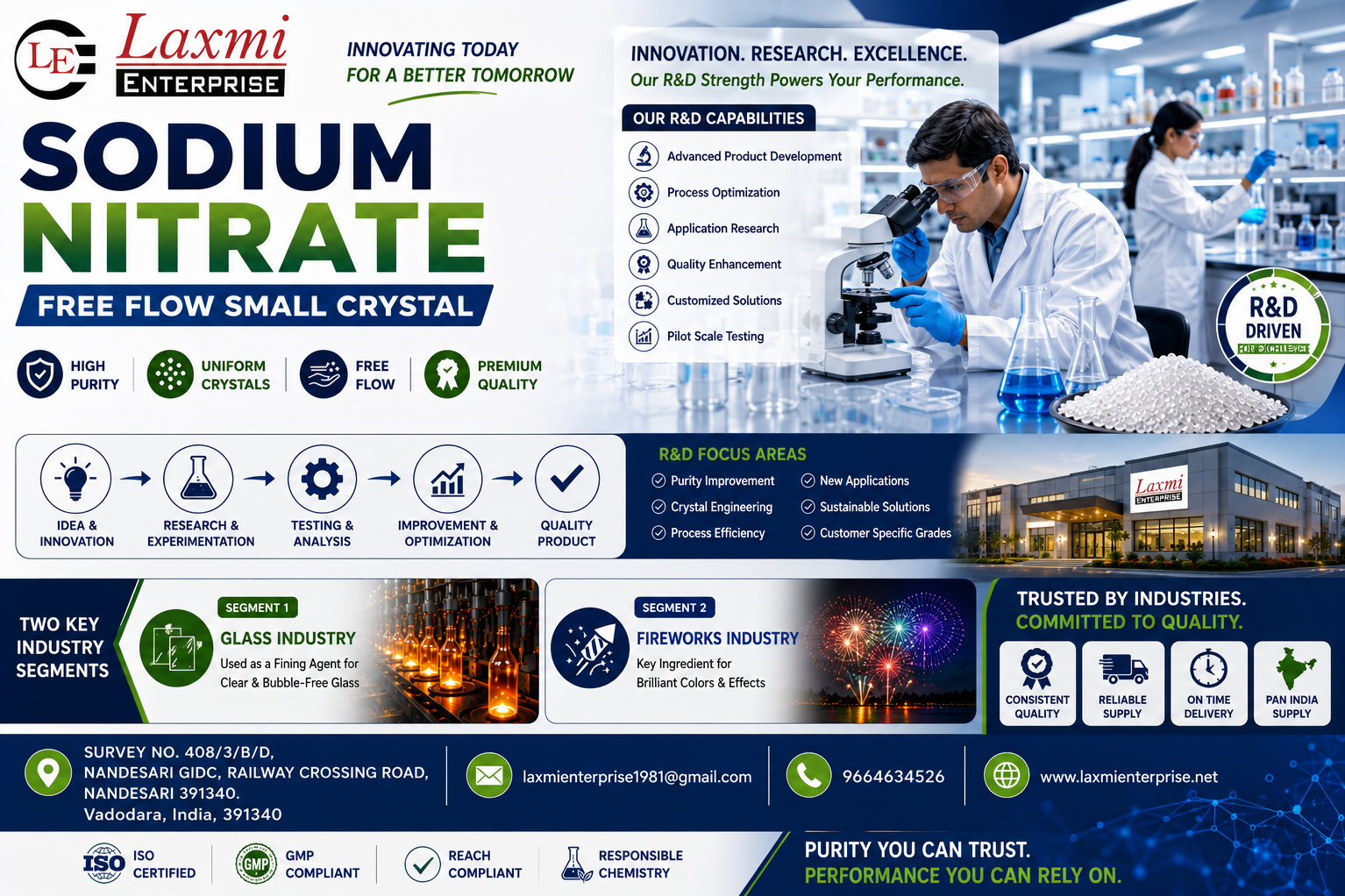
Laxmi Enterprise supplies industrial-grade Sodium Nitrate to customers across India for demanding manufacturing applications.
Customers value:
Reliable quality
Consistent supply
Competitive pricing
Prompt dispatch
Technical documentation
Secure packaging
Professional customer support
Long-term supply relationships
Frequently Asked Questions (FAQ)
1. Why is Sodium Nitrate used in mirror glass manufacturing?
Sodium Nitrate is primarily used during the float glass manufacturing stage rather than the silver coating stage. It supports oxidation and refining processes that help produce cleaner molten glass with fewer bubbles and optical defects, creating a better substrate for mirror production.
2. Does Sodium Nitrate directly create the reflective surface of a mirror?
No. The reflective surface is typically created by applying a metallic layer, commonly silver, to one side of the finished glass. Sodium Nitrate contributes earlier in the process by helping improve the quality of the glass itself.
3. Why is optical clarity important for mirrors?
A mirror reflects every detail visible on its surface. Even minor defects within the glass can distort reflections, reduce brightness, or create visual imperfections. High optical clarity is therefore essential for premium mirror products.
4. Can bubbles inside the glass affect reflection quality?
Yes. Microscopic bubbles can become more noticeable after the reflective coating is applied. While some very small inclusions may not affect functionality, visible bubbles can reduce aesthetic quality and lead to product rejection in premium applications.
5. How does glass quality influence silver coating?
A clean, smooth, and homogeneous glass surface supports more uniform silver deposition and better coating adhesion. Defects or contamination on the substrate may reduce coating quality and long-term durability.
6. Why do manufacturers inspect mirrors before packaging?
Final inspection helps identify defects such as scratches, coating irregularities, optical distortion, edge damage, or color variations. Detecting these issues before shipment helps maintain product quality and customer satisfaction.
7. Does Sodium Nitrate affect the color of mirror glass?
Its role is indirect. By supporting suitable oxidation conditions during glass melting, Sodium Nitrate contributes to consistent furnace chemistry, which helps manufacturers achieve stable optical characteristics. The final color also depends on raw material purity and overall glass composition.
8. What industries require premium mirror glass?
Premium mirror glass is widely used in architecture, hospitality, healthcare, furniture manufacturing, automotive components, elevators, luxury interiors, retail displays, gyms, and decorative applications where high reflection quality is important.
9. What documents do industrial buyers expect with Sodium Nitrate shipments?
Most buyers require a Certificate of Analysis (COA), batch identification, product specifications, packing details, safety documentation where applicable, and commercial shipping documents to support quality assurance and traceability.
10. Why is supplier consistency important?
Consistent Sodium Nitrate quality helps manufacturers maintain stable furnace conditions and predictable refining performance. Reliable supply also reduces production interruptions and supports consistent finished product quality over long manufacturing campaigns.
11. How should Sodium Nitrate be stored before use?
It should be stored in a clean, dry, well-ventilated area in sealed packaging to minimize moisture uptake and contamination. Storage practices should always follow applicable industrial safety guidelines.
12. Can the quality of raw materials influence mirror durability?
Yes. The long-term performance of a mirror depends on several factors, including the quality of the glass substrate, coating process, protective backing, manufacturing controls, and environmental exposure. Consistent raw materials contribute to overall product reliability.
Conclusion
Exceptional mirrors begin with exceptional glass. Before silver coating, painting, or final finishing, manufacturers must first produce a clean, homogeneous, and optically precise glass substrate. Sodium Nitrate supports this objective by assisting oxidation and refining during glass melting, helping reduce defects that can affect reflection quality and downstream processing.
For manufacturers seeking dependable industrial-grade Sodium Nitrate backed by consistent quality, technical documentation, and reliable nationwide supply, Laxmi Enterprise continues to support glass manufacturers and other industrial sectors with products designed to meet demanding production requirements.