What is a Sodium Sulfate Crystallizer?
A Sodium Sulfate Crystallizer is industrial equipment designed to separate sodium sulfate crystals (Na₂SO₄·10H₂O or anhydrous Na₂SO₄) from an aqueous solution through controlled evaporation or cooling.
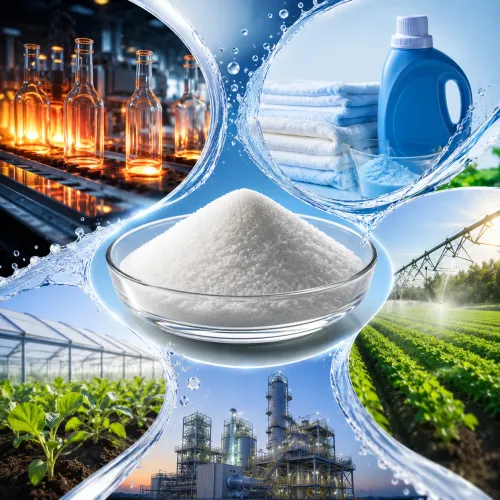
It’s used for recovery, purification, and drying of sodium sulfate in industries such as:
Detergent manufacturing
Pulp & paper (kraft recovery process)
Textile dyeing and bleaching
Glass and ceramics
Chemical intermediates and battery industries
* Types of Sodium Sulfate Crystallizers
1. Forced Circulation (FC) Crystallizer
Most common for sodium sulfate decahydrate.
Circulates slurry through a heat exchanger and back to a crystallization chamber.
Ensures uniform supersaturation and large, uniform crystals.
Often coupled with a steam-heated evaporator.
Advantages:
Handles high viscosity and impurities.
Low maintenance and continuous operation.
2. Draft Tube Baffle (DTB) Crystallizer
Combines classification and crystallization in one vessel.
Produces large, well-formed crystals.
Suitable when crystal size control is crucial (e.g., for detergent-grade sodium sulfate).
Advantages:
Excellent crystal quality.
Reduced fines formation.
Good energy efficiency.
3. Vacuum Crystallizer
Operates under reduced pressure to lower the boiling point of water.
Ideal for temperature-sensitive or energy-efficient crystallization.
Advantages:
Lower energy consumption.
Gentle operation, minimal degradation.
4. Cooling Crystallizer
Cools a saturated solution to precipitate sodium sulfate.
Typically used for purification or recovery from process liquors.
Advantages:
Low utility cost.
Easy integration with waste heat or chilled water systems.
* Key Equipment Components
Crystallization chamber (SS316L or duplex steel)
Circulation pump (for FC types)
Heat exchanger / Steam jacket
Vacuum system (for evaporative or vacuum crystallizers)
Centrifuge or filter (for solid-liquid separation)
Mother liquor recycle system
Instrumentation: level, temperature, pressure, and conductivity sensors
Automation: PLC/DCS control for feed, temperature, and supersaturation
*Design Parameters
Parameter Typical Range
Feed concentration 10–30 wt% Na₂SO₄
Operating temperature 35–120 °C
Pressure Atmospheric to 0.1 bar abs (vacuum)
Crystal size 0.3–3 mm
Yield 90–98%
Material of construction SS316L, Duplex SS, FRP-lined carbon steel
* Typical Process Flow
Feed liquor enters crystallizer.
Heating or evaporation increases supersaturation.
Crystals nucleate and grow.
Slurry is circulated to maintain uniform crystal suspension.
Centrifugation or filtration separates sodium sulfate crystals.
Mother liquor is recycled or purged.
Crystals are dried in rotary or fluid bed dryers.
Manufacturers / Suppliers (India & Global)
Chem Process Systems Pvt. Ltd. – Vadodara
Vapco Engineers Pvt. Ltd. – Mumbai
Excel Plants & Equipment Pvt. Ltd. – Pune
Bucher Unipektin AG – Switzerland
GEA Group – Germany
Evapco Inc. – USA
* Applications
Recovery of sodium sulfate from waste streams in detergent or viscose plants.
Crystallization from Glauber’s salt (Na₂SO₄·10H₂O).
By-product recovery from hydrochloric acid or sodium chloride processes.
Zero Liquid Discharge (ZLD) systems in effluent treatment
Here’s a comprehensive overview of industrial sodium sulfate drying techniques, covering both decahydrate (Na₂SO₄·10H₂O) and anhydrous sodium sulfate (Na₂SO₄) — including process flow, equipment types, operating conditions, and best practices used in large-scale plants.
1. Purpose of Drying Sodium Sulfate
Drying converts wet crystals or hydrated salt (usually from crystallizers or centrifuges) into anhydrous sodium sulfate suitable for:
Detergent and soap industries
Glass and ceramics manufacturing
Pulp and paper
Dye and textile processing
Battery and chemical synthesis
Drying removes free moisture and, in case of decahydrate, also drives crystal water removal to produce the anhydrous form.
2. Common Industrial Drying Techniques
A. Rotary Drum Dryer
Most widely used for sodium sulfate.
Working Principle:
A rotating cylindrical shell with internal lifters tumbles the material through a hot air stream.
Heat transfer occurs by convection, drying the crystals efficiently.
Key Parameters:
Parameter Typical Range
Inlet temperature 250–400 °C
Outlet temperature 90–120 °C
Residence time 20–40 minutes
Moisture (final) <0.2 wt %
Capacity 500 kg/h to 20 TPH
Material of Construction SS316L or carbon steel with special coatings
Advantages:
Continuous operation.
Handles high throughput and variable feed moisture.
Robust and low maintenance.
Disadvantages:
High dust load in exhaust.
Moderate energy efficiency.
B. Fluid Bed Dryer (FBD)
Used when precise temperature control and uniform drying are critical.
Working Principle:
Hot air passes upward through a perforated plate, fluidizing the sodium sulfate crystals.
This ensures uniform contact and rapid drying.
Key Parameters:
Parameter Typical Range
Air temperature 120–180 °C
Air velocity 0.8–1.2 m/s
Moisture (final) <0.1 wt %
Residence time 10–25 minutes
Advantages:
High thermal efficiency (60–70%).
Uniform particle drying.
Compact footprint and dust control.
Disadvantages:
Sensitive to particle size variations.
Higher initial cost.
C. Flash Dryer
Used for fine sodium sulfate powder or centrifuge cake with high initial moisture (20–30%).
Working Principle:
Material is dispersed in a high-velocity hot air stream inside a vertical duct.
Moisture evaporates rapidly within seconds.
Key Parameters:
Parameter Typical Range
Air temperature 180–300 °C
Residence time <5 seconds
Moisture (final) 0.1–0.3 wt %
Particle size <500 µm
Advantages:
Very fast drying.
Compact system.
Suitable for fine powders.
Disadvantages:
High dust load — needs cyclone & bag filter.
Less suitable for large crystal sizes.
D. Spray Dryer
Used when sodium sulfate is produced from solution, especially in detergent intermediates.
Working Principle:
A concentrated sodium sulfate solution is atomized into a hot air chamber, instantly forming dry, free-flowing powder.
Key Parameters:
Parameter Typical Range
Inlet air temp. 200–300 °C
Outlet air temp. 90–110 °C
Particle size 80–200 µm
Moisture (final) <0.3 wt %
Advantages:
Produces uniform, spherical particles.
Continuous and clean operation.
Integrated with upstream crystallization or evaporation.
Disadvantages:
High capital and energy cost.
Requires clean feed liquor.
E. Vacuum Tray Dryer (Batch)
Used for small-scale or specialty grades of sodium sulfate (e.g., lab-grade or pharmaceutical).
Key Parameters:
Parameter Typical Range
Temperature 60–120 °C
Pressure 100–200 mmHg
Drying time 6–10 hours
Advantages:
Gentle drying, avoids decomposition.
Precise moisture control.
Disadvantages:
Batch operation.
Limited capacity.
3. Comparison Summary
Dryer Type Capacity Energy Efficiency Product Form Best For
Rotary Drum High Moderate Granular/Crystals Bulk industrial
Fluid Bed Medium High Uniform crystals Detergent, battery grade
Flash Medium Moderate Fine powder Waste recovery
Spray Medium Moderate Fine, spherical Solution drying
Vacuum Tray Low Low Specialty grade Laboratory, pharma
4. Integration in a Sodium Sulfate Plant
Typical sequence:
Crystallizer → Centrifuge → Dryer (Rotary/FBD/Flash) → Cooler → Storage silo
Dust-laden exhaust gases pass through cyclones + bag filters.
Optional fluid cooling before packaging to avoid caking.
5. Energy Optimization Tips
Use waste heat from boiler flue gases.
Implement heat recovery systems (HRSG / economizers).
Employ multi-effect evaporation before drying to minimize water load.
Maintain controlled air humidity in dryers to prevent caking.
6. Leading Equipment Manufacturers (India)
Chem Process Systems Pvt. Ltd., Vadodara
Raj Process Equipments, Pune
Evaporators & Dryers Engineering, Mumbai
Kilburn Engineering Ltd., Thane
Shachi Engineering Pvt. Ltd., Pune
• Buy Sodium Sulphate
• Sodium Sulphate for Sale
• Sodium Sulphate Supplier
• Sodium Sulphate Manufacturers
• Sodium Sulphate Exporter
• Sodium Sulphate Powder
• Industrial Grade Sodium Sulphate
• Anhydrous Sodium Sulphate
• Sodium Sulphate Bulk Supply
• Sodium Sulfate Distributor
A Sodium Sulfate Crystallizer is industrial equipment designed to separate sodium sulfate crystals (Na₂SO₄·10H₂O or anhydrous Na₂SO₄) from an aqueous solution through controlled evaporation or cooling.
It’s used for recovery, purification, and drying of sodium sulfate in industries such as:
Detergent manufacturing
Pulp & paper (kraft recovery process)
Textile dyeing and bleaching
Glass and ceramics
Chemical intermediates and battery industries
* Types of Sodium Sulfate Crystallizers
1. Forced Circulation (FC) Crystallizer
Most common for sodium sulfate decahydrate.
Circulates slurry through a heat exchanger and back to a crystallization chamber.
Ensures uniform supersaturation and large, uniform crystals.
Often coupled with a steam-heated evaporator.
Advantages:
Handles high viscosity and impurities.
Low maintenance and continuous operation.
2. Draft Tube Baffle (DTB) Crystallizer
Combines classification and crystallization in one vessel.
Produces large, well-formed crystals.
Suitable when crystal size control is crucial (e.g., for detergent-grade sodium sulfate).
Advantages:
Excellent crystal quality.
Reduced fines formation.
Good energy efficiency.
3. Vacuum Crystallizer
Operates under reduced pressure to lower the boiling point of water.
Ideal for temperature-sensitive or energy-efficient crystallization.
Advantages:
Lower energy consumption.
Gentle operation, minimal degradation.
4. Cooling Crystallizer
Cools a saturated solution to precipitate sodium sulfate.
Typically used for purification or recovery from process liquors.
Advantages:
Low utility cost.
Easy integration with waste heat or chilled water systems.
* Key Equipment Components
Crystallization chamber (SS316L or duplex steel)
Circulation pump (for FC types)
Heat exchanger / Steam jacket
Vacuum system (for evaporative or vacuum crystallizers)
Centrifuge or filter (for solid-liquid separation)
Mother liquor recycle system
Instrumentation: level, temperature, pressure, and conductivity sensors
Automation: PLC/DCS control for feed, temperature, and supersaturation
*Design Parameters
Parameter Typical Range
Feed concentration 10–30 wt% Na₂SO₄
Operating temperature 35–120 °C
Pressure Atmospheric to 0.1 bar abs (vacuum)
Crystal size 0.3–3 mm
Yield 90–98%
Material of construction SS316L, Duplex SS, FRP-lined carbon steel
* Typical Process Flow
Feed liquor enters crystallizer.
Heating or evaporation increases supersaturation.
Crystals nucleate and grow.
Slurry is circulated to maintain uniform crystal suspension.
Centrifugation or filtration separates sodium sulfate crystals.
Mother liquor is recycled or purged.
Crystals are dried in rotary or fluid bed dryers.
Manufacturers / Suppliers (India & Global)
Chem Process Systems Pvt. Ltd. – Vadodara
Vapco Engineers Pvt. Ltd. – Mumbai
Excel Plants & Equipment Pvt. Ltd. – Pune
Bucher Unipektin AG – Switzerland
GEA Group – Germany
Evapco Inc. – USA
* Applications
Recovery of sodium sulfate from waste streams in detergent or viscose plants.
Crystallization from Glauber’s salt (Na₂SO₄·10H₂O).
By-product recovery from hydrochloric acid or sodium chloride processes.
Zero Liquid Discharge (ZLD) systems in effluent treatment
Here’s a comprehensive overview of industrial sodium sulfate drying techniques, covering both decahydrate (Na₂SO₄·10H₂O) and anhydrous sodium sulfate (Na₂SO₄) — including process flow, equipment types, operating conditions, and best practices used in large-scale plants.
1. Purpose of Drying Sodium Sulfate
Drying converts wet crystals or hydrated salt (usually from crystallizers or centrifuges) into anhydrous sodium sulfate suitable for:
Detergent and soap industries
Glass and ceramics manufacturing
Pulp and paper
Dye and textile processing
Battery and chemical synthesis
Drying removes free moisture and, in case of decahydrate, also drives crystal water removal to produce the anhydrous form.
2. Common Industrial Drying Techniques
A. Rotary Drum Dryer
Most widely used for sodium sulfate.
Working Principle:
A rotating cylindrical shell with internal lifters tumbles the material through a hot air stream.
Heat transfer occurs by convection, drying the crystals efficiently.
Key Parameters:
Parameter Typical Range
Inlet temperature 250–400 °C
Outlet temperature 90–120 °C
Residence time 20–40 minutes
Moisture (final) <0.2 wt %
Capacity 500 kg/h to 20 TPH
Material of Construction SS316L or carbon steel with special coatings
Advantages:
Continuous operation.
Handles high throughput and variable feed moisture.
Robust and low maintenance.
Disadvantages:
High dust load in exhaust.
Moderate energy efficiency.
B. Fluid Bed Dryer (FBD)
Used when precise temperature control and uniform drying are critical.
Working Principle:
Hot air passes upward through a perforated plate, fluidizing the sodium sulfate crystals.
This ensures uniform contact and rapid drying.
Key Parameters:
Parameter Typical Range
Air temperature 120–180 °C
Air velocity 0.8–1.2 m/s
Moisture (final) <0.1 wt %
Residence time 10–25 minutes
Advantages:
High thermal efficiency (60–70%).
Uniform particle drying.
Compact footprint and dust control.
Disadvantages:
Sensitive to particle size variations.
Higher initial cost.
C. Flash Dryer
Used for fine sodium sulfate powder or centrifuge cake with high initial moisture (20–30%).
Working Principle:
Material is dispersed in a high-velocity hot air stream inside a vertical duct.
Moisture evaporates rapidly within seconds.
Key Parameters:
Parameter Typical Range
Air temperature 180–300 °C
Residence time <5 seconds
Moisture (final) 0.1–0.3 wt %
Particle size <500 µm
Advantages:
Very fast drying.
Compact system.
Suitable for fine powders.
Disadvantages:
High dust load — needs cyclone & bag filter.
Less suitable for large crystal sizes.
D. Spray Dryer
Used when sodium sulfate is produced from solution, especially in detergent intermediates.
Working Principle:
A concentrated sodium sulfate solution is atomized into a hot air chamber, instantly forming dry, free-flowing powder.
Key Parameters:
Parameter Typical Range
Inlet air temp. 200–300 °C
Outlet air temp. 90–110 °C
Particle size 80–200 µm
Moisture (final) <0.3 wt %
Advantages:
Produces uniform, spherical particles.
Continuous and clean operation.
Integrated with upstream crystallization or evaporation.
Disadvantages:
High capital and energy cost.
Requires clean feed liquor.
E. Vacuum Tray Dryer (Batch)
Used for small-scale or specialty grades of sodium sulfate (e.g., lab-grade or pharmaceutical).
Key Parameters:
Parameter Typical Range
Temperature 60–120 °C
Pressure 100–200 mmHg
Drying time 6–10 hours
Advantages:
Gentle drying, avoids decomposition.
Precise moisture control.
Disadvantages:
Batch operation.
Limited capacity.
3. Comparison Summary
Dryer Type Capacity Energy Efficiency Product Form Best For
Rotary Drum High Moderate Granular/Crystals Bulk industrial
Fluid Bed Medium High Uniform crystals Detergent, battery grade
Flash Medium Moderate Fine powder Waste recovery
Spray Medium Moderate Fine, spherical Solution drying
Vacuum Tray Low Low Specialty grade Laboratory, pharma
4. Integration in a Sodium Sulfate Plant
Typical sequence:
Crystallizer → Centrifuge → Dryer (Rotary/FBD/Flash) → Cooler → Storage silo
Dust-laden exhaust gases pass through cyclones + bag filters.
Optional fluid cooling before packaging to avoid caking.
5. Energy Optimization Tips
Use waste heat from boiler flue gases.
Implement heat recovery systems (HRSG / economizers).
Employ multi-effect evaporation before drying to minimize water load.
Maintain controlled air humidity in dryers to prevent caking.
6. Leading Equipment Manufacturers (India)
Chem Process Systems Pvt. Ltd., Vadodara
Raj Process Equipments, Pune
Evaporators & Dryers Engineering, Mumbai
Kilburn Engineering Ltd., Thane
Shachi Engineering Pvt. Ltd., Pune
• Buy Sodium Sulphate
• Sodium Sulphate for Sale
• Sodium Sulphate Supplier
• Sodium Sulphate Manufacturers
• Sodium Sulphate Exporter
• Sodium Sulphate Powder
• Industrial Grade Sodium Sulphate
• Anhydrous Sodium Sulphate
• Sodium Sulphate Bulk Supply
• Sodium Sulfate Distributor
Keywords