INDUSTRIAL SODIUM SULPHATE PRODUCTION METHODS
Overview
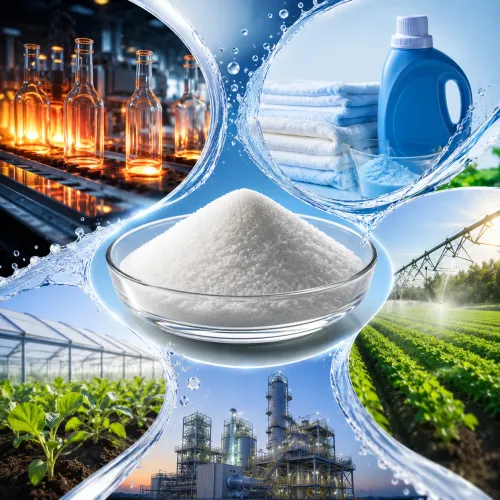
Sodium Sulphate (Na₂SO₄), also known as salt cake or Glauber’s salt (Na₂SO₄·10H₂O), is an important inorganic chemical used in detergents, glass, textiles, and pulp & paper industries. It can be produced both synthetically and as a by-product from various chemical processes.
Industrial Sodium Sulphate – Production Methods
Chemical Name: Sodium Sulphate
Chemical Formula: Na₂SO₄
CAS Number: 7757-82-6
Molecular Weight: 142.04 g/mol
Common Forms:
Anhydrous Sodium Sulphate
Decahydrate (Glauber’s Salt)
1. By-Product Recovery Method (from Chemical Processes)
One of the most common industrial sources of sodium sulphate is as a by-product in various chemical manufacturing processes.
a. From Hydrochloric Acid Production
Occurs when sodium chloride (salt) reacts with sulphuric acid at high temperature (about 800 °C).
The resulting sodium sulphate (salt cake) is separated and purified.
Widely used in glass and detergent industries.
Advantages:
Low raw material cost.
Utilizes waste stream from acid plants.
By-product: Hydrogen chloride gas (used to make HCl).
2. From Sodium Carbonate and Sulphuric Acid
This process uses soda ash (Na₂CO₃) and sulphuric acid (H₂SO₄).
Produces high-purity sodium sulphate, suitable for pharmaceutical or food-grade applications.
Key Steps:
Mixing and controlled heating of reactants.
Filtration of solid sodium sulphate.
Crystallization (for Glauber’s salt) or drying (for anhydrous form).
3. From Mirabilite Ore (Natural Mineral Process)
Natural mirabilite (Na₂SO₄·10H₂O) is extracted from salt lakes, brines, or mineral deposits.
Steps:
Mining / Extraction: Brine or lake water rich in sodium sulphate is pumped out.
Crystallization: The solution is cooled to precipitate Glauber’s salt (Na₂SO₄·10H₂O).
Separation & Drying: Crystals are separated and heated to obtain anhydrous Na₂SO₄.
Advantages:
Environmentally friendly (no acid use).
Cost-effective in regions with natural deposits (e.g., Gujarat, Rajasthan in India, China, Canada).
4. From Flue Gas Desulfurization (FGD) or Sulphur Recovery
Modern plants recover sodium sulphate as a by-product of pollution control or industrial scrubbing processes.
Used in power plants, pulp mills, and chemical recovery systems.
Produces high-purity sodium sulphate for reuse in paper or detergent industries.
5. From Sodium Bisulphate Neutralization
In some processes (like neutralizing sodium bisulphate waste streams):
This yields anhydrous sodium sulphate as a recyclable solid.
Comparison Table
Method Main Raw Materials Purity By-products Industrial Use
From NaCl + H₂SO₄ Salt, Sulphuric acid 96–98% HCl gas Detergent, Glass
From Na₂CO₃ + H₂SO₄ Soda ash, Sulphuric acid 99%+ CO₂, H₂O Food & Pharma
From Mirabilite Ore Natural brine or ore 99% — Textile, Pulp, Glass
From FGD / Recovery SO₂, NaOH 98–99% Water Paper, Recycling
From NaHSO₄ Sodium bisulphate 97–99% H₂SO₄ Chemical reuse
6. Purification and Finishing
After production, sodium sulphate undergoes:
Filtration and washing to remove impurities.
Crystallization or drying for desired form.
Sieving and packaging for industrial grades.
7. Sustainability and Economic Aspects
Natural recovery (mirabilite) has low carbon footprint.
Synthetic routes from NaCl or Na₂CO₃ are more energy-intensive but allow by-product valorization (e.g., HCl).
Increasing use of by-product sodium sulphate from chemical and detergent plants aligns with circular economy goals.
1. SYNTHETIC PRODUCTION METHODS
(a) Mannheim Process
One of the most common industrial methods for producing sodium sulphate.
Process Details:
Sodium chloride (common salt) reacts with concentrated sulphuric acid in a Mannheim furnace.
The reaction occurs in two stages:
Formation of sodium bisulphate (NaHSO₄)
Conversion to sodium sulphate
Hydrogen chloride gas (HCl) is recovered as a valuable by-product.
Applications:
Produces high-purity sodium sulphate used in detergents, dyes, and glass manufacturing.
(b) Hargreaves Process
Another synthetic route using gaseous sulphur dioxide, air, water vapor, and sodium chloride.
Advantages:
Utilizes waste SO₂ from smelters.
Environmentally friendly compared to the Mannheim process.
2. BY-PRODUCT (SECONDARY) SOURCES
Industrial sodium sulphate is also obtained as a by-product from various chemical manufacturing processes. These are known as salt cake by-products.
(a) From Viscose Rayon Production
During the neutralization of sodium hydroxide and sulphuric acid in viscose rayon plants, sodium sulphate forms as a by-product.
Often recovered from spin bath effluent.
(b) From Hydrofluoric Acid (HF) Manufacture
Reaction between fluorspar (CaF₂) and sulphuric acid produces HF gas and a sodium sulphate by-product when sodium salts are present.
(c) From Titanium Dioxide (TiO₂) Pigment Production
In the sulphate process, sodium sulphate forms as a by-product after the leaching and purification stages.
By-product sodium sulphate from this process is known as salt cake.
(d) From Detergent and Dye Intermediates
Some organic and dye intermediate processes (e.g., sulphonation or nitration) generate sodium sulphate as a neutralization by-product.
3. NATURAL SOURCES
Besides industrial routes, sodium sulphate is found in natural mineral deposits such as:
Mirabilite (Na₂SO₄·10H₂O) – Glauber’s salt
Thenardite (Na₂SO₄) – Anhydrous form
These are extracted and purified for industrial use in regions like India, Canada, Chile, and China.
4. QUALITY AND APPLICATIONS
Quality Parameters
Purity: 98–99%
pH: Neutral to slightly alkaline
Insoluble Matter: <0.05%
Applications
Detergent Industry: As a filler and processing aid
Glass Manufacturing: Fluxing agent to remove bubbles
Textile Dyeing: Leveling agent
Paper Pulp Industry: Kraft process chemical
Thermal Storage and Laboratory Use
Conclusion
Industrial sodium sulphate can be produced synthetically (Mannheim or Hargreaves process) or recovered as a by-product (salt cake) from other chemical operations. By-product recovery plays a key role in sustainable chemical manufacturing, reducing waste and environmental impact.
Sodium Sulphate as a Food Additive – Benefits and Applications
Chemical Name: Sodium Sulphate
Chemical Formula: Na₂SO₄
E Number (Food Additive Code): E514
Common Forms:
Anhydrous Sodium Sulphate (Na₂SO₄)
Decahydrate – Glauber’s Salt (Na₂SO₄·10H₂O)
* Overview
Sodium sulphate (E514) is an inorganic salt used in the food processing industry as a processing aid, stabilizer, and pH regulator.
While its direct use in foods is limited, it plays a vital role in food manufacturing, ingredient purification, and quality control processes.
* 1. Processing Aid in Food Manufacturing
Sodium sulphate acts as a supporting agent in the drying and concentration of food extracts, ensuring uniform texture and stability.
It helps maintain moisture balance during the dehydration of powdered foods such as:
Instant soups
Flavoring powders
Seasoning mixes
Benefit: Prevents caking and improves shelf stability of powdered products.
* 2. Clarifying and Purification Agent
In the production of sugar, starch, and gelatin, sodium sulphate assists in purification and clarification processes.
It helps remove impurities and suspended solids during crystallization or filtration.
Benefit: Improves color and purity of final food ingredients.
* 3. Electrolyte Balancer in Functional Foods
Sodium sulphate provides essential sodium and sulphate ions that support electrolyte balance in certain health drinks or rehydration formulations.
In small, controlled amounts, it aids fluid regulation and metabolic activity in the body.
Benefit: Supports hydration and mineral balance in specialized food and beverage formulations.
* 4. pH Buffer and Stabilizer
Functions as a neutral salt buffer to control acidity or alkalinity in certain food preparations.
Helps stabilize flavor, color, and shelf life of sensitive ingredients.
Benefit: Ensures consistent taste and product stability during storage.
* 5. Use in Food-Grade Chemical Processing
Sodium sulphate is commonly used in:
Food-grade enzyme manufacturing
Vitamins and additive purification
Extraction of natural food colors or essential oils
It acts as a salting-out agent to enhance separation and concentration of valuable food compounds.
Benefit: Improves yield and purity of high-value food ingredients.
* 6. Safe and Approved Usage
Recognized by FAO/WHO Codex Alimentarius and European Food Safety Authority (EFSA) as a safe additive (E514) when used within prescribed limits.
Non-toxic, non-flammable, and environmentally safe.
Does not react with food flavors or colors under normal processing conditions.
* 7. Health and Nutritional Aspects
Non-nutritive compound – does not add calories or affect macronutrient balance.
Sulphate ions may aid digestion and detoxification in trace amounts.
Overuse is avoided due to potential mild laxative effects, especially in beverages.
* 8. Typical Food Industry Applications
Application Area Function Examples
Sugar refining Clarifying agent Sugar mills, confectionery
Flavor & seasoning powders Drying aid, anti-caking Soup mixes, instant foods
Beverage formulations Electrolyte stabilizer Sports drinks, mineral water
Enzyme & vitamin production Salting-out agent Biotech & food-grade chemicals
Gelatin and starch refining Purification Capsules, desserts, thickeners
* Key Benefits Summary
Enhances purity and stability of food products
Supports electrolyte and pH balance
Functions as a safe, non-reactive additive
Aids in dehydration and drying processes
Suitable for food-grade chemical and processing applications
* Laxmi Enterprise – Food Grade Sodium Sulphate Supplier
Laxmi Enterprise, Vadodara, supplies high-purity food-grade sodium sulphate (E514) meeting FSSAI and international quality standards, suitable for:
Food ingredient manufacturing
Flavor and extract processing
Pharmaceutical and nutraceutical formulations
Available Grades:
Food Grade (≥99% purity)
Anhydrous and Decahydrate forms
Packaging:
25 kg / 50 kg HDPE bags with liner
Applications: Sugar, flavor, enzyme, and food ingredient industries
[[Sodium Sulphate as a Food Additive – Benefits and Applications, laxmi enterprise, vadodra, gujarat]]
• Buy Sodium Sulphate
• Sodium Sulphate for Sale
• Sodium Sulphate Supplier
• Sodium Sulphate Manufacturers
• Sodium Sulphate Exporter
• Sodium Sulphate Powder
• Industrial Grade Sodium Sulphate
• Anhydrous Sodium Sulphate
• Sodium Sulphate Bulk Supply
• Sodium Sulfate Distributor
• Certification Sodium Sulphate for Detergents
• Detergent Grade Sodium Sulphate
• Sodium Sulphate in Powdered Detergents
• Laundry Chemicals Supplier
• • Sodium Sulphate for Textile Processing
• • Textile Chemicals Supplier
• • Dye Fixing Agent Chemicals
• • Sodium Sulphate in Dyeing
• Sodium Sulphate for Glass Manufacturing
• Sodium Sulphate for Kraft Process
• Sodium Sulphate for Paper Industry
• Industrial Chemicals for Glass Production
• • Request Sodium Sulphate Quote
• • Bulk Sodium Sulphate Pricing
• • Sodium Sulphate MSDS Download
• • REACH-Compliant Sodium Sulphate
• • Sodium Sulphate with COA and SGS
• • “Get a Free Quote Now”
• • “Download Product Specifications”
• • “Request SDS & COA”
• • “Talk to a Product Expert”
• • “Order a Sample Batch”
Overview
Sodium Sulphate (Na₂SO₄), also known as salt cake or Glauber’s salt (Na₂SO₄·10H₂O), is an important inorganic chemical used in detergents, glass, textiles, and pulp & paper industries. It can be produced both synthetically and as a by-product from various chemical processes.
Industrial Sodium Sulphate – Production Methods
Chemical Name: Sodium Sulphate
Chemical Formula: Na₂SO₄
CAS Number: 7757-82-6
Molecular Weight: 142.04 g/mol
Common Forms:
Anhydrous Sodium Sulphate
Decahydrate (Glauber’s Salt)
1. By-Product Recovery Method (from Chemical Processes)
One of the most common industrial sources of sodium sulphate is as a by-product in various chemical manufacturing processes.
a. From Hydrochloric Acid Production
Occurs when sodium chloride (salt) reacts with sulphuric acid at high temperature (about 800 °C).
The resulting sodium sulphate (salt cake) is separated and purified.
Widely used in glass and detergent industries.
Advantages:
Low raw material cost.
Utilizes waste stream from acid plants.
By-product: Hydrogen chloride gas (used to make HCl).
2. From Sodium Carbonate and Sulphuric Acid
This process uses soda ash (Na₂CO₃) and sulphuric acid (H₂SO₄).
Produces high-purity sodium sulphate, suitable for pharmaceutical or food-grade applications.
Key Steps:
Mixing and controlled heating of reactants.
Filtration of solid sodium sulphate.
Crystallization (for Glauber’s salt) or drying (for anhydrous form).
3. From Mirabilite Ore (Natural Mineral Process)
Natural mirabilite (Na₂SO₄·10H₂O) is extracted from salt lakes, brines, or mineral deposits.
Steps:
Mining / Extraction: Brine or lake water rich in sodium sulphate is pumped out.
Crystallization: The solution is cooled to precipitate Glauber’s salt (Na₂SO₄·10H₂O).
Separation & Drying: Crystals are separated and heated to obtain anhydrous Na₂SO₄.
Advantages:
Environmentally friendly (no acid use).
Cost-effective in regions with natural deposits (e.g., Gujarat, Rajasthan in India, China, Canada).
4. From Flue Gas Desulfurization (FGD) or Sulphur Recovery
Modern plants recover sodium sulphate as a by-product of pollution control or industrial scrubbing processes.
Used in power plants, pulp mills, and chemical recovery systems.
Produces high-purity sodium sulphate for reuse in paper or detergent industries.
5. From Sodium Bisulphate Neutralization
In some processes (like neutralizing sodium bisulphate waste streams):
This yields anhydrous sodium sulphate as a recyclable solid.
Comparison Table
Method Main Raw Materials Purity By-products Industrial Use
From NaCl + H₂SO₄ Salt, Sulphuric acid 96–98% HCl gas Detergent, Glass
From Na₂CO₃ + H₂SO₄ Soda ash, Sulphuric acid 99%+ CO₂, H₂O Food & Pharma
From Mirabilite Ore Natural brine or ore 99% — Textile, Pulp, Glass
From FGD / Recovery SO₂, NaOH 98–99% Water Paper, Recycling
From NaHSO₄ Sodium bisulphate 97–99% H₂SO₄ Chemical reuse
6. Purification and Finishing
After production, sodium sulphate undergoes:
Filtration and washing to remove impurities.
Crystallization or drying for desired form.
Sieving and packaging for industrial grades.
7. Sustainability and Economic Aspects
Natural recovery (mirabilite) has low carbon footprint.
Synthetic routes from NaCl or Na₂CO₃ are more energy-intensive but allow by-product valorization (e.g., HCl).
Increasing use of by-product sodium sulphate from chemical and detergent plants aligns with circular economy goals.
1. SYNTHETIC PRODUCTION METHODS
(a) Mannheim Process
One of the most common industrial methods for producing sodium sulphate.
Process Details:
Sodium chloride (common salt) reacts with concentrated sulphuric acid in a Mannheim furnace.
The reaction occurs in two stages:
Formation of sodium bisulphate (NaHSO₄)
Conversion to sodium sulphate
Hydrogen chloride gas (HCl) is recovered as a valuable by-product.
Applications:
Produces high-purity sodium sulphate used in detergents, dyes, and glass manufacturing.
(b) Hargreaves Process
Another synthetic route using gaseous sulphur dioxide, air, water vapor, and sodium chloride.
Advantages:
Utilizes waste SO₂ from smelters.
Environmentally friendly compared to the Mannheim process.
2. BY-PRODUCT (SECONDARY) SOURCES
Industrial sodium sulphate is also obtained as a by-product from various chemical manufacturing processes. These are known as salt cake by-products.
(a) From Viscose Rayon Production
During the neutralization of sodium hydroxide and sulphuric acid in viscose rayon plants, sodium sulphate forms as a by-product.
Often recovered from spin bath effluent.
(b) From Hydrofluoric Acid (HF) Manufacture
Reaction between fluorspar (CaF₂) and sulphuric acid produces HF gas and a sodium sulphate by-product when sodium salts are present.
(c) From Titanium Dioxide (TiO₂) Pigment Production
In the sulphate process, sodium sulphate forms as a by-product after the leaching and purification stages.
By-product sodium sulphate from this process is known as salt cake.
(d) From Detergent and Dye Intermediates
Some organic and dye intermediate processes (e.g., sulphonation or nitration) generate sodium sulphate as a neutralization by-product.
3. NATURAL SOURCES
Besides industrial routes, sodium sulphate is found in natural mineral deposits such as:
Mirabilite (Na₂SO₄·10H₂O) – Glauber’s salt
Thenardite (Na₂SO₄) – Anhydrous form
These are extracted and purified for industrial use in regions like India, Canada, Chile, and China.
4. QUALITY AND APPLICATIONS
Quality Parameters
Purity: 98–99%
pH: Neutral to slightly alkaline
Insoluble Matter: <0.05%
Applications
Detergent Industry: As a filler and processing aid
Glass Manufacturing: Fluxing agent to remove bubbles
Textile Dyeing: Leveling agent
Paper Pulp Industry: Kraft process chemical
Thermal Storage and Laboratory Use
Conclusion
Industrial sodium sulphate can be produced synthetically (Mannheim or Hargreaves process) or recovered as a by-product (salt cake) from other chemical operations. By-product recovery plays a key role in sustainable chemical manufacturing, reducing waste and environmental impact.
Sodium Sulphate as a Food Additive – Benefits and Applications
Chemical Name: Sodium Sulphate
Chemical Formula: Na₂SO₄
E Number (Food Additive Code): E514
Common Forms:
Anhydrous Sodium Sulphate (Na₂SO₄)
Decahydrate – Glauber’s Salt (Na₂SO₄·10H₂O)
* Overview
Sodium sulphate (E514) is an inorganic salt used in the food processing industry as a processing aid, stabilizer, and pH regulator.
While its direct use in foods is limited, it plays a vital role in food manufacturing, ingredient purification, and quality control processes.
* 1. Processing Aid in Food Manufacturing
Sodium sulphate acts as a supporting agent in the drying and concentration of food extracts, ensuring uniform texture and stability.
It helps maintain moisture balance during the dehydration of powdered foods such as:
Instant soups
Flavoring powders
Seasoning mixes
Benefit: Prevents caking and improves shelf stability of powdered products.
* 2. Clarifying and Purification Agent
In the production of sugar, starch, and gelatin, sodium sulphate assists in purification and clarification processes.
It helps remove impurities and suspended solids during crystallization or filtration.
Benefit: Improves color and purity of final food ingredients.
* 3. Electrolyte Balancer in Functional Foods
Sodium sulphate provides essential sodium and sulphate ions that support electrolyte balance in certain health drinks or rehydration formulations.
In small, controlled amounts, it aids fluid regulation and metabolic activity in the body.
Benefit: Supports hydration and mineral balance in specialized food and beverage formulations.
* 4. pH Buffer and Stabilizer
Functions as a neutral salt buffer to control acidity or alkalinity in certain food preparations.
Helps stabilize flavor, color, and shelf life of sensitive ingredients.
Benefit: Ensures consistent taste and product stability during storage.
* 5. Use in Food-Grade Chemical Processing
Sodium sulphate is commonly used in:
Food-grade enzyme manufacturing
Vitamins and additive purification
Extraction of natural food colors or essential oils
It acts as a salting-out agent to enhance separation and concentration of valuable food compounds.
Benefit: Improves yield and purity of high-value food ingredients.
* 6. Safe and Approved Usage
Recognized by FAO/WHO Codex Alimentarius and European Food Safety Authority (EFSA) as a safe additive (E514) when used within prescribed limits.
Non-toxic, non-flammable, and environmentally safe.
Does not react with food flavors or colors under normal processing conditions.
* 7. Health and Nutritional Aspects
Non-nutritive compound – does not add calories or affect macronutrient balance.
Sulphate ions may aid digestion and detoxification in trace amounts.
Overuse is avoided due to potential mild laxative effects, especially in beverages.
* 8. Typical Food Industry Applications
Application Area Function Examples
Sugar refining Clarifying agent Sugar mills, confectionery
Flavor & seasoning powders Drying aid, anti-caking Soup mixes, instant foods
Beverage formulations Electrolyte stabilizer Sports drinks, mineral water
Enzyme & vitamin production Salting-out agent Biotech & food-grade chemicals
Gelatin and starch refining Purification Capsules, desserts, thickeners
* Key Benefits Summary
Enhances purity and stability of food products
Supports electrolyte and pH balance
Functions as a safe, non-reactive additive
Aids in dehydration and drying processes
Suitable for food-grade chemical and processing applications
* Laxmi Enterprise – Food Grade Sodium Sulphate Supplier
Laxmi Enterprise, Vadodara, supplies high-purity food-grade sodium sulphate (E514) meeting FSSAI and international quality standards, suitable for:
Food ingredient manufacturing
Flavor and extract processing
Pharmaceutical and nutraceutical formulations
Available Grades:
Food Grade (≥99% purity)
Anhydrous and Decahydrate forms
Packaging:
25 kg / 50 kg HDPE bags with liner
Applications: Sugar, flavor, enzyme, and food ingredient industries
[[Sodium Sulphate as a Food Additive – Benefits and Applications, laxmi enterprise, vadodra, gujarat]]
• Buy Sodium Sulphate
• Sodium Sulphate for Sale
• Sodium Sulphate Supplier
• Sodium Sulphate Manufacturers
• Sodium Sulphate Exporter
• Sodium Sulphate Powder
• Industrial Grade Sodium Sulphate
• Anhydrous Sodium Sulphate
• Sodium Sulphate Bulk Supply
• Sodium Sulfate Distributor
• Certification Sodium Sulphate for Detergents
• Detergent Grade Sodium Sulphate
• Sodium Sulphate in Powdered Detergents
• Laundry Chemicals Supplier
• • Sodium Sulphate for Textile Processing
• • Textile Chemicals Supplier
• • Dye Fixing Agent Chemicals
• • Sodium Sulphate in Dyeing
• Sodium Sulphate for Glass Manufacturing
• Sodium Sulphate for Kraft Process
• Sodium Sulphate for Paper Industry
• Industrial Chemicals for Glass Production
• • Request Sodium Sulphate Quote
• • Bulk Sodium Sulphate Pricing
• • Sodium Sulphate MSDS Download
• • REACH-Compliant Sodium Sulphate
• • Sodium Sulphate with COA and SGS
• • “Get a Free Quote Now”
• • “Download Product Specifications”
• • “Request SDS & COA”
• • “Talk to a Product Expert”
• • “Order a Sample Batch”
Keywords