
Sodium Sulphate in Glass Fiber Manufacturing
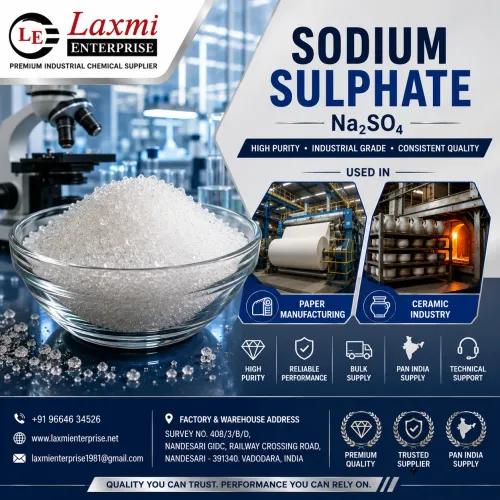
Glass fiber has become an essential material for modern industries because of its excellent strength, lightweight nature, corrosion resistance, and thermal stability. It is widely used in construction, automotive components, wind energy, electrical insulation, marine products, aerospace, and composite manufacturing. Producing high-quality glass fiber requires carefully controlled raw materials, and sodium sulphate is one of the industrial chemicals used during glass production to support stable manufacturing conditions.
Glass manufacturers prefer high-purity sodium sulphate because of its consistent composition, reliable quality, and compatibility with large-scale melting operations. Selecting the right grade helps manufacturers achieve better production efficiency and maintain consistent glass quality.
Why Sodium Sulphate Is Used in Glass Fiber Production
Glass fiber is manufactured by melting carefully selected mineral raw materials at extremely high temperatures before drawing the molten glass into fine continuous filaments.
Every ingredient added to the glass batch influences the melting process and the quality of the finished glass. Sodium sulphate is used in many glass manufacturing operations because it supports efficient melting and contributes to stable furnace performance.
Its predictable chemical behavior makes it suitable for continuous industrial production where consistency is essential.
Physical Properties That Support Glass Manufacturing
Several characteristics make sodium sulphate suitable for glass fiber production.
High chemical purity
Uniform crystalline structure
Excellent storage stability
Consistent particle size
Low insoluble matter
Reliable handling properties
Good compatibility with glass batch materials
Stable quality during transportation
These characteristics help manufacturers maintain consistent production from one batch to another.
Importance in Large-Scale Glass Fiber Plants
Modern glass fiber facilities operate continuously for long periods.
Production interruptions can significantly increase operating costs, making reliable raw materials extremely important.
High-quality sodium sulphate supports smooth raw material preparation and contributes to stable manufacturing operations throughout extended production cycles.
Consistent quality also simplifies process monitoring and quality control.
Benefits for Glass Manufacturers
Using premium-grade sodium sulphate provides several operational advantages.
Supports consistent raw material blending
Contributes to stable production conditions
Maintains batch uniformity
Suitable for automated feeding systems
Reliable storage characteristics
Consistent supply for continuous manufacturing
Compatible with various glass formulations
Supports efficient production planning
These advantages improve manufacturing efficiency while helping maintain product quality.
Applications of Glass Fiber Products
Glass fiber manufactured using controlled production processes is used in many industries.
Construction materials
Fiberglass insulation
Wind turbine blades
Automotive composite parts
Electrical insulation products
Marine equipment
Industrial storage tanks
Pipes and pressure vessels
Consumer appliances
Infrastructure reinforcement
Growing demand from these industries continues to increase the importance of reliable glass manufacturing raw materials.
Quality Considerations for Industrial Buyers
Industrial glass manufacturers generally evaluate several important quality parameters before selecting sodium sulphate.
Chemical purity
Particle size consistency
Moisture content
Low impurity levels
Reliable packaging
Batch consistency
Technical documentation
Supply capability
Consistent raw material quality helps reduce manufacturing variability and supports long-term production stability.
Contribution to Manufacturing Efficiency
Large production facilities depend on uninterrupted material flow.
High-quality sodium sulphate offers several manufacturing benefits.
Supports continuous furnace operations
Improves raw material handling
Reduces process variability
Simplifies inventory management
Maintains production consistency
Supports automated material feeding
Enhances overall operational efficiency
Reliable raw materials contribute to smoother manufacturing operations and improved productivity.
Storage and Handling Recommendations
Proper storage helps preserve product quality before use.
Store in dry warehouses
Protect from moisture exposure
Use sealed packaging
Prevent contamination
Maintain organized inventory
Handle with clean equipment
Inspect packaging before use
Following proper storage practices helps maintain consistent raw material quality.
Sustainability in Glass Manufacturing
Glass manufacturers continue investing in energy-efficient production technologies and better resource management.
Consistent raw material quality supports optimized manufacturing processes, reduces production waste, and improves operational efficiency.
Reliable sodium sulphate quality also contributes to stable furnace operation and predictable manufacturing outcomes.
Selecting the Right Supplier
Choosing a dependable supplier involves evaluating more than product pricing.
Industrial buyers should consider manufacturing capability, quality assurance systems, technical support, logistics performance, packaging quality, documentation, and long-term supply reliability.
A supplier capable of maintaining consistent quality throughout every shipment helps manufacturers reduce production risks and improve overall operational efficiency.
Conclusion
Sodium sulphate continues to be an important industrial raw material in glass fiber manufacturing because of its consistent quality, reliable chemical characteristics, and suitability for continuous production. High-purity sodium sulphate supports stable manufacturing conditions, efficient raw material handling, and dependable production performance.
As demand for glass fiber continues to grow across construction, renewable energy, transportation, and industrial applications, quality sodium sulphate will remain an important component of reliable glass manufacturing operations.
Frequently Asked Questions
Why is sodium sulphate used in glass fiber manufacturing?
Sodium sulphate is used because it supports stable glass manufacturing processes and provides consistent quality for industrial production.
Is high-purity sodium sulphate important for glass production?
Yes. High-purity sodium sulphate helps manufacturers maintain consistent production quality and reduce variations during large-scale glass manufacturing.
Which industries use glass fiber products?
Glass fiber products are widely used in construction, automotive manufacturing, wind energy, electrical insulation, marine equipment, aerospace, infrastructure, and composite materials.
What quality factors should buyers evaluate when purchasing sodium sulphate?
Industrial buyers generally evaluate chemical purity, moisture content, particle size consistency, packaging quality, technical documentation, and supplier reliability.
How should sodium sulphate be stored before use?
It should be stored in clean, dry warehouses using sealed packaging to prevent moisture absorption and maintain consistent product quality.
Glass fiber has become an essential material for modern industries because of its excellent strength, lightweight nature, corrosion resistance, and thermal stability. It is widely used in construction, automotive components, wind energy, electrical insulation, marine products, aerospace, and composite manufacturing. Producing high-quality glass fiber requires carefully controlled raw materials, and sodium sulphate is one of the industrial chemicals used during glass production to support stable manufacturing conditions.
Glass manufacturers prefer high-purity sodium sulphate because of its consistent composition, reliable quality, and compatibility with large-scale melting operations. Selecting the right grade helps manufacturers achieve better production efficiency and maintain consistent glass quality.
Why Sodium Sulphate Is Used in Glass Fiber Production
Glass fiber is manufactured by melting carefully selected mineral raw materials at extremely high temperatures before drawing the molten glass into fine continuous filaments.
Every ingredient added to the glass batch influences the melting process and the quality of the finished glass. Sodium sulphate is used in many glass manufacturing operations because it supports efficient melting and contributes to stable furnace performance.
Its predictable chemical behavior makes it suitable for continuous industrial production where consistency is essential.
Physical Properties That Support Glass Manufacturing
Several characteristics make sodium sulphate suitable for glass fiber production.
High chemical purity
Uniform crystalline structure
Excellent storage stability
Consistent particle size
Low insoluble matter
Reliable handling properties
Good compatibility with glass batch materials
Stable quality during transportation
These characteristics help manufacturers maintain consistent production from one batch to another.
Importance in Large-Scale Glass Fiber Plants
Modern glass fiber facilities operate continuously for long periods.
Production interruptions can significantly increase operating costs, making reliable raw materials extremely important.
High-quality sodium sulphate supports smooth raw material preparation and contributes to stable manufacturing operations throughout extended production cycles.
Consistent quality also simplifies process monitoring and quality control.
Benefits for Glass Manufacturers
Using premium-grade sodium sulphate provides several operational advantages.
Supports consistent raw material blending
Contributes to stable production conditions
Maintains batch uniformity
Suitable for automated feeding systems
Reliable storage characteristics
Consistent supply for continuous manufacturing
Compatible with various glass formulations
Supports efficient production planning
These advantages improve manufacturing efficiency while helping maintain product quality.
Applications of Glass Fiber Products
Glass fiber manufactured using controlled production processes is used in many industries.
Construction materials
Fiberglass insulation
Wind turbine blades
Automotive composite parts
Electrical insulation products
Marine equipment
Industrial storage tanks
Pipes and pressure vessels
Consumer appliances
Infrastructure reinforcement
Growing demand from these industries continues to increase the importance of reliable glass manufacturing raw materials.
Quality Considerations for Industrial Buyers
Industrial glass manufacturers generally evaluate several important quality parameters before selecting sodium sulphate.
Chemical purity
Particle size consistency
Moisture content
Low impurity levels
Reliable packaging
Batch consistency
Technical documentation
Supply capability
Consistent raw material quality helps reduce manufacturing variability and supports long-term production stability.
Contribution to Manufacturing Efficiency
Large production facilities depend on uninterrupted material flow.
High-quality sodium sulphate offers several manufacturing benefits.
Supports continuous furnace operations
Improves raw material handling
Reduces process variability
Simplifies inventory management
Maintains production consistency
Supports automated material feeding
Enhances overall operational efficiency
Reliable raw materials contribute to smoother manufacturing operations and improved productivity.
Storage and Handling Recommendations
Proper storage helps preserve product quality before use.
Store in dry warehouses
Protect from moisture exposure
Use sealed packaging
Prevent contamination
Maintain organized inventory
Handle with clean equipment
Inspect packaging before use
Following proper storage practices helps maintain consistent raw material quality.
Sustainability in Glass Manufacturing
Glass manufacturers continue investing in energy-efficient production technologies and better resource management.
Consistent raw material quality supports optimized manufacturing processes, reduces production waste, and improves operational efficiency.
Reliable sodium sulphate quality also contributes to stable furnace operation and predictable manufacturing outcomes.
Selecting the Right Supplier
Choosing a dependable supplier involves evaluating more than product pricing.
Industrial buyers should consider manufacturing capability, quality assurance systems, technical support, logistics performance, packaging quality, documentation, and long-term supply reliability.
A supplier capable of maintaining consistent quality throughout every shipment helps manufacturers reduce production risks and improve overall operational efficiency.
Conclusion
Sodium sulphate continues to be an important industrial raw material in glass fiber manufacturing because of its consistent quality, reliable chemical characteristics, and suitability for continuous production. High-purity sodium sulphate supports stable manufacturing conditions, efficient raw material handling, and dependable production performance.
As demand for glass fiber continues to grow across construction, renewable energy, transportation, and industrial applications, quality sodium sulphate will remain an important component of reliable glass manufacturing operations.
Frequently Asked Questions
Why is sodium sulphate used in glass fiber manufacturing?
Sodium sulphate is used because it supports stable glass manufacturing processes and provides consistent quality for industrial production.
Is high-purity sodium sulphate important for glass production?
Yes. High-purity sodium sulphate helps manufacturers maintain consistent production quality and reduce variations during large-scale glass manufacturing.
Which industries use glass fiber products?
Glass fiber products are widely used in construction, automotive manufacturing, wind energy, electrical insulation, marine equipment, aerospace, infrastructure, and composite materials.
What quality factors should buyers evaluate when purchasing sodium sulphate?
Industrial buyers generally evaluate chemical purity, moisture content, particle size consistency, packaging quality, technical documentation, and supplier reliability.
How should sodium sulphate be stored before use?
It should be stored in clean, dry warehouses using sealed packaging to prevent moisture absorption and maintain consistent product quality.
Keywords